Anthony Joshua and Tyson Fury Are Finally Set for Cardiff — But the Venue Is Not the Real Story

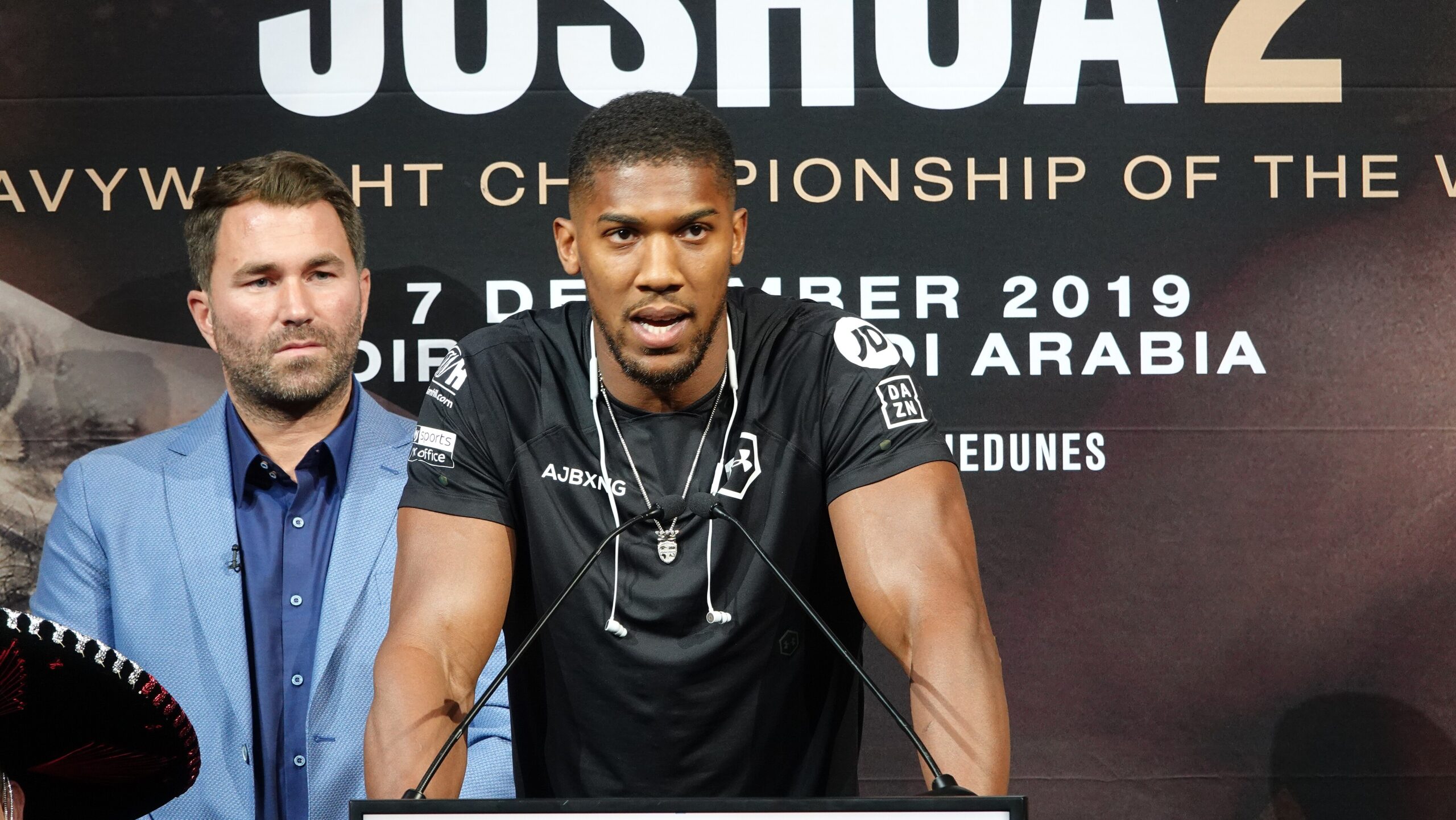
Anthony Joshua and Tyson Fury are officially scheduled to fight on December 11, 2026, at Principality Stadium in Cardiff, Wales, with Netflix streaming the event live to members around the world.
For British boxing, that sentence ends years of failed negotiations, public challenges and repeated uncertainty surrounding the biggest domestic heavyweight fight never made. Fury and Joshua have occupied the same era, carried world championships and generated enormous audiences, yet Netflix notes that they have never met in a professional bout.
Now the fight has a date, a stadium and a global platform. What it does not have is the same competitive meaning it might have carried several years ago.
Cardiff provides the stage, but the location should not become the entire story. World Boxing News framed the decision as Joshua avoiding Madison Square Garden, where Andy Ruiz Jr. stopped him in one of heavyweight boxing’s most memorable upsets. That interpretation offers an easy headline, but the available reporting does not establish that Joshua personally rejected New York because of the defeat.
The more important question is what Fury and Joshua can still prove once they finally share a ring.
Cardiff Is Confirmed, but Joshua’s Motive Is Not
Turki Alalshikh officially confirmed the matchup, according to Netflix, while the World Boxing Council and Principality Stadium also published confirmation of the December 11 date and Cardiff venue.
Principality Stadium says the event was secured following weeks of negotiations. It also states that the main event will take place during the early hours of the morning, although an exact ring-walk time has not been announced.
Those are the established facts.
World Boxing News presented Cardiff as an alternative that allows Joshua to avoid returning to the scene of his knockout defeat against Ruiz. The connection is understandable because Madison Square Garden remains permanently attached to the most damaging night of Joshua’s career. However, none of the cited reports includes a direct statement from Joshua saying that he opposed New York, rejected the venue or allowed the Ruiz defeat to influence the final decision.
That distinction matters.
A venue can carry emotional and historical significance without determining the business decisions behind a major event. Stadium availability, broadcast requirements, promotional negotiations, ticketing potential and the commercial value of staging an all-British heavyweight fight in the United Kingdom could all affect the selection process. The reviewed sources do not provide enough detail to identify which factor was decisive.
Cardiff also offers an obvious appeal without requiring a psychological explanation. Principality Stadium is a major British venue capable of presenting Fury-Joshua as a national event rather than merely another international boxing production.
Perhaps Joshua had no interest in returning to Madison Square Garden. Perhaps the subject was discussed during negotiations. But without a statement from Joshua or documented reporting establishing that position, it remains speculation rather than fact.
Boxing coverage should be able to recognize a compelling narrative without promoting it into a confirmed motive.
Madison Square Garden Still Matters Because the Defeat Changed Joshua
The absence of proof surrounding Joshua’s alleged opposition to New York does not make the Madison Square Garden connection meaningless.
BoxRec records that Ruiz stopped Joshua at 1:27 of the seventh round on June 1, 2019. Joshua weighed 248 pounds for the fight, while Ruiz entered at 268 pounds.
The result became one of the defining heavyweight upsets of its era.
Joshua arrived in New York as an undefeated world champion making his American debut. Ruiz entered as a replacement opponent and recovered from being knocked down before repeatedly hurting Joshua. By the seventh round, the championships had changed hands and the image of Joshua as an unstoppable heavyweight force had disappeared.
Joshua later defeated Ruiz in their rematch, but the first loss remained a turning point in the way his career was discussed. Every subsequent performance invited questions about his confidence, durability, aggression and willingness to take risks.
That is why Madison Square Garden creates such a powerful storyline now. Returning there for Fury would have invited constant comparisons with the Ruiz defeat. Every press conference, promotional feature and broadcast package would have revisited the night Joshua’s first championship reign collapsed.
But symbolic meaning is not the same as evidence.
Madison Square Garden can remain part of the story because of what happened there without becoming the unverified explanation for why this fight is taking place somewhere else. The first Ruiz fight is documented history. The claim that Joshua personally ruled out a return because of it is not.
That difference may appear small, but it separates analysis from assumption.
Joshua has enough legitimate questions surrounding his career without assigning him a fear or motivation he has not publicly expressed. His four professional defeats are already part of the record. There is no need to manufacture an additional concession before the Fury fight begins.
The Records Show Why This Fight Now Carries a Different Standard
Netflix lists Fury’s record at 36-2-1 with 25 knockouts. Joshua is listed at 30-4 with 27 knockouts.
Those numbers describe two accomplished former heavyweight champions who remain major attractions. They also confirm that this is no longer a meeting between unbeaten fighters approaching the height of their dominance.
Joshua has four professional losses. Fury has two, along with one draw.
That does not make the fight irrelevant. It changes what the fight can establish.
At an earlier stage, Fury-Joshua might have settled a much cleaner argument about heavyweight supremacy. The matchup once appeared capable of unifying championships, protecting undefeated records and identifying the defining British heavyweight of the generation in one event.
The December 11 fight does not automatically carry those stakes. No title implications were confirmed in the reviewed announcements, and neither Netflix nor the other cited sources presented the bout as determining the best heavyweight in the world.
Names alone cannot restore the competitive meaning lost during years of delay.
Fury and Joshua remain commercially powerful because audiences have followed their championship victories, setbacks and attempted recoveries. Their personalities and contrasting styles have sustained interest through negotiations that repeatedly failed to produce a fight.
Fury is the larger, more unconventional boxer whose movement, reach and adaptability helped define his best performances. Joshua built his reputation through structured combinations, physical power and a more traditional heavyweight attack. That contrast still offers technical intrigue.
The uncertainty is whether both men can perform closely enough to their best levels for those differences to matter.
A sharp Fury controlling distance and disrupting Joshua’s rhythm would show that his craft remains effective at the level required for a major heavyweight contest. A disciplined Joshua finding ways to close space and deliver his power would demonstrate that he can still impose himself against an elite, difficult opponent.
A slow, cautious fight between diminished former champions would produce a different conclusion.
That is the standard now. Fury-Joshua no longer needs to prove that boxing can sell unfinished business. It needs to prove that the unfinished business still contains a meaningful fight.
December 11 Can Settle the Question Negotiations Could Not
The Cardiff announcement resolves one long-running issue: Fury and Joshua are finally scheduled to meet professionally.
It does not erase the delay.
Boxing allowed this matchup to spend years existing more convincingly in interviews, social-media exchanges and negotiation reports than on an official calendar. During that time, both fighters’ careers changed, defeats accumulated and the heavyweight division continued moving.
The event can still produce an important answer.
A commanding performance would give the winner more than bragging rights. It would show that one of these former champions still possesses enough discipline, physical ability and competitive ambition to deliver under the pressure surrounding a global heavyweight spectacle.
The loser would face a more difficult assessment. Losing a competitive fight against another accomplished former champion would not necessarily end a career, but a flat or visibly diminished performance would strengthen the argument that the matchup arrived after its most valuable sporting moment.
That possibility is what makes the actual fight more interesting than the venue theory.
Cardiff cannot tell us whether Joshua remains haunted by Madison Square Garden. It can tell us whether he can handle Fury’s movement, size and unpredictability. It can also reveal whether Fury can still impose his boxing against a powerful opponent with enough experience to recognize his patterns.
Several important details remain unresolved. The complete undercard has not been announced in the reviewed sources, and confirmed purses, officials, fight-night weights, title stakes and an exact main-event ring-walk time have not been published.
Those details will shape the event as December approaches. They will not replace the central issue.
After years of waiting, Fury and Joshua must demonstrate that the contest itself can match the scale of its promotion.
LET’S TALK ABOUT IT
Does Cardiff matter beyond providing the stage, or do you believe Anthony Joshua genuinely wanted to avoid returning to Madison Square Garden after his knockout loss to Andy Ruiz Jr.?
More importantly, can Fury-Joshua still deliver an elite heavyweight fight, or did boxing wait too long to make it?
Outlets cited in this story
- World Boxing News
Spot an error? Send a correction. We fix mistakes in the open.