Anthony Joshua’s Reported Netflix Series Could Hinge on Tyson Fury — But It Cannot Rewrite Andy Ruiz Jr.

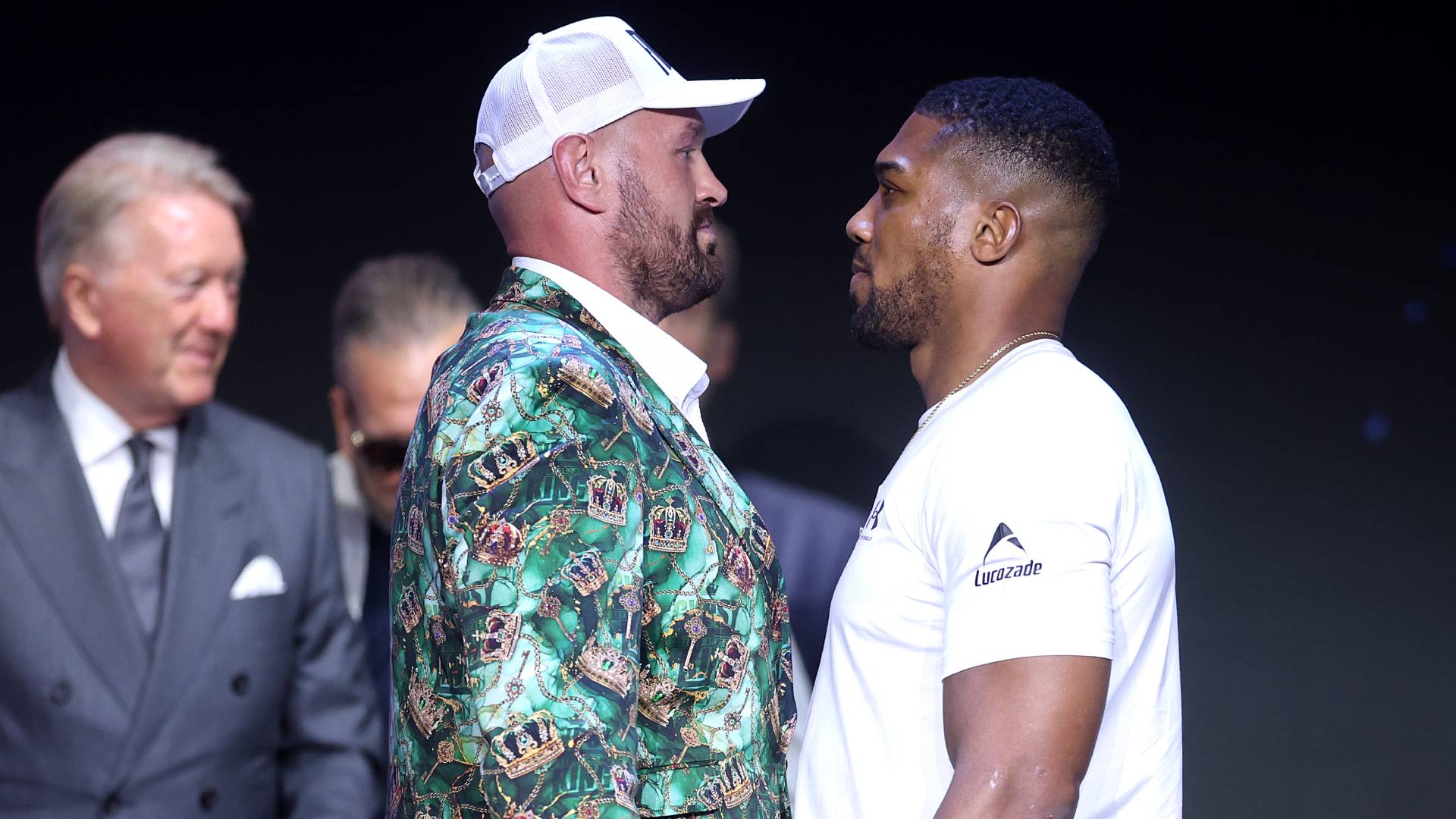
Anthony Joshua has reportedly agreed to a four-part Netflix documentary covering his life and boxing career, with previously unseen material surrounding his 2019 upset loss to Andy Ruiz Jr. potentially forming part of the series. The reported agreement is said to be worth £10 million, but none of those details has been officially confirmed by Joshua or Netflix.
The claim originated with unnamed sources cited by The Sun and was subsequently reported by Boxing 247 and World Boxing News. The proposed four-episode format, reported financial terms and suggested spring 2027 release window should therefore be treated as unconfirmed. No official title, trailer, production company, director or precise release date has been announced.
Netflix does have a confirmed connection to Joshua’s immediate boxing future. The platform has officially announced that Joshua will face Tyson Fury at Principality Stadium in Cardiff on December 11, 2026, with the heavyweight event streaming live. That announcement establishes a major working relationship between Joshua and Netflix, but it does not confirm that a documentary is being produced or that the Fury fight will appear in one.
If the reported series becomes official, the most sensitive part of the project may not be its treatment of Fury. It may be how it revisits the night Ruiz knocked Joshua down four times and stopped him in the seventh round at Madison Square Garden.
New footage could provide valuable context.
It cannot provide a different result.
The Documentary Report Contains More Questions Than Answers
According to Boxing 247, citing The Sun and unnamed sources, Joshua has signed a reported £10 million agreement for a four-part Netflix series. World Boxing News reported that the proposed production could arrive in spring 2027 and may include dressing-room footage connected to Joshua’s first fight with Ruiz.
Those are potentially significant details, but they remain media reports rather than an official announcement.
Neither Netflix nor Joshua has publicly confirmed the reported deal in the reviewed material. There is no announced producer or director, no episode guide and no information explaining which periods of Joshua’s career would receive the greatest attention. It is also unknown whether the production has licensed footage from the Ruiz fight, obtained new interviews with people who were in Joshua’s dressing room or invited Ruiz and his team to participate.
Those missing details matter because documentaries are shaped by access. A production built around Joshua would naturally present his experiences from his perspective, but a personal perspective should not automatically be mistaken for a complete historical account.
Joshua has every right to describe how he experienced the Ruiz defeat. His preparation, mental state and reaction to the loss are legitimate parts of his story. If previously unseen footage exists, it could make those parts of the evening easier to understand.
The difficulty begins when possibility is presented as discovery.
No specific revelation about Joshua’s condition before the Ruiz fight has been disclosed. The reviewed reports do not identify a verified injury, medical problem or private incident that would materially change the established account of the contest. Until the footage is released and its contents can be evaluated, claims about what it might prove are speculation.
At present, the responsible story is that a Joshua documentary has been reported.
It has not been announced.
No Anthony Joshua “Revelation” Has Actually Emerged
The suggestion that unreleased dressing-room footage could alter perceptions of Joshua’s loss is naturally attractive. The first Ruiz fight remains one of the defining upsets of modern heavyweight boxing, and any promise of unseen material creates the expectation that audiences may finally learn something hidden.
But no one outside the reported production has established that the footage contains such an answer.
Dressing-room video could show Joshua appearing nervous, unusually quiet, distracted or physically uncomfortable. It could also show an elite fighter experiencing the ordinary tension that comes before a major heavyweight contest. Without context from medical personnel, trainers and the fighter himself, body language can be interpreted in whatever way best serves the documentary’s narrative.
Atmosphere is not diagnosis.
That does not make the material worthless. Behind-the-scenes footage can reveal how Joshua’s team communicated with him, how he approached the unexpected opponent and what emotional state surrounded one of the most consequential nights of his career. It could deepen the audience’s understanding without challenging the legitimacy of Ruiz’s victory.
The distinction is between explanation and revision.
An explanation asks why Joshua performed as he did. Revision begins when that explanation is used to suggest that Ruiz’s achievement should count for less. Those are not the same argument, and any serious documentary should resist collapsing them into one.
World Boxing News has argued that new context about Joshua’s condition should not diminish what Ruiz accomplished. That judgment is sound because Ruiz did not control Joshua’s preparation, mindset or dressing-room circumstances. He controlled what happened after the opening bell.
Whatever a camera may have captured before the fight, Ruiz still had to respond when Joshua knocked him down. He still had to recover, attack and finish the favored champion.
That is where the official record becomes essential.
The Ruiz Fight Already Has a Complete Sporting Answer
The WBA’s October 2019 championship report records Ruiz defeating Joshua by seventh-round technical knockout on June 1, 2019, at Madison Square Garden in New York.
According to the fight account reported by World Boxing News, Joshua scored the first knockdown in the third round. That moment appeared to move the contest toward the result most observers expected: the heavily promoted champion hurting a replacement challenger before taking control.
Ruiz changed the fight almost immediately.
He dropped Joshua twice in the third round, transforming his own moment of danger into the beginning of an historic upset. Matchroom Boxing’s later retrospective records that Ruiz floored Joshua four times in total. The final two knockdowns came in the seventh round before the contest was stopped.
Those facts explain why the victory cannot be reduced to Joshua having a bad night. Ruiz was hurt first, recovered under pressure and then repeatedly created the exchanges that broke the champion down. He took Joshua’s heavyweight titles on one of boxing’s largest stages and overturned expectations through what he did in the ring.
Joshua later supplied his own answer.
The Associated Press reported that he defeated Ruiz by decision in their December 2019 rematch and regained the heavyweight titles. Joshua changed his tactical approach, controlled the contest and refused to repeat the kind of exchanges that had allowed Ruiz to seize the first fight.
That rematch is an important part of the story because it demonstrates that Joshua did not need to erase his defeat to restore his position. He responded competitively. Ruiz owns the stoppage victory from New York, and Joshua owns the decision from their second meeting.
Both results belong in the record.
A documentary could make Joshua’s personal experience of the first fight more understandable. It could show how he processed the loss and why he approached the rematch differently. What it cannot do is convert four knockdowns into an illusion or treat Ruiz as a supporting character in an event he decisively shaped.
The Fury Result Could Change the Ending, Not the History
Boxing 247 has suggested that the reception of the reported documentary could depend on Joshua’s result against Fury. That is the outlet’s analysis, not a position announced by Netflix.
Netflix has confirmed that Fury-Joshua will take place on December 11 at Principality Stadium. The platform has not confirmed that the fight will be included in a Joshua series or that its result will determine the documentary’s editorial direction.
The timing nevertheless creates an obvious narrative possibility.
A victory over Fury would give Joshua a powerful late-career chapter. It would allow a potential documentary to move from the Ruiz collapse, through the successful rematch and later setbacks, toward a defining triumph against the British rival most closely associated with his era.
A defeat would create a more complicated conclusion. It would not remove Joshua’s championships, major victories or commercial influence, but it could make the series a story about ambition, resilience and the limits encountered across a long heavyweight career rather than a straightforward redemption arc.
That may ultimately produce a better documentary.
Boxing careers rarely follow the clean structure that films prefer. Fighters lose at inconvenient moments, rematches do not settle every debate and major rivalries sometimes arrive years after their ideal competitive window. The value of a documentary should come from confronting those complications honestly, not forcing them into a predetermined ending.
Before anyone can judge the reported project, several basic facts still require confirmation. Netflix or Joshua must first acknowledge that the documentary exists. Its producers must establish the episode count, release plan and scope. The public would then need to see what the Ruiz footage actually contains and whether Ruiz or his representatives were invited to contribute.
The Fury result will provide another chapter in Joshua’s career.
It should not be allowed to manufacture a different version of an old one.
LET’S TALK ABOUT IT
Could previously unseen dressing-room footage legitimately change how you evaluate Anthony Joshua’s first fight with Andy Ruiz Jr., or should Ruiz’s recovery, four knockdowns and seventh-round stoppage remain the decisive evidence?
And if the reported Netflix documentary is confirmed, should Ruiz and members of his team be included to ensure one of heavyweight boxing’s greatest upsets is presented from both corners?
Outlets cited in this story
- World Boxing News
- Associated Press
- Boxing 247
Spot an error? Send a correction. We fix mistakes in the open.