
Bakhodir Jalolov Defeats Solomon Dacres — But His Prospect Phase Should End Here

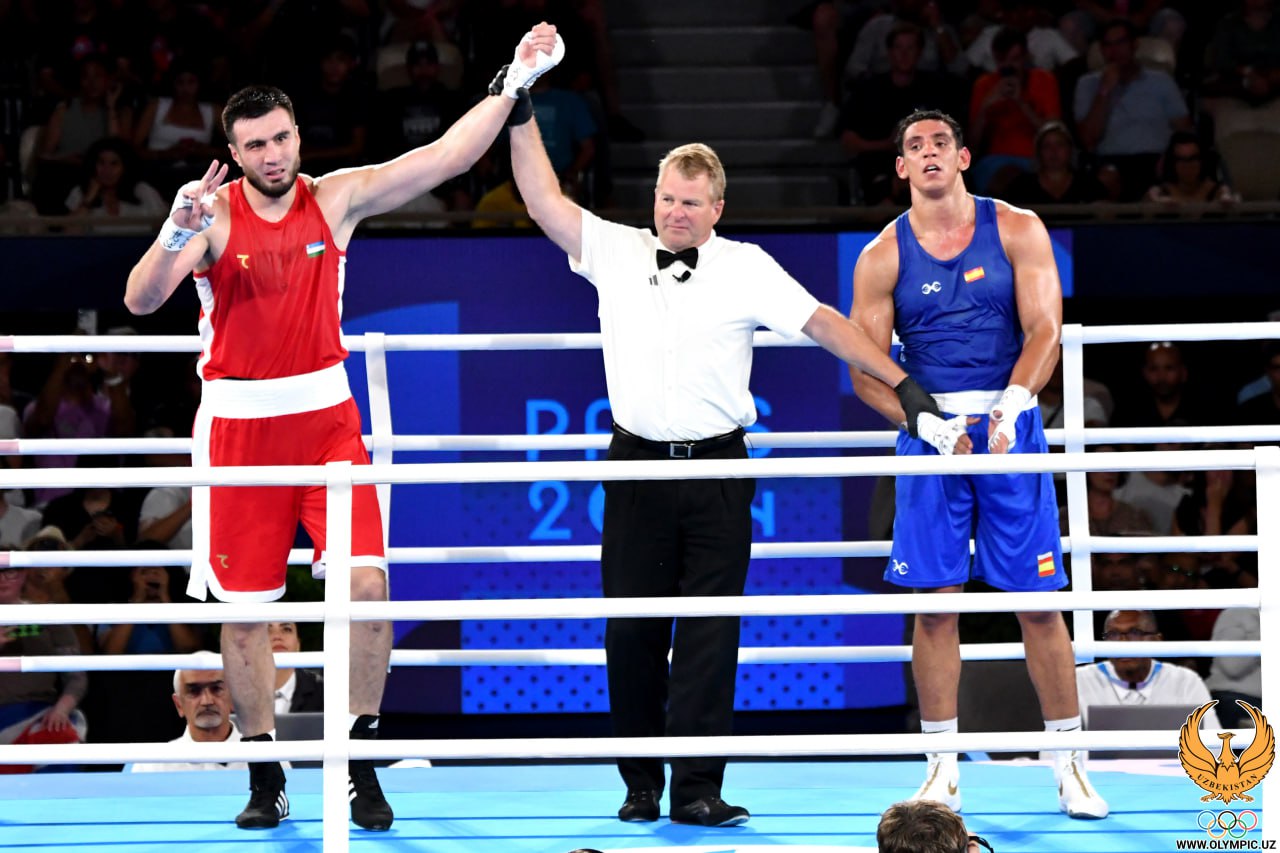
Bakhodir Jalolov remained unbeaten by defeating Solomon Dacres over ten heavyweight rounds on October 17, 2026, at London’s O2 Arena. The result gave Jalolov another victory, his first reported ten-round decision and a stronger argument for facing a meaningful contender next.
According to BoxingNews24, Jalolov won by unanimous decision with official scores of 99-91, 99-90 and 99-90. He also scored the fight’s only knockdown, dropping Dacres with a straight left in the fifth round before continuing to control the contest from long range.
The fight took place on the Queensberry Promotions undercard of Daniel Dubois versus Fabio Wardley II, according to World Boxing News. The Ring’s event listing also placed the card at the O2 Arena in London.
Jalolov did what an unbeaten heavyweight with his physical advantages and amateur background was expected to do. He controlled the distance, produced the most decisive moment of the fight and left with his record intact.
Now the matchmaking must change.
Beating Dacres does not prove Jalolov is ready to defeat the heavyweight division’s leading contenders. It does, however, make another cautious developmental assignment increasingly difficult to justify. At a reported 18-0, Jalolov has reached the point where potential must be tested against proven professional quality.
Jalolov Controlled the Fight Without Forcing the Finish
BoxingNews24 described Jalolov as controlling the contest from long range while Dacres struggled to close the distance. That was always likely to be one of the central challenges for Dacres: finding a way past Jalolov’s reach and straight punches without absorbing clean shots on the way inside.
He never solved it consistently enough.
The fifth-round knockdown provided the clearest example of the problem. Jalolov dropped Dacres with a straight left, according to BoxingNews24, creating the fight’s only official knockdown and widening a lead that was already being built through his control of range.
Dacres recovered and completed the full ten rounds, preventing Jalolov from adding another knockout to a record that World Boxing News listed at 17-0 with 15 stoppages before the fight. That durability deserves acknowledgment. Dacres remained in the contest after suffering its most damaging moment and forced Jalolov to work through the scheduled distance.
But survival did not translate into competitive control.
The scorecards reflected a fight in which Jalolov consistently held the advantage. One judge gave Dacres a single round, while the other two produced 99-90 scores that accounted for the knockdown and otherwise credited Jalolov with every round.
There is value in that kind of performance. Heavyweight prospects cannot be evaluated only through quick knockouts, particularly when early finishes prevent them from encountering resistance, adjusting over longer distances or maintaining control late in a fight.
Jalolov did not secure the stoppage, but he gained ten professional rounds against an established British heavyweight and remained in command. That experience may ultimately be more useful than another opponent disappearing in the opening stages.
Still, usefulness has its limits. This fight should be treated as preparation for a higher level, not as evidence that Jalolov needs more of the same.
Dacres Was a Credible Test, Not a Contender-Level Answer
Dacres entered the fight with a 10-1 record, according to World Boxing News. His only previous professional defeat had come before he rebounded with a decision victory over the previously unbeaten Vladyslav Sirenko in July 2025.
That made Dacres a reasonable opponent for determining whether Jalolov could control a capable heavyweight across ten rounds. He had enough experience and durability to make the fight informative, even if the final scores showed that he did not possess the tools necessary to threaten Jalolov consistently.
The distinction matters.
Dacres was credible enough to test Jalolov’s patience and distance management. He was not established enough at the highest professional level for beating him to confirm that Jalolov is ready to compete with the division’s elite.
Boxing often collapses those two conclusions into one. A heavily promoted heavyweight dominates the opponent placed in front of him, and the performance is immediately presented as proof that he belongs near a world title. Jalolov’s victory does not support that leap.
What it supports is movement.
He has now beaten an opponent who entered with only one professional loss, scored a knockdown and completed ten rounds without surrendering control of the fight. That should be enough to close the developmental chapter of his career. The next stage must involve an opponent capable of exposing weaknesses that Dacres could not reach.
That does not require pretending Jalolov has already earned a particular ranking or title opportunity. No verified post-fight sanctioning-body rankings were identified in the available reporting, and there is no reason to manufacture a position for him.
His next fight does not need to be presented as a title eliminator unless a sanctioning body officially designates it as one.
It does need to provide a meaningful answer.
An 18-0 Heavyweight Should No Longer Be Protected From the Question
World Boxing News listed Jalolov at 17-0 with 15 knockouts before the fight. BoxingNews24 recorded him at 18-0 afterward, while Dacres fell from 10-1 to a reported 10-2.
Eighteen victories do not automatically make a heavyweight a contender. Records can be built at radically different levels, and an undefeated total means less than the quality of the opposition behind it.
But 18-0 is enough experience for Jalolov’s handlers to stop treating him like a fighter who still needs to be introduced gradually to professional boxing.
There is a legitimate case for careful development in the heavyweight division. One punch can change a fight, physical maturity matters and the transition from amateur success to the professional game requires more than talent. Fighters must learn how to manage rounds, respond when an opponent refuses to collapse and maintain discipline when the initial plan does not produce an immediate finish.
Jalolov has now received that kind of test.
Dacres gave him ten rounds. Jalolov controlled them, scored the only knockdown and won by wide margins on all three official cards. Sending him into another fight designed primarily to preserve his unbeaten record would provide little new information.
The unanswered questions concern how Jalolov performs when the distance is harder to control, when an opponent brings sustained pressure and when the man across from him has already demonstrated that he can compete successfully against proven heavyweights.
Dacres could not force those answers.
The next opponent should.
The Next Fight Must Test More Than Jalolov’s Patience
There was no verified post-fight report identifying Jalolov’s next opponent or confirming a particular ranking opportunity. Any discussion of his next matchup must therefore be treated as analysis, not reporting on active negotiations.
The necessary level of opposition is more important than one specific name.
Jalolov should face a heavyweight with credible professional experience, the ability to apply pressure and enough proven quality to punish mistakes. The opponent should be capable of making him defend under stress rather than allowing him to dictate the entire fight from long range.
That matchup would tell us far more than another win over a fighter selected mainly because he is unlikely to disrupt the plan.
Can Jalolov preserve his control when an opponent consistently reaches his preferred range? Can he maintain his effectiveness when the fight becomes physically uncomfortable? Can he adjust if his straight left does not discourage the man moving toward him? Can he turn his size, skill and power into a complete performance against someone with genuine contender-level ambition?
Those questions are not criticisms. They are the questions every promising heavyweight eventually has to answer.
Dacres represented a sensible bridge between low-risk development and more demanding professional opposition. Jalolov crossed that bridge convincingly. The mistake would be asking him to cross it again under a different opponent’s name.
His team does not need to rush him directly into the deepest end of the division. It does need to accept that the shallow end no longer serves a purpose.
LET’S TALK ABOUT IT
Has Bakhodir Jalolov shown enough to move directly into a serious contender fight after his wide decision victory over Solomon Dacres?
And what level of opponent would provide a legitimate answer about whether Jalolov is ready for the heavyweight elite?
Outlets cited in this story
- World Boxing News
- BoxingNews24
- The Ring
Spot an error? Send a correction. We fix mistakes in the open.