
Bilal Fawaz Stops Eithan James in Eight — But His Next Challenger Must Raise the Level

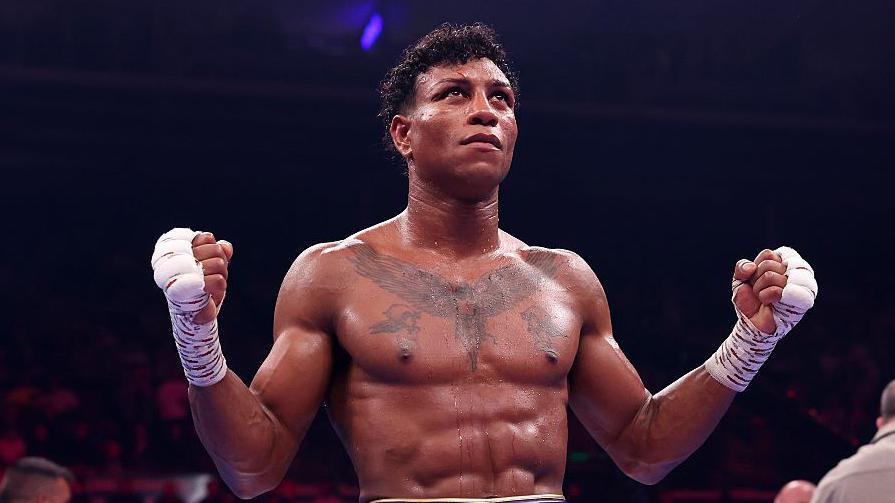
Bilal Fawaz retained his British and Commonwealth super-welterweight titles by stopping Eithan James 1 minute and 14 seconds into the eighth round at Utilita Arena Birmingham.
According to BoxingNews24, Fawaz dropped James twice before the scheduled 12-round contest was stopped. The victory moved the champion to 13-1-1, while James fell to 17-3.
Fawaz also reportedly collected a £5,000 knockout bonus offered before the bout by promoter Eddie Hearn. Complete purse figures were not disclosed, making it impossible to determine how large that payment was relative to Fawaz’s total compensation.
The money gave the finish an additional promotional hook. The more important development was that Fawaz followed a competitive title-winning decision with a second consecutive defense ending inside the distance.
That is how a domestic title reign begins gaining substance.
The next challenger will determine whether Fawaz is simply becoming established at British level or preparing to move beyond it.
Fawaz Found the Right Hand and Closed the Fight
The available post-fight reporting provides a clear account of the decisive sequence without offering a complete round-by-round picture.
According to BoxingNews24, Fawaz landed a heavy right hand near the ropes to score the first knockdown. He then put James down again before the referee intervened at 1:14 of the eighth round.
The referee’s identity was not confirmed in the reviewed sources and should not be guessed. There were also no verified post-fight comments from either fighter explaining how Fawaz created the opening or how James viewed the stoppage.
What can be established is that Fawaz converted control into a decisive result.
This was not a non-title attraction placed on the undercard for visibility. The British Boxing Board of Control had approved Fawaz-James as a voluntary defense of the British championship, and the Commonwealth title was also at stake. The contest took place on Matchroom’s Ben Whittaker-Conor Wallace card in Birmingham.
James entered with an advertised record of 17-2 and no knockouts on Matchroom’s pre-fight event page. That unusual record suggested his route to victory was unlikely to involve matching Fawaz in a contest of finishing power. Fawaz ultimately became the fighter capable of forcing the conclusive ending.
The two knockdowns matter because they removed uncertainty. Fawaz did not merely protect his titles through another close scorecard. He separated himself from the challenger before the judges were required.
That becomes particularly important when viewed beside the fight that made him champion.
Two Stoppage Defenses Have Changed the Shape of Fawaz’s Reign
Fawaz won the British and Commonwealth titles from Ishmael Davis on February 21, 2026. BBC Sport records the championship opportunity, while BoxingNews24 reported the result as a majority decision.
The scores showed how competitive the contest was: 114-114, 115-113 and 115-114.
That kind of victory establishes a champion, but it also leaves an immediate question. Did Fawaz narrowly produce the best performance of his career on one night, or had he genuinely reached a level he could maintain across a title reign?
His defenses have started answering that.
Tapology records that Fawaz retained both championships when Ryan Kelly retired after the ninth round on May 2. Fawaz has now followed that result by dropping and stopping James in the eighth.
The sequence matters. A close championship victory can sometimes become an isolated breakthrough if the new titleholder struggles to confirm it. Fawaz has instead produced two defenses without requiring the final bell.
That does not automatically make every part of those performances dominant. A corner retirement and a referee’s stoppage can develop through very different kinds of fights. The reviewed material does not provide enough detail to declare that Fawaz controlled every round against Kelly or James.
It does show that both challengers were unable to complete the scheduled distance.
Fawaz has therefore moved from winning the belts to building a recognizable reign. He has defended them twice, improved his record to 13-1-1 and produced a marketable stoppage on a major Matchroom card.
The reported knockout bonus adds another layer to the night. According to BoxingNews24, Hearn offered £5,000 for a knockout and Fawaz earned it with the eighth-round finish.
There is no evidence that the bonus changed Fawaz’s tactics or caused him to pursue the stoppage recklessly. Without complete purse information, there is also no basis for determining how financially significant the payment was.
It should be treated as part of the event’s promotion, not the explanation for the victory.
Fawaz still had to create the opening, land the right hand and finish the contest.
Domestic Success Is Not Yet Proof of International Readiness
The James victory strengthened Fawaz’s position, but it did not establish where he belongs against the wider super-welterweight division.
No current sanctioning-body ranking for Fawaz was located in the reviewed post-fight material. The British Boxing Board of Control approved James as a voluntary challenger rather than an ordered mandatory, and none of the available sources identified James as a leading international contender.
That distinction should guide the evaluation.
James brought professional experience and entered with only two defeats on the advertised record. He was a legitimate challenger approved for a British-title contest. Beating him adds value to Fawaz’s reign.
It does not show how Fawaz would perform against a highly ranked contender with international-level experience, significant punching power or the ability to impose a different tactical problem over 12 rounds.
Fawaz has handled the opponents placed in front of him. The next stage requires an opponent capable of threatening what he has built.
There is also a recordkeeping issue that should not be used to inflate the result. BoxingNews24 described the loss as James’s first stoppage defeat, but existing records conflict with that claim. Tapology lists James retiring after the ninth round against Owen Cooper in March 2024 and suffering a seventh-round stoppage against Constantin Ursu in March 2025.
Because those records contradict the description, the “first stoppage defeat” claim remains unverified.
Fawaz’s victory does not need that distinction. Dropping James twice and stopping him in the eighth is meaningful on its own. Presenting an inaccurate historical claim would only create artificial importance around a result that already deserves credit.
The official facts are sufficient: Fawaz retained two recognized titles, recorded another defense inside the distance and continued building momentum.
What those facts do not reveal is whether he has reached the ceiling of the domestic scene.
Only stronger opposition can answer that.
The Next Challenger Will Define Where Fawaz Is Going
Fawaz now has several possible routes, but no next opponent has been confirmed.
The British Boxing Board of Control could order a mandatory defense. His team could seek another voluntary challenger. Matchroom could also attempt to move him toward an opponent with stronger international standing.
Each choice would communicate something different.
A credible mandatory defense would allow Fawaz to prove his position against the strongest available challenger produced by the domestic system. Another voluntary defense could keep him active, but it would need to offer a clear increase in difficulty to provide new information.
An international-level opponent would carry more risk. It would also give Fawaz the chance to demonstrate that his British and Commonwealth championships are preparing him for something larger rather than becoming a comfortable destination.
The best next opponent should bring current form, ambition and a realistic chance of taking the belts.
That does not require rushing Fawaz into a world-title fight. Domestic champions often benefit from gaining experience across several 12-round contests before moving into higher-level competition. Fawaz has only 15 professional bouts on his updated record, and controlled development can still have value.
But control should not become repetition.
Another opponent selected primarily because Fawaz is expected to beat him would extend the statistical reign without necessarily advancing the fighter. A challenger capable of forcing tactical adjustments, surviving Fawaz’s strongest attacks and applying pressure in the later rounds would reveal far more.
Fawaz’s close victory over Davis showed that he could win a championship fight when the margins were narrow. The Kelly and James results showed that he could defend his titles and force stoppages.
The missing test is whether he can do the same when the opponent arrives with stronger current credentials and an equal expectation of progressing beyond British level.
That is the fight his reign now needs.
LET’S TALK ABOUT IT
Has Bilal Fawaz done enough through his title-winning victory and two stoppage defenses to move toward international-level opposition?
Or should he first face the strongest available British mandatory before looking beyond the domestic super-welterweight scene?
Outlets cited in this story
- BoxingNews24
- BBC Sport
Spot an error? Send a correction. We fix mistakes in the open.