Canelo Alvarez Wants Terence Crawford Again — But Christian Mbilli Has the First Say
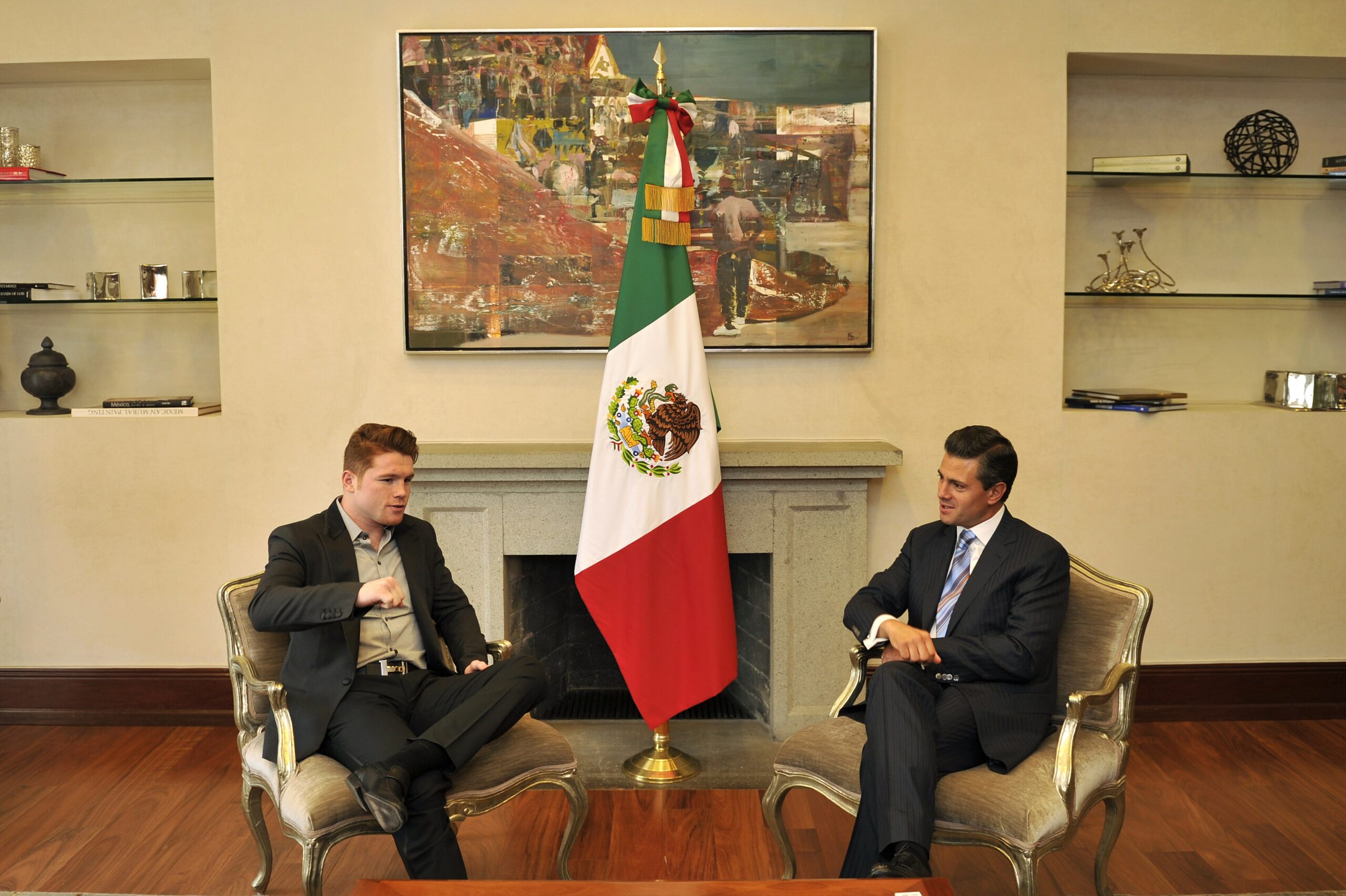
Canelo Alvarez has identified the fight he wants most before retirement: another opportunity against Terence Crawford.
The request comes with a significant problem. Crawford already defeated Canelo by unanimous decision over 12 rounds on September 13, 2025, then retired three months later with an undefeated record. In January, Crawford said Canelo’s team had never contacted him about a second fight and described their business as finished.
Canelo does not see the loss as the end of the competitive argument. In an interview with The Ring, reported by Boxing News, he said he has watched the fight approximately five times, identified mistakes in his performance and believes there was not much separating them. He also pointed to his history of improving in rematches as a reason to believe a second meeting could produce a different result.
For now, however, this is an ambition rather than an active fight. No offer, formal negotiation or Crawford comeback agreement has been confirmed by either side.
Canelo also has a more immediate problem directly in front of him. On October 31, he is scheduled to challenge Christian Mbilli for the WBC super-middleweight championship in Riyadh. The World Boxing Council identifies the contest as Mbilli’s first title defense, meaning the champion is not simply a placeholder in somebody else’s retirement plan.
If Canelo wants Crawford again, he must first prove against Mbilli that the rematch is worth discussing.
Canelo Says He Has Identified What Went Wrong
Canelo’s interest in a second fight is built around the belief that he can correct specific mistakes rather than merely produce a better version of the same performance.
According to the Boxing News account of his interview with The Ring, Canelo said he has repeatedly reviewed the Crawford fight and now understands where he went wrong. He also argued that the contest was closer than many observers believed and emphasized that he has generally performed well when given a second opportunity against the same opponent.
That confidence is understandable. Fighters rarely reach Canelo’s level without believing every loss contains a solution. Film study can reveal missed openings, predictable reactions and tactical choices that felt reasonable in the ring but looked completely different afterward.
A rematch would also give Canelo a chance to pursue the kind of ending he appears to want for his career. Crawford did more than hand him another defeat. He beat Canelo in an undisputed super-middleweight championship fight, taking control of one of the most important stages available in boxing. Reversing that result would carry more meaning than adding another respectable name to Canelo’s record. But Canelo’s interpretation must remain his interpretation.
ESPN records the first fight as a 12-round unanimous-decision victory for Crawford. The Associated Press characterized Crawford as dominating the contest, while Canelo acknowledged afterward that he could not solve Crawford’s style. Those details create a much higher standard than simply showing that the fight contained competitive moments.
Watching the loss five times may have helped Canelo identify what he should have done. It does not establish that he can do it against Crawford. There is a considerable difference between recognizing a problem and solving it while one of boxing’s most adaptable fighters is standing across the ring.
Crawford Has Already Closed the Door
Canelo’s desire is only one side of the potential matchup. The larger obstacle is that Crawford no longer considers himself an active fighter with unfinished business. ESPN reported that Crawford announced his retirement on December 16, 2025, saying he was leaving boxing with nothing left to prove. He retired with a record of 42-0 with 31 knockouts, according to ESPN’s record of his career, and his victory over Canelo gave him the kind of final accomplishment that makes walking away easier to defend.
Crawford then addressed the rematch directly in January. According to Boxing News, he said Canelo’s team had never contacted him about another fight and described the matter between them as finished. That position matters more than public interest or Canelo’s preferred career ending. A rematch requires Crawford to reverse a retirement decision that he presented as final, return to training and accept a fight against an opponent he has already defeated.
At present, there is no confirmed indication that he intends to do any of those things.
Boxing News 24/7 has suggested that a substantial Saudi-backed payment could be necessary to bring Crawford back. That remains speculation. No offer has been disclosed, no requested purse has been confirmed and no financial agreement has been announced.
Boxing has repeatedly shown that retirement declarations can become negotiable when the right fight and money appear. Crawford’s retirement therefore does not make a rematch impossible. It does, however, make it inaccurate to discuss the matchup as if negotiations are already developing behind Canelo’s public request.
Wanting the fight does not mean the fight exists. Canelo has clarified the opponent he would most like to face before leaving boxing. Crawford has not indicated that he shares the ambition.
The First Result Still Defines the Conversation
Canelo’s comments change the story surrounding his future, but they do not alter the documented result of the first fight. Crawford remains the official unanimous-decision winner. Canelo’s admission that he struggled to solve Crawford’s style remains part of the record. Crawford remains retired, and there is no confirmed agreement for him to return. What Canelo’s comments reveal is that he does not regard the defeat as a closed competitive question. He believes his mistakes were correctable and appears to view a second fight as an opportunity to redefine the final stage of his career.
That belief creates intrigue because rematches can expose whether the first contest established a permanent hierarchy or merely captured one fighter executing the better plan on one night. Canelo has experience making productive adjustments between fights, and that history gives him a legitimate reason to trust his ability to improve.
Crawford presents a more complicated challenge.
His defining quality has never been limited to one tactic. He reads opponents, changes approaches and adjusts within fights, which means Canelo would not be preparing to face a fixed version of the man who beat him in 2025. Even if Canelo corrected every mistake he identified on film, Crawford would enter a rematch with his own knowledge of what worked, what could be improved and how Canelo might respond differently.
That is why Canelo’s film study cannot serve as evidence by itself. It explains his confidence and his motivation, but the question is not whether he can describe a better performance. The question is whether he remains physically and tactically capable of producing one. His next fight offers a meaningful test.
Christian Mbilli Controls What Happens Next
Canelo is scheduled to challenge Mbilli for the WBC super-middleweight championship on October 31 in Riyadh. According to the World Boxing Council, the bout will be Mbilli’s first defense of the title. That makes Mbilli the immediate reality standing between Canelo and his preferred final objective. Canelo cannot afford to approach the champion as a holding assignment while directing public attention toward Crawford. Mbilli has his own championship position to defend, and defeating Canelo would establish his authority in the division while potentially ending the rematch discussion before it develops.
A convincing Canelo victory would strengthen his case in several ways. It would show that he remains capable of winning a significant championship fight, adapting against an active opponent and performing under pressure after the Crawford defeat. It would also give promoters a current achievement to sell rather than asking the public to invest entirely in Canelo’s reputation and dissatisfaction with the first result. A loss would change the conversation completely.
If Canelo cannot defeat the active champion in front of him, there would be little competitive basis for asking a retired Crawford to return. Even an unconvincing victory could raise doubts about whether Canelo still possesses the timing, endurance and adaptability necessary to reverse a clear decision against the man who already solved him.
Mbilli therefore has more than a title at stake. His performance will help determine whether Canelo’s Crawford ambition remains a plausible boxing match or becomes only an aging champion’s preferred ending.
This does not mean defeating Mbilli would obligate Crawford to return. Crawford has already provided his answer in the ring and has said he has nothing left to prove. A strong Canelo performance would simply make the proposal more credible. Canelo must earn the right to turn his desire into a serious conversation. Mbilli is the fighter with the first opportunity to decide whether he can.
LET’S TALK ABOUT IT
If Canelo Alvarez defeats Christian Mbilli, would a Terence Crawford rematch become the right final target for his career?
Has Canelo identified a result he can genuinely reverse, or is Crawford’s style still the kind of problem that film study alone cannot solve?
Outlets cited in this story
- Associated Press
- Boxing News 24
- Boxing News
- The Ring
- ESPN
Spot an error? Send a correction. We fix mistakes in the open.