Canelo Calls for Crawford Rematch After Beating Mbilli — But Redemption Remains Out of His Control
 Elijah StoneBoxing Writer, 13 years ringside
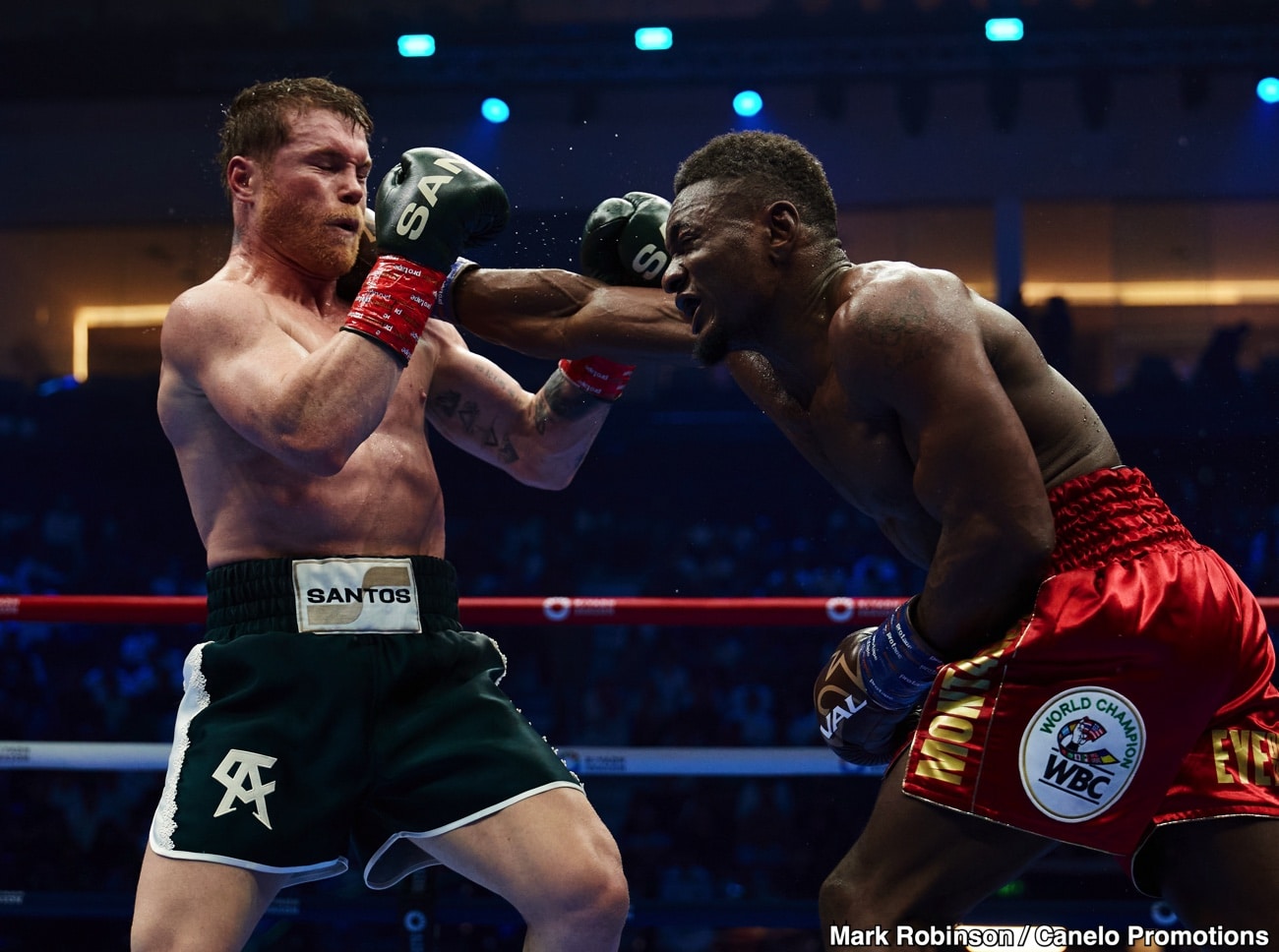
Saul “Canelo” Alvarez is a world champion again. On October 31 in Riyadh, the Mexican star defeated Christian Mbilli by unanimous decision to reclaim the WBC super-middleweight title and restore some of the championship status he lost to Terence Crawford in September 2025.
Arab News reported official scores of 115–112, 116–111 and 117–110 after 12 rounds. MMA Fighting listed Canelo’s record at 64–3–2 following the victory, while Mbilli suffered his first professional defeat and moved to 29–1–1. The result confirmed that Canelo remains capable of beating a leading super-middleweight over the championship distance.
It did not answer the question that has followed him since Crawford handed him the third loss of his professional career.
Canelo used his post-fight interview to renew his interest in a rematch with the retired former champion. According to Boxing News and BoxingNews24, Canelo said his team would “love to have that rematch,” although he also made clear that his career would continue if Crawford does not return.
That distinction matters. Canelo wants the fight, but wanting redemption is not the same as having a willing opponent. Crawford officially retired in December 2025, and nothing has been confirmed to suggest that negotiations for a second fight have begun.
Canelo regained a title against Mbilli. The opportunity to regain what he lost against Crawford remains beyond his control.
Beating Mbilli Restored Canelo’s Championship Position
Mbilli represented a legitimate test of Canelo’s place at super-middleweight. At the October 30 weigh-in, MMA Fighting reported that Canelo came in at 167.6 pounds, while Mbilli weighed 167.8. This was not a case of Canelo returning against an opponent from a lower division or easing back into competition without a title at stake.
He entered against an unbeaten WBC champion and left with the belt.
The official scorecards show a clear Canelo victory, although the range from 115–112 to 117–110 indicates that the judges did not view every part of the fight identically. What matters is that all three agreed on the winner. Over 12 rounds, Canelo did enough to separate himself from a younger, undefeated champion and restore his position near the center of the division.
Mbilli should not be reduced to a supporting character in Canelo’s pursuit of Crawford. He arrived with a 29-fight unbeaten record and the opportunity to secure the most important victory of his career. Losing a decision to Canelo does not erase the work that brought him to a world title, nor does it mean he cannot remain relevant at 168 pounds.
For Canelo, however, the victory carried meaning beyond the belt. It demonstrated that the Crawford defeat had not removed him from elite competition. He could still prepare for a major fight, perform over the full distance and defeat a credible champion.
That is a meaningful answer to anyone who believed the loss to Crawford had marked the immediate end of Canelo’s championship years.
It is not an answer to Crawford himself.
Canelo Wants the One Loss He Cannot Correct Alone
Canelo’s interest in a second Crawford fight did not begin in Riyadh. On October 17, before facing Mbilli, he told The Ring that he wanted another opportunity and believed a rematch could produce a different result.
His comments after beating Mbilli reinforced that position. According to Boxing News and BoxingNews24, Canelo said his team would welcome the rematch but added that he would continue fighting if it never happens.
That sounds less like a confirmed plan than a declaration of competitive ambition.
The motivation is easy to understand. Crawford did not catch Canelo with one dramatic punch or win through a disputed technicality. On September 13, 2025, he defeated Canelo by unanimous decision to win the unified super-middleweight championship. The Associated Press reported official scores of 115–113, 115–113 and 116–112.
Those cards establish a clear victory without turning the fight into something it was not. Crawford did not stop Canelo, and the official scoring does not support describing the contest as a complete humiliation. He did, however, convince all three judges that he had won.
For a fighter of Canelo’s stature, that kind of defeat creates a particularly difficult problem. There is no controversy to resolve and no accidental ending to correct. Canelo must believe that a different tactical approach, a better performance or another preparation could change the result.
A rematch would give him the cleanest opportunity to prove it.
The problem is that Crawford does not owe him one.
Crawford already climbed to super-middleweight, defeated Canelo and left with the championships. The IBF announced that it received official confirmation of Crawford’s retirement on December 23, 2025, when he relinquished its super-middleweight title. Before Canelo fought Mbilli, The Ring reported that Crawford had made no declaration indicating that he was prepared to return.
There is still no confirmed negotiation, contract, date, venue, purse or agreement over whether the WBC title would be contested.
Until that changes, the rematch is an ambition rather than an event.
The Mbilli Victory Does Not Show That Canelo Solved Crawford
Boxing has a habit of treating a successful comeback as though it automatically erases the defeat that came before it. Canelo’s victory deserves respect, but it must be evaluated for what it actually established.
He proved that he remains an elite super-middleweight. He proved that he can defeat a leading opponent over 12 rounds. He proved that his career did not end when Crawford took his titles.
He did not prove that he has solved the problems Crawford presented.
Mbilli and Crawford are different fighters with different physical qualities, tactical habits and methods of controlling a contest. Beating one cannot serve as a substitute for beating the other. Mbilli was not a rehearsal designed to reproduce Crawford’s decisions, timing or approach.
That does not weaken Canelo’s accomplishment. It simply places it in the correct category.
The factual record now supports two conclusions at the same time. Canelo remains one of the leading fighters at 168 pounds, as demonstrated by his WBC championship victory and 64–3–2 record. Crawford also remains the most recent man to defeat him, having won a unanimous decision when they shared the ring.
Neither fact cancels the other.
Canelo’s third professional loss will naturally carry weight in any discussion of the final stage of his career because it came against another defining fighter of his generation. A victory in a rematch would give Canelo something no other opponent can provide: direct evidence that he learned from the defeat and found a way to reverse it.
But the absence of a rematch would not make Canelo’s remaining career meaningless.
His responsibility is to remain active against opponents who are available, qualified and prepared to fight. Crawford’s retirement may prevent Canelo from pursuing his preferred form of redemption, but it does not prevent him from adding significant victories to his record.
The Mbilli fight was the first important example of that.
Canelo Cannot Allow a Retired Rival to Control His Final Chapter
The cleanest answer to the Crawford question is obvious: fight again.
Everything required to make that happen, however, remains unresolved. Crawford would first have to decide that retirement no longer suits him. Representatives for both fighters would then have to negotiate financial terms, a date, a location and the status of Canelo’s newly regained WBC championship.
None of those steps has been confirmed.
That means Canelo’s immediate future cannot responsibly be presented as a countdown to Crawford’s return. His post-fight callout creates interest, but it does not create an agreement. Unless Crawford publicly changes his position or formal negotiations emerge, Canelo must proceed as though the rematch may never happen.
His next opponent would then become more important than repeated public requests for an unavailable rival.
Canelo has already made the sensible part of his position clear: he wants Crawford, but he will continue without him. The second half of that statement now requires action. If the rematch remains unavailable, Canelo must select active opposition capable of testing whether he can sustain his restored championship standing.
That path would not provide the same emotional resolution. A victory over another contender cannot rewrite the Crawford scorecards or establish what would happen in a second meeting.
It can still define how Canelo responds to defeat.
Late-career greatness is not measured only by whether a fighter avenges every loss. It is also measured by whether he remains ambitious when the perfect opportunity is unavailable. Canelo cannot force Crawford to leave retirement, but he can control whether his own final years become a serious championship run or an extended waiting period.
The belt is back in his possession.
The direction of the rest of his career must be as well.
LET’S TALK ABOUT IT
Did beating Christian Mbilli restore Canelo’s standing without resolving the questions raised by his loss to Terence Crawford?
If Crawford remains retired, which active opponent should Canelo face next to define the final stage of his career?
Outlets cited in this story
- Associated Press
- BoxingNews24
- Boxing News
- The Ring
Spot an error? Send a correction. We fix mistakes in the open.