Christian Mbilli Faces Another Possible Canelo Alvarez Delay — But the Champion Is Still Waiting for Confirmation

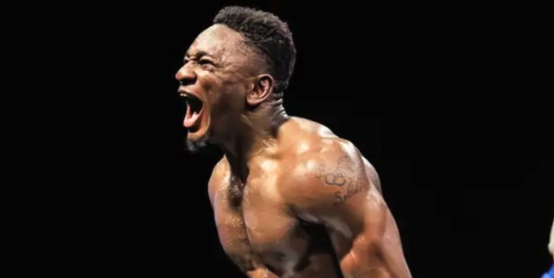
Christian Mbilli is scheduled to defend his WBC super-middleweight title against Canelo Alvarez on October 31 in Riyadh. That remains the latest publicly confirmed arrangement, even as a possible postponement and relocation to Las Vegas have created new uncertainty around the biggest fight of Mbilli’s career.
Boxing 247 reported on October 14 that the event is being moved to Las Vegas and delayed until November 21. Its analysis focused on whether the additional preparation time would benefit Alvarez, but the report did not identify an announcement or named source from either fighter’s team, the promoter, the WBC, a commission or the proposed venue confirming that the change had been completed.
A Las Vegas contingency has been discussed. BoxingNews.com reported on October 10 that November 21 at T-Mobile Arena was among the possibilities being considered amid renewed security concerns surrounding Riyadh. That report also made clear that no postponement or relocation had been announced.
Until an authorized party says otherwise, October 31 in Riyadh is still the date supported by the public record.
The distinction matters because the conversation has already moved beyond whether Alvarez and Mbilli will fight. It has become a question of when, where and which fighter will be expected to absorb the consequences of another disrupted schedule.
The Latest Public Record Still Points to Riyadh
This fight has already been postponed once.
The Ring reported on June 27 that Alvarez and Mbilli were originally scheduled to meet on September 12 in Riyadh before the event was pushed into late October. Alvarez later told Ariel Helwani that family matters had prevented him from beginning training camp on schedule. According to ESPN’s July 22 report, Alvarez announced October 31 as the new date.
That explanation provided a legitimate reason for the first postponement. Family circumstances can affect any athlete, regardless of fame, and a delayed camp is especially significant before a championship fight. Alvarez was not merely asking for more time without explanation; he publicly connected the change to matters that had kept him from beginning his preparation when planned.
The revised arrangement subsequently received official support. On September 29, The Ring reported that Turki Alalshikh had announced the October 31 fight in Riyadh for Mbilli’s WBC title.
Questions about the venue returned when security concerns produced speculation about moving the event. Yet Al Jazeera reported on October 12 that Alalshikh said the fight would proceed in Riyadh. According to that report, Alvarez had contacted Alalshikh and remained willing to compete there.
As of October 14, The Ring’s event calendar also continued to list Mbilli-Alvarez for October 31 in Riyadh.
None of that makes a relocation impossible. Boxing schedules can change quickly, and contingency planning would be understandable when security and international travel are involved. But a possible alternative is not the same thing as a finalized event.
The evidence currently supports two separate statements: October 31 in Riyadh has been publicly confirmed, while November 21 at T-Mobile Arena has been reported as an unconfirmed possibility.
Treating those statements as interchangeable turns speculation into news before the people responsible for staging the fight have publicly settled the matter.
More Time Could Help Alvarez, but It Guarantees Nothing
If the fight is postponed again, Alvarez would receive additional time to prepare for an opponent whose physical pressure could demand a disciplined and complete performance.
That possibility cannot be dismissed. Alvarez said the first delay resulted from family matters interfering with the beginning of his camp. If his preparation started later than intended, several additional weeks could allow him to complete more of the work originally planned for Mbilli.
The matchup makes that preparation especially important. Mbilli’s pressure is the central competitive problem Alvarez must solve. A fighter dealing with that kind of opponent needs the conditioning to work through sustained exchanges, the positioning to avoid being pushed into unproductive areas and the concentration to make good decisions when the pace becomes uncomfortable.
More time may help Alvarez sharpen those elements.
It may also create complications. Training camps are built around schedules, and extending one does not automatically mean improving it. Fighters can peak too early, lose rhythm or spend additional weeks managing the physical wear produced by preparation. Without direct information from Alvarez’s team, there is no basis for assuming that a November date would leave him significantly better prepared than he would be on October 31.
Extra time offers an opportunity. It does not guarantee a better performance.
That is one reason the scheduling discussion should not be treated as though it settles the competitive question. Even a perfectly structured camp would not prove that Alvarez can control Mbilli’s pressure once the champion begins imposing it in a live fight.
Alvarez’s experience and star power ensure that his readiness will dominate much of the coverage. But the event is not simply a Canelo comeback date waiting for the calendar to accommodate it.
Mbilli holds the title, and he has been preparing for a defense that has already moved once.
Mbilli Would Carry the Cost of Another Delay
Another postponement could give Alvarez more preparation time, but it would also require Mbilli to reorganize his professional life around a second major change.
That burden cannot be measured only by counting the additional weeks. A fighter’s camp is structured toward a particular date. Sparring, conditioning, recovery and weight management all follow a schedule designed to produce readiness on one specific night. Moving that night means adjusting the entire process.
If the reported November 21 date becomes official, Mbilli would have to extend or restructure a camp that had already been redirected from September 12 to October 31. A move from Riyadh to Las Vegas could also change travel plans, event logistics and the environment surrounding the fight.
There may be effects on the undercard and broadcast arrangements as well, although no such changes have been confirmed publicly. Those questions should remain open until the promoter or other authorized parties provide details.
What is already clear is that Mbilli’s momentum remains tied to decisions occurring around the sport’s biggest commercial star. Alvarez may have entirely reasonable grounds for needing flexibility, but reasonable explanations do not make the consequences disappear for the other fighter.
Mbilli is the reigning WBC champion. He should not be reduced to an opponent waiting for Alvarez’s preferred date to become available.
That imbalance is familiar in boxing. Commercial power often matters more than which fighter enters with the belt. The larger attraction can influence the location, timing and presentation of an event, while the less famous participant is expected to remain ready through every revision.
Some of that is the economic reality of staging a major fight. Alvarez brings attention that few boxers can match, and Mbilli benefits from receiving the career-defining opportunity attached to facing him.
But opportunity should not require indefinite uncertainty.
The champion also has a career to manage. Every change affects his preparation for the most important assignment on his schedule. If another postponement is necessary, it should be announced clearly and explained through the appropriate parties rather than allowed to circulate as an established fact through unattributed reports.
The Timeline Shows Why Confirmation Matters
The sequence of public reporting explains why the fight’s current status should be handled carefully.
On June 27, The Ring reported that the original September 12 event had been pushed to late October. On July 22, ESPN reported Alvarez’s explanation that family matters delayed the start of his training camp, along with his announcement of the October 31 date.
On September 29, The Ring reported Alalshikh’s official confirmation that the fight would take place in Riyadh on October 31.
The situation became less certain on October 10, when BoxingNews.com discussed November 21 in Las Vegas as a possible contingency. Crucially, that report said no postponement or venue change had been announced.
Two days later, Al Jazeera reported Alalshikh’s statement that the event would proceed in Riyadh and that Alvarez remained willing to fight there. Then, on October 14, Boxing 247 published an analysis treating the relocation and delay as settled without identifying who had officially confirmed either one.
That leaves several straightforward questions unanswered.
Has the promoter formally changed the date or venue? Has T-Mobile Arena been contracted for a replacement event? Have the fighters’ teams, the WBC or the broadcaster been notified of a completed move? Would a relocation preserve the rest of the event exactly as planned?
An announcement from the promoter, either fighter’s team, the WBC, the broadcaster or T-Mobile Arena could settle the issue immediately. Until then, November 21 in Las Vegas belongs in the category of contingency reporting, not confirmed scheduling.
The difference is not a technicality. Boxing fans, fighters and everyone working around an event make plans based on reported dates. When speculation is presented with the certainty of an official announcement, confusion becomes avoidable damage.
LET’S TALK ABOUT IT
Would another postponement be a reasonable accommodation for Canelo Alvarez, or would it place too much of the burden on Christian Mbilli after the fight has already been delayed once?
And if the fight goes ahead, will additional preparation meaningfully improve Alvarez’s chances—or will Mbilli’s pressure make the scheduling debate irrelevant?
Outlets cited in this story
- Boxing 247
- The Ring
- ESPN
Spot an error? Send a correction. We fix mistakes in the open.