
Christian Mbilli Has the Belt — But Canelo Álvarez Is the Test That Makes a Champion

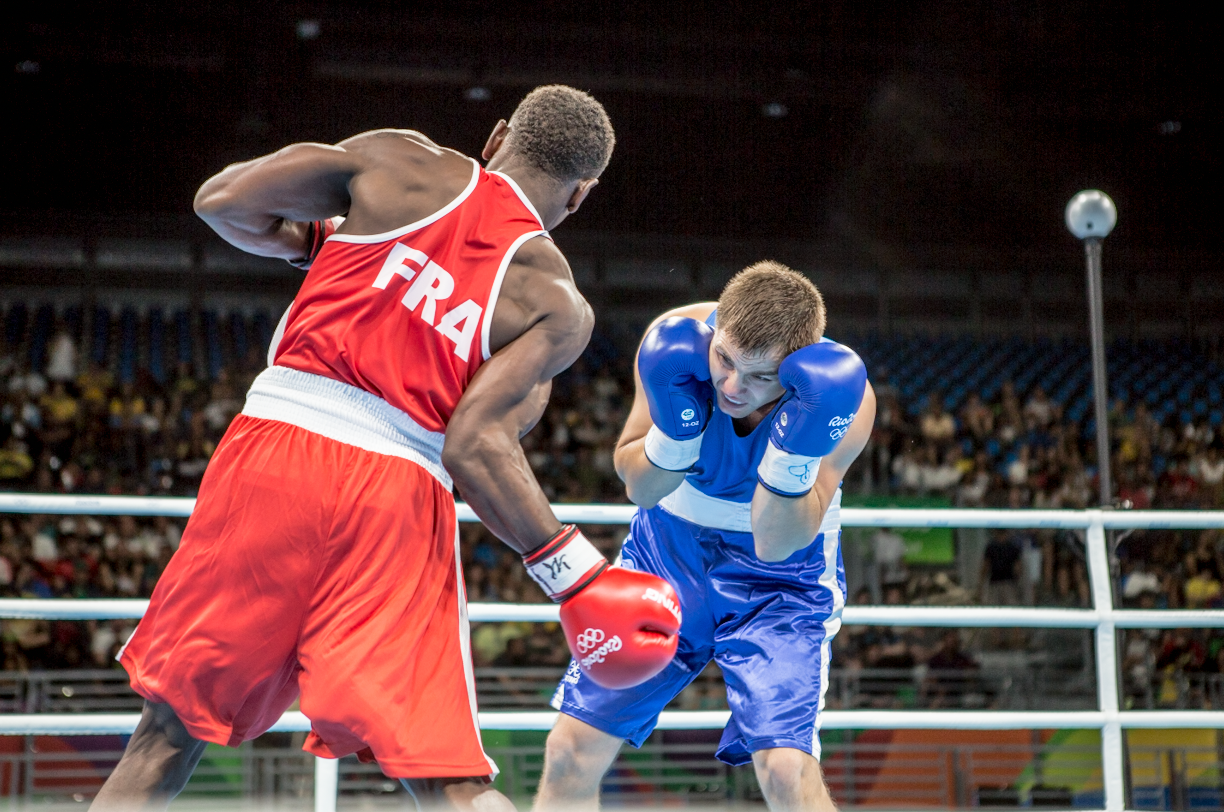
Christian Mbilli will enter Kingdom Arena in Riyadh, Saudi Arabia, on October 31 as the WBC super-middleweight champion. Saúl “Canelo” Álvarez will enter as the challenger attempting to reclaim championship status in the division he once controlled.
That distinction is official, but it does not fully describe the balance of power surrounding the fight.
The WBC elevated Mbilli from interim champion to full champion, making the Canelo fight his first defense of the title. According to the sanctioning body, Mbilli brings an unbeaten record of 29-0-1 with 24 knockouts, while Álvarez enters at 63-3-2 with 39 knockouts.
Mbilli already owns the championship. What he does not yet possess is the defining victory that would make the rest of the super-middleweight division recognize him as its competitive authority.
Beating Canelo would provide it.
This is why the main event is more significant than a routine title defense. Mbilli is not merely protecting a belt against a famous former champion. He is trying to prove that his elevation marked the beginning of a new order rather than an administrative transition between established reigns.
The Riyadh Schedule Begins Hours Before the Main Event
DAZN lists Mbilli–Álvarez as a pay-per-view event, with preliminary coverage scheduled to begin at 9:00 a.m. ET. The main pay-per-view broadcast is scheduled for 12:30 p.m. ET, and the projected ring-walk time for the main event is 4:00 p.m. ET.
That final time should be treated as an estimate. The length of the earlier fights, broadcast pacing and any late changes to the card can affect when Mbilli and Álvarez actually enter the ring.
The October 31 date is itself the result of a postponement. According to The Ring, the fight was originally planned for September 12, but a family matter delayed Álvarez’s training camp. The WBC reported on July 23 that Canelo had confirmed the rescheduled date, and The Ring later reported Turki Alalshikh’s official announcement of the Riyadh event on September 29.
The delay gave the fight a different place on the boxing calendar, but it did not change its central stakes.
Mbilli is making his first defense as full WBC champion. Canelo is attempting to regain a championship at 168 pounds. One man has the title that defines the official matchup; the other has the name, résumé and public recognition that make the title defense meaningful beyond the sanctioning body.
That creates an unusual dynamic.
The champion is the fighter still seeking validation. The challenger is the fighter whose presence supplies it.
Mbilli’s Elevation Gave Him a Title, Not an Easy Position
There is no reason to frame Mbilli as an illegitimate champion. He did not create the WBC’s procedures, and he should not be criticized for accepting the full championship after previously holding the interim version.
The issue is not whether he is officially recognized.
The issue is what the recognition means competitively.
Boxing regularly produces champions through vacancies, elevations and decisions made outside the ring. Those mechanisms are part of the sport’s structure, but they cannot answer every question the public asks about a division. A belt can identify the sanctioned champion without establishing that fighter as the unquestioned man everyone else must chase.
Mbilli now has an opportunity to close that gap in a single night.
His record shows why he belongs in this position. The WBC lists him as unbeaten through 30 professional fights, with 24 knockout victories. Those numbers establish experience, consistency and finishing ability. They do not need to be inflated with invented rankings or unsupported claims about where he belongs among boxing’s best.
Canelo is the measuring stick because of what defeating him would represent now.
A victory would validate Mbilli’s championship status against the most recognizable elite opponent available to him at super middleweight. It would transform his first defense into the result that defines his reign. It could also establish him as a proven headliner rather than simply the fighter who inherited a larger designation from a sanctioning body.
That is an enormous opportunity, but it also creates pressure.
Mbilli is not being asked merely to look competitive. If he wants the division to reorganize around him, he must produce the kind of performance that makes his authority difficult to dispute.
Canelo Is Fighting to Prove the Division Still Runs Through Him
Canelo’s position is almost the reverse.
He does not need this fight to establish his career accomplishments. One result against Mbilli cannot create or erase the body of work that made Álvarez one of boxing’s defining figures. What he needs is proof that his relevance at super middleweight remains active rather than historical.
Regaining the WBC title would accomplish that.
A Canelo victory would restore him to championship status at 168 pounds and reinforce the argument that the division still runs through him, regardless of who carried the belt into Riyadh. It would also prevent Mbilli’s elevation from developing into a lasting transfer of authority.
That is why this fight cannot be reduced to champion versus challenger in the simplest sense.
Mbilli owns the title, but Canelo carries the established status. Mbilli has the unbeaten record, but Canelo has the opportunity to show that experience at the highest level still separates him from the new champion. Each man possesses something the other is trying to claim.
For Mbilli, it is recognition.
For Canelo, it is restoration.
A convincing Mbilli victory would tell the division that the belt and the competitive power now belong to the same fighter. A Canelo victory would suggest that Mbilli’s championship reign was a transitional chapter rather than the foundation of a new era.
The fight itself is the only evidence capable of settling that tension.
A Mbilli Victory Would Change the Present, Not Rewrite the Past
If Mbilli defeats Canelo, the significance should not be minimized because of how he initially received the full title.
He would no longer be defined primarily as an elevated champion. He would be a champion who successfully defended against the division’s most recognizable established figure. The distinction between receiving a championship designation and proving worthy of it would become much harder to maintain.
That does not mean one victory would settle every argument surrounding super middleweight.
It would not determine every future matchup, permanently resolve every ranking debate or guarantee that Mbilli defeats every other leading fighter at 168 pounds. It also would not diminish Canelo’s previous accomplishments or allow the present result to rewrite the challenger’s career.
What it would do is establish Mbilli’s authority now.
Boxing too often treats major victories as either meaningless or absolute. The truth usually sits between those extremes. Mbilli beating Canelo would not answer every possible question about the division, but it would answer the most important immediate one: whether the WBC champion can defeat the established elite opponent whose shadow still hangs over the weight class.
That answer could change how Mbilli is promoted, how future opponents approach negotiations and how the public evaluates his reign. It would give him something no elevation could provide—a result carrying his own signature.
Canelo, meanwhile, can prevent that transition by taking the championship back in the ring.
That possibility is what makes the matchup credible as a test rather than ceremonial as a defense.
The Undercard Still Carries an Unresolved Opponent Change
DAZN’s current main-card listing includes Jaime Munguia against Nikita Zon, Rafael Espinoza against Ricardo Blandon and Raymundo Rojas against Reito Tsutsumi.
The Espinoza matchup requires qualification.
An October 27 WBC preview listed Lorenzo Parra as Espinoza’s opponent, while DAZN’s later event information listed Ricardo Blandon. Because DAZN provides the newer broadcaster listing, Blandon should be treated as the current scheduled opponent. That does not make the change unquestionably final, especially with the event so close and the two published listings in conflict.
The discrepancy is another reminder that boxing cards can remain fluid until fight night. DAZN’s schedule represents the most current available broadcast information, but viewers should still check the final lineup before the preliminary coverage begins.
Other information also remains unavailable in the reviewed reporting. No verified purse figures have been published, and there is no confirmed information establishing possible pay-per-view shares. Official weigh-in results were also not available in the supplied research.
Those gaps should remain gaps unless credible reporting fills them.
There is no need to invent financial figures, repeat speculation as fact or publish unofficial weights without attribution. The verified story is already strong enough: an unbeaten WBC champion is making his first defense against Canelo Álvarez, and the result could determine whether super middleweight has entered a new era or returned to a familiar one.
LET’S TALK ABOUT IT
If Christian Mbilli beats Canelo Álvarez, should he be recognized as the clear new authority at super middleweight?
Does an elevated champion need a victory over an established elite opponent before the public fully accepts the reign?
Outlets cited in this story
- The Ring
- DAZN
Spot an error? Send a correction. We fix mistakes in the open.