
Daniel Dubois and Fabio Wardley Hit Career-High Weights — But the Champion Still Has to Prove He Can Control the Fight

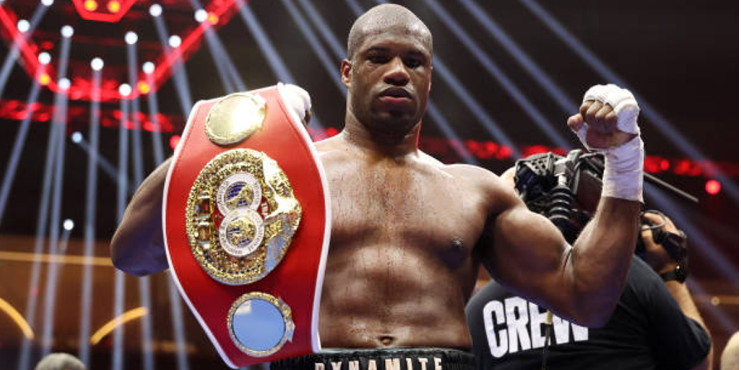
Daniel Dubois already proved he can survive Fabio Wardley. On Saturday night, he must prove he can control him.
Dubois will defend the WBO heavyweight championship against Wardley on October 17 at The O2 in London, five months after overcoming two early knockdowns and stopping Wardley in the 11th round. The result gave Dubois the title, but the route he took to victory left an obvious question behind: Was the disastrous beginning an isolated failure he has since corrected, or will Wardley be able to drag him into another crisis?
Both heavyweights added another variable at Friday’s weigh-in. Sky Sports and Boxing News recorded Dubois at a career-high 253.9 pounds and Wardley at a career-high 248.3 pounds. ESPN also reported that both fighters reached the heaviest weights of their careers ahead of the rematch.
The numbers will attract immediate speculation about punching power, conditioning and intent. They do not provide answers by themselves. The more important issue remains whether Dubois can prevent Wardley from establishing the aggression that nearly ended their first fight before the champion had an opportunity to take control.
Dubois won the championship in May. The rematch will help determine what kind of champion he intends to become.
Dubois Won the First Fight After Losing Control of the Beginning
BBC Sport reported that Wardley dropped Dubois in the first and third rounds when they met on May 9. For a heavyweight expected to impose himself physically, Dubois instead found himself trying to recover almost immediately.
Wardley’s early success established that his threat was real. He did not merely enter the first fight as an aggressive challenger with knockout intentions; he turned that aggression into two knockdowns within three rounds. Dubois was forced to demonstrate resilience before he could begin demonstrating command.
What followed deserves proper credit.
Dubois remained in the fight, recovered from the knockdowns and extended Wardley into the later rounds. He eventually stopped him in the 11th, capturing the WBO championship after surviving the kind of start that ends many heavyweight fights.
That comeback showed composure, durability and finishing ability. It also prevented the early defensive failures from becoming the complete story of the night.
It did not erase them.
A champion can be praised for surviving adversity while still being questioned for creating—or failing to prevent—the conditions that made such a recovery necessary. Dubois proved he could rescue a fight against Wardley. He has not yet proved that he can manage Wardley from the opening bell without first being pushed toward defeat.
That distinction gives this rematch its real meaning. Dubois is not being asked only to repeat the official result. He is being asked to produce a performance that looks more sustainable for a defending champion.
The Career-High Weights Create Questions, Not Conclusions
The final weigh-in and face-off took place Friday at Spitalfields Market in London, according to Sky Sports. Dubois registered 253.9 pounds, while Wardley came in at 248.3.
Boxing News reported that Dubois weighed 251.75 pounds before their first meeting and Wardley weighed 242 pounds. That means Dubois has added 2.15 pounds, while Wardley has added 6.3 pounds.
Wardley’s increase is the more noticeable of the two, but the scale cannot explain why either man is heavier or how those pounds will function once the fight begins. A career-high weight is not automatic evidence of improved strength, reduced speed, greater punching power or poor conditioning.
It is simply a new variable.
Wardley may believe the additional size will help him apply more physical pressure, strengthen his position in exchanges or make his attacks more damaging. Dubois may want greater authority when Wardley closes the distance. Those are reasonable tactical possibilities, but the reviewed reports do not establish either explanation as fact.
The later rounds could make the numbers more significant. Their first fight lasted into the 11th, meaning both men have already experienced the demands of an extended heavyweight contest against each other. If the rematch follows a similar path, movement, recovery and energy management will matter as much as whatever physical benefit the added weight provides.
Wardley’s 6.3-pound increase will therefore be examined closely if he again begins at a high pace. His problem in May was not an inability to hurt Dubois. He proved he could do that almost immediately. His problem was converting early dominance into a completed victory and remaining effective long enough to prevent Dubois from taking over.
Dubois faces the opposite question. His modest increase may have little visible effect, but his defensive choices should be apparent quickly. The champion cannot assume that his ability to recover once guarantees he can survive the same danger again.
Heavyweight boxing allows little room for that kind of confidence.
Wardley Wants Destruction, but He Needs Sustained Execution
Boxing News quoted Wardley describing his approach to the rematch as “seek and destroy.” He also predicted that he would win by knockout.
That mentality is consistent with what worked for him in May. Wardley created immediate pressure, found openings and put Dubois on the canvas twice. He has direct evidence that aggression can unsettle the champion.
He also has direct evidence that early success will not be enough.
Wardley’s task is more complicated than simply reproducing the opening three rounds. He must manage the entire fight more effectively, adjust when Dubois begins recovering and preserve enough discipline to turn momentum into a finish. Dropping Dubois again would be significant, but it would not settle the contest unless Wardley can prevent another recovery.
Dubois, meanwhile, told Boxing News that he knows what to expect and is “ready to go to war.” His familiarity with Wardley should help, but accepting another war may not be the strongest demonstration of progress.
Dubois already showed that he can endure disorder. What he needs now is evidence that he can impose structure.
That means cleaner defense early, fewer uncontrolled exchanges and better recognition of the attacks that caused him trouble in May. It means making Wardley pay for aggressive entries instead of allowing the challenger to build immediate confidence. Most importantly, it means forcing Wardley to react to the champion rather than allowing Wardley to establish the terms of the fight.
Promoter Frank Warren told Sky Sports that both men can punch and predicted the rematch would not go the distance. That is Warren’s opinion, not a confirmed outcome. Their first meeting supports the expectation of danger, but it also showed why a heavyweight fight cannot be reduced to predictions based on power.
Wardley produced the first major moments. Dubois produced the final one.
The rematch will reveal which fighter has made the more useful adjustments between those two points.
A Victory Alone May Not Answer Every Question About Dubois
Dubois remains the defending WBO champion regardless of how dramatically he had to recover to win the belt. The knockout is part of the record, and Wardley must overturn it if he wants the championship.
But not every victory carries the same meaning.
A controlled Dubois performance would strengthen his standing because it would show that he learned from the two knockdowns rather than merely survived them. If he defends more responsibly, dictates the exchanges and prevents Wardley from building another early lead, the rematch will look like the development of a champion rather than the repetition of a crisis.
Another comeback victory would still count. It would also preserve familiar doubts.
If Dubois is badly hurt or dropped early again before recovering to win, the result would confirm his resilience without fully resolving concerns about his vulnerability. A champion cannot expect every future opponent to lose control of a fight after gaining such a major advantage.
Wardley has just as much to prove. He does not need to demonstrate that he can threaten Dubois; that evidence already exists. He needs to show that his threat can last, that his aggression can remain organized and that he can respond when the champion survives the first attack.
The career-high weights do not change those responsibilities. Dubois still must correct the defensive failures that put him down twice. Wardley still must sustain his success beyond an explosive beginning. Neither man can place the burden of proof on the scale.
The fight itself is the evidence that matters.
The reviewed reports do not disclose either fighter’s guaranteed or potential purse, so there is no verified financial figure to attach to the stakes. Competitively, however, the consequences are clear. Dubois is defending both the WBO championship and the credibility of his improvement. Wardley is trying to prove that the first fight revealed a path to victory rather than his inability to complete one.
LET’S TALK ABOUT IT
Does Daniel Dubois need a cleaner, more controlled victory to establish himself as a convincing WBO champion, or did surviving two knockdowns and stopping Fabio Wardley already answer the most important questions?
And which career-high weight concerns you more: Dubois at 253.9 pounds or Wardley at 248.3?
Outlets cited in this story
- Boxing News
- Sky Sports
- BBC Sport
- ESPN
Spot an error? Send a correction. We fix mistakes in the open.