Daniel Dubois and Fabio Wardley Trade Pre-Fight Assessments — But Adjustments Will Decide the Rematch
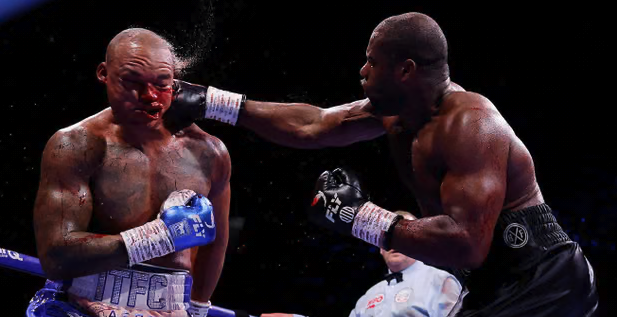
Daniel Dubois and Fabio Wardley already know what the other man can do.
Wardley knows he can reach Dubois with the overhand right because he dropped him twice when they first met on May 9. Dubois knows he can survive that early danger, impose sustained pressure and eventually stop Wardley because he did exactly that 28 seconds into the 11th round.
Now, with their WBO heavyweight-title rematch scheduled for October 17 at The O2 in London, the buildup has become a contest between two interpretations of the same fight.
Carl Froch believes Dubois’ strong finish established a genuine advantage that will carry into the rematch. Wardley believes the early knockdowns exposed a reaction he can force again. Both assessments are supported by evidence from the first bout, but neither settles the question that matters.
This rematch will not be decided by which side tells the more convincing story about confidence. It will be decided by whether Dubois can protect himself against Wardley’s overhand right and whether Wardley can counter the champion’s jab without remaining in position for the punishment that stopped him last time.
Froch Believes Dubois Established the Clearer Advantage
Speaking on his YouTube channel, Froch backed Dubois to repeat his first victory. Boxing News reported that the former super-middleweight champion believes Dubois has “an extra 10% over Wardley” and will enter the rematch with greater confidence after surviving two knockdowns and producing the stoppage.
Froch’s argument is straightforward. Wardley created dramatic moments early, but Dubois was the fighter who finished strongly. He recovered from adversity, continued applying pressure and inflicted enough punishment to end the contest in the opening seconds of the 11th round. Froch expects that experience to matter psychologically and physically when the two heavyweights share a ring again.
He also predicted that Wardley would “probably get stopped again.”
There is logic behind that position. Dubois does not have to imagine whether he can recover after Wardley lands cleanly. He has already done it. He also knows that his pressure and offense remained effective deep into the fight, while Wardley was unable to convert his early success into control over the full contest.
The champion enters the rematch with the official result, the belt and the memory of being the stronger finisher.
But Froch’s prediction is still an assessment rather than an established outcome. A stoppage victory proves that Dubois won the first fight. It does not prove that the second must follow the same pattern, especially when the first contest also exposed a serious defensive problem.
Dubois may have finished with authority, but he had to survive two knockdowns before he could reach that point.
That is not a detail Wardley is willing to dismiss.
Wardley Believes the Overhand Right Exposed Something Repeatable
During a DAZN face-off, Wardley focused on the third-round knockdown and Dubois’ response to the overhand right. As reported by BoxingNews24, Wardley said Dubois backed up and “chose to take a knee” after the punch landed.
Wardley interprets that moment as evidence that enough pressure can force Dubois into the same reaction again. He is not simply arguing that he hurt the champion once. He believes he identified a vulnerability that can become the foundation of his rematch strategy.
Wardley also said he intends to counter immediately behind Dubois’ jab in an effort to make the champion hesitant to use it.
That plan addresses one of the most important exchanges in the matchup. Dubois’ jab can establish his range, interrupt Wardley’s attacks and create openings for heavier punches. If Wardley can time the jab and send the overhand right over it, he can turn one of Dubois’ primary weapons into a predictable trigger.
The risk is what happens after Wardley counters.
Landing the first punch in an exchange does not guarantee control of the exchange. If Wardley remains in front of Dubois after throwing the overhand right, he may still be available for the champion’s return fire. That becomes more dangerous if Wardley has to reach, square his feet or commit himself heavily to getting around the jab.
His challenge is not merely to land the punch that worked in May.
It is to land it while preserving his defense, controlling the distance and preventing Dubois from turning the exchange into another prolonged physical battle.
Wardley’s psychological language may attract attention during fight week, but his tactical idea deserves more serious consideration. He has already shown that the overhand right can reach Dubois. What remains uncertain is whether he can build an entire winning performance around that success.
The First Fight Provided Evidence for Both Men
According to BoxRec, Wardley weighed 242 pounds for the first contest, while Dubois entered at 252 pounds. The fight took place at Manchester’s Co-op Live Arena, with Howard Foster serving as the referee.
BoxRec records knockdowns of Dubois in rounds one and three before listing his victory by technical knockout at 28 seconds of round 11. BBC Sport reported that the result was Wardley’s first professional defeat.
Those facts explain why both camps can leave the first fight believing they possess something decisive.
Wardley has proof that he can hurt Dubois early. One knockdown can occasionally be dismissed as a moment of poor balance, surprise or imperfect positioning. Two knockdowns create a more substantial tactical warning. Dubois was repeatedly vulnerable to an attack Wardley believes he can reproduce.
Dubois, however, has proof of something broader. He recovered, remained functional and gradually imposed the kind of punishment Wardley could not withstand. His advantage was not confined to one isolated exchange. It developed as the fight progressed and ultimately produced the result.
The distinction matters.
Wardley’s best evidence comes from his ability to create immediate danger. Dubois’ best evidence comes from his ability to survive that danger and take over the contest. One man demonstrated that he could disrupt the fight early; the other demonstrated that he could control how it ended.
BBC Sport reported that Wardley activated his contractual right to an immediate rematch after the loss. Queensberry Promotions later announced the October 17 return at The O2, where Dubois will defend the WBO heavyweight title.
The rematch clause gives Wardley an immediate opportunity to correct what went wrong, but it also denies him the benefit of a rebuilding fight in which to test major changes under competitive conditions. Whatever adjustments he and his team have developed must work against the same champion who punished him in May.
Dubois faces a different problem. Winning can create false reassurance if the result overshadows the danger that preceded it. He cannot assume that recovery will always be available simply because he survived the first time.
The knockdowns and the stoppage both matter.
Neither should be used to erase the other.
Dubois Must Make His Jab Safer
Dubois’ jab should remain central to his approach, but it cannot become an invitation.
If Wardley is waiting to counter immediately over or around it, Dubois must vary its timing, speed and purpose. A jab thrown from the same position at the same rhythm gives Wardley the opportunity to anticipate rather than react. Once Wardley recognizes the trigger, the overhand right becomes easier to launch with commitment.
Dubois can reduce that danger by changing the look of the jab. He can feint before throwing it, double it, direct it toward the body or use it while moving rather than remaining set in front of Wardley. The objective is not simply to land more jabs. It is to prevent Wardley from knowing exactly when the opening will appear.
His positioning after the punch will be equally important. If Dubois leaves his head on the center line or pulls straight back with his guard compromised, Wardley will have a familiar target. If he finishes the jab with defensive responsibility and moves away from Wardley’s preferred countering lane, he can make the overhand right more difficult to land cleanly.
Dubois also has to resist the temptation to treat his ability to recover as a permanent safety net.
His first-fight resilience deserves credit, but heavyweights do not receive unlimited opportunities to survive clean power punches. Another early knockdown could change the pace, confidence and physical condition of the rematch before Dubois has time to establish the pressure that worked in May.
The champion’s task is to reach his strongest phase of the fight without first giving Wardley the same opportunities.
Wardley Must Turn Early Success Into Sustained Control
Wardley’s responsibility is even more demanding because he must correct the failure that produced the official result.
The first fight showed that hurting Dubois is not enough. Dropping him twice was not enough. Wardley still absorbed the sustained punishment that preceded the stoppage, and any serious plan for the rematch must explain how that changes.
Countering the jab could discourage Dubois from using it freely, but Wardley cannot become so focused on the overhand right that his offense becomes predictable. Dubois now knows which punch caused the greatest problems. He and his team have had an entire camp to prepare specifically for it.
Wardley therefore needs more than a successful counter. He needs control after the counter.
That may mean leaving at an angle instead of remaining directly in front of Dubois. It may mean interrupting the champion’s advances before he can establish his feet. It may also require Wardley to manage his effort more carefully so that his early attacks do not leave him less capable of defending himself when Dubois begins increasing the pressure.
The central question is whether Wardley can preserve the threat that produced two knockdowns while becoming harder to punish in return.
If he can, the rematch may look fundamentally different. If he cannot, another fast start could lead toward the same late problem.
The Rematch Will Show Whether May Established a Hierarchy
A cleaner Dubois victory would strengthen Froch’s position that the champion owns a genuine advantage over Wardley. If Dubois neutralizes the overhand right, controls the jab and produces another stoppage without surviving the same early crisis, the first result will look less like a difficult escape and more like the beginning of a clear hierarchy.
A Wardley victory built around the overhand right would validate his belief that the knockdowns revealed an exploitable weakness. It would also show that his first-fight failure was not finding the opening, but failing to convert that opening into a complete performance.
There is also a third possibility.
The rematch may develop into a substantially different fight because both men have been forced to prepare for specific evidence rather than an unfamiliar opponent. Dubois knows exactly which punch he must take away. Wardley knows exactly what happens if he allows the champion to remain close enough to apply sustained punishment.
The first fight settled one contest.
October 17 will determine whether it settled the matchup.
LET’S TALK ABOUT IT
Did Dubois’ late stoppage establish him as the clearly superior heavyweight, or did Wardley’s two knockdowns reveal a weakness capable of deciding the rematch?
Which adjustment matters more at The O2: Dubois taking away Wardley’s overhand right, or Wardley countering the champion’s jab without getting caught by the return fire?
Outlets cited in this story
- BoxingNews24
- Boxing News
- BBC Sport
- DAZN
Spot an error? Send a correction. We fix mistakes in the open.