Daniel Dubois Settles the Fabio Wardley Rivalry — Now He Must Prove He Can Rule
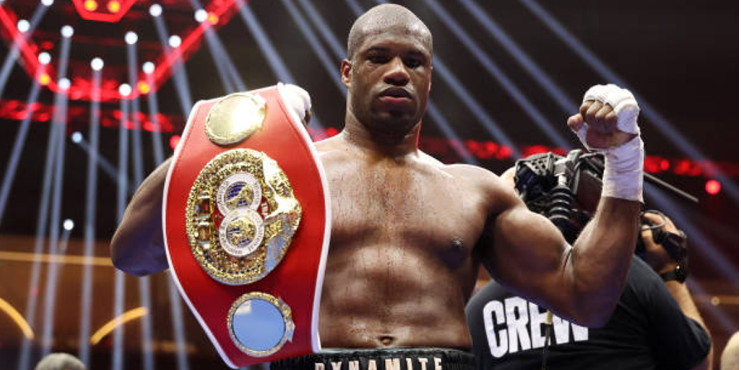
Daniel Dubois did more than retain his WBO heavyweight title against Fabio Wardley. He answered the questions their first fight had left behind.
Five months after surviving two knockdowns and stopping Wardley in the 11th round, Dubois transformed a difficult rivalry into a demonstration of control. He dropped Wardley inside the opening 20 seconds, kept him under sustained pressure and forced trainer Ben Davison to throw in the towel during the second round at London’s O2 Arena on October 17.
Fight Sports reported that referee Steve Gray stopped the contest at 2:21 of Round 2. The Ring records the official result as a second-round technical knockout for Dubois, who improved to 24-3 with 23 knockouts. Wardley fell to 20-2-1 with 19 knockouts.
The first fight proved Dubois could recover from adversity. The rematch proved he could prevent that adversity from developing in the first place.
That distinction matters. Wardley had already demonstrated that he could hurt Dubois, disrupt him and force the more experienced heavyweight into a prolonged battle. Dubois entered the rematch as the champion, but he still had something to settle against the opponent who had dropped him twice before losing.
He settled it emphatically.
Dubois Turned a Difficult Rivalry Into a One-Sided Fight
Their first meeting on May 9 showed both the danger surrounding Dubois and the resilience within him. Wardley knocked him down twice before Dubois recovered, took control and secured an 11th-round stoppage to win the WBO heavyweight title.
The result gave Dubois the championship, but it did not erase the sight of him on the canvas. Wardley had exposed vulnerabilities even in defeat, creating a legitimate reason for a rematch and a serious question about whether the second fight would follow the same punishing pattern.
It did not.
According to Boxing News, Dubois landed the right hand that dropped Wardley inside the opening 20 seconds. Instead of giving Wardley time to recover, regain his composure or begin forcing exchanges, Dubois continued advancing and kept the challenger under pressure until Davison intervened in the second round.
Dubois did not need another comeback because he never surrendered control.
The physical dimensions offered no obvious explanation for such a dramatic difference. Boxing News reported that Dubois weighed 253.9 pounds at the official weigh-in, while Wardley came in at 248.3 pounds. Both arrived as fully established heavyweights with significant knockout records. What changed inside the ring was the authority with which Dubois imposed himself.
It would be irresponsible to invent camp adjustments that have not been documented. The performance itself, however, demonstrated visible tactical and psychological improvement. Dubois began decisively, found the opening for his right hand and responded to early success with controlled pressure rather than hesitation.
In May, he had to prove he could survive Wardley.
In October, Wardley was never given the opportunity to build momentum.
Heavyweight Rivals Saw a Demolition — and a Troubling Wardley Performance
The reaction from other prominent heavyweights and former champions reflected two different ways to interpret the fight. Some focused on Dubois’ destructive finish. Others concentrated on how poorly Wardley handled the champion’s attack.
Tyson Fury praised Dubois in a social-media video reported by Boxing News. Fury then used the result to predict that he would knock out Anthony Joshua. That Joshua claim should be understood for what it is: promotional opinion from a fighter speaking about another potential heavyweight matchup, not a confirmed outcome supported by Dubois’ victory.
Dubois beating Wardley does not establish what Fury would do against Joshua. Fury’s reaction still captures the immediate impression created by the champion’s performance. Dubois looked forceful, composed and dangerous enough to generate wider discussion about where his power belongs in the heavyweight hierarchy.
Tony Bellew’s response was even more revealing because he had predicted Wardley would win. In a post reported by Boxing News, Bellew described Dubois’ performance as a “Demolition.”
That was an accurate description of the action, but Carl Froch looked more closely at why it became so one-sided.
Speaking to his YouTube audience, Froch criticized Wardley for fighting with his chin high, pawing with his jab and repeatedly looking away while attempting to defend himself. Those habits are Froch’s technical assessment, but they match the larger problem visible in the fight: Wardley never appeared settled enough to manage Dubois’ pressure after the early knockdown.
Froch also suggested that the first fight may have taken too much out of Wardley. Filip Hrgovic raised a similar concern, telling reporters that Wardley did not look good from the beginning and arguing that the rematch came too soon after the punishment Wardley absorbed in May.
Those concerns deserve consideration, particularly after two stoppage defeats in five months. They should not be presented as medical conclusions. No cited medical finding has established that lingering damage from the first fight caused Wardley’s performance in the rematch.
Wardley may have been affected by the previous fight. He may also have produced a poor defensive performance against a champion who began faster and punished his mistakes immediately. The available reporting does not allow opinion to become diagnosis.
What can be established is that Dubois recognized the openings and exploited them without mercy.
The Victory Strengthens Dubois Without Settling the Division
Dubois now owns two stoppage victories over Wardley, achieved under completely different circumstances.
The first victory demonstrated recovery, endurance and the ability to keep fighting after being hurt. The second demonstrated immediate command. Taken together, the two results give Dubois a complete victory in the rivalry rather than merely a favorable record.
There is no serious competitive argument for a third fight now.
Wardley had his success in May, but Dubois survived it and stopped him. When Wardley received another opportunity, Dubois overwhelmed him in less than two rounds. The champion corrected the problems that had made the first fight dangerous while Wardley appeared less equipped to handle the same opponent.
That changes the way Dubois should be viewed. He is not simply a titleholder who escaped a difficult championship fight. He is a WBO champion who returned against the man who exposed him and produced a far more decisive result.
What the victory does not do is establish Dubois as the heavyweight division’s leading champion.
Wardley’s defensive performance was too poor, and the rematch was too brief, to answer every question about Dubois at the highest level. The result does not show how he would respond if another elite heavyweight survived his opening pressure, forced him backward or made him operate through difficult later rounds. It does not prove that the vulnerabilities exposed in May have disappeared against every possible style.
It also does not confirm what happens next for either fighter. No verified purse figures were included in the cited reporting, and any projections about future sanctioning-body rankings would be speculation until the organizations publish their decisions.
For Wardley, consecutive stoppage defeats make the next move especially important. His team must decide when he should return, what level of opponent is appropriate and whether technical changes are required. Froch and Hrgovic have offered explanations for what they saw, but Wardley’s future cannot be built around outside commentary alone.
For Dubois, the path forward should be more ambitious.
Filip Hrgovic Can Answer the Bigger Question
Dubois used his post-fight press conference to call for another meeting with IBF champion Filip Hrgovic. According to Boxing News, Dubois wants the opportunity to add the IBF belt, while Hrgovic has also expressed interest in the matchup.
Interest is not an agreement.
No unification fight has been officially announced, and important obstacles remain unresolved. The WBO and IBF would need to approve the relevant championship arrangements, while the question of whether Hrgovic must first defend against IBF mandatory challenger Frank Sanchez could affect the schedule.
If those issues can be resolved, Hrgovic is the right opponent for the next stage of Dubois’ career.
A unification fight would require Dubois to carry the authority he showed against Wardley into a matchup with another reigning champion. It would also give him a chance to prove that his development applies beyond one familiar opponent whose weaknesses he had already experienced across 13 rounds.
Dubois no longer needs another Wardley fight to explain himself. He needs a contest that expands the argument for his place in the division.
Beating Hrgovic for a second belt would not automatically settle every debate in heavyweight boxing, but it would move Dubois from defending his position to building a genuine championship reign. It would test whether the controlled aggression displayed at the O2 can remain effective against a different opponent with his own physical strengths, confidence and championship ambitions.
The Wardley rematch delivered closure.
A Hrgovic unification could deliver elevation.
LET’S TALK ABOUT IT
Did Dubois’ dominant rematch performance erase the concerns created when Wardley dropped him twice in their first fight, or must he show the same authority against another elite heavyweight?
Should Dubois face Hrgovic in a unification fight next, or must the IBF mandatory situation involving Frank Sanchez be resolved first?
Outlets cited in this story
- Boxing News
- The Ring
Spot an error? Send a correction. We fix mistakes in the open.