Daniel Dubois Wants Moses Itauma Soon — Before Another British Heavyweight Rivalry Goes Stale

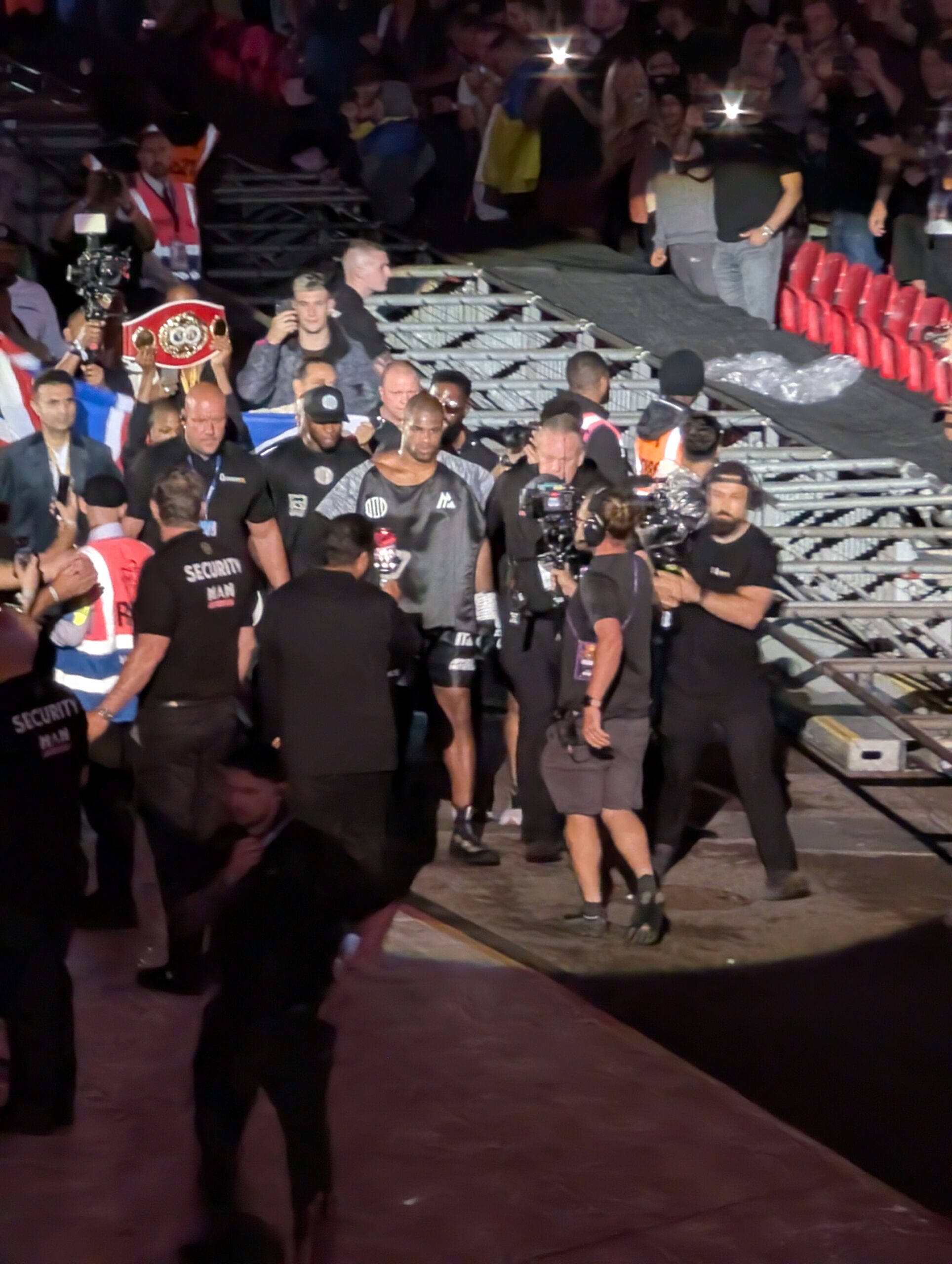
Daniel Dubois wants to fight Moses Itauma, and he does not want British boxing to spend years protecting the possibility until the moment loses its edge.
Speaking to Sky Sports, the WBO heavyweight champion said he would prefer to face Itauma “sooner,” pointing to the long-delayed meeting between Tyson Fury and Anthony Joshua as a warning. His argument is simple: if two leading British heavyweights appear to be moving toward each other, boxing should not assume the same sporting and cultural interest will survive indefinitely.
That does not mean Dubois-Itauma is close to happening. No agreement, date or formal negotiation has been announced. Itauma has not been cited in the available reporting saying he wants Dubois next, while Queensberry Promotions—which represents both fighters—has not committed to making the matchup.
For now, it is a compelling idea with a champion publicly supporting it.
The timing makes that support significant. Dubois strengthened his position by stopping Fabio Wardley in the second round of their October 17 rematch and retaining the WBO title, according to Sky Sports. Itauma, meanwhile, is preparing to rebuild after Filip Hrgovic stopped him in the ninth round of their August 29 IBF heavyweight title fight, handing him his first professional defeat.
Those results have placed the two heavyweights on different tracks. Dubois is defending his position at the top of the division. Itauma must prove that his loss was a correctable setback rather than evidence that his development needs more time.
Dubois believes those tracks could still meet—and that boxing should not wait too long to find out what happens when they do.
Dubois Is Publicly Accepting the Risk
Dubois told Sky Sports that he wants “anyone that can give me a challenge” and that he is interested in facing the toughest opponents available. Itauma fits that idea because his first defeat did not erase the talent or promise that carried him into a world-title fight.
Dubois also said he believes Itauma can return to title contention. That matters because his comments are not built around dismissing a wounded rival or treating Itauma as an easy option after the Hrgovic loss. Dubois is presenting him as a dangerous heavyweight whose career can recover.
In practical terms, Dubois is publicly accepting the concept of a future fight before Itauma’s rebuild has produced its answers.
That is different from a promoter mentioning two fighters as a long-term possibility. Champions regularly say they will face anyone, but Dubois has identified Itauma specifically and connected the matchup to one of British boxing’s clearest lessons about delay. Fury and Joshua spent years linked to a fight that appeared capable of defining their era, yet the sport repeatedly failed to deliver it when both men’s positions made it most valuable.
Dubois does not want his rivalry with Itauma managed under the same assumption that tomorrow will always offer a bigger opportunity.
His comments do not establish that a fight is being negotiated, and they do not tell us whether Itauma shares his preferred timetable. They do, however, remove one potential question from the discussion: Dubois is not publicly asking Queensberry to keep Itauma away from him.
The champion appears willing to find out whether Itauma belongs at that level.
Itauma’s First Defeat Changed the Calculation
Before the Hrgovic fight, Itauma could be discussed as a rapidly advancing heavyweight moving toward the biggest contests available. After being stopped in the ninth round, the immediate issue is no longer how quickly he can reach the top. It is how effectively he can respond to the first professional defeat of his career.
Sky Sports reported that Hrgovic stopped Itauma in their IBF heavyweight title fight on August 29. That result did more than place a loss on Itauma’s record. It created questions about what went wrong, what must change and how aggressively Queensberry should match him during his return.
Promoter Frank Warren told Sky Sports that Itauma was expected to have a comeback fight in January before Queensberry considered the available scenarios. That is the only publicly outlined next step in the supplied reporting. Itauma’s opponent has not been announced, and Warren has not committed to moving him directly toward Dubois afterward.
A comeback fight is the logical starting point. Itauma needs rounds, confidence and an opportunity to demonstrate that the Hrgovic defeat taught him something useful. The quality of the opponent will reveal how seriously Queensberry intends to test that development.
There is still a major difference between rebuilding a fighter and indefinitely protecting a future attraction.
Boxing 24/7 has suggested that Queensberry could delay Dubois-Itauma for several years, presumably allowing Itauma time to recover while the matchup gains commercial value. That is analysis, not a confirmed promotional plan. Warren has not announced that the fight will be held back for a specific period, and neither camp has publicly described a long-term agreement.
The concern is still reasonable because boxing has repeatedly treated major fights as assets that become more valuable simply by remaining unmade. Sometimes that patience works. In other cases, one fighter loses, promotional circumstances change or the audience becomes tired of waiting.
Itauma should not be rushed into a dangerous assignment merely because Dubois has called for it. But his loss to Hrgovic should not automatically place every meaningful opponent years away either.
His January performance could begin showing which approach makes sense.
Dubois Now Holds the Stronger Position
Dubois enters this discussion with more leverage than Itauma.
According to Sky Sports, he stopped Wardley in two rounds in their October 17 rematch and retained the WBO heavyweight title. That victory preserved his championship position and gave any proposed fight with Itauma a different level of importance.
Itauma would not simply be facing another prominent British heavyweight. Depending on the timing and the decisions of the relevant sanctioning bodies, he could be approaching another opportunity at the highest level. Nothing has been announced establishing Dubois-Itauma as a title fight, however, and it would be premature to describe it as one.
The current results still define the competitive picture. Dubois is coming off a successful title defense. Itauma is coming off a stoppage defeat and preparing for a comeback. On that evidence, Dubois is clearly in the stronger position.
That imbalance may be precisely why Queensberry exercises caution.
A promoter responsible for both fighters must consider more than whether the public finds the matchup attractive. Matching them would guarantee that one Queensberry heavyweight loses ground. If Itauma is moved too quickly and suffers another defeat, his return to contention becomes considerably more difficult. If he beats Dubois, Queensberry still retains a leading heavyweight, but the champion’s momentum and title position could be disrupted.
Those are legitimate business and career-management concerns. They are also the kind of concerns that can leave boxing waiting for a supposedly perfect moment that never arrives.
The appeal of Dubois-Itauma comes partly from the uncertainty. Dubois has the stronger recent result and the championship position, but Itauma remains talented enough for the matchup to generate real debate. If Queensberry waits until every risk has been reduced, the fight may become commercially larger—but it may also become competitively obvious, less relevant or impossible to make.
Dubois is arguing that the danger is part of the value.
The January Comeback Should Set the Next Conversation
Itauma’s expected January return is the clearest checkpoint.
The identity of his opponent will matter. A low-risk comeback could help Itauma recover psychologically, but it might reveal little about whether he is ready to pursue another major heavyweight fight. A more demanding opponent would provide better evidence, though it would also expose him to greater risk immediately after his first defeat.
His performance will matter even more.
Itauma must show whether he has corrected the problems Hrgovic exposed and whether he can respond when a fight becomes difficult. The result alone will not answer every question. How he manages the pace, handles resistance and reacts under pressure will help determine whether Dubois belongs in the near-term discussion or remains a longer-term possibility.
Itauma’s own position also needs to be heard. Dubois has expressed interest, but the supplied reporting does not include Itauma publicly calling for the fight on the same timetable. Until he and his team address it, the proposed rivalry remains driven largely by Dubois’ comments and the natural appeal of two British heavyweights promoted by the same company.
Dubois’ next move could change the calculation as well. His next opponent and title-defense date have not been confirmed in the supplied research. Another successful defense could make him more valuable and strengthen his argument for the toughest available opposition. A loss, an injury or a conflicting mandatory obligation could complicate the Itauma discussion before it becomes serious.
That is why Dubois’ warning carries weight.
Boxing cannot control every result or business complication, but it can stop behaving as though appealing fights will remain available on demand. Dubois-Itauma does not have to happen immediately to be treated seriously. It does need a realistic path if everyone involved believes it could become one of Britain’s leading heavyweight contests.
Itauma’s comeback should tell us whether that path can begin in January.
LET’S TALK ABOUT IT
Should Queensberry begin moving toward Daniel Dubois versus Moses Itauma after Itauma’s expected January comeback, or does Itauma need several rebuilding fights before facing the WBO champion?
And is Dubois right that British boxing risks repeating the Fury-Joshua mistake if it waits too long to make another valuable heavyweight rivalry?
Outlets cited in this story
- Sky Sports
Spot an error? Send a correction. We fix mistakes in the open.