David Benavidez Commits to Cruiserweight — And Makes the Division More Important Than a Lost Mega Fight

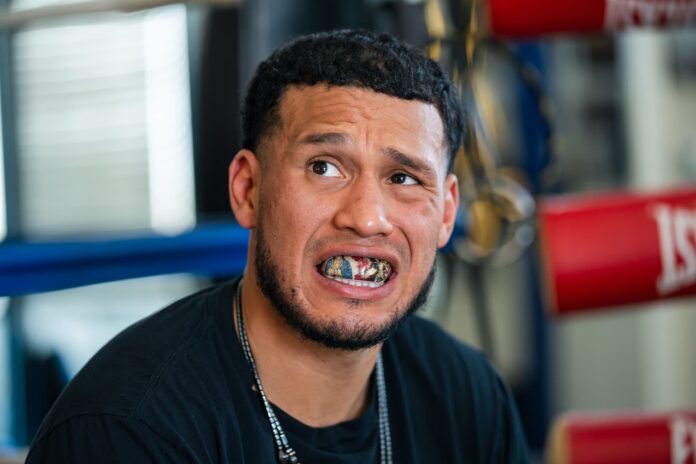
David Benavidez has made the decision that could define the rest of his career. After stopping Gilberto Ramirez in the sixth round on May 2, the unbeaten champion says he intends to remain at cruiserweight rather than return to light heavyweight.
The choice makes potential fights with Dmitry Bivol and Artur Beterbiev considerably less likely while they remain in the lower division. It also creates another obstacle between Benavidez and Saul “Canelo” Alvarez, whose name has followed him through years of speculation, frustration and arguments over why the two never shared a ring.
But describing Benavidez’s decision only as the end of another possible mega fight misses the more important development.
Cruiserweight has gained an unbeaten 32-0 champion with multiple belts, substantial drawing power and an ordered path toward Michal Cieslak and Jai Opetaia. If the sanctioning bodies and promoters follow through, Benavidez could help turn a historically overlooked division into one of boxing’s most meaningful championship races.
He has not conquered cruiserweight yet.
He has, however, given the division a chance to establish a clear leader through actual fights.
Benavidez Says Cruiserweight Is His Long-Term Home
Benavidez told The Ring’s Mike Coppinger that he does not plan to return to light heavyweight, according to Boxing News. He said he felt better during his previous fight, benefited from not cutting as much weight and wants to build a long championship reign at cruiserweight.
His performance against Ramirez gave that ambition immediate credibility.
Premier Boxing Champions reported that Benavidez dropped Ramirez twice before stopping him at 2:59 of the sixth round. The victory secured the WBA and WBO cruiserweight titles, while the WBO currently lists Benavidez as its champion with a 32-0 record.
That was more than a successful experiment in a new weight class. Benavidez defeated an established champion, produced a decisive finish and immediately became one of the central figures in the division.
His explanation for staying there also makes practical sense. Fighters can spend years treating the scale as their first opponent, reducing their bodies to reach a division that may no longer suit them. If Benavidez feels stronger, healthier and more effective without the same weight cut, remaining at cruiserweight could extend his prime rather than limit his opportunities.
There is still a difference between feeling comfortable in one fight and establishing a lasting reign. Benavidez has shown that his pressure and power can carry into the division, but one victory cannot answer every question about how he will perform against its other leading champions.
Ramirez opened the door.
Cieslak and Opetaia could determine how far Benavidez actually walks through it.
The Decision Changes Several Major Fights, but It Does Not Cancel One
Benavidez’s commitment to cruiserweight changes the direction of several conversations that have surrounded his career.
A return to light heavyweight now appears less likely, which reduces the immediate possibility of fights with Bivol or Beterbiev. Those matchups would require Benavidez to reverse his stated plan or require one of those fighters to move up. Neither possibility can be ruled out permanently in boxing, but neither should be treated as the direction Benavidez is currently pursuing.
The Alvarez fight becomes even more difficult to imagine.
For years, Benavidez was discussed as one of the most compelling possible opponents for Canelo. The matchup carried competitive interest, commercial potential and a built-in dispute over whether Benavidez had been unfairly denied his opportunity. Now the weight difference provides another reason for the fight to remain hypothetical.
Still, saying the contest has been formally canceled would go beyond the available evidence. No publicly established signed fight has been presented, and neither camp has jointly announced that an agreement existed and was terminated. Boxing News characterized Benavidez’s decision as taking the Alvarez fight off the table, but that is an assessment based on the growing divisional gap rather than confirmation that a scheduled event has been abandoned.
There is an important distinction between a fight becoming unrealistic and a fight being canceled.
Benavidez’s decision makes Alvarez, Bivol and Beterbiev less relevant to his immediate future. It does not erase the possibility that an extraordinary offer could eventually change his mind, and it does not establish what those fighters would be willing to do.
What it does establish is where Benavidez says his priorities now belong.
The boxing public can continue mourning fights that were never finalized, or it can examine the championship path directly in front of him.
That path may produce something the sport rarely delivers: a logical sequence between leading champions.
Michal Cieslak Is the Next Test, Not a Formality
The World Boxing Council elevated Michal Cieslak to full cruiserweight champion on September 14 and sanctioned a mandatory defense against Benavidez. The organization also ordered the winner of that fight to face Jai Opetaia.
That ruling gives Benavidez an immediate opportunity to strengthen his championship position. It also prevents his cruiserweight campaign from becoming a holding pattern built around recognizable opponents and favorable title defenses.
Cieslak represents another champion and another obstacle.
Boxing News has reported that Cieslak-Benavidez is expected to take place on December 12, but the WBC ruling cited in the report does not confirm a date or venue. Until a promoter or sanctioning body announces those details, the matchup should be treated as an ordered fight rather than a completed event agreement.
That uncertainty matters because boxing’s championship plans often appear straightforward on paper and become complicated in practice. Mandatory obligations, promotional negotiations, broadcast arrangements and competing title requirements can interrupt even the clearest route.
Benavidez’s own title situation still requires clarification. Boxing News reported that the WBA asked him on September 22 to state whether he intended to continue campaigning for its cruiserweight or light-heavyweight title. The available information does not conclusively establish that every light-heavyweight title associated with Benavidez has been formally relinquished or that all sanctioning-body records have been updated.
What is clear is that Benavidez has publicly identified cruiserweight as his intended home.
Beating Cieslak would add substance to that commitment. It would give Benavidez another championship victory in the division and move him closer to the kind of authority that cannot be created through popularity alone.
But Cieslak cannot be treated as a ceremonial stop between Benavidez and a bigger fight. Ordered title bouts are not coronations, and an opponent does not become secondary simply because the more famous fighter attracts greater attention.
Benavidez must win the fight before the division can move to its next stage.
Jai Opetaia Could Help Establish a Clear Cruiserweight Leader
The most significant part of the WBC’s ruling may be what comes after Cieslak.
By ordering the Cieslak-Benavidez winner to face Opetaia, the organization has outlined a sequence capable of reducing the confusion created by scattered title ownership. Benavidez would first need to defeat the WBC champion. The winner would then be required to face another leading cruiserweight in Opetaia.
If those fights happen, the results could create a championship hierarchy based on competition rather than publicity.
Benavidez already possesses several advantages that can shape how the division is presented. He is unbeaten, holds the WBA and WBO titles following the Ramirez victory and brings greater mainstream recognition than cruiserweight champions often receive. His presence can generate attention for opponents who might otherwise struggle to reach the same audience.
None of those advantages automatically makes him the best cruiserweight.
Stopping Ramirez established Benavidez as a legitimate champion in the division. Beating Cieslak would deepen that claim. Defeating Opetaia after that would provide the strongest available competitive argument that Benavidez had separated himself from the other leading titleholders.
That is the difference between entering a division with momentum and ruling it.
The sequence also explains why remaining at cruiserweight may be the right career decision even if it costs Benavidez more glamorous possibilities elsewhere. A Canelo fight would almost certainly command more general attention, while meetings with Bivol or Beterbiev would connect Benavidez to the most important recent light-heavyweight storylines.
At cruiserweight, however, Benavidez has the opportunity to build something around himself.
He can defend major championships, pursue another title and potentially participate in the fight that settles the division’s leadership. That may prove more valuable to his legacy than continuing to wait for famous opponents whose plans do not align with his own.
The opportunity is real, but it remains conditional.
A loss to Cieslak would immediately change the direction of the division. A prolonged delay could leave its championship picture fragmented. Failure to produce the ordered Opetaia fight would turn a promising sequence into another example of boxing announcing clarity without delivering it.
The next fight will provide more useful evidence than any debate over which hypothetical matchup Benavidez has sacrificed.
LET’S TALK ABOUT IT
Does David Benavidez already deserve to be viewed as cruiserweight’s leading fighter after stopping Gilberto Ramirez, or must he beat Michal Cieslak and Jai Opetaia before making that claim?
And is remaining at cruiserweight the right career decision, even if it makes fights with Canelo Alvarez, Dmitry Bivol and Artur Beterbiev far less likely?
Outlets cited in this story
- Boxing News
- The Ring
Spot an error? Send a correction. We fix mistakes in the open.