Deontay Wilder and Jai Opetaia Agree to Fight — But the Crossroads Clash Is Still Unsigned

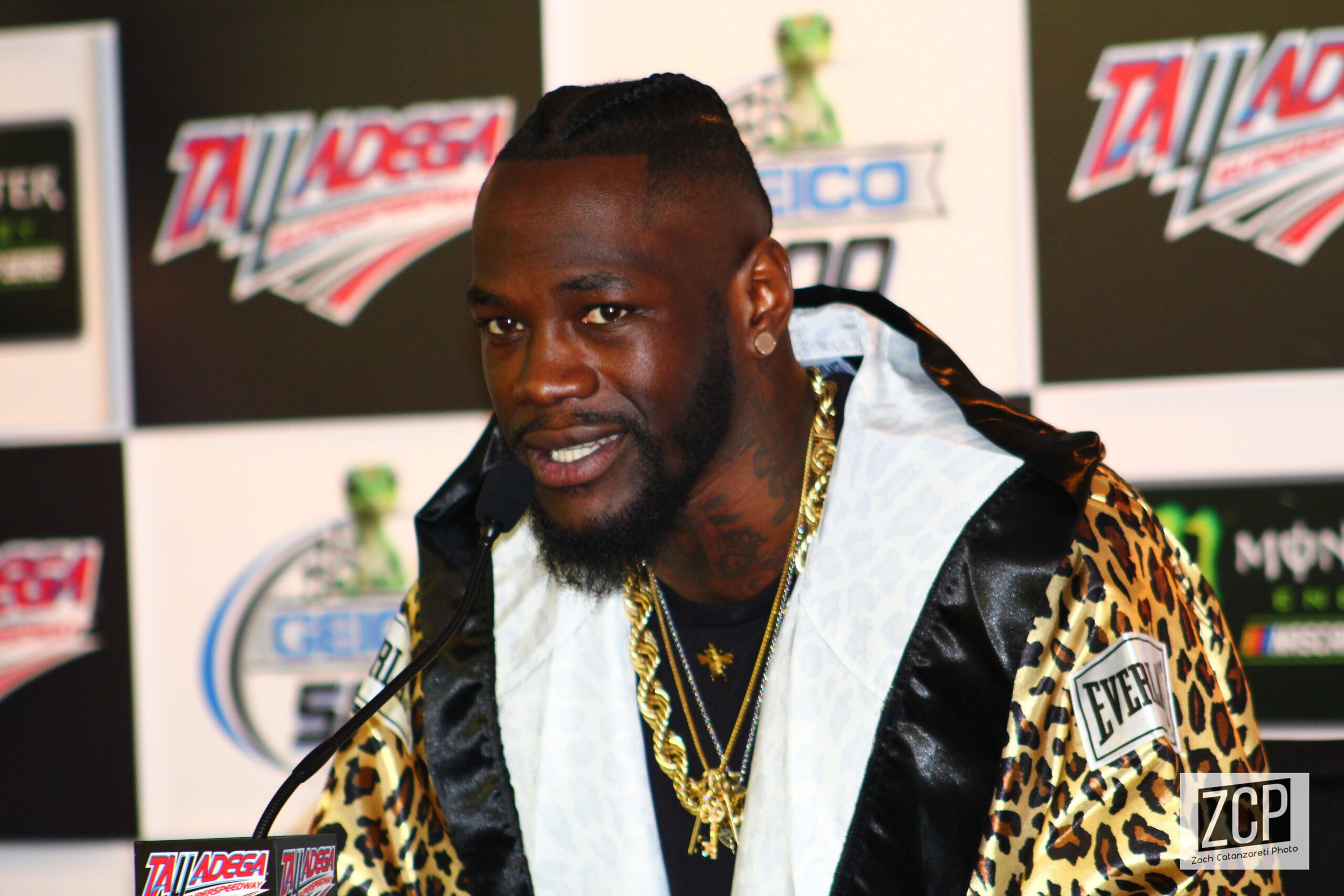
Deontay Wilder and Jai Opetaia have reportedly agreed to meet in a heavyweight fight on the Tyson Fury–Anthony Joshua undercard in Cardiff. If finalized, the matchup would place one of boxing’s leading cruiserweights against a former WBC heavyweight champion on one of the sport’s biggest confirmed events of 2026.
The distinction between reported and confirmed, however, matters.
Journalist Dan Rafael reported on October 30, citing an unnamed source, that the sides had agreed to the fight but had not signed contracts. Boxing News and BoxingNews24 subsequently relayed that account, but neither produced confirmation from the fighters, their representatives, the event organizers or a governing commission.
Netflix has officially listed Fury–Joshua for December 11 at Principality Stadium in Cardiff, Wales, and says the event will feature a multi-fight undercard. Its event page does not currently name Wilder–Opetaia as part of that card.
The proposed fight is therefore close enough to demand attention without being official enough to treat as guaranteed. That uncertainty is particularly important because the matchup could redirect both careers. Opetaia would be testing whether his cruiserweight success translates against established heavyweight power. Wilder would be trying to prove he remains a competitive force rather than simply a dangerous name from the previous heavyweight era.
Those are questions worth asking.
First, boxing still needs to establish that the fight is real.
The Negotiations Have Progressed Beyond an Ordinary Rumor
The Wilder–Opetaia discussion did not begin with Rafael’s October 30 report.
On October 9, Wilder manager Shelly Finkel told Rafael that Wilder’s team had accepted an offer to face Opetaia at heavyweight. According to Finkel, his side was waiting to learn whether the matchup would proceed. That represented interest and acceptance from Wilder’s camp, but it was not the same as a completed agreement.
A day later, Opetaia promoter Dana White confirmed to Sky Sports that Wilder was an opponent his team had been discussing and that work on the matchup was underway. White also acknowledged the danger involved for Opetaia, an important admission considering the physical challenge his fighter would be accepting.
Rafael then reported on October 30 that an unnamed source said the sides had reached an agreement. His report still emphasized that the bout remained unsigned.
That chronology gives the proposed fight more substance than an unsupported social-media rumor. Wilder’s manager publicly acknowledged accepting an offer. Opetaia’s promoter independently confirmed that discussions were taking place. A journalist later reported that those negotiations had produced an agreement.
But every stage has stopped short of signed contracts and an official announcement.
Neither fighter has formally confirmed the contest. The promoters and event organizers have not announced it as part of the Fury–Joshua undercard. Netflix has not added the matchup to its listing, and no commission or governing authority has disclosed approval or sanctioning details.
Boxing negotiations can reach an advanced stage and still collapse over money, contractual language, weight conditions, scheduling or other terms. No reporting supplied so far establishes the proposed weight limit, number of rounds, purses or whether any title or sanctioning-body position would be involved.
The evidence suggests that Wilder–Opetaia is being seriously pursued.
It does not yet establish that the fight will happen.
Opetaia Would Be Entering a Different Physical Argument
Opetaia’s appeal in this matchup begins with what he has already shown as a cruiserweight. Sky Sports identifies him as one of the division’s leading fighters, and the proposed move would give him an immediate opportunity to test his abilities on a major heavyweight platform.
That opportunity would also bring a different category of danger.
Success at cruiserweight does not automatically answer how a fighter will respond to the size, strength and punching power of an established heavyweight. Opetaia’s speed, technique and sharpness could all create problems for Wilder, particularly if the former champion struggles to establish his preferred distance or match a faster opponent’s pace.
But those advantages remain theoretical until Opetaia demonstrates that he can carry them into a heavyweight contest.
Wilder is not simply a larger opponent selected to introduce Opetaia to the division. He is a former WBC heavyweight champion whose power has defined his career. Even if questions remain about what Wilder can still produce at this stage, the danger attached to his right hand gives Opetaia almost no room for careless experimentation.
Opetaia would need to determine whether he can enter range, execute his combinations and leave safely without allowing Wilder to set his feet. He would also have to show that his movement and technical control remain effective when the opponent across from him presents genuine heavyweight force.
Unknown contractual conditions make that evaluation more complicated. No official weight limit has been disclosed. There is no confirmed information about how much weight Opetaia would add, whether the contest would involve any special limit or what physical condition either fighter would be expected to meet.
Those details could materially affect how the matchup should be judged.
If Opetaia defeats Wilder, the victory would be significant because it would show that his cruiserweight skill can function against a recognized heavyweight threat. It still would not automatically prove that he belongs among the heavyweight elite. One victory cannot answer every question about dealing with the division’s largest, most complete or most durable fighters.
It would, however, provide evidence that currently does not exist.
Opetaia has established himself at cruiserweight. Wilder would make him prove that his abilities survive when the physical terms change.
Wilder Needs More Than His Reputation to Reestablish Himself
Wilder’s challenge is different.
He does not need to prove that he possesses heavyweight power. That reputation was built during his championship career and remains central to every matchup involving him. The more urgent question is whether he can still use that power effectively against a technically accomplished opponent.
There is an important difference between being dangerous and remaining competitive at the highest level.
A fighter can retain enough punching power to threaten almost anyone while losing the timing, activity, confidence or tactical control required to defeat elite opposition. Wilder’s name ensures attention, but name recognition cannot establish what he still has left.
That is why Opetaia could represent a meaningful credibility test. Although he would be moving up from cruiserweight, he would bring speed, technical discipline and the ambition of a fighter trying to enter a larger divisional conversation. Wilder would not simply be facing a heavyweight selected to stand in front of him. He would be asked to solve an opponent whose movement and precision could expose any remaining limitations.
A Wilder victory would not answer every question either.
If the physical terms strongly favor the natural heavyweight, beating a smaller opponent would not automatically restore Wilder to his former standing. The quality of the performance would matter. Wilder would need to show more than the ability to wait for one decisive punch. He would need to demonstrate that he can control exchanges, manage a skilled opponent’s movement and create his own opportunities.
Stopping Opetaia would remind the division that Wilder’s power still carries consequences. Outboxing him or consistently disrupting his rhythm could say even more about Wilder’s remaining competitive range.
A poor performance, even in victory, would leave the central doubts unresolved. A loss would strengthen the conclusion that Wilder’s reputation now exceeds his present ability to defeat elite opposition.
That makes the proposed fight more than another high-profile appearance.
For Wilder, it would be an examination of whether his most famous weapon still belongs to a complete and credible contender.
The Fight Could Redirect Both Careers Without Settling Everything
If Wilder–Opetaia is finalized, it would give the Fury–Joshua event a consequential second attraction.
Opetaia would receive a major stage for his first reported test against a true heavyweight puncher. Wilder would receive an opportunity to reestablish his relevance against a respected, technically sharp opponent. The contrast in size, speed, experience and career direction would create legitimate uncertainty.
The winner would gain momentum, but the meaning of that momentum would require restraint.
An Opetaia victory would show that his skills can translate against at least one major heavyweight threat. It would not establish that every size disadvantage in the division has been solved or immediately place him on equal footing with the leading heavyweights.
A Wilder victory would show that he can still defeat a high-quality opponent. It would not recreate his championship years or erase questions about how he would perform against established heavyweights whose size and technical ability are combined.
The method would matter as much as the result.
Can Opetaia neutralize Wilder’s power through positioning, speed and disciplined offense? Can he absorb a heavyweight shot if his defense fails? Can Wilder impose the physical terms of the contest, or will he struggle to find a faster opponent? Does he still possess the timing and judgment needed to turn power into a winning performance?
Those questions are what make the matchup compelling. Neither man can answer them through reputation.
Opetaia’s cruiserweight success cannot prove that he will handle heavyweight danger. Wilder’s history cannot prove that he remains capable of defeating an elite opponent now. The proposed fight would create a direct test of both claims, with each man carrying something the other needs to confront.
Before that test can begin, the business must catch up with the headline.
Signed contracts, an official card announcement and disclosed contest terms would establish that Wilder–Opetaia has moved from a reported agreement to an actual fight. Until then, it remains one of the most intriguing possibilities attached to Fury–Joshua—not a confirmed part of the event.
LET’S TALK ABOUT IT
If the fight is finalized, is Opetaia’s skill enough to overcome Wilder’s heavyweight size and power?
Would defeating Opetaia restore Wilder as a serious heavyweight threat, or would beating a cruiserweight leave the larger questions about his future unresolved?
Outlets cited in this story
- BoxingNews24
- Boxing News
- Sky Sports
Spot an error? Send a correction. We fix mistakes in the open.