Devin Haney and Shakur Stevenson Agree on 145 Pounds — But the Size Question Will Shape the Verdict

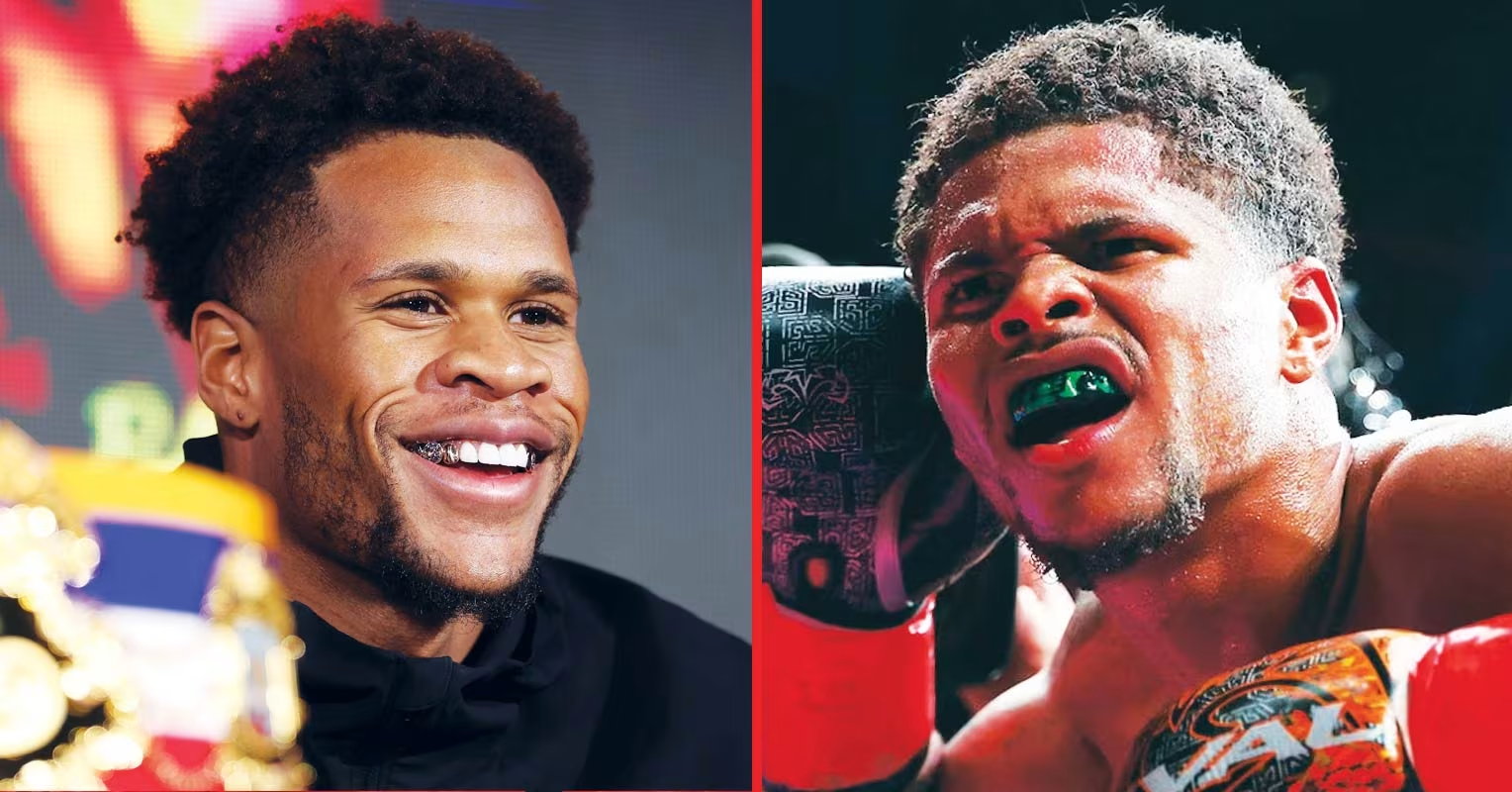
Devin Haney and Shakur Stevenson have publicly agreed to meet at 145 pounds, pushing one of boxing’s most compelling potential matchups closer to reality. The agreement creates the outline of a superfight between two champions known for intelligence, timing and defensive control, but it does not make the fight official.
According to Boxing News, Haney proposed a 145-pound catchweight without a rehydration clause and identified December 2026 as his preferred timeframe. Stevenson answered publicly on October 8, writing on X, “145.0 U GOT A DEAL.”
That exchange matters. Both fighters have now indicated that they are willing to compete at the same weight, removing one of the most obvious barriers to the matchup. What remains, however, may be considerably more complicated.
No signed contract, official date, venue or complete agreement has been announced. The promoter, broadcaster, purse split and title implications also remain unknown. Stevenson’s response accepted the 145-pound limit, but Boxing News 24 noted that it did not explicitly address the reported demand for no rehydration clause.
For now, Haney-Stevenson is a proposed fight with a public verbal agreement on weight.
It is also a potential pound-for-pound test with a size problem that will influence how the result is judged.
Stevenson’s Acceptance Moves the Fight Beyond Routine Callouts
The public negotiations developed quickly.
On October 4, Stevenson tagged Haney on X and wrote, “LET’S GO,” renewing discussion of a fight that would match two of the most technically accomplished American boxers of their generation. Two days later, Haney responded with the 145-pound proposal and his preference for a December 2026 fight, according to Boxing News.
Stevenson’s October 8 acceptance changed the tone of the conversation. Fighters regularly exchange challenges on social media, but agreeing to a specific weight gives the discussion more substance than a general callout.
It still does not resolve every condition.
The proposed 145-pound limit places the fight between the championship divisions in which the two men currently operate. Boxing News reports that Haney holds the WBO welterweight title, while Stevenson holds the WBO super-lightweight title. That means Stevenson would be moving above his reported championship division to face a naturally larger opponent, while Haney would be coming below the full welterweight limit.
That compromise is part of what makes the matchup attractive. Neither fighter would be competing at the exact limit attached to his current WBO title.
It is also what makes the details so important.
Haney reportedly proposed the fight without a rehydration restriction, which would allow both fighters to regain weight after the official weigh-in without an additional contractual limit. Stevenson accepted 145 pounds publicly, but his message did not specify whether he had accepted that separate condition.
Until that issue is clarified in a signed agreement, it should not be assumed that every weight-related term has been settled.
December must be treated the same way. Haney has identified it as his preferred timeframe, but there has been no announcement confirming that both sides have agreed to a December date.
The fight is closer because the central number is no longer being publicly disputed. It is not complete because nearly everything surrounding that number remains unresolved.
Haney Sees a Pound-for-Pound Crown Within Reach
Haney made his view of the stakes clear after Stevenson accepted the proposed limit.
“Crown me #1 P4P after this InshaAllah,” Haney wrote, according to Boxing 24/7.
The argument is easy to understand. Stevenson’s reputation is built around precision, positioning, defensive awareness and the ability to control fights without giving opponents many clean opportunities. Defeating a fighter with those qualities would provide Haney with a major addition to his pound-for-pound case.
But the catchweight complicates the demand for automatic recognition.
Pound-for-pound discussion is supposed to separate ability from physical size. It asks which fighters are best when the advantages created by weight are theoretically removed. Haney beating Stevenson would be significant because of Stevenson’s skill, but a victory at 145 pounds would immediately generate questions about how much the size difference contributed.
That does not mean Haney could receive no credit. He would still have to solve Stevenson’s movement, timing and defensive discipline. Natural size cannot make those problems disappear, especially against a fighter whose entire approach is built around controlling distance and punishing mistakes.
The manner of victory would matter.
If Haney outboxes Stevenson, adjusts to his rhythm and consistently wins technical exchanges, his pound-for-pound argument becomes much stronger. That type of performance would demonstrate more than an ability to impose his frame on a smaller opponent.
If Haney wins primarily by absorbing Stevenson’s shots, forcing him backward and overwhelming him physically, the result would remain legitimate, but its meaning would be debated differently. The conversation would focus as much on the conditions as on the quality of Haney’s work.
Haney is asking for the highest possible recognition. To make that demand convincing, he would need to show that elite ability—not merely greater size—decided the fight.
Stevenson Would Be Betting That His Craft Travels Upward
Stevenson’s acceptance suggests confidence that the strengths defining his career will remain effective at 145 pounds.
The challenge is not simply whether he can weigh enough to compete there. The real question is whether his control can survive against an opponent with a larger frame who may be able to apply pressure without reacting to his punches in the same way as smaller fighters.
Ryan Garcia identified that tension when discussing the matchup with Fight Hub TV. According to Boxing News, Garcia said his “first instinct” was that Stevenson would win, but he also emphasized that Haney is the larger fighter.
That is the central tactical debate.
Stevenson would be expected to rely on accuracy, distance management and defensive anticipation. His path would likely require him to prevent Haney from turning the contest into a physical fight while landing enough clean punches to command respect and win rounds.
Haney’s size could influence each part of that assignment. A longer or physically stronger opponent may be more difficult to control at range. If Stevenson cannot discourage Haney from advancing, he could find himself working under sustained pressure while giving away natural weight.
Stevenson would nevertheless gain enormous credit for succeeding under those conditions. Moving upward to defeat a larger champion would support the idea that his technique is not dependent on being physically comfortable within one division. A decisive performance would show that his timing and ring intelligence can overcome a disadvantage that is visible before either fighter enters the ring.
That may give Stevenson the cleaner pound-for-pound opportunity.
Haney would be trying to prove that he is technically superior to one of boxing’s most respected pure boxers. Stevenson would be trying to prove that his technical superiority is great enough to neutralize Haney’s skill and size at the same time.
Neither task is easy, but they are not identical.
A Contract Must Define What This Fight Actually Is
The public agreement establishes willingness. A signed contract would establish the contest.
The difference matters because catchweight fights are often judged long before the opening bell. Every pound, rehydration condition and title designation can affect how the matchup is understood.
The first unresolved issue is whether the fight would include any rehydration restriction. Haney reportedly proposed that it would not, but Stevenson’s acceptance addressed only the 145-pound limit. If there is no secondary limit, the amount of weight each fighter can regain after the weigh-in could become an important part of the discussion surrounding Haney’s physical advantage.
The second issue is timing. December 2026 is Haney’s stated preference, according to Boxing News, not an agreed or officially announced date.
The location, promoter and broadcaster are also unknown. No purse split has been reported in the supplied coverage, and there has been no confirmation regarding whether Haney’s WBO welterweight title, Stevenson’s WBO super-lightweight title or neither championship would be at stake.
Those are not minor administrative questions. They define the competitive and commercial structure of the fight.
Title status is particularly unclear because the proposed weight sits between the fighters’ reported championship divisions. A fight can carry enormous sporting importance without a belt, but the public should know whether this is being constructed as a championship contest, a catchweight attraction or something else.
Transparency would prevent the conditions from overwhelming the event itself.
Once the contracts are signed, the performances would settle the larger debate. A decisive technical victory for either fighter would produce the strongest pound-for-pound statement. A narrow decision would establish little separation and likely intensify arguments over the weight. A Haney victory built predominantly on physical pressure would be respected, but it would not end questions about the size advantage.
A Stevenson win would answer a different question. It would demonstrate that his precision and defense can travel upward against a champion whose greater size is already central to the matchup.
LET’S TALK ABOUT IT
If Devin Haney defeats Shakur Stevenson at 145 pounds, should that make him boxing’s No. 1 pound-for-pound fighter, or would his natural size advantage limit the achievement?
Does Stevenson’s willingness to move up make this the ultimate test of his skill, or should the fight take place under conditions closer to his natural division?
Outlets cited in this story
- Boxing News 24
- Fight Hub TV
- Boxing News
Spot an error? Send a correction. We fix mistakes in the open.