Devin Haney and Shakur Stevenson Renew Fight Speculation — But the Biggest Questions Remain Unanswered

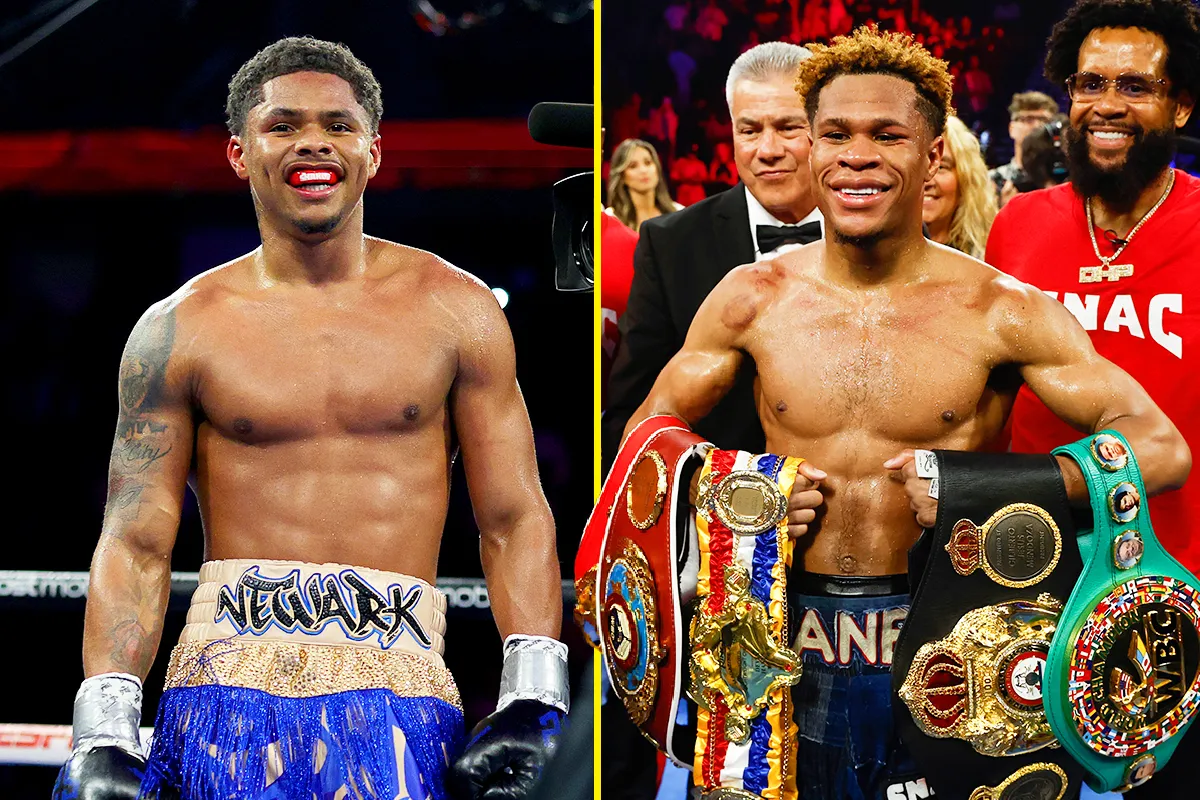
Devin Haney and Shakur Stevenson have returned one of American boxing’s most compelling potential matchups to the center of the conversation.
On October 4, Haney posted footage of the two champions facing off, according to Boxing News. Stevenson then tagged Haney on X and responded, “LET’S GO.” Boxing News 24 also reported the exchange, while Boxing 24/7 reported that Stevenson challenged doubters to bet against him.
The posts created immediate excitement because this is not a random fantasy matchup between fighters separated by divisions, promoters and career objectives. Haney is the WBO welterweight champion. Stevenson is the WBO junior-welterweight champion. Both men have publicly entertained the fight before, and a previously proposed 144-pound catchweight appeared to offer a possible path toward making it happen.
But that distinction matters: it was previously proposed.
No promoter, commission, sanctioning body or broadcaster has announced that Haney-Stevenson is signed. There is no confirmed date, venue, weight or title arrangement. The latest activity may indicate renewed interest, but it does not establish that formal negotiations have resumed.
The fight remains unconfirmed.
That does not make the speculation meaningless. Haney-Stevenson could provide something increasingly rare in boxing: two prime American champions meeting while both are still competing for the same kind of pound-for-pound recognition. Belts created the platform. A victory over the other man could create the defining result.
The Latest Posts Renewed Interest, Not a Fight Agreement
According to Boxing News, Haney’s Instagram footage showed him facing off with Stevenson but did not include an announcement of a signed agreement, date or venue. Stevenson’s “LET’S GO” response intensified the speculation because it showed that he was willing to engage publicly with the possibility.
Boxing 24/7 subsequently reported Stevenson’s message challenging people who doubt him to bet against him. That post contributed to the atmosphere surrounding a potential fight, but it did not explicitly identify Haney as Stevenson’s next opponent.
Those details can be encouraging without being conclusive.
Boxing regularly uses social media to measure interest, create leverage and maintain attention around possible matchups. Fighters can publicly call for a bout while their representatives remain divided over the money, weight, broadcasting arrangement or promotional control. A faceoff can function as a signal of intent, but it can also function as promotion before the difficult decisions have been made.
Nothing announced on October 4 answered the practical questions that determine whether a major fight reaches the ring.
Has either fighter signed a bout agreement? Would the contest take place at 144 pounds? Would one or both WBO titles be involved? Who would promote and broadcast it? Where and when would it happen? How would the matchup affect the champions’ obligations in their respective divisions?
Until those questions receive official answers, Haney-Stevenson should be described as a serious possibility rather than an established event.
The new activity matters because neither fighter is publicly distancing himself from the contest. It also places pressure on both sides to move beyond posts and provide specifics. The longer a major fight is teased without contracts, however, the greater the risk that anticipation becomes skepticism.
Both Champions Have Already Shown Public Interest
The October exchange did not create Haney-Stevenson speculation. It revived a discussion that had already developed through several stages.
Boxing News reported on April 27 that preliminary discussions had taken place and identified the weight limit as the principal obstacle. That issue appeared to move closer to resolution on June 9, when The Ring reported that Haney and Stevenson publicly agreed in principle on social media to a proposed 144-pound catchweight.
That exchange was significant because it addressed the most obvious structural problem. Haney currently operates as the WBO champion at welterweight, while Stevenson holds the organization’s junior-welterweight title. A catchweight between those divisions could allow the fighters to meet without requiring either man to compete at the other champion’s established limit.
Still, agreeing to a number online was not the same as completing a deal.
On June 30, Bill Haney told Inside The Ring that his side was waiting for Stevenson to respond after the public catchweight agreement. That statement suggested that whatever had been settled publicly had not yet produced a completed agreement behind the scenes.
Stevenson later made his own interest clear. During a July 13 appearance on Inside The Ring, he described fighting Haney as his “No. 1 priority.”
Taken together, those developments demonstrate that both camps have publicly entertained the matchup. They do not prove that every obstacle was resolved, and the October posts do not independently confirm that negotiations have restarted.
The sequence instead reveals the gap between interest and completion. Haney and Stevenson have discussed the fight, addressed the proposed weight and continued invoking each other’s names. The remaining work involves the contractual details that social media cannot settle.
That is why the latest exchange should increase attention without lowering the standard of proof.
Their WBO Victories Raised the Stakes
The potential fight carries more weight now because Haney and Stevenson hold WBO championships in neighboring divisions.
The WBO records that Haney defeated Brian Norman Jr. by unanimous decision on November 22, 2025, to win the organization’s welterweight title. The official scores were 114-113, 116-111 and 117-110.
Stevenson added his own major result on January 31, 2026, defeating Teofimo Lopez by unanimous decision to become the WBO junior-welterweight champion. In its February 2026 ratings explanation, the WBO listed Stevenson’s record at 25-0 following that victory.
Those results established both fighters as champions at their current weights. More importantly, they strengthened the argument that Haney-Stevenson would be a meeting between accomplished contemporaries rather than a showcase built around a famous name and a carefully selected opponent.
Neither man needs this fight to prove that he belongs at championship level. Their WBO titles already answer that question.
What the matchup could determine is whose résumé carries the most persuasive peer-level victory.
Boxing debates often become exercises in comparing parallel careers. One fighter defeated a respected opponent in one division. Another collected a title somewhere else. Supporters then argue over style, opposition and hypothetical outcomes without receiving the direct evidence that only a fight can provide.
Haney-Stevenson could interrupt that pattern.
A victory would give the winner more than another recognizable name. It would establish that he defeated another prime, technically gifted American champion pursuing similar recognition. That kind of result can carry more pound-for-pound significance than adding another belt against an opponent who does not occupy the same competitive tier.
The loser would not suddenly become an inferior fighter. One defeat against an elite contemporary would not erase championship accomplishments or settle every argument about either man’s career. But the winner would possess the strongest evidence available in a debate that currently relies too heavily on projections.
He would have beaten the other man.
A Defining Fight Still Requires Defining Details
The appeal of Haney-Stevenson is easy to understand. The conditions required to make it real remain far less clear.
The previously proposed 144-pound catchweight has not been reconfirmed in an official announcement. It is also unknown whether either WBO championship would be at stake. Because Haney and Stevenson hold titles in different divisions, the sanctioning details could become complicated depending on the contracted weight and the WBO’s position.
Their championship obligations must also be considered. Neither fighter exists outside the structure of his division simply because a more commercially attractive matchup has gained public attention. Mandatory challengers, sanctioning decisions and title requirements could affect the timing or terms of any agreement.
Then there are the essential business details: promoter, broadcaster, date, venue and contracts.
None has been announced.
That does not mean the fight is unlikely. It means the public does not yet have enough verified information to determine how close it is. The October activity could represent genuine momentum, an attempt to restart stalled discussions or promotional teasing designed to test the audience’s reaction.
Only the people involved know which explanation is most accurate.
For fans, the proper response is cautious interest. This is exactly the kind of fight boxing should pursue, and the continued willingness of both men to discuss it is preferable to either side pretending the matchup has no value. But enthusiasm should not convert an online exchange into an official announcement.
The next meaningful development must contain details.
A credible announcement would identify the contracted weight, date, venue, promoter and broadcaster. It would explain whether a title is involved and confirm that agreements have been signed. Anything short of that may keep the conversation active, but it will not settle the speculation.
And even a formal announcement would only produce the opportunity.
The fight itself would provide the proof.
LET’S TALK ABOUT IT
Would beating the other man make Devin Haney or Shakur Stevenson America’s leading pound-for-pound fighter?
Do the latest posts suggest genuine movement, or should fans wait for contracts, a date and a venue before investing in the speculation?
Outlets cited in this story
- Boxing News 24
- Boxing News
- The Ring
Spot an error? Send a correction. We fix mistakes in the open.