
Fabio Wardley Draws Expert Support for Daniel Dubois Rematch — But His Gas Tank May Decide Everything

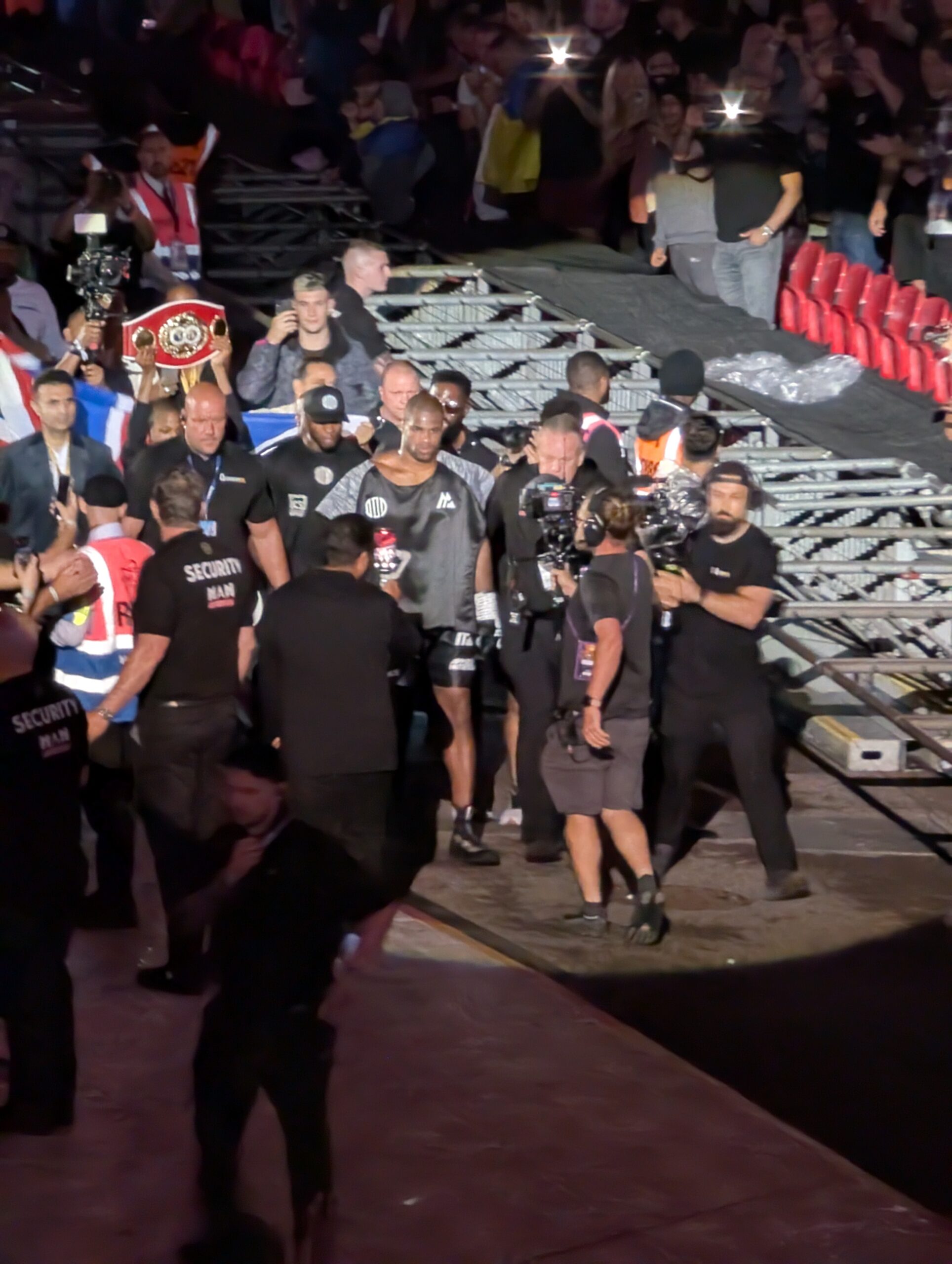
Fabio Wardley has already proved he can hurt Daniel Dubois. On October 17, he must prove he can do it without exhausting himself before the WBO heavyweight championship is decided.
Dubois and Wardley meet again at The O2 in London five months after a first fight that produced two sharply different stories. Wardley dropped Dubois in rounds one and three, threatening to end the contest before it had properly settled. Dubois survived, recovered and stopped Wardley in the 11th round to claim the WBO heavyweight title, according to Boxing News.
That result confirmed Dubois as the winner, but it did not eliminate the questions created by those opening rounds. Several prominent boxing figures are backing Wardley to reverse the outcome, with Tony Bellew, Chris Mannix and Sergio Mora all selecting the challenger. Peter Fury considers the rematch a 50/50 contest, while Wardley’s gymmate Moses Itauma believes he can and should win.
The support is significant because it shows how much credibility Wardley gained even in defeat. It is not proof, however, that he has solved the problem that ultimately cost him the first fight.
Wardley’s real rematch is not only with Dubois. It is with his own pace, judgment and ability to remain dangerous when an early knockout does not arrive.
Wardley’s Early Success Created the Case for a Rematch
Wardley does not need anyone to convince him that his power can trouble Dubois. He has already produced direct evidence.
The two early knockdowns in their May 9 fight established that Wardley can find openings against the champion and do meaningful damage when he lands. Those moments also explain why experienced observers are willing to look beyond the official result and imagine a different ending in the rematch.
Boxing News reported that Bellew told the BBC he expects Wardley to win by knockout within six rounds. Boxing 24/7 reported that Mannix also selected Wardley by stoppage. Mora backed Wardley as well, but his analysis identified the central condition attached to that prediction: the challenger cannot punch himself out and must show greater patience when setting up his right hand.
That distinction matters.
Predicting Wardley by knockout is an acknowledgment of his most obvious advantage. Explaining how he must pursue that knockout is an acknowledgment of his greatest danger.
Wardley’s early pressure worked in the first fight because it forced Dubois into immediate survival mode. Abandoning that aggression would make little sense. The challenger’s opportunity is most likely to appear when he is imposing physical and psychological pressure, not when he is giving Dubois unlimited time to establish a rhythm behind his jab.
But pressure and recklessness are not the same thing.
Wardley cannot treat every clean connection as confirmation that the next attack must end the fight. Hurting a heavyweight champion creates an opportunity; it does not guarantee that the finish is available. If Dubois covers up, moves, clinches or simply absorbs the attack, Wardley must be prepared to reset rather than spend an entire round trying to force one decisive punch.
That is where Mora’s warning becomes more valuable than a simple prediction. Wardley’s right hand will remain dangerous whether it is thrown in the first round or the eighth. The challenge is creating the right opening without sacrificing the energy he may need later.
Dubois Has Already Shown He Can Survive the Worst Moment
The strongest argument for Wardley is that he dropped Dubois twice. The strongest argument for Dubois is everything that happened afterward.
Recovering from knockdowns in the first and third rounds required more than durability. Dubois had to remain composed enough to rebuild the fight while facing an opponent who had already demonstrated that another mistake could end his title ambitions.
He managed to do exactly that.
As Wardley’s initial surge became less sustainable, Dubois gained control and eventually forced referee Howard Foster to stop the contest in the 11th round, according to Boxing News. That sequence is the most important evidence available before the rematch because it shows how each fighter responded when the contest moved beyond Wardley’s preferred early chaos.
Peter Fury’s assessment reflects the strength of the champion’s position. Boxing News reported that Fury highlighted Dubois’ confidence, jab and heavy hands while describing the matchup as a 50/50 fight.
The jab may be the most important part of that analysis.
Dubois cannot assume that surviving another dangerous opening is a reliable championship strategy. Heavyweights carry too much power, and Wardley has already shown he can reach him. The champion’s adjustment must begin before he gets hurt, not after he is forced to recover.
An earlier, more consistent jab could interrupt Wardley’s advances, make him reset his feet and increase the physical cost of closing distance. It could also prevent Wardley from building the confidence that followed those first-fight knockdowns. Once Wardley believes Dubois is vulnerable, the contest becomes faster and more volatile. Dubois should want the opposite: controlled exchanges, disciplined positioning and a pace that requires Wardley to work for every opening.
Dubois also carries enough power to punish impatience. If Wardley overcommits to the right hand or attacks without securing his position, he risks giving the champion the counters and sustained offense that changed the first fight.
Wardley may be the fighter seeking revenge, but Dubois has adjustments of his own to make. Another victory would be more convincing if it did not require him to survive two early knockdowns first.
The Predictions Favor Wardley Without Creating a Consensus
The growing support for Wardley should not be mistaken for agreement across boxing.
Bellew expects a knockout within six rounds. Mannix selected Wardley by stoppage. Mora chose Wardley while emphasizing the tactical discipline required for that outcome. Those predictions point in the same direction, but they do not establish that the challenger has corrected his pacing.
Fury’s 50/50 assessment recognizes the danger on both sides. Itauma’s support must also be considered in context. Boxing News reported that Itauma, speaking to Queensberry Promotions, said his gymmate Wardley can and should win while openly acknowledging his personal bias. He did not specify a method or round.
That is a collection of informed opinions, not a consensus that Wardley will become champion.
Predictions also cannot confirm changes that have not yet been demonstrated in competition. It is reasonable to argue that Wardley needs more patience, better shot selection and a sustainable pace. It would be speculation to claim he has developed those qualities without confirmed evidence from his camp or proof inside the ring.
The same standard applies to Dubois. His first victory demonstrates that he can recover and stop Wardley late. It does not guarantee that he will survive the same early danger again, particularly if Wardley attacks with greater control.
What the predictions genuinely show is that the first fight did not settle every competitive question. Wardley lost, but he did enough damage to make respected observers believe the outcome can be reversed. Dubois won, but his difficult opening left enough vulnerability for the rematch to feel necessary rather than ceremonial.
The official weigh-in added another detail without resolving the tactical issue. Boxing News reported that Dubois weighed 253.9 pounds and Wardley came in at 248.3 pounds on October 16. The outlet described Wardley’s weight as a career high.
A heavier Wardley may appear more physically imposing, but the number alone cannot tell us how he will manage 12-round demands. The meaningful question is not simply how much he weighs. It is whether he can carry that weight while maintaining effective pressure, recovering between attacks and remaining defensively responsible as the fight develops.
No verified purse figures were identified in the reviewed reporting, and none are necessary to explain the stakes. The WBO heavyweight championship and the direction of both fighters’ careers are enough.
Wardley Must Prove He Can Win After the Knockout Window Closes
The rematch will reveal whether Wardley’s first-fight success was the beginning of a championship formula or merely an explosive opening that Dubois learned to survive.
Wardley’s path does not require him to become cautious. Excessive restraint could surrender the very advantage that makes him dangerous. He must instead become selective—applying pressure without treating every exchange as an emergency and attacking without assuming that one hurtful punch has already broken the champion.
If he hurts Dubois early again, his next decision may matter more than the punch itself.
Does he step forward behind organized combinations, protect himself against counters and force Dubois to keep solving problems? Or does he empty his reserves trying to reproduce a finish that failed to arrive the first time?
Wardley must also show that he can recover when an attack does not work. Championship pacing is not only about throwing fewer punches. It is about remaining mentally settled when the opponent survives, when momentum changes and when the original plan becomes more difficult than expected.
For Dubois, the task is to prevent the fight from becoming a repeat of the first three rounds. He needs to establish the jab earlier, make Wardley pay for closing distance and force the challenger to spend energy before he can launch his heaviest attacks. If Dubois reaches the later rounds without absorbing major damage, the first fight suggests the advantage could move increasingly in his direction.
A Wardley victory would change the way he is viewed. He would no longer be defined primarily as an explosive contender capable of producing dramatic moments. Beating the man who survived his best attacks and stopped him would establish Wardley as a credible heavyweight champion who can recognize a previous failure and correct it.
Another late Dubois stoppage would reinforce a different conclusion: Wardley’s power can create danger, but his approach cannot sustain that danger across a championship fight.
A decisive Dubois performance from the opening bell would make an even stronger statement. It would show that the champion has learned from the knockdowns rather than simply trusting himself to survive them again.
LET’S TALK ABOUT IT
Can Fabio Wardley hurt Daniel Dubois without emptying his gas tank trying to finish him, or did the first fight reveal the decisive limit in his championship approach?
And will Dubois establish his jab early enough to control the rematch, or is another dangerous opening all Wardley needs to change the heavyweight title picture?
Outlets cited in this story
- Boxing News
Spot an error? Send a correction. We fix mistakes in the open.