
Floyd Mayweather’s Chances Against Ryan Garcia Assessed — But Garcia’s Championship Credibility Is the Bigger Question

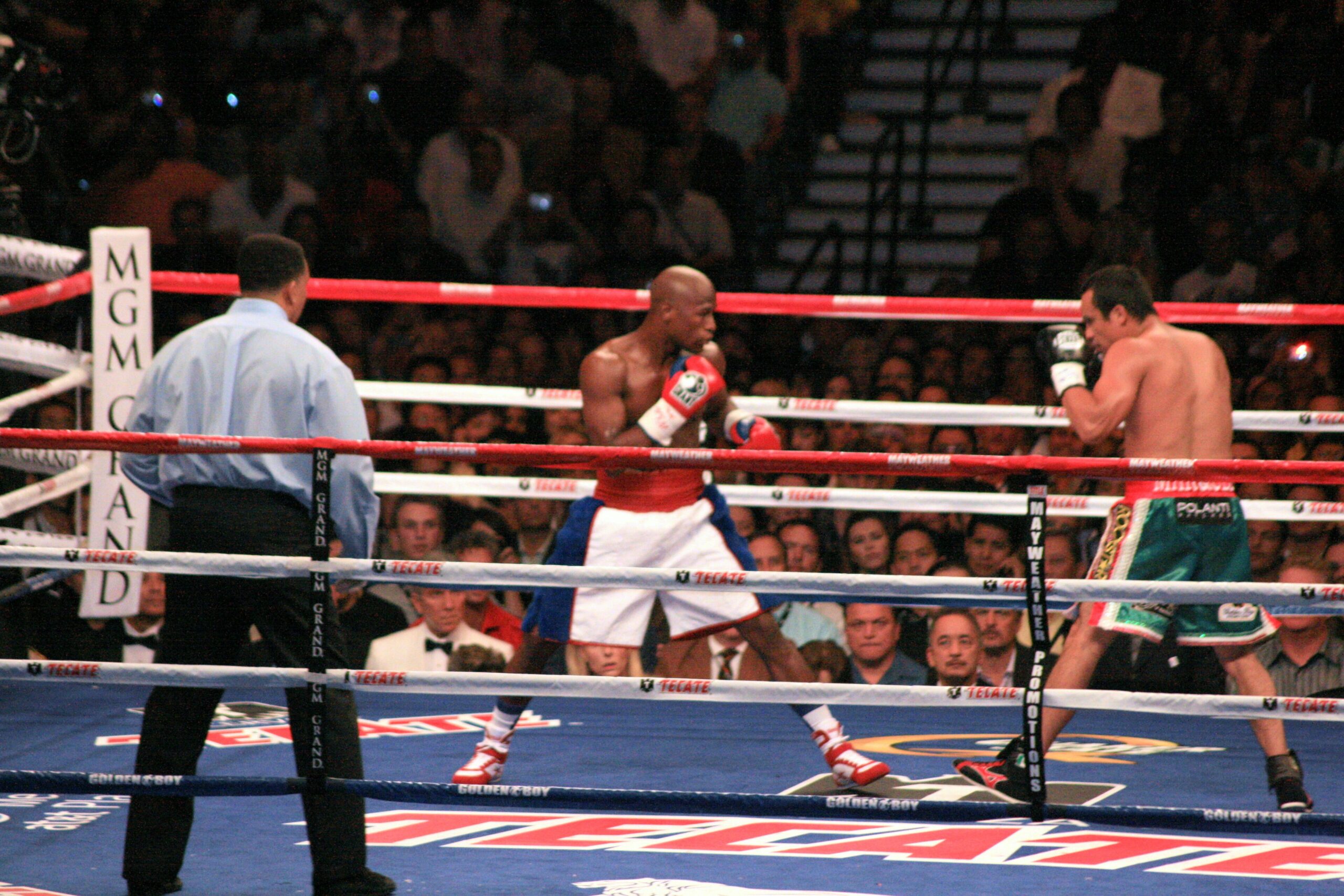
Floyd Mayweather has not competed in a professional boxing match since defeating Conor McGregor in 2017. He is now 49 years old, officially retired and nine years removed from the career that ended with a perfect 50-0 record.
Yet respected figures within boxing are treating Mayweather as a genuine threat to Ryan Garcia, the reigning WBC welterweight champion.
Garcia claimed on October 21 that he and Mayweather had agreed to pursue a professional fight at the 147-pound limit for Garcia’s championship, according to Boxing News 24. No contract, date, venue, broadcaster or sanctioning approval was announced with that claim. Mayweather has not publicly confirmed the proposed matchup in the reports reviewed, and the WBC has not announced that it would approve him as a title challenger.
That uncertainty has not prevented the boxing world from debating what might happen. Promoter Eddie Hearn has predicted that Mayweather would defeat Garcia, while former two-division champion Zab Judah believes Mayweather must see a strategic advantage if he is seriously considering the contest.
Their opinions create an intriguing question about what Mayweather could still do at 49. They also create a more uncomfortable question for Garcia.
If a retired fighter who has not boxed professionally in nine years is considered capable of defeating the reigning champion, how firmly has that champion established his credibility?
Hearn and Judah See More Than a Nostalgia Fight
Hearn told Boxing News that, as he understood the situation, the proposed fight was “on.” He also predicted that Mayweather would beat Garcia.
That is a striking assessment because Hearn is not simply suggesting Mayweather could remain competitive for a few rounds. He is backing a 49-year-old former champion to return after nearly a decade without a professional bout and defeat the man currently holding the WBC title at 147 pounds.
Hearn is not identified as the promoter of the proposed contest, however, and his understanding does not amount to official confirmation. Until the fighters sign contracts and the necessary organizations announce their involvement, his comments should be treated as an informed opinion rather than evidence that the fight has been finalized.
Judah approached the matchup from a slightly different direction. Speaking to Fight Hub TV, he suggested that Mayweather would have a strategic reason for accepting the fight and might know something about Garcia that outside observers do not.
That does not establish what Mayweather currently looks like in a professional training camp. It does reflect the reputation he built throughout his career.
Mayweather was known for identifying patterns, controlling distance, limiting opponents’ opportunities and forcing aggressive fighters to operate at his pace. His undefeated record was not built exclusively on athletic ability. It also reflected preparation, adaptability and an unusually detailed understanding of how opponents reacted under pressure.
Those qualities help explain why Hearn and Judah are unwilling to dismiss him based on age alone.
They do not eliminate the effects of age and inactivity.
No one can responsibly know how Mayweather’s timing, reflexes, stamina or durability would hold up in a professional championship fight after nine years away. An exhibition appearance cannot answer the same questions as a sanctioned contest against an active titleholder. Any assessment of Mayweather’s present ability therefore remains speculative until he demonstrates it under professional conditions.
The intrigue is real. So is the uncertainty.
Garcia’s Claim Is Ahead of the Available Confirmation
Garcia presented the proposed contest as though an agreement had been reached. The subsequent update from his own team sounded considerably less definite.
Garcia’s lawyer and adviser, Guadalupe Valencia, told The Ring’s Mike Coppinger that the team would work to make the fight once Mayweather was free from other obligations. Valencia also said the intended matchup would be a professional fight rather than an exhibition.
That distinction matters, but so does the wording.
Garcia claimed that an agreement existed. His adviser described a fight the team still hoped to make. Those are not necessarily irreconcilable statements, but they are not identical either.
The absence of public confirmation from Mayweather makes the difference more significant. So does the lack of an announcement from the WBC, which would have to determine whether Mayweather could challenge for Garcia’s championship. An athletic commission would also have to license the contest, while the promoter, broadcaster, venue and date remain unknown.
There has been no reported confirmation of signed contracts or disclosed financial terms. It is also unclear whether Mayweather’s other obligations could delay or prevent the matchup.
Until those questions are answered, Mayweather–Garcia is a proposed fight—not a scheduled title defense.
Boxing regularly produces major announcements before every necessary detail has been completed. Sometimes the fights eventually happen. Sometimes the public discussion becomes part of a negotiation that never reaches the ring.
Garcia’s claim has created the story. Documentation and official approval would make it a fight.
Mayweather’s Strengths Still Matter, but His Age Cannot Be Ignored
Mayweather’s case against Garcia begins with what he proved during his professional career.
Boxing News lists Mayweather at 50-0 and identifies his victory over McGregor in 2017 as his most recent professional appearance. Over the course of that undefeated career, Mayweather demonstrated that he could adjust to different styles, protect himself under pressure and reduce dangerous opponents to increasingly limited options.
That history is relevant because intelligence and technical discipline can survive longer than raw athleticism. A fighter who understands positioning, rhythm and risk does not suddenly lose all of that knowledge when he retires.
The difficulty is determining whether the body can still carry out the decisions.
Mayweather would not be returning after an ordinary period between fights. He would be attempting to compete professionally after nine years away. At 49, he would be facing a champion 23 years younger whose WBC-listed record stands at 26-2 with 21 knockouts.
Garcia’s speed and punching power would present real physical demands. Mayweather could recognize an opening and still be a fraction too slow to exploit it. He could anticipate an attack and no longer possess the legs or reactions needed to escape it consistently.
That is why Hearn’s prediction is provocative rather than obvious.
A Mayweather victory would require more than reputation. He would have to show that enough of his defense, timing and distance control remains functional against a younger, active opponent. He would also have to manage the demands of a professional fight rather than a controlled event built around his celebrity.
Garcia, meanwhile, would face a psychological and tactical challenge unlike a conventional title defense. He would be expected to defeat an opponent because of Mayweather’s age, yet every mistake would be measured against Mayweather’s championship history.
Garcia would have the physical advantages associated with youth and recent activity. Mayweather would carry the pressure of making Garcia prove that those advantages are enough.
Garcia Has Earned the Belt but Not Finished Building His Reign
The WBC’s October 2 ratings identify Garcia as its welterweight champion and define the division limit as 147 pounds. According to the sanctioning body, Garcia won the title by unanimous decision over Mario Barrios on February 22, 2026.
The WBC also reports that Garcia made his first successful defense on September 12, stopping Conor Benn in the second round.
Those results matter. Garcia did not acquire the championship through name recognition alone. He defeated Barrios over the scheduled distance and then delivered a decisive stoppage in his first defense.
His reign is still young, however.
Two championship victories do not settle every question about where a fighter stands within a division. Sustained credibility is built by repeatedly facing opponents who are active, qualified and capable of exposing different weaknesses.
A Mayweather fight would offer something else.
It could become the biggest commercial event of Garcia’s career. Mayweather remains one of boxing’s most recognizable figures, and the contrast between a retired legend and a younger champion would attract attention far beyond an ordinary mandatory defense.
Commercial importance and competitive importance are not always the same.
If Garcia defeated Mayweather, he would add an iconic name to his record. He would not be defeating the Mayweather who built the 50-0 record at the height of his career. He would be defeating a 49-year-old version returning after nine years without a professional contest.
That victory could still require discipline and composure. It could still generate enormous attention. It would not automatically establish Garcia as the best active welterweight.
A loss would be far more damaging.
If Mayweather returned at 49 and stripped Garcia of the WBC championship, the result would immediately raise questions about Garcia’s readiness, judgment and standing within the division. The age gap and inactivity would prevent the defeat from being treated like an ordinary loss to another elite champion.
Garcia would not simply have lost to a famous fighter.
He would have lost his title to a retired one.
The Fight and Garcia’s Credibility Require Separate Answers
There are two unresolved issues surrounding this story, and boxing should not confuse them.
The first is whether Mayweather–Garcia is real. That question can be answered through signed contracts, Mayweather’s public confirmation and formal announcements identifying the date, venue, promoter and broadcaster. Commission licensing and WBC sanctioning would then establish whether the fight can proceed as the professional championship contest Garcia’s team has described.
The second issue is whether Garcia has become a proven welterweight champion.
Mayweather cannot completely answer that question, regardless of the result.
A Garcia victory would show that he could manage the unusual pressure and tactical complications attached to facing one of the sport’s most accomplished retired fighters. It would create a major event and likely become one of the most discussed wins of his career.
It would not replace the need for defenses against leading active welterweights.
Garcia’s championship credibility will ultimately depend on what he does against fighters competing within the division now—not only on what he can earn from a legend whose defining achievements belong to an earlier era.
That does not mean Garcia should reject the opportunity if it becomes legitimate. Boxing is both a sport and a business, and few fighters would voluntarily turn away from the attention attached to Mayweather.
It means the championship cannot be treated merely as a prop that makes the spectacle more valuable.
LET’S TALK ABOUT IT
Would defeating a 49-year-old Floyd Mayweather strengthen Ryan Garcia’s championship résumé, or would it merely produce the biggest commercial victory of his career?
And if established boxing figures genuinely believe Mayweather could win after nine years away, what does that say about Garcia’s credibility as WBC welterweight champion?
Outlets cited in this story
- Boxing News 24
- Fight Hub TV
- Boxing News
- The Ring
Spot an error? Send a correction. We fix mistakes in the open.