Jaron Ennis and Josh Kelly Target a January Unification — But the Takeover Still Has to Be Proven
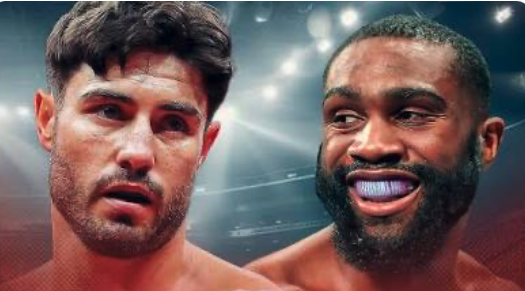
Jaron Ennis may be one victory away from controlling nearly the entire junior-middleweight division. According to Josh Kelly’s trainer and manager, Adam Booth, terms have been agreed for Ennis and Kelly to meet in a three-belt unification, with early January 2027 now appearing to be the likely window.
The fight is not official. Booth told The Ring that Kelly’s terms are settled and that he understands Ennis has also agreed, but DAZN and Matchroom have not provided an exact date. No venue has been announced, and neither side has publicly confirmed that final bout contracts have been signed.
That uncertainty should not obscure the importance of the proposed matchup. Ennis holds the WBA and WBO titles after stopping Xander Zayas in the seventh round on June 27. Kelly owns the IBF belt, which he retained with a unanimous-decision victory over Caoimhín Agyarko on July 25. If they meet, three of the four major championships at 154 pounds will be at stake.
For Ennis, the fight would be an opportunity to turn an explosive arrival into a much stronger claim of divisional supremacy. For Kelly, it would be the defining test of a career resurgence that has already carried him from gifted contender to world champion.
Terms May Be Agreed, but the Fight Still Needs a Date
Booth’s account suggests that the most important negotiations have already taken place. He told The Ring that Kelly has agreed to his terms and that he understands Ennis has done the same. What the fighters apparently do not have is a confirmed night and location.
That distinction matters.
Boxing regularly treats an agreement in principle as though a fight has been finalized, only for scheduling, broadcasting or promotional details to delay the announcement. Booth’s statement is significant evidence that both sides intend to proceed, but agreed terms are not necessarily the same as signed final contracts.
Eddie Hearn previously told Pro Boxing Fans that Matchroom was targeting December 2026 or very early January 2027. Hearn also said Matchroom’s contracts with both fighters allow the promoter to activate the matchup. Booth’s October 5 comments narrowed the expectation toward early January, but DAZN and Matchroom still must provide the details that turn the plan into an event.
Until that happens, Ennis-Kelly should be described as a proposed unification rather than a completed booking.
The waiting period may also benefit Kelly physically. According to Booth’s comments reported by The Ring, Kelly underwent minor surgery to repair a broken nose after defeating Agyarko. An early-January date would give the IBF champion additional recovery time before entering the biggest fight of his career.
For now, the central facts are straightforward: the fighters reportedly have terms, the promoter wants the matchup, and the broadcaster has not supplied a date. The missing announcement is no small formality, but this appears to be more than casual speculation.
Kelly Would Test More Than Ennis’ Power
Ennis made an emphatic statement against Zayas. He stopped him in the seventh round and emerged with the WBA and WBO championships, immediately placing himself near the top of the junior-middleweight division.
That performance proved Ennis could carry his offensive danger into a new weight class and overwhelm a championship-level opponent. It did not prove that he had already solved every type of fighter at 154 pounds.
Kelly would present a different problem.
Where the Zayas fight gave Ennis opportunities to impose his speed, pressure and destructive combinations, Kelly’s movement and timing could force him to operate with greater patience. Ennis may have to close distance without becoming careless, limit Kelly’s exits and maintain control when immediate openings are unavailable.
That is why Kelly represents the first real test of Ennis’ proposed takeover at junior middleweight. The issue is not whether Kelly is more dangerous in every category than Zayas. The issue is whether he asks different tactical questions while bringing a legitimate championship into the ring.
Dominant fighters are not defined only by what they do when an opponent cooperates with their preferred rhythm. They are defined by how quickly they recognize adjustments, remove escape routes and continue creating opportunities when the easy attacks disappear.
Ennis has already demonstrated the ability to produce a destructive result at the weight. Beating Kelly would provide stronger evidence that he can control the division across contrasting styles.
It would also add another belt. If Ennis wins, he would own the WBA, WBO and IBF titles, leaving only the WBC championship outside his possession. That would place him in the clearest possible position to pursue undisputed status, assuming the promotional and competitive pieces align.
But that future should not be treated as inevitable before Ennis has dealt with the opponent directly in front of him.
Kelly’s Career Turnaround Has Reached Its Defining Fight
Kelly enters the discussion with momentum of his own.
According to The Ring, he defeated Bakhram Murtazaliev by majority decision on January 31 to win the IBF championship. He then retained the belt against Agyarko on July 25, earning a unanimous decision before undergoing the minor nose surgery disclosed by Booth.
Those two victories changed Kelly’s position in the division. He is no longer simply a technically gifted fighter whose ability looks impressive in isolated moments. He is a reigning champion who has won a title and successfully defended it.
Beating Ennis would complete that transformation.
Kelly would not merely retain the IBF belt. He would take the WBA and WBO championships from the fighter currently carrying the greatest momentum at 154 pounds. A victory of that scale would make Kelly the division’s central figure and force the boxing public to reassess the balance of power around him.
The challenge is substantial because Kelly cannot rely on movement alone. Ennis is too fast, too aggressive and too capable of sustaining offense for a challenger to assume he can simply stay out of danger for an entire fight. Kelly would need to make his movement purposeful, interrupt Ennis’ entries and create enough offensive consequences to prevent the unified champion from advancing without hesitation.
That is what makes the matchup more revealing than the number of belts alone suggests.
Ennis would be trying to prove that his physical advantages and offensive instincts remain decisive against a mobile, measured champion. Kelly would be trying to prove that his timing and composure can survive the pressure of the most dangerous assignment in his championship run.
Their recent results show two fighters arriving through different routes. Ennis produced the more dramatic statement by stopping Zayas. Kelly built his position through a majority-decision title win over Murtazaliev and a unanimous-decision defense against Agyarko.
January, if the date is confirmed, would determine which form of momentum carries greater weight.
Three Belts Would Change the Division, but Not Complete It
The Ennis-Kelly winner would leave with three major championships and the strongest claim to being the leading fighter at junior middleweight. The winner would not be undisputed.
Sebastian Fundora still holds the WBC title. According to The Ring, he is scheduled to defend it against mandatory challenger Ermal Hadribeaj on October 17. That fight must take place before anyone can know whether Fundora will remain part of the undisputed picture.
Hearn told The Ring that his preferred roadmap, if Ennis beats Kelly, is to match Ennis with Fundora for all four championships. Boxing 247 has also reported that Fundora is interested in facing the Ennis-Kelly winner.
Interest is not an agreement.
An undisputed fight would depend on Ennis defeating Kelly, Fundora defeating Hadribeaj and the relevant promotional parties reaching terms. If Kelly wins, an entirely different negotiation may be required. Even if both expected winners advance, boxing has repeatedly demonstrated that an obvious fight and a completed deal are not the same thing.
The sport should therefore resist promoting Ennis-Fundora as the guaranteed destination. It is a logical possibility and perhaps the most attractive outcome for the division, but multiple fights and negotiations stand between the current moment and that matchup.
The immediate question is whether Ennis-Kelly becomes official.
If it does, the fight will settle something more meaningful than which man collects three belts. It will test whether Ennis’ victory over Zayas represented the beginning of genuine control at junior middleweight or merely an exceptional first step. It will also establish whether Kelly’s championship resurgence can withstand a level of speed, pressure and offensive ambition he has not encountered during his title run.
Ennis does not need to apologize for how quickly the takeover conversation started. He won two championships by stoppage and created the kind of performance that naturally produces ambitious expectations.
He does need another major victory before those expectations can be treated as established reality.
Kelly is the opponent who can provide it—or dismantle it.
LET’S TALK ABOUT IT
Is Josh Kelly the opponent who will show whether Jaron Ennis can truly rule junior middleweight, or did Ennis prove enough by stopping Xander Zayas and winning the WBA and WBO titles?
And if Ennis-Kelly happens in January, should the winner immediately pursue the WBC champion—or are there still too many unresolved pieces to treat an undisputed fight as the inevitable next step?
Outlets cited in this story
- Boxing 247
- The Ring
- DAZN
Spot an error? Send a correction. We fix mistakes in the open.