Jesse “Bam” Rodriguez Is Preparing for Naoya Inoue at 122 — But an Unsigned Super-Fight Could Cost Him a Bantamweight Reign
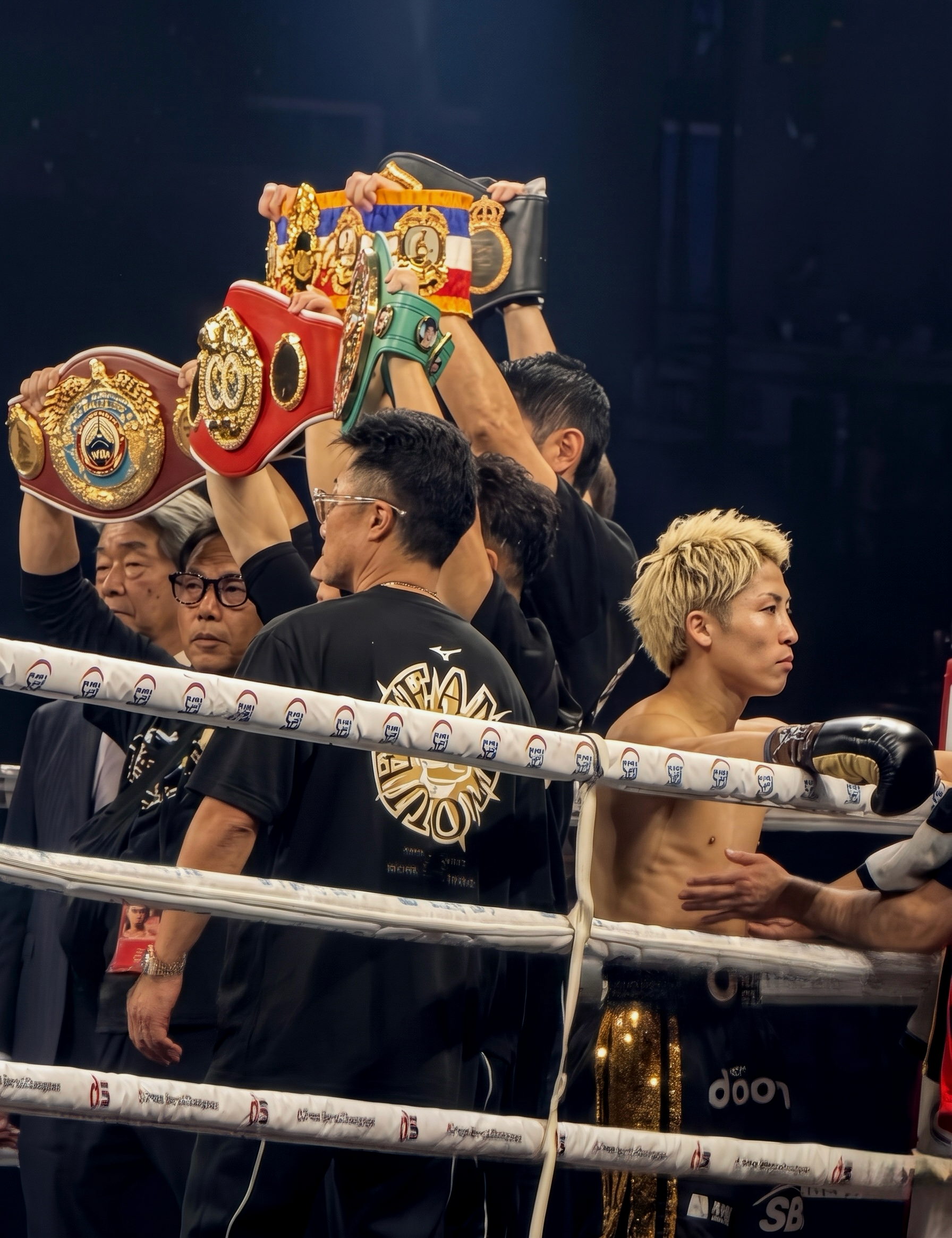
Jesse “Bam” Rodriguez has already begun preparing his body for a possible move to super-bantamweight, where a career-defining fight with Naoya Inoue could await. His trainer, Robert Garcia, believes Rodriguez can arrive at 122 pounds without surrendering a meaningful physical advantage—and David Benavidez is backing him to defeat the undisputed champion.
The ambition is clear. The fight is not.
No contract, finalized date or confirmed venue has been announced for Inoue-Rodriguez. March 2027 has been discussed publicly as a potential target, while reports have mentioned possible locations in Japan, but none of those details has been made official. Garcia has openly requested that Inoue’s representatives send a contract, yet public interest and active negotiations are not the same as a completed agreement.
That uncertainty leaves Rodriguez facing a significant career decision. The WBA bantamweight champion can continue building at 118 pounds, potentially through an unconfirmed unification fight with Christian Medina, or he can position himself to jump immediately into the most demanding opportunity available at 122.
One path builds a championship reign.
The other could define his legacy in a single night.
Benavidez Backs Rodriguez, While Garcia Builds Him for 122 Pounds
David Benavidez told ESNEWS that he favors Rodriguez against Inoue, describing the proposed matchup as a great fight and making clear that “Bam” has his support. As Boxing News reported, Benavidez also acknowledged a personal element behind that prediction: he has met Rodriguez and likes him.
That does not make his opinion meaningless. Benavidez understands the demands placed on elite fighters and has watched Rodriguez develop into a champion across multiple weight classes. But his stated connection is relevant because it shows that the prediction is not being presented as a completely detached technical assessment.
Benavidez is backing a fighter he respects personally.
Garcia’s comments address a more practical concern: whether Rodriguez can move from bantamweight to super-bantamweight without becoming physically overmatched. In a separate ESNEWS interview reported by Boxing News, Garcia said his team has been developing Rodriguez’s body for 122 pounds. He also predicted that Rodriguez and Inoue would be approximately the same size once they entered the ring.
That assessment matters because the proposed fight cannot be analyzed only through reputation and skill. Rodriguez won the WBA bantamweight championship by stopping Antonio Vargas in the sixth round on June 13, according to the WBA. Inoue, meanwhile, retained his undisputed super-bantamweight championship by unanimous decision against Junto Nakatani on May 2, as recorded by the WBC and WBA.
Rodriguez would therefore be leaving the division in which he recently became champion to challenge the established champion four pounds above it.
Garcia’s confidence suggests that the move is not being treated as a desperate attempt to manufacture a lucrative matchup. Rodriguez’s team appears to have incorporated 122 pounds into his physical development and believes he can compete there effectively.
Still, believing Rodriguez will be comparable in size to Inoue does not prove that he will be equally effective at the weight. Rodriguez has not yet demonstrated at super-bantamweight what he has shown in the lower divisions, while Inoue has already established himself as the undisputed champion there.
Size may be one part of the test.
It is not the entire test.
Moving Immediately Would Put Rodriguez’s Bantamweight Reign on Hold
Garcia has said Rodriguez would consider skipping another bantamweight appearance if negotiations for Inoue produce satisfactory terms. That position is understandable because fights of this magnitude are rarely guaranteed to remain available.
Boxing careers do not move according to clean long-term plans. Mandatory obligations, promotional disagreements, injuries and unexpected results can destroy a major matchup before the fighters ever reach the ring. If Rodriguez receives an acceptable contract to challenge Inoue next, delaying that opportunity could mean losing it completely.
But moving immediately would come with a cost.
Rodriguez has only just claimed the WBA bantamweight championship. The victory over Vargas gave him a position from which he could begin establishing control over the division, and a possible unification fight with Medina has been discussed. That matchup remains unconfirmed, and it is unknown whether it will happen before any move to face Inoue.
The championship questions are also unresolved. There has been no official announcement explaining what would happen to Rodriguez’s WBA title if he moved to 122 pounds, and it would be premature to assume that he must vacate or that any particular arrangement has been agreed.
What is clear is that a move toward Inoue would redirect Rodriguez’s immediate career away from building at bantamweight.
A Medina fight, if finalized, could help Rodriguez strengthen his position at 118 pounds and add another significant achievement to his reign. It could also create another opportunity for something to go wrong. Even a victory would require time, recovery and another negotiation before an Inoue fight could be revisited.
That is the tension behind Garcia’s willingness to skip another bantamweight appearance. Rodriguez would not simply be choosing one opponent over another. He would be deciding whether division-building work should take priority over a rare chance to challenge one of boxing’s most accomplished reigning champions.
The Inoue Opportunity Changes the Stakes, Not the Facts
Garcia’s public request for a contract shows that Rodriguez’s interest is serious. His comments about developing Rodriguez for 122 pounds also suggest that the team is doing more than discussing the matchup casually.
Those developments change how the speculation should be viewed. This is not merely a fight invented by supporters comparing two elite talents from neighboring divisions. Rodriguez’s trainer is openly discussing the move, the preparation and the possibility of bypassing another bantamweight fight.
What those comments do not establish is equally important.
They do not confirm that the fighters’ representatives have exchanged a formal contract. They do not establish March 2027 as the official date. They do not settle whether Tokyo, the Fukuoka Dome or another location would stage the fight. They also do not reveal the financial arrangements, championship conditions or other contractual terms that could determine whether the matchup is acceptable.
Until those details are announced, Inoue-Rodriguez remains a proposed fight.
Boxing regularly allows an unsigned event to begin dominating the conversation around fighters who already hold championships and have other available opponents. Every interview becomes an update. Every prediction creates the impression of momentum. Eventually, the public can begin treating the matchup as inevitable even though the central business has not been completed.
Rodriguez should receive credit for appearing willing to take the risk. Moving up to challenge Inoue would represent a far more demanding assignment than remaining at bantamweight for a routine defense. A victory would carry greater historical value than simply protecting a new title against manageable opposition.
But the opportunity only becomes real when the agreement does.
Until then, Rodriguez has a WBA championship at 118 pounds and an uncertain possibility at 122.
Contracts and Performances Will Settle the Debate
Benavidez’s prediction adds another prominent voice to Rodriguez’s side, but it cannot answer the central questions surrounding the matchup. Neither can Garcia’s belief that the fighters will be similar in size.
The first meaningful answer must come from the negotiating table.
An official announcement would need to identify the opponent, date, venue, weight and championship terms. It would also clarify whether Rodriguez is moving directly to 122 pounds or taking another bantamweight fight first. Without that information, every discussion about his immediate future remains conditional.
If Inoue is next, Rodriguez will have the opportunity to prove whether his preparation can translate into elite performance at super-bantamweight. Garcia may be correct that the physical difference will be smaller than some expect, but Rodriguez would still be challenging a fighter who has already demonstrated championship effectiveness at that weight.
The matchup would not be decided by which fighter looks larger at a press conference or appears heavier on fight night. Rodriguez would have to carry his timing, composure, offensive variety and ability to control exchanges into a division where Inoue is already established.
If Medina comes first, that fight would present a different form of evidence. Rodriguez could strengthen his bantamweight reign and demonstrate that he can handle another major assignment without allowing the Inoue discussion to distract him. The risk is that another bout introduces another variable into a matchup that already lacks a signed agreement.
Neither choice is automatically wrong.
Staying at bantamweight would not represent a lack of ambition if Rodriguez were pursuing meaningful unification business. Moving directly to 122 would not represent reckless impatience if a legitimate Inoue contract arrived with acceptable terms.
The mistake would be allowing an unsigned fight to determine every decision before anyone has formally delivered it.
LET’S TALK ABOUT IT
Should Jesse “Bam” Rodriguez move directly to 122 pounds if an acceptable Naoya Inoue contract arrives, or should he first pursue unification and establish himself as the leading bantamweight?
And how much confidence should fans place in Robert Garcia’s size assessment when Rodriguez has yet to prove himself against an undisputed champion at super-bantamweight?
Outlets cited in this story
- Boxing News
Spot an error? Send a correction. We fix mistakes in the open.