
Lawrence Okolie Seeks a Return After Drug-Test Resolution — But Boxing Still Needs Answers

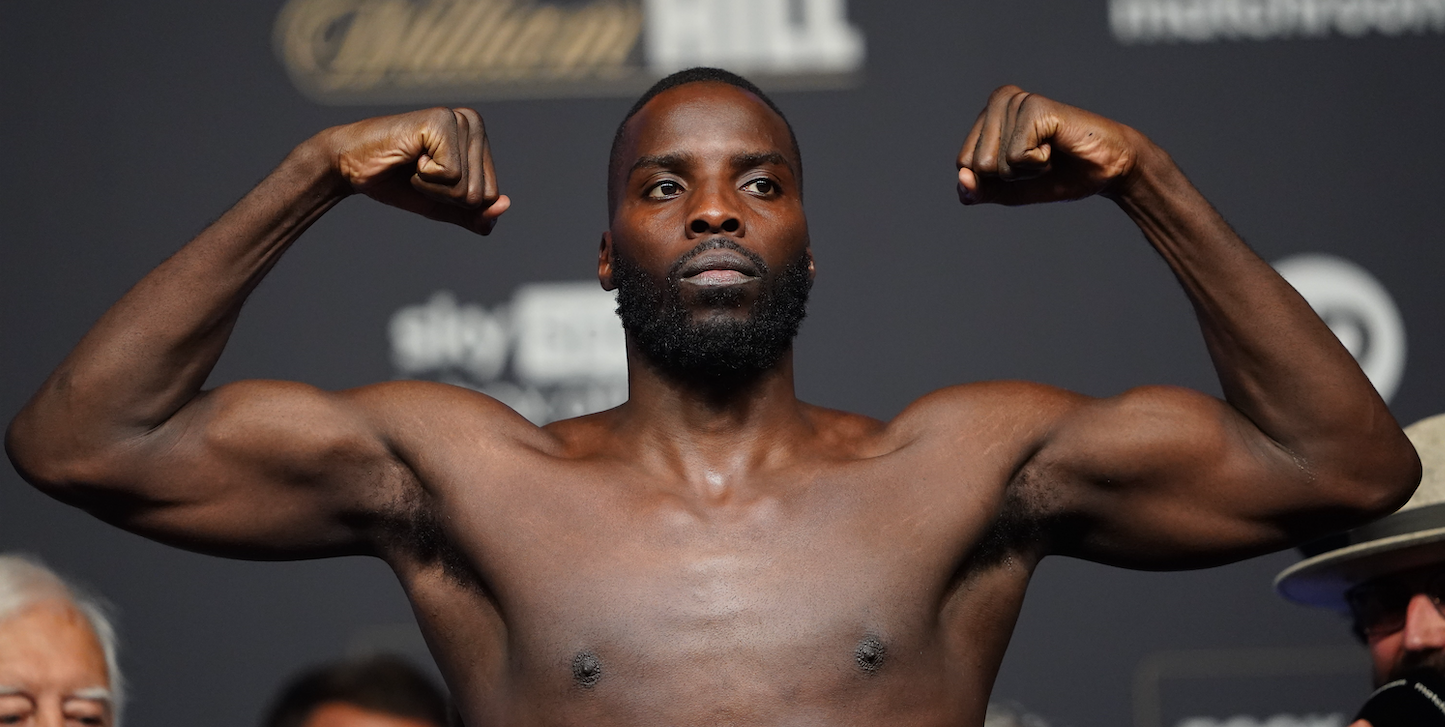
Lawrence Okolie has taken the first significant step toward resuming his boxing career after an adverse analytical finding derailed his scheduled heavyweight fight with Tony Yoka in April.
On October 16, the World Boxing Council and Okolie jointly announced that they had reached an adjudication agreement under the WBC Clean Boxing Program. According to the sanctioning body, Okolie presented mitigating evidence supporting his position that a third party caused the prohibited substance to enter his system without his knowledge or consent. The WBC also considered his previous testing history and cooperation during the process.
That resolution changes Okolie’s position. A proceeding that had remained unresolved for months has now ended in an agreement, and the WBC is publicly welcoming his continued participation in testing and anti-doping education. Okolie says he expects to become active again in the coming months.
But the announcement stops short of answering the most important sporting questions.
The WBC did not identify the prohibited substance, publish the complete agreement, disclose whether Okolie received a sanction or confirm that he is immediately eligible to compete under its authority. The agreement may have reopened the door to a comeback, but the public still has not been shown exactly how far that door is open.
The April Finding Cost Okolie More Than One Fight
The case began with a sample collected on April 8, 2026. Queensberry Promotions later said the Voluntary Anti-Doping Association notified the company of Okolie’s adverse finding on April 20, five days before he was scheduled to face Yoka in Paris.
Queensberry publicly announced the development on April 21. Sky Sports reported that the planned event was subsequently cancelled, while BBC Sport also covered the collapse of the Okolie-Yoka fight.
An adverse analytical finding is not automatically proof of intentional doping. It indicates that testing detected a prohibited substance or related marker requiring review under the applicable rules. Questions of intent, fault, contamination and sanction can depend on the evidence presented during that process.
Okolie said at the time that he had received treatment for an elbow injury and expected the investigation to clear his name. That was his explanation, not an independently established conclusion about how the substance entered his body. Neither the treatment itself nor a direct connection between that treatment and the adverse finding was publicly confirmed in the reporting provided.
The immediate consequence was clear even without a completed adjudication: Okolie lost the Yoka fight and the opportunity to continue building his heavyweight career.
That matters because the damage caused by an anti-doping case begins long before a final ruling. Training camps, scheduled events and career momentum can disappear while the process continues. Opponents move on, promoters revise their plans, and the fighter remains connected publicly to an unresolved test.
Six months after the sample was collected, Okolie finally has a resolution with the WBC.
What he does not yet have—at least publicly—is a complete explanation of what that resolution means.
The WBC Accepted Mitigating Evidence, Not a Publicly Documented Exoneration
In its joint statement with Okolie, the WBC said it considered mitigating evidence supporting his position that the prohibited substance entered his system because of a third party’s actions and without his knowledge or consent.
That is important language, but it must be read carefully.
The WBC did not say in its published statement that no violation occurred. It did not describe Okolie as fully exonerated. It did not disclose the evidentiary record or explain precisely how the third party introduced the substance into his system. It said the evidence supported Okolie’s position and that the parties had reached an adjudication agreement.
The organization also considered Okolie’s testing history and his cooperation throughout the proceedings. Those factors may have affected how the WBC assessed his level of responsibility or determined the appropriate outcome, but the practical consequences were not disclosed.
Okolie, for his part, emphasized that clean sport remains important to him and said he looks forward to returning to active competition in the coming months. WBC president Mauricio Sulaimán welcomed Okolie’s commitment to helping educate fighters about anti-doping compliance and athlete responsibility.
Under the announced resolution, Okolie will remain available for additional testing and participate in education, awareness and compliance efforts.
Those obligations suggest that the WBC intends to maintain a working relationship with him. They also make a return appear more realistic than it did while the proceeding remained unresolved.
But an agreement is not necessarily the same thing as a complete clearance.
Anti-doping cases can end in different ways. A fighter can establish a lack of intent without establishing a total absence of responsibility. Mitigating evidence can reduce consequences without eliminating them. An agreement can settle a dispute while leaving important details confidential.
Without the terms, the public cannot determine which of those possibilities applies here.
The distinction is not an accusation against Okolie. It is a limitation created by the information the WBC chose to release.
The Resolution Leaves the Central Sporting Questions Unanswered
The most obvious omission is the identity of the prohibited substance.
That information matters because not every adverse finding raises the same questions. The substance, its potential source, the concentration involved and the rules governing its use can all be relevant when evaluating an explanation. Without even the substance being named, the public cannot meaningfully assess the WBC’s conclusion or understand the nature of the case.
The second omission concerns sanctions.
The WBC did not announce whether Okolie received a suspension, a period of ineligibility, a warning or another consequence. It also did not explicitly say that no sanction was imposed. The requirement that he remain available for additional testing and assist with anti-doping education may be part of the agreed outcome, but the statement does not establish whether those are the only conditions.
The third issue is immediate eligibility.
Okolie said he hopes to become active again in the coming months, but that is not the same as the WBC confirming that he can compete immediately. The announcement did not clearly state whether he is eligible for WBC ranking consideration, whether he can participate in a WBC-sanctioned contest now or whether any further requirements must be satisfied first.
There is also the question of regulatory authority. The WBC is a sanctioning organization, but boxing events require approval from the relevant commission or governing body in the jurisdiction where a fight takes place. The announced agreement does not reveal whether another regulator will review the case independently or require additional documentation before licensing Okolie.
These are not minor technicalities. They determine whether Okolie currently has a path to a confirmed fight or merely has a more favorable position from which to begin seeking one.
The WBC may have sound reasons for keeping parts of the agreement private. Anti-doping proceedings can involve medical records, confidential evidence and legal considerations that cannot always be published in full. But there is a large gap between releasing every private document and withholding nearly every detail needed to understand the sporting outcome.
The substance could be identified without publishing Okolie’s complete medical history. The applicable rule could be explained without revealing confidential testimony. The existence and duration of any sanction could be disclosed without naming the third party involved.
A joint statement tells the public that the dispute has ended.
It does not tell the public why this particular outcome was appropriate.
Okolie’s Next Fight Will Clarify His Career, Not the Agreement
The documented timeline is straightforward even if the adjudication is not.
The sample was collected on April 8. Queensberry said VADA notified the promoter of the adverse finding on April 20. The finding was publicly announced on April 21, and the scheduled April 25 fight with Yoka was lost as the Paris event was cancelled. On October 16, Okolie and the WBC announced their agreement.
The next meaningful development should be more than another expression of intent.
First, the WBC needs to clarify whether Okolie is currently eligible and whether the agreement includes any sanction. Second, the relevant commission will need to approve his participation when a location is selected. Third, a promoter must confirm an opponent and date. Finally, Okolie will have to continue testing and actually make it back into the ring.
Until those steps occur, talk of a comeback remains a plan rather than a completed return.
A confirmed fight would still matter. It would show that the various sporting and regulatory barriers had been addressed sufficiently for Okolie to compete. It would also begin answering what the disruption has done to his career after months without the Yoka opportunity.
The opponent would matter as well. A cautious comeback matchup could give Okolie time to recover his rhythm, while a significant heavyweight assignment would signal that his team believes the interruption has not changed his ambitions.
But no opponent can answer the transparency questions surrounding the WBC agreement.
Okolie could return, win impressively and restore his momentum inside the ring. That would demonstrate what he can still do as a heavyweight. It would not identify the substance, explain the rules applied to his case or reveal whether the outcome included a sanction.
His next performance can resolve the sporting uncertainty around his form.
Only disclosure can resolve the uncertainty around the adjudication.
LET’S TALK ABOUT IT
Does the WBC’s explanation provide enough reason to accept Lawrence Okolie’s return, or should the prohibited substance and the full practical terms of the agreement be disclosed first?
If Okolie is eligible to compete immediately, who should he face in his first fight back?
Outlets cited in this story
- Sky Sports
- BBC Sport
Spot an error? Send a correction. We fix mistakes in the open.