
Moses Itauma’s First Defeat Raises Championship Questions — But Adaptation Is the Real Test

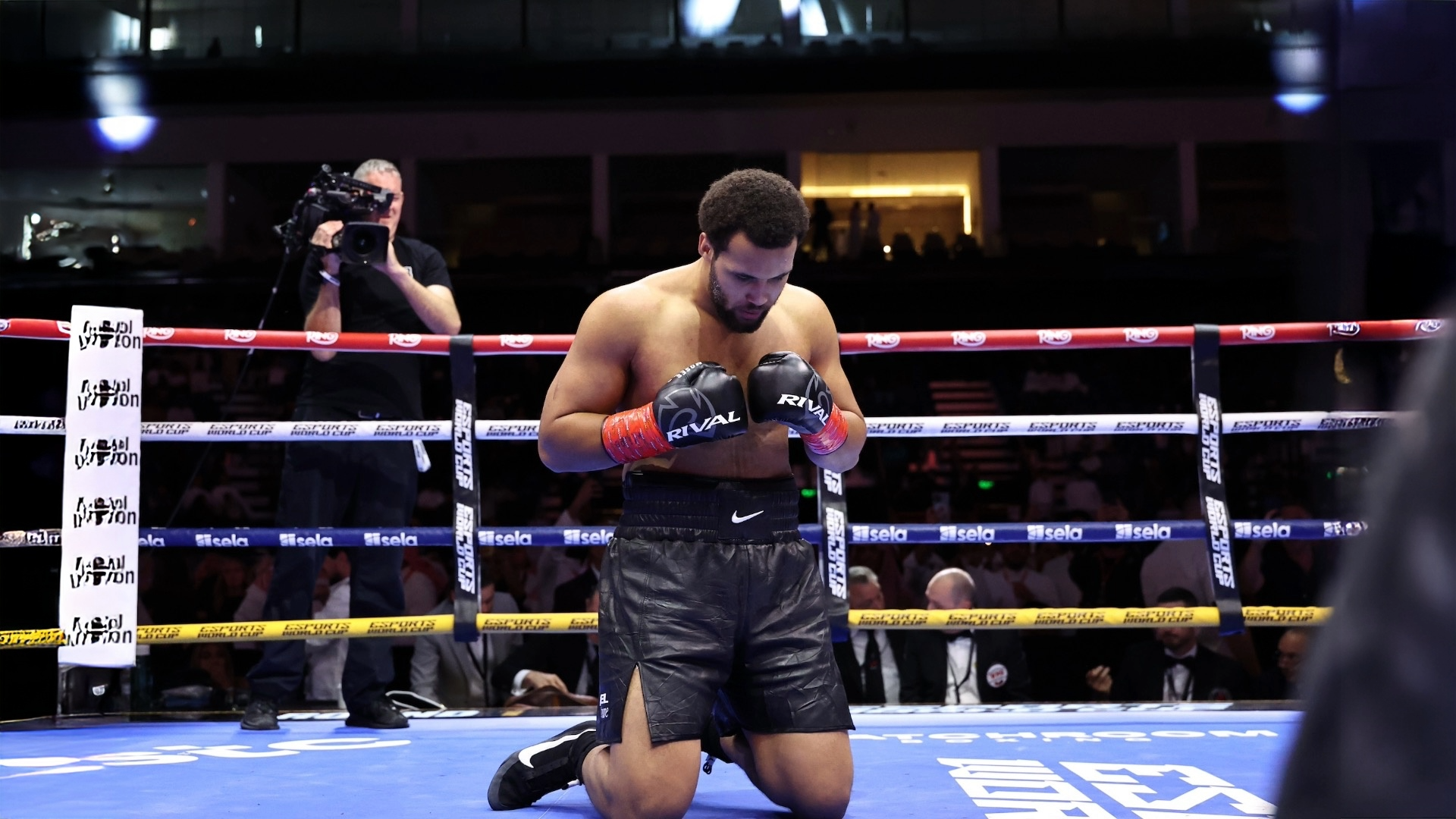
Moses Itauma entered his first world-title fight carrying the expectations that follow an exceptional young heavyweight. He left it with his first professional defeat—and with questions that punching power and athleticism alone cannot answer.
Filip Hrgovic stopped Itauma in the ninth round at London’s O2 Arena on August 29, 2026, according to Sky Sports, winning the vacant IBF heavyweight title. Itauma scored a second-round knockdown and controlled the early action, but the fight changed as his energy declined and Hrgovic continued applying pressure. Itauma’s corner eventually threw in the towel when he was no longer defending himself effectively.
Tony Bellew has now added a more personal question to the discussion. During an appearance on the Fight Your Corner podcast, the former world champion questioned whether Itauma genuinely enjoys boxing or studies the sport with the commitment expected of a future champion.
That conclusion is impossible to prove from outside Itauma’s camp. The performance against Hrgovic, however, exposed issues that can be examined: pacing, defensive discipline and the ability to adjust when an opponent survives the initial attack.
Itauma’s championship potential should be judged by what he does about those problems—not by speculation about how he privately feels about the sport.
Bellew Questions Itauma’s Passion but Still Backs His Talent
Bellew’s position is more complicated than a simple dismissal of Itauma.
Speaking on Fight Your Corner, Bellew said he does not believe the young heavyweight is “a student of the game” and questioned whether he actually likes boxing. At the same time, Bellew described Itauma’s natural ability as “unbelievable,” praised the courage he showed while exhausted against Hrgovic and predicted that he will eventually become a world champion.
That combination matters.
Bellew is not arguing that Itauma lacks the talent to reach the top. He appears to be questioning whether the fighter possesses the deeper engagement required to develop when natural gifts are no longer enough to control every contest.
It is a provocative theory, particularly after a first defeat. It is also only a theory.
Itauma has not responded directly to Bellew’s claim in the sources reviewed by Boxing News and Boxing News 24. Without that response—or evidence from inside his preparation—it would be unfair to present Bellew’s interpretation as an established truth about the fighter.
There are also less personal explanations for what happened against Hrgovic. Itauma was 21 years old, competing for a vacant heavyweight world title and facing an experienced opponent who survived his early success. A young fighter struggling in unfamiliar later-round conditions does not automatically mean he lacks passion. It may simply mean he encountered a problem that his rapid rise had not yet taught him to solve.
Bellew’s strongest criticism was not psychological. It was tactical.
He argued that after several rounds of sustained attacks failed to stop Hrgovic, Itauma needed to change his approach and make greater use of the jab. That is a far more useful place to begin evaluating the defeat.
Hrgovic Survived the Early Attack and Changed the Fight
Sky Sports reported that Itauma started strongly and dropped Hrgovic in the second round. For a time, the younger heavyweight appeared to be controlling the contest and moving toward the kind of decisive victory that would have confirmed the excitement surrounding his rise.
Hrgovic refused to disappear.
He recovered from the knockdown, remained in the fight and forced Itauma to operate beyond the explosive opening stages. As the rounds passed, Itauma tired and became increasingly vulnerable when Hrgovic returned fire. The pressure eventually produced the ninth-round stoppage, with Itauma’s corner intervening once he could no longer protect himself effectively.
Hrgovic was generous afterward. According to Sky Sports, the new IBF champion called Itauma the best opponent he had faced while also saying the younger fighter needed more experience.
That assessment captures both sides of the result.
Itauma’s early success should not be ignored simply because the fight ended badly for him. He hurt and controlled the man who eventually became the IBF champion. That is meaningful evidence of his ability.
But early control is not the same as championship control.
Boxing News 24 offered a technical assessment that connected Itauma’s fatigue to energy-intensive movement, repeated attempts to force the knockout and his reactions when Hrgovic fired back. Those are the outlet’s analytical conclusions rather than confirmed explanations from Itauma or his team, but they fit the visible pattern of a fighter expending heavily without finding a sustainable second approach.
Once Hrgovic absorbed Itauma’s best early work, the contest required a different kind of performance. Itauma needed to conserve energy, reestablish distance, use the jab and reduce the opportunities for Hrgovic to answer.
That adjustment never became clear enough to reverse the momentum.
The Measurable Problem Was Itauma’s Failure to Adapt
Boxing encourages dramatic judgments after dramatic results.
Before facing Hrgovic, Itauma’s early finishes and rapid rise made him appear capable of accelerating through the heavyweight division. After the stoppage, the temptation is to move too far in the opposite direction and treat the defeat as proof that he was never ready to become a champion.
Neither conclusion accounts for the complexity of development.
The loss did expose specific concerns. Itauma could not sustain his early pace. His defense became less reliable as he tired. Most importantly, he did not find an effective tactical answer once Hrgovic survived the initial assault and began changing the physical direction of the fight.
Bellew’s criticism about using the jab addresses that failure directly. A jab would not have guaranteed victory, but it could have helped Itauma manage distance, interrupt Hrgovic’s advance and create periods of control without requiring another exhausting power attack.
The larger issue is whether Itauma recognized the need to change—or whether he recognized it but could no longer execute the adjustment.
Those are different problems. One concerns decision-making under pressure. The other concerns conditioning and technical discipline under fatigue. Both can be tested in future fights, and both can be improved through preparation and experience.
A supposed lack of passion is much harder to establish. Fighters express their relationship with boxing differently. Some study its history obsessively. Others approach it primarily as a profession. Neither personality guarantees championship success or failure.
Commitment eventually becomes visible through behavior: preparation, consistency, tactical growth and the response to adversity.
That is where Itauma’s next chapter should be judged.
The Defeat Changes His Position, Not His Potential
Itauma is no longer protected by an unbeaten record. The questions about his readiness now have evidence behind them rather than existing as hypothetical concerns.
He has shown that he can hurt a world-class heavyweight early. He has not yet shown that he can remain composed, defensively responsible and tactically flexible when that opponent survives and extends the fight.
That distinction is significant, but it is not a final verdict.
The record described by the Hrgovic fight is not the record of a prospect who was hopelessly outclassed from the opening bell. It is the record of a gifted young heavyweight who created meaningful early success, scored a knockdown and then lost after an experienced opponent absorbed his attack and brought him into increasingly difficult rounds.
The defeat therefore provides evidence of developmental gaps—not proof of a permanent ceiling.
It also matters that Bellew, despite questioning Itauma’s passion, still expects him to become a world champion. His criticism is ultimately a warning about what must change rather than a declaration that change is impossible.
Hrgovic’s reaction points in a similar direction. Calling Itauma his best opponent while emphasizing the need for experience suggests that the new champion saw serious ability alongside the flaws he exploited.
One loss cannot prove that Itauma lacks dedication. It also should not be minimized as an accident with no larger meaning. He was presented with a championship problem and could not solve it.
What happens next will reveal whether that problem becomes a lesson.
The January Return Must Show More Than Another Knockout
Promoter Frank Warren told Playbook Boxing that Itauma is expected to return in January and will remain with trainer Ben Davison, as reported by Boxing News. No opponent was identified in that report.
Remaining with Davison gives the partnership an opportunity to respond to the Hrgovic defeat rather than abandoning the existing process after its first major setback. The important issue will be whether that response produces visible changes.
A quick knockout might restore some confidence, but it would not necessarily answer the questions created at the O2 Arena. Itauma has already demonstrated that he can overwhelm opponents when his power, speed and aggression dictate the fight.
The revealing moments will come if his next opponent survives.
Can Itauma control his energy instead of treating every opening as the beginning of the finish? Can he use the jab consistently when a sustained attack fails? Can he remain defensively disciplined when an opponent answers? Can he listen, process instructions and change the fight between rounds?
Those are the standards that should matter in January.
The quality and style of the opponent will also determine how much can realistically be learned. If Itauma faces someone unable to pressure him or extend the contest, an impressive victory may rebuild momentum without establishing that the weaknesses exposed by Hrgovic have been corrected.
A comeback does not have to answer every question immediately. It does need to show that the loss has influenced the work.
LET’S TALK ABOUT IT
Did the Hrgovic defeat expose a ceiling in Moses Itauma’s championship potential, or did it give a gifted young heavyweight the education his rapid rise had denied him?
What improvement must Itauma show in January before you are ready to consider him a future world champion again?
Outlets cited in this story
- Boxing News 24
- Boxing News
- Sky Sports
Spot an error? Send a correction. We fix mistakes in the open.