
Oleksandr Usyk Considers Fury and Benavidez After Wilder Talks Collapse — But His Final Fight Is a Choice Between Legacy and Spectacle

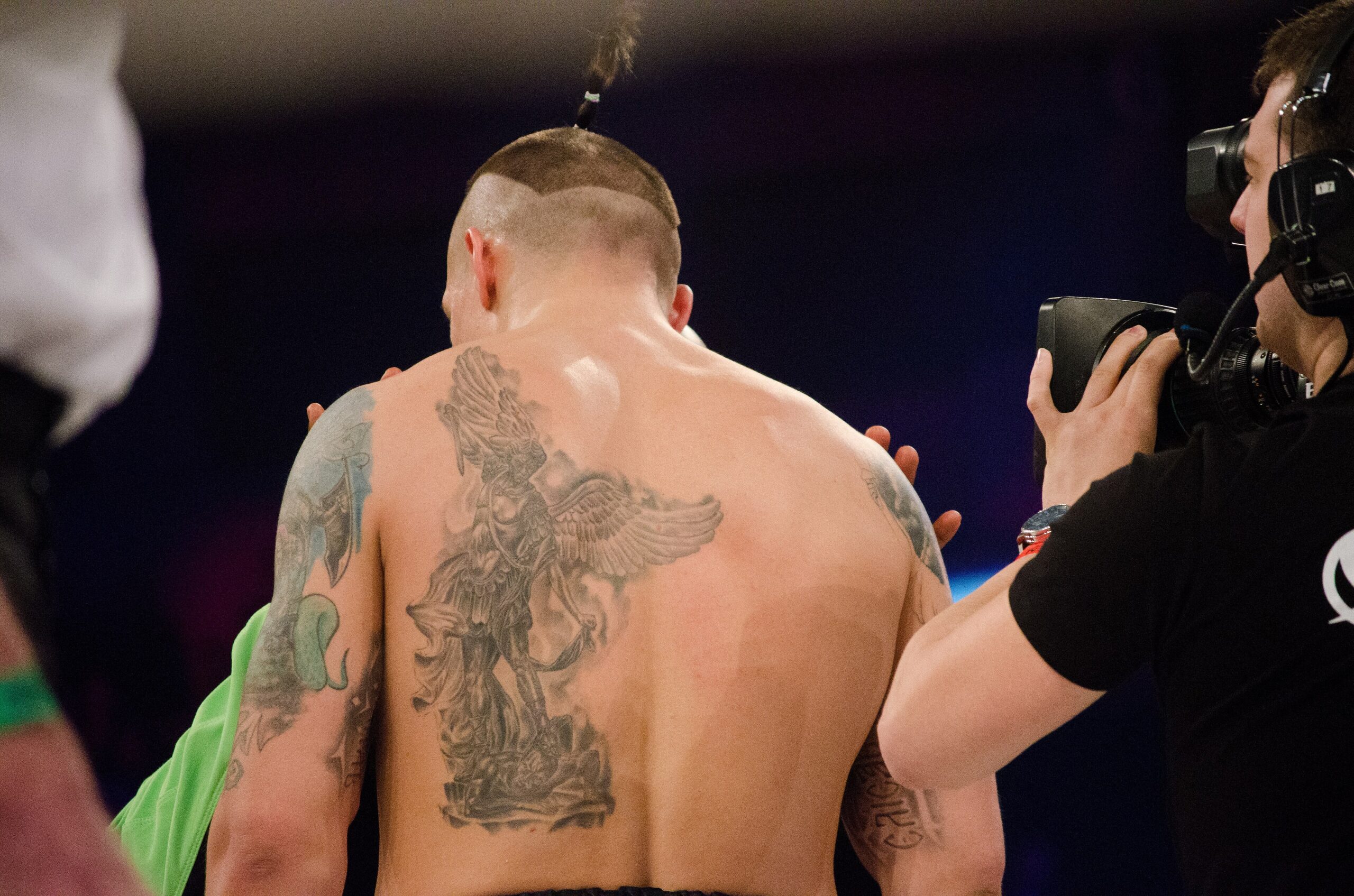
Oleksandr Usyk’s search for a final opponent has reportedly taken another turn. After negotiations with Deontay Wilder stalled, the former heavyweight champion is now being linked to two dramatically different possibilities: a third fight with Tyson Fury or a fresh matchup against David Benavidez.
Mike Coppinger reported on October 15 that Fury and Benavidez were considered “viable options” for Usyk, according to Boxing News. The Fury possibility reportedly depends on Fury defeating Anthony Joshua, while Benavidez would be moving beyond the cruiserweight division in pursuit of the biggest fight of his career.
Neither matchup is confirmed. There has been no official announcement, and no agreement, date, venue, purse, broadcaster, weight arrangement or sanctioning plan has been disclosed. There is also no public confirmation that Usyk has formally authorized negotiations with either fighter.
For now, these are reported possibilities rather than scheduled fights. But the names reveal the two directions Usyk could take as he considers the ending to an extraordinary career.
Fury would offer history, familiarity and an established rivalry. Benavidez would offer novelty, ambition and considerable uncertainty.
Usyk is not simply choosing between opponents. He may be choosing between a legacy sequel and a new spectacle.
The Wilder Collapse Has Reopened Usyk’s Farewell Plans
Usyk’s next move appeared to be heading toward Wilder until reports indicated that those negotiations had broken down. Boxing News reported that the discussions had been abandoned, while Coppinger previously described the talks as “dead.”
The exact reason for the collapse remains unclear. Neither camp has publicly provided a definitive explanation establishing why the proposed fight failed, and there is no confirmed evidence that the possibility could never be revived.
What has changed is the direction of the conversation surrounding Usyk.
The Ring reported that Usyk stopped Rico Verhoeven in the 11th round on May 23, 2026. A little more than a month later, on June 26, the same outlet reported that Usyk was vacating his WBA, WBC and IBF heavyweight titles before what he called his final fight.
That decision separated Usyk’s farewell from the ordinary obligations of defending multiple championships. Without those belts determining mandatory challengers and title requirements, his last opponent could be selected according to a different calculation—legacy, commercial appeal, personal interest or some combination of all three.
Wilder would have brought his own powerful sales pitch. He is an established heavyweight name whose punching reputation could create danger even in a matchup against a fighter as accomplished as Usyk. Once those talks reportedly ended, however, the opponent search became less predictable.
Fury and Benavidez now represent opposite answers to the same question.
Does Usyk finish by returning to the rivalry that defined his heavyweight reign, or does he create an entirely new event against an unbeaten champion entering unfamiliar territory?
A Fury Trilogy Would Sell History That Usyk Has Already Written
The argument for a third Usyk-Fury fight begins with significance.
Their first two meetings became the defining rivalry of Usyk’s heavyweight run. ESPN recorded Usyk defeating Fury by split decision on May 18, 2024, before winning their December 21 rematch by unanimous decision. Those victories established more than superiority on a single night. Usyk beat Fury twice, under different circumstances, with two separate sets of scorecards.
That is a difficult competitive argument to overturn.
A trilogy would still carry considerable promotional value because both men are connected by history. Their contrasting styles, personalities and physical dimensions remain recognizable, and a final meeting could be marketed as the conclusion of one of the era’s most important heavyweight rivalries.
But the sporting burden now belongs to Fury.
According to Coppinger’s report, Fury would first need to defeat Joshua for the trilogy to remain a viable option. A victory in that fight could restore momentum and create a natural promotional bridge to Usyk. Fury could present himself as a renewed challenger who earned another opportunity by overcoming one of the division’s biggest names.
Even then, beating Joshua would not erase two losses to Usyk.
A third fight would need to answer why the rivalry remains competitively unresolved. Fury did not lose once under controversial circumstances and then demand an immediate correction. He received a rematch and lost again, this time by unanimous decision.
That does not make a trilogy meaningless. Fighters can change tactics, rebuild confidence and produce different outcomes in repeated meetings. Fury’s size, experience and adaptability would still require Usyk to prepare for a serious heavyweight contest.
It does mean the third fight cannot rely entirely on history to justify itself.
Fury would be attempting to reverse a rivalry Usyk has already settled twice. If the trilogy is going to represent more than an attractive sequel, Fury must make a convincing case that the version emerging from a Joshua victory is meaningfully different from the fighter Usyk has already defeated.
Benavidez Offers Freshness Without Heavyweight Proof
Benavidez presents the opposite proposition.
Boxing News identifies him as the unbeaten WBA and WBO cruiserweight champion, and the outlet reported that both Benavidez and his father-trainer, Jose Benavidez Sr., have publicly pursued a fight with Usyk. Unlike Fury, Benavidez would arrive without any previous losses to overcome or familiar tactical story to repeat.
The appeal would be immediate.
An unbeaten champion moving up to challenge Usyk creates intrigue because the audience would be seeing something new. Benavidez would bring ambition, confidence and the uncertainty that surrounds any accomplished fighter entering a larger division against an elite opponent.
Freshness, however, is not the same as proof.
The supplied reporting establishes Benavidez’s accomplishments at cruiserweight, but it does not establish that he has competed successfully as a heavyweight. No proposed weight has been announced, and there is no disclosed information about whether the fight would take place at the heavyweight limit or under another negotiated arrangement.
Those details would shape the entire competitive evaluation.
If Benavidez enters as a full heavyweight, questions will follow him into the ring. Can he add the necessary weight without sacrificing the speed and conditioning that helped make him successful? Can his power affect a larger opponent? Can he absorb the physical pressure and punches of a heavyweight who has already solved Fury twice?
Usyk’s own career demonstrates that movement between divisions should never be dismissed automatically. Skill, timing, discipline and intelligence can defeat natural size. But Usyk’s success does not guarantee that every cruiserweight champion can reproduce the same transition.
Benavidez would need to prove that his heavyweight challenge is more than a commercially fascinating leap.
Until the weight terms and preparation plan become known, the matchup remains easier to imagine than to evaluate. The name is compelling. The competitive foundation is incomplete.
Neither Reported Option Is Yet a Definitive Final Challenge
The strongest sales pitch for Fury is that he represents legacy. The strongest sales pitch for Benavidez is that he represents danger through the unknown.
Both descriptions require scrutiny.
Usyk is already 2–0 against Fury. A third fight might complete a trilogy on promotional posters, but the rivalry already has a clear leader. Fury would need a major performance against Joshua to create genuine demand for another opportunity rather than merely reminding audiences that familiar heavyweight names remain commercially valuable.
Benavidez has not lost, but an unbeaten record at cruiserweight does not establish his position against an elite heavyweight. His pursuit of Usyk shows ambition. It does not answer whether he is physically prepared for the assignment.
That leaves Usyk with two potentially lucrative fights that may be marketed as defining challenges without automatically being definitive ones.
The distinction matters because this is supposed to be his final appearance.
A farewell fight does not have to settle every debate in a division, particularly after Usyk has vacated his titles. He has earned substantial freedom to choose how he exits. But if the event is presented as the final test of his greatness, the opponent should bring a competitive question worthy of that description.
Fury’s question is whether he can finally solve a fighter who has beaten him twice.
Benavidez’s question is whether excellence at cruiserweight can survive a direct jump into a heavyweight fight of the highest consequence.
Both are legitimate questions. Neither has yet been supported by the developments necessary to make the fight real.
Official Details Must Come Before the Promotional Story
The next stage should provide evidence rather than speculation.
Fury first needs to face Joshua and win if Coppinger’s reported condition is accurate. A loss would weaken the foundation of the trilogy and raise the obvious question of why Fury should proceed directly to a third Usyk fight after another defeat.
Benavidez must clarify how he intends to enter the matchup. His target weight, preparation for heavyweight and any proposed contractual weight terms would determine whether the fight should be viewed as a credible challenge or a dramatic experiment.
Usyk’s position also needs confirmation. Public interest from an opponent is not the same as active negotiations, and a report identifying viable options does not establish that contracts are being drafted.
An official announcement would need to answer the basic questions still surrounding both possibilities: who is promoting the event, which broadcaster will carry it, where and when it will happen, what weight terms will govern it and whether any championship or sanctioning arrangement will be involved.
Until then, Fury and Benavidez remain names on a shortlist.
The Wilder situation should be treated with the same discipline. The negotiations have reportedly collapsed, but the precise reason is unconfirmed. Unless one of the camps provides a clear account or another fight is signed, the possibility of renewed discussions cannot be completely excluded.
Boxing frequently moves from one reported opponent to another before the contracts determine which story was real.
Usyk’s farewell deserves the same caution.
LET’S TALK ABOUT IT
Should Usyk pursue a third fight with Fury if Fury defeats Joshua, or has Usyk already settled that rivalry with two victories?
And would Benavidez be a credible final opponent at heavyweight, or would the matchup be selling novelty before competitive proof?
Outlets cited in this story
- Boxing News
- The Ring
- ESPN
Spot an error? Send a correction. We fix mistakes in the open.