Oleksandr Usyk Wants David Benavidez at Cruiserweight — But Michal Cieslak Can End the Conversation

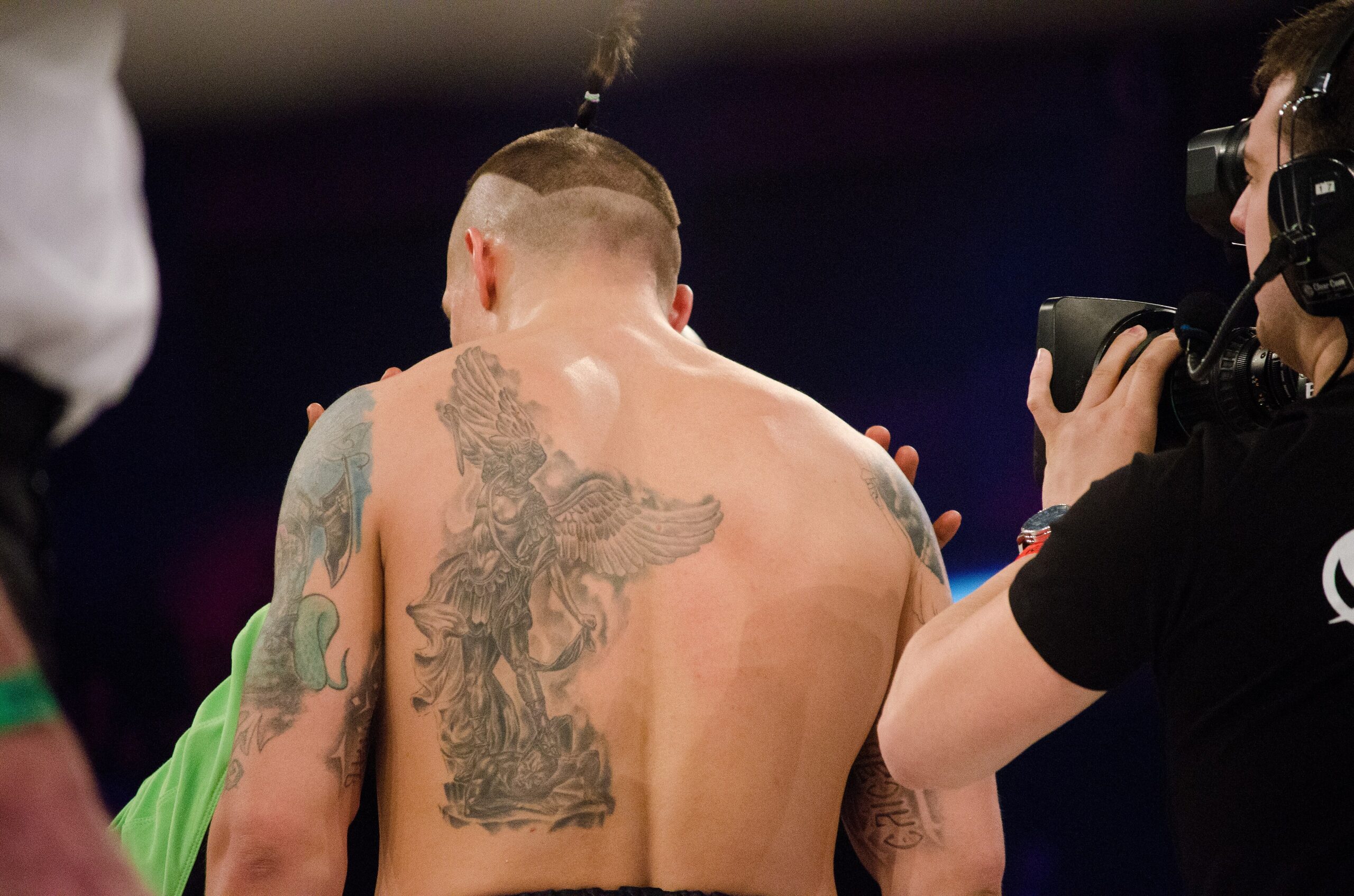
Oleksandr Usyk has specified where he wants a possible fight with David Benavidez to happen: back at cruiserweight, the division he once ruled before moving up to heavyweight.
Speaking during the Canelo Alvarez–Christian Mbilli broadcast, Usyk said he currently weighs approximately 96–97 kilograms and would return to cruiserweight if given the opportunity. According to Boxing News, Usyk said he had “cleaned out heavyweight” and described a fight with Benavidez as significant because Benavidez is “a big champion.”
The interest is real enough to command attention. Usyk’s adviser, Serhii Lapin, has also told The Ring that Usyk plans to return to cruiserweight and pursue Benavidez. Benavidez, meanwhile, told Fight Hub TV that his team had spoken with Usyk about a cruiserweight fight.
None of that amounts to an agreement.
No contract, date, venue or broadcast platform has been announced for Usyk–Benavidez. The contact described publicly by Benavidez does not independently confirm formal negotiations, and any discussion of an undisputed championship fight remains conditional.
There is also a reigning champion standing directly between Benavidez and that possibility.
Benavidez is scheduled to face WBC cruiserweight champion Michal Cieslak in a three-belt unification fight on December 5 in Glendale, Arizona, according to Premier Boxing Champions. Benavidez’s WBA and WBO titles will be matched against Cieslak’s WBC belt in the confirmed fight that will determine whether the proposed Usyk matchup becomes more compelling—or falls apart before it can become real.
Usyk Has Identified the Division, but Not a Deal
Usyk’s comments matter because they address one of the first questions surrounding the matchup. After competing at heavyweight since 2019, would he expect Benavidez to move up, or would Usyk return to the cruiserweight limit?
Usyk’s answer points toward cruiserweight.
That would place the proposed fight in the division where Usyk became undisputed champion before moving into the heavyweight ranks. It would also eliminate the possibility of Benavidez being asked to enter a heavyweight contest against a naturally larger opponent simply to secure the biggest name available.
Boxing News 24/7 characterized Usyk’s position as wanting the fight without weight excuses. That framing gives the potential matchup an obvious competitive appeal: Usyk would be returning to Benavidez’s current division, while Benavidez would be defending the ground he has established since moving beyond light heavyweight.
Usyk’s reported current weight of approximately 96–97 kilograms suggests that a reduction would be required to make the cruiserweight limit. His willingness to discuss that move publicly is notable, but willingness and execution are different matters. No official announcement has confirmed that he has begun a cruiserweight campaign, scheduled a return bout or committed to facing Benavidez next.
Lapin’s statement to The Ring strengthens the indication that this is more than an improvised answer during a broadcast. Usyk’s adviser said the plan was to return to cruiserweight and pursue Benavidez, giving the idea support from within Usyk’s team.
It still remains a plan rather than a signed fight.
That distinction is essential because boxing regularly allows public interest to move several steps ahead of contractual reality. Usyk and Benavidez can agree that the matchup is attractive without agreeing on money, timing, location, platform, championship stakes or any of the other terms required to place two elite fighters in the ring.
For now, Usyk has specified his preferred division. Everything beyond that remains unresolved.
Benavidez Has Built the Opportunity at Cruiserweight
Benavidez’s place in this conversation is not based only on name recognition. He has already produced a major result at cruiserweight.
The Associated Press reported that Benavidez stopped Gilberto Ramirez at 2:59 of the sixth round on May 2, 2026, winning the WBA and WBO cruiserweight championships. That victory established him immediately as one of the division’s central figures and created a path toward further unification.
Premier Boxing Champions lists Benavidez at 32-0 entering the December 5 fight. Cieslak is listed at 28-2, with PBC identifying Benavidez as the WBA and WBO champion and Cieslak as the WBC champion.
Benavidez told Fight Hub TV on October 28 that his team had spoken to Usyk about coming down to cruiserweight for an undisputed-title fight. His claim confirms that the subject has reached the camps, at least at the level Benavidez described publicly. It does not prove that formal negotiations are active or that Usyk has accepted specific terms.
The undisputed element also cannot be guaranteed by the December unification alone. A victory over Cieslak would give Benavidez three major cruiserweight titles, but the complete championship picture would still have to be resolved before an undisputed fight could be promised.
What Benavidez can control is the immediate assignment.
Defeating Cieslak would strengthen nearly every part of his argument for facing Usyk. Benavidez would hold the WBA, WBO and WBC titles, carry an unbeaten record and possess considerably more leverage in any future discussion. Usyk would not simply be returning for an intriguing name; he would be challenging a champion with control over most of the division’s major hardware.
That is what makes December 5 more consequential than it already was.
Benavidez is not merely defending the momentum created by the Ramirez victory. He is fighting for the championship position that could turn Usyk’s interest from an attractive headline into the biggest available event at cruiserweight.
Usyk’s Interest Changes the Stakes, Not the Signed Opponent
The possibility of Usyk entering the division adds commercial weight to Benavidez–Cieslak. It gives the winner a potential destination beyond the three belts immediately at stake and places the cruiserweight division under a brighter spotlight.
It does not make Cieslak a supporting character.
Cieslak is the reigning WBC champion and the only fighter currently signed to face Benavidez. His record, title and opportunity cannot be reduced to an obstacle in someone else’s future superfight. He has the ability to take Benavidez’s belts, his unbeaten record and his place in the developing Usyk narrative.
A Cieslak victory would transform the entire discussion.
Instead of Benavidez emerging with three belts and a stronger case for facing Usyk, Cieslak would become the champion controlling the majority of the division. The competitive foundation of Usyk–Benavidez would be severely weakened because Benavidez would no longer be approaching the matchup as an undefeated three-belt champion.
That does not mean the fight could never happen after a Benavidez loss. Boxing has made plenty of commercially attractive bouts without every ideal championship condition being present. But the emerging narrative depends heavily on Benavidez continuing to win and consolidating the cruiserweight division.
Cieslak is the fighter who can stop that from happening.
The danger is that Usyk’s name encourages the public to treat December 5 as a preliminary step instead of a championship fight with its own uncertainty. Future matchups are easier to sell in conversation because they exist without the complications of an opponent who can disrupt the plan.
Cieslak supplies that complication.
Usyk’s interest has raised the reward available to Benavidez, but it has also raised the cost of losing.
December 5 Will Decide Whether the Idea Deserves to Grow
A Benavidez victory would create the strongest version of the Usyk fight.
He would emerge with three cruiserweight titles, another championship victory and greater negotiating leverage. The matchup could then be presented as Usyk returning to the division he once dominated to challenge the man who had taken control of it in his absence.
The contrast would sell itself.
Usyk would bring his history at cruiserweight and his accomplishments at heavyweight. Benavidez would bring an unbeaten record, three belts and the momentum of consecutive major victories in his new division. The fight would carry championship significance in addition to the appeal of two established stars meeting at a weight Usyk has specifically identified.
Even then, important questions would remain.
Usyk would still have to demonstrate that he can safely return to the cruiserweight limit after years at heavyweight. The camps would still need to negotiate the financial and promotional structure. A date, location and platform would still have to be secured, and the remaining championship situation would determine whether an undisputed designation was actually available.
A Benavidez victory would make those questions worth answering. It would not answer them automatically.
A Cieslak victory would create a very different future. He would become the fighter holding three titles and the man responsible for dismantling one of boxing’s most discussed hypothetical matchups. Any cruiserweight plan involving Usyk would then have to account for the champion who defeated Benavidez rather than proceeding as though the division had followed a predetermined script.
That is why Benavidez–Cieslak should not be framed only as a bridge toward something bigger.
It is the fight that decides who earns the right to discuss what comes next.
LET’S TALK ABOUT IT
If David Benavidez defeats Michal Cieslak and leaves Glendale with three cruiserweight titles, should Oleksandr Usyk be his next opponent?
Is Usyk–Benavidez the most important potential fight at cruiserweight, or is boxing getting ahead of itself before Benavidez faces the reigning WBC champion?
Outlets cited in this story
- Associated Press
- Boxing News 24
- Fight Hub TV
- Boxing News
- The Ring
Spot an error? Send a correction. We fix mistakes in the open.