
Omari Jones Stops Alan Sanchez in Two Rounds — But Now Matchroom Has to Raise the Risk

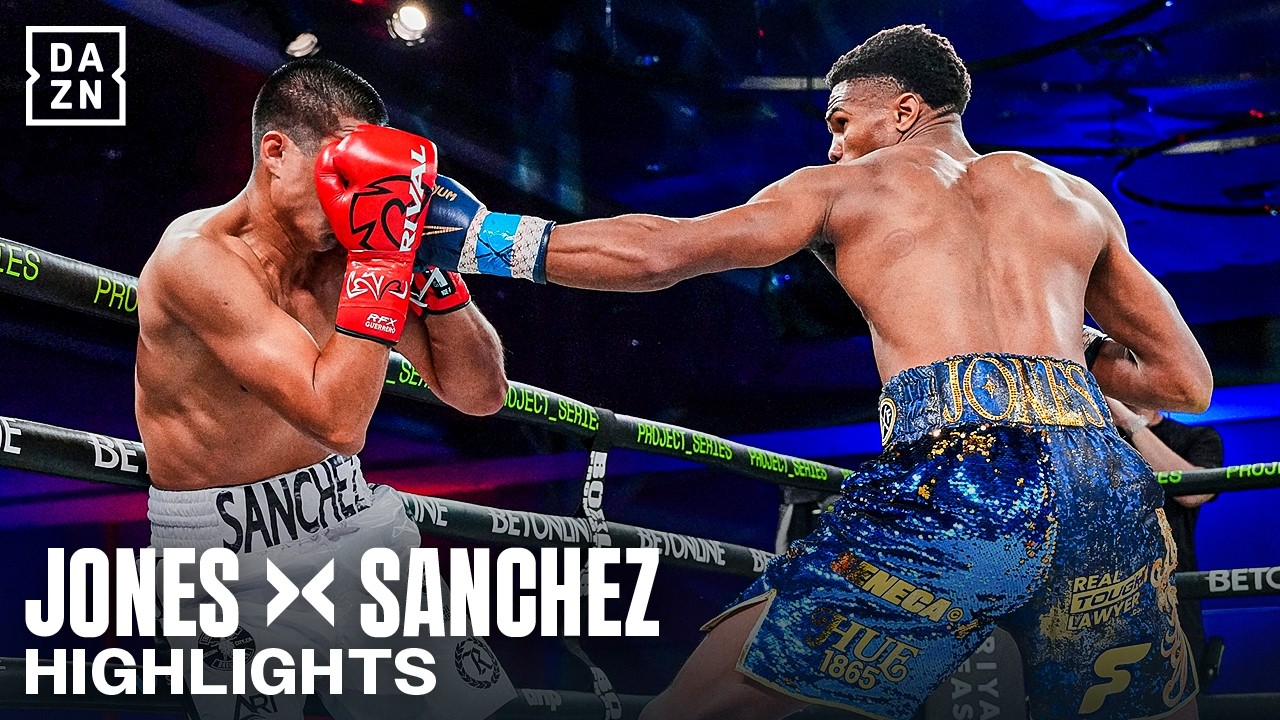
Omari Jones delivered the kind of finish expected from a leading prospect, stopping Alan Sanchez 49 seconds into the second round of their junior-middleweight main event at Caribe Royale Orlando.
Referee Christopher Young ended the scheduled eight-round fight after Jones drove Sanchez toward his corner and followed with a sustained attack. BoxingNews24 and Boxing 247 both recorded the official result as a second-round technical knockout at 0:49.
The victory moved Jones to 8-0 with five knockouts, according to Matchroom Boxing’s updated fighter profile. It also ended a run of three consecutive decision wins and gave the Orlando prospect an emphatic result in his first professional main event.
Jones handled the assignment placed in front of him. The harder question is what Matchroom places in front of him next.
Sanchez brought professional experience into the ring, but none of the reviewed sources identified him as a leading or currently ranked junior-middleweight contender. Jones showed that he could finish this level of opponent quickly. He did not get the opportunity to show how he would respond against someone capable of surviving his best work, changing the pace and forcing him to make difficult decisions over eight or 10 rounds.
That is not a criticism of the knockout.
It is the question the knockout created.
Jones Recognized the Change and Finished the Fight
The most encouraging part of Jones’s performance may have been how quickly he responded when Sanchez did not behave as expected.
According to Boxing Wire, Jones said after the fight that he had prepared for a pressure fighter based on what he studied from Sanchez’s previous performances. Sanchez instead adopted a different approach once the bout began.
Jones did not spend long waiting for the opponent he expected to appear.
Boxing Wire reported that a straight right from Jones drove Sanchez back toward his corner. Jones then followed with left hooks and additional straight right hands until Young intervened. The stoppage arrived before the second round had reached its first minute.
That sequence demonstrated two useful qualities. Jones recognized that Sanchez was giving ground rather than applying the anticipated pressure, and he attacked decisively once the opening appeared. Young prospects can sometimes become frustrated when an opponent changes the expected picture, particularly when they have spent an entire training camp preparing for one style.
Jones adjusted without allowing the fight to become complicated.
His own explanation supports that interpretation. He said Sanchez fought differently from the man he had studied on film, but Jones adapted and took advantage when the finishing opportunity arrived.
That is meaningful evidence of awareness.
It is not yet evidence that Jones can solve every kind of resistance.
The fight was too short to test his pacing, concentration or ability to make repeated adjustments. Sanchez did not force him to recover after losing a round, manage fatigue or work through a period when his offense was being neutralized. There is also no post-fight account from Sanchez in the reviewed sources explaining his strategy or his view of the stoppage.
Jones deserves full credit for preventing those questions from becoming necessary on this night. The next opponent should be selected to ask them again.
The Knockout Restored Momentum Without Establishing Contention
Jones had gone the distance in three consecutive fights before stopping Sanchez, according to BoxingNews24. His previous appearance ended in an eight-round decision over Diego Osuna Zuniga on May 30, as recorded by Bleacher Report.
Decision victories are not failures, particularly for a prospect learning how professional opponents manage rounds and survive difficult moments. They can provide development that quick knockouts cannot. Still, a first professional main event creates different expectations, and Jones gave Matchroom a result it can promote.
He did not simply win. He recognized an opening and finished an experienced opponent before the fight could settle.
That matters for momentum. It matters for building an audience in Orlando. It also matters for a Project Series event designed to showcase fighters whose careers are supposed to be moving forward.
But the result must be placed in proper context.
Caribe Royale advertised Sanchez before the bout at 24-7-1 with 10 knockouts. BoxingNews24 lists his post-fight record as 24-8-1 with 10 knockouts. Those numbers show experience, but they do not establish that Sanchez represented the level Jones will encounter among serious divisional contenders.
No title was advertised for the main event. No sanctioning-body ranking was attached to Sanchez in the reviewed reports. There were also no confirmed fight-night weights or purse figures available.
Jones proved that he was too sharp and too damaging for Sanchez during the brief contest they shared.
He did not prove that he is ready for the top of the 154-pound division.
That distinction should not reduce the value of the performance. It should determine the value of the next matchup.
Jones’s Amateur Pedigree Should Accelerate the Questions
Matchroom records that Jones won a welterweight bronze medal at the 2024 Paris Olympics before signing with the promoter in January 2025. He made his professional debut in Orlando that March and won by second-round stoppage.
That background separates him from an ordinary 8-0 prospect.
Jones entered the professional ranks with elite amateur experience, international competition and the expectations that come with being an Olympic medalist. He still needed time to adjust to the professional game, but his development was never supposed to follow the slowest available path.
Eight professional fights remain a small sample. Jones has not yet encountered every style or every kind of adversity that could become relevant at championship level. Moving him recklessly would be poor development, especially in a division where experienced professionals can punish mistakes that lesser opposition cannot reach.
Protection and preparation, however, are not the same thing.
A useful developmental opponent should be capable of exposing something. That might mean a durable pressure fighter who continues coming after Jones lands cleanly, a disciplined boxer who makes him lead, or an experienced opponent who can alter tactics after the first plan stops working.
Sanchez was expected to bring pressure, according to Jones’s account, but the fight never developed into that test. Jones adapted and removed him quickly. The correct response is not to repeat the same assignment and hope the next opponent lasts longer.
The correct response is to increase the difficulty with purpose.
That could mean moving Jones into his first scheduled 10-round contest. It could mean keeping him at eight rounds but selecting an opponent with a stronger current divisional position and a realistic chance of winning. What matters is that the next fight tests an area the Sanchez result left unanswered.
Jones does not need to be rushed directly into a championship opportunity.
He does need to start moving toward opponents who make the outcome less predictable.
Project Series Now Has to Deliver the Test It Promised
The Jones-Sanchez fight headlined Project Series 2, a Matchroom and Boxlab Promotions event streamed on DAZN. When Matchroom announced the series in July, the promoter described it as a platform intended to develop and test prospects.
Jones received the development side of that equation. His first main event gave him additional attention, responsibility and the experience of carrying a card in his hometown.
The competitive test lasted less than four minutes.
That was not Matchroom’s fault, and it certainly was not Jones’s. A promoter cannot instruct a prospect to leave a vulnerable opponent in the fight merely to gain rounds. Once Jones hurt Sanchez, finishing him was the correct professional response.
The matchmaking now has to account for what the fight failed to reveal.
Keeping Jones at eight rounds could be reasonable if the opponent brings a meaningful increase in ability. Moving him to 10 would raise the physical and tactical demands, but distance alone does not guarantee danger. A limited opponent scheduled for more rounds can still become another controlled showcase.
The opponent matters more than the number printed beside the bout.
A strong next assignment would give Jones someone capable of absorbing early offense, countering effectively and making him manage periods when the fight is not moving in his favor. If Jones looks equally impressive under those conditions, the conversation can begin shifting from prospect development toward legitimate contention.
If Matchroom gives him another opponent at Sanchez’s level, the questions will remain exactly where they are now.
Jones has already demonstrated that he can produce marketable moments. The purpose of Project Series should be to discover whether those moments survive increasing resistance.
LET’S TALK ABOUT IT
Did Omari Jones’s second-round stoppage show that he is ready for a currently ranked junior-middleweight, or does an 8-0 prospect still need another developmental fight first?
And should Matchroom move Jones into a scheduled 10-round contest next, or would the right eight-round opponent provide a more meaningful test?
Outlets cited in this story
- BoxingNews24
- Boxing 247
- DAZN
Spot an error? Send a correction. We fix mistakes in the open.