O’Shaquie Foster Delays a Potential Shakur Stevenson Fight — But His Undisputed Plan Runs Into the WBA’s Belt Maze

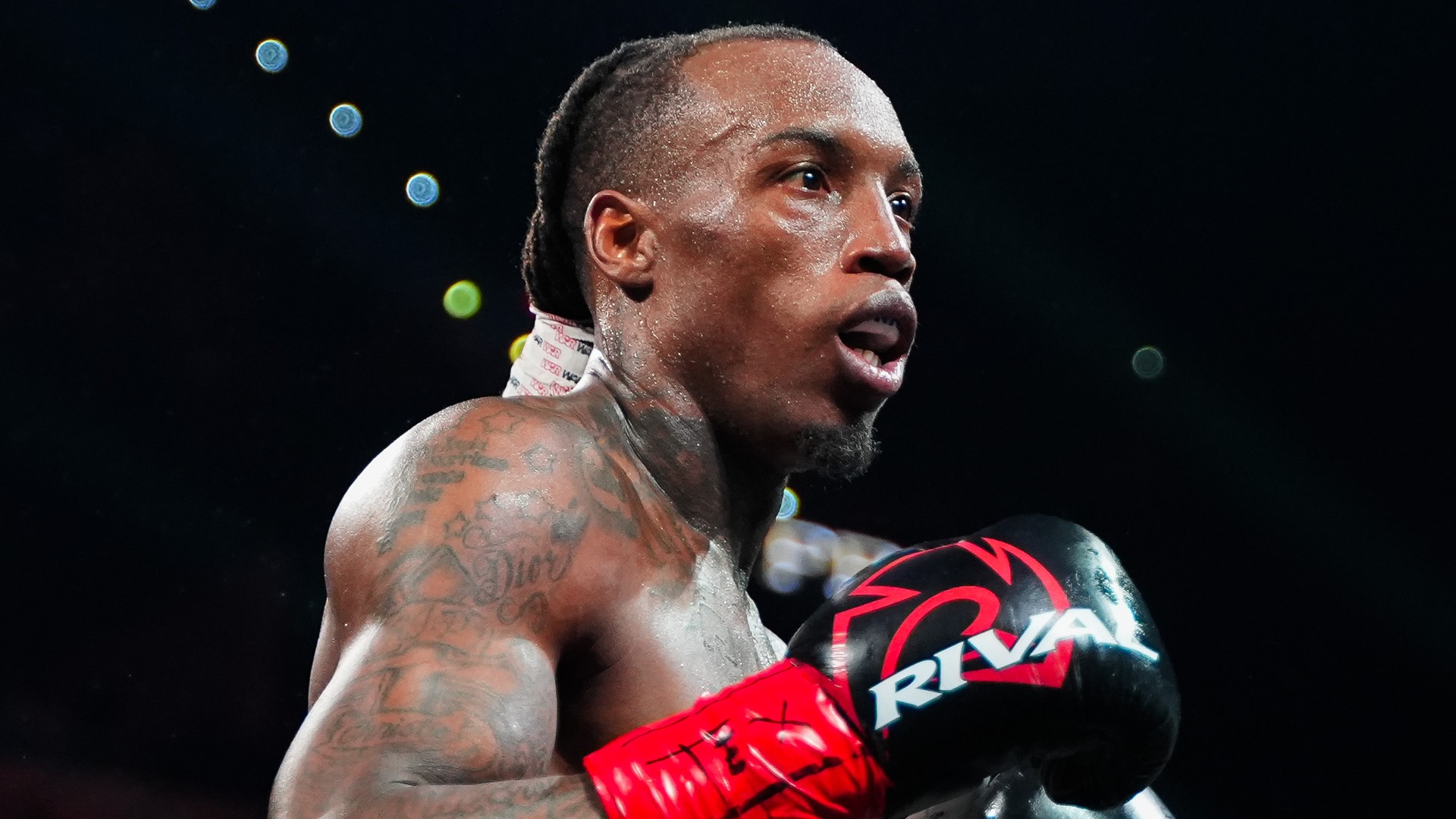
O’Shaquie Foster left San Antonio with three major junior-lightweight titles and a clear idea of what he wants next. After defeating Emanuel Navarrete by unanimous decision on October 24, Foster said becoming undisputed matters more to him than immediately pursuing a potential fight with Shakur Stevenson.
The ambition makes sense. Foster now holds the WBC, IBF and WBO championships, placing him one belt away from fully unifying the 130-pound division. According to Boxing News, Foster intends to pursue the winner of Anthony Cacace and Nick Ball, who are scheduled to fight for Cacace’s WBA Super Championship on December 19 in Belfast.
But Foster’s path is not as simple as waiting for the winner.
A September 8 resolution from the WBA elevated Cacace to Super Champion, recognized Elnur Samedov as the organization’s champion and established a future obligation involving both titleholders. Under that resolution, the winner of Cacace’s voluntary defense is supposed to defend the Super Championship against Samedov.
That means Foster controls three belts but does not control access to the fourth. His undisputed goal now depends on the Cacace-Ball result, the WBA’s enforcement of its own order and whether the organization would permit an undisputed fight before Samedov receives his opportunity.
Foster-Stevenson has therefore been delayed in principle, but it has not been canceled because it was never formally agreed. No date, weight or contractual arrangement has been announced.
For now, Foster is choosing the possibility of undisputed status over another major fight that may remain available only if boxing’s timing cooperates.
Foster Has Chosen Championship History Over the Biggest Available Name
Foster’s priorities became clear after his victory over Navarrete. Boxing News reported that the unified champion told post-fight media he wanted the remaining belt before pursuing Stevenson, describing himself as the first three-belt champion in the super-featherweight division and emphasizing that he needed “one more” to become undisputed.
That is a reasonable sporting decision.
Opportunities to become an undisputed champion are rare, particularly in divisions where titles are routinely separated by promotional interests, mandatory challengers and sanctioning-body decisions. Foster has already completed most of the work. He entered the Navarrete fight holding the WBC title and emerged with the IBF and WBO championships as well, according to CBS Sports.
Stevenson remains an attractive opponent, but that potential fight does not presently carry the same clearly defined historical reward. Boxing News reported that Stevenson praised Foster’s performance and indicated that he was willing to fight him “whenever.” That establishes mutual interest, not an agreement.
There is still no confirmed weight for the matchup. There is no announced date, promoter, broadcaster or purse. There is also no guarantee that Stevenson will remain available while Foster attempts to complete his business at junior lightweight.
Foster is therefore delaying a possibility rather than walking away from a signed fight.
The risk is that his preferred alternative is uncertain too. He can declare the Cacace-Ball winner his target, but neither Foster nor that winner can simply ignore the WBA’s existing championship structure. If Samedov’s ordered opportunity comes first, Foster could find himself waiting for a fourth belt that remains tied up beyond December.
The Cacace-Ball Winner May Already Have Another Obligation
The O2 Belfast lists Cacace-Ball for December 19, with Cacace’s WBA Super Championship at stake. That fight is the immediate center of Foster’s undisputed plans because its winner would possess the final major title he needs.
Ordinarily, that would produce an obvious next step: match the three-belt champion against the holder of the remaining championship and allow the division to determine one undisputed king.
The WBA’s September 8 resolution complicates that logic.
The organization elevated Cacace to Super Champion and recognized Samedov as champion. It also stated that the winner of Cacace’s voluntary defense would subsequently be required to defend the Super Championship against Samedov. With Ball now scheduled as Cacace’s challenger, the winner could leave Belfast with Foster calling for an undisputed fight while Samedov holds an ordered position of his own.
That creates competing claims.
Foster would be offering the biggest championship opportunity available in the division: all four major belts in one fight. Samedov, however, would be able to point to the WBA’s written resolution and argue that his opportunity had already been established before Foster defeated Navarrete.
The question is not whether an undisputed fight would make sporting sense. It clearly would. The question is whether the WBA will allow that fight to take priority over the obligation it has already outlined.
The supplied resolution does not establish that Foster can move ahead of Samedov. It also does not confirm what conditions, if any, might permit the WBA to alter the order. Until the organization rules on the matter, any direct route from Cacace-Ball to Foster remains a possibility rather than a confirmed plan.
Foster may be standing at the undisputed doorway, but the WBA is holding the key.
The Navarrete Victory Gave Foster the Right to Think Bigger
The uncertainty surrounding Foster’s next move should not distract from what he accomplished against Navarrete.
CBS Sports recorded a unanimous decision for Foster at the Frost Bank Center in San Antonio, with official scores of 115-111 and 118-108 twice. Foster also scored two knockdowns in the 12th round, closing the fight emphatically and removing any realistic doubt about the result.
That performance changed his position within the division. Foster did not merely retain his WBC championship. He took Navarrete’s IBF and WBO belts, giving himself control of three of the four major titles and making an undisputed fight the most logical championship matchup at junior lightweight.
His post-fight decision should be viewed in that context.
Foster is not avoiding Stevenson because another ordinary defense appears easier. He is prioritizing the only title he does not possess after producing the victory that made full unification possible. From a competitive standpoint, asking for the Cacace-Ball winner is exactly what a unified champion should do.
It also explains why immediately leaving the division—or committing to an undefined weight for Stevenson—would carry a cost. Foster has reached a position fighters spend entire careers chasing. Moving away before attempting to collect the last belt could mean never receiving another opportunity to become undisputed at 130 pounds.
The problem is that earning the right to pursue undisputed status does not guarantee access to the necessary opponent.
Foster did his part in the ring. He defeated Navarrete, collected three championships and publicly identified the fourth. The remaining obstacles are now administrative and contractual as much as competitive.
Three Decisions Will Determine Whether Foster’s Plan Is Realistic
The first decisive development is the Cacace-Ball result. Foster cannot negotiate a final unification fight until there is a winner, and the identity of that winner may affect how quickly an agreement could be reached.
The second is the WBA’s ruling on what comes next. Its September 8 resolution places Samedov in the path of the Super Championship holder, but boxing organizations sometimes face requests to approve unifications, exceptions or altered mandatory schedules. There is currently no confirmed ruling allowing the Cacace-Ball winner to face Foster first.
The third is whether all parties can complete negotiations within a workable timeline.
Even if the WBA permits an undisputed fight, permission alone would not create a deal. Foster and the Cacace-Ball winner would still need terms acceptable to their respective teams. A date and venue would have to be arranged, and the other sanctioning bodies could have obligations involving Foster’s titles.
None of those potential complications should be presented as an established barrier unless formally announced. They do, however, explain why Foster’s declaration is a goal rather than a schedule.
Stevenson’s availability adds another layer. His reported willingness to fight Foster “whenever” does not guarantee that he will wait indefinitely. Fighters pursue their own opportunities, and the longer Foster’s undisputed route takes, the greater the possibility that Stevenson’s plans move in another direction.
That does not mean Foster is making the wrong choice. It means the choice carries a genuine opportunity cost.
If the WBA clears the Cacace-Ball winner to pursue undisputed status immediately, Foster could receive the defining championship fight he wants. If Samedov must be faced first, Foster may have to wait, reconsider his priorities or pursue another fight while the WBA situation is resolved.
The next meaningful answer will not come from another exchange between Foster and Stevenson. It will come from Belfast—and then from the WBA.
LET’S TALK ABOUT IT
Should the WBA allow the Cacace-Ball winner to face O’Shaquie Foster immediately for the undisputed junior-lightweight championship, or should Elnur Samedov receive the opportunity established in the organization’s September resolution first?
And is Foster making the right decision by delaying a potential Shakur Stevenson fight for undisputed status, even though there is no guarantee the final belt will be available to him next?
Outlets cited in this story
- Boxing News
Spot an error? Send a correction. We fix mistakes in the open.