
Osleys Iglesias Stops Oliver Zaren in Seven — But He Needs a Unification Fight Next

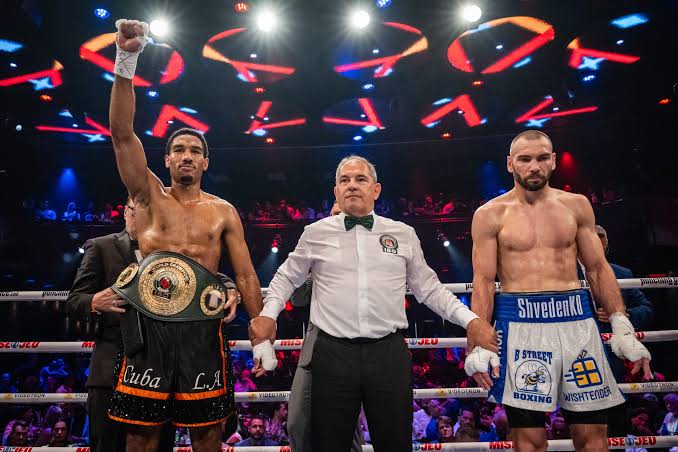
Osleys Iglesias entered his first IBF super-middleweight title defense with an unbeaten record, one of boxing’s most intimidating knockout rates and a growing reputation as a serious threat at 168 pounds. He left Quebec City with all three intact.
Iglesias stopped Oliver Zaren at 1:31 of the seventh round on October 8 at the Théâtre Capitole, according to The Boxing Hour. The victory allowed him to retain his IBF and IBO titles, improve to 16-0 with 15 knockouts and hand Zaren the first professional defeat of his career.
The result reinforced what Iglesias has already demonstrated against the contenders placed in front of him: his power is real, his finishing instincts are dangerous and surviving his pressure becomes increasingly difficult once he begins breaking an opponent down.
What it did not establish is whether Iglesias should be called the best super middleweight in boxing.
Zaren entered as the IBF’s No. 5 contender, while The Ring ranked Iglesias No. 2 in the division before the fight. That made the contest a legitimate title defense rather than an empty showcase. But Iglesias has now reached the point where defeating credible challengers can confirm his standing without significantly advancing it.
Another routine defense would add a victory to his record. A unification fight could define his career.
Iglesias Turned a Competitive Assignment Into Another Stoppage
There was little separating the fighters on the scale. The Boxing Hour listed Iglesias at 167.6 pounds and Zaren at 167.7, with both men comfortably inside the super-middleweight limit.
The greater separation emerged once Iglesias began imposing his physical advantages in the ring.
The Ring and BoxingNews24 reported that Iglesias dropped Zaren twice in the sixth round. Those knockdowns transformed the fight from a title defense Zaren was attempting to navigate into a survival test against one of the division’s most destructive punchers.
Zaren made it through the round, but the damage was serious enough to produce additional scrutiny before the seventh began. According to The Ring, a ringside doctor examined him and permitted the fight to continue.
That clearance did not mean Zaren’s corner was obligated to let the contest continue indefinitely.
Boxing 247 identified former super-middleweight champion Mikkel Kessler as the trainer who threw in the towel during the seventh round. Zaren was still standing when the fight ended, but a fighter does not need to be unconscious—or even on the canvas—for a corner to recognize that he is no longer in a position to benefit from taking more punches.
The official stoppage came at 1:31.
Iglesias had successfully defended the IBF belt for the first time and the IBO title for the fifth time, as the event billing from Eye of the Tiger Management described it. The IBF champions register also identifies Iglesias as the organization’s champion at 168 pounds.
Zaren fell to 19-1-1, suffering his first professional loss. BoxingNews24 listed him with eight knockouts, a respectable record that helped establish him as a credible challenger but did not suggest he possessed the same fight-ending threat as Iglesias.
Once the fight became a sustained exchange of damage, that difference mattered.
Zaren’s Corner Made the Right Decision
A towel stoppage sometimes creates controversy because spectators want to see a conclusive ending. This one should not require much debate.
Zaren had already been knocked down twice in the sixth. A doctor examined him before the seventh, and his corner then watched another 91 seconds before intervening. The sequence indicates that Kessler did not react impulsively to a single difficult moment. He evaluated what had happened, gave his fighter an opportunity to recover and stopped the contest when that recovery was not producing a meaningful change.
Zaren remaining on his feet does not make the decision premature.
One of a trainer’s most important responsibilities is recognizing when a fighter’s toughness has begun working against his safety. Competitors are conditioned to continue, especially in a championship fight carrying the emotional weight of an unbeaten record. That determination can keep a fighter alive in a difficult contest, but it can also prevent him from acknowledging when the realistic chance of victory has disappeared.
There has been no verified post-fight medical update establishing that Zaren required further treatment. It would therefore be irresponsible to speculate about his condition beyond what was observable and reported: he suffered two knockdowns, received a ringside examination and was stopped by his corner while still standing in the seventh.
Those facts are enough to support the decision.
Zaren was allowed every reasonable opportunity to remain in the fight. His corner did not owe the audience additional punishment simply to produce a more dramatic finish.
The Victory Confirms Iglesias Has Outgrown Routine Contenders
Stopping an unbeaten challenger matters.
Zaren was not presented as a faded former champion or an opponent carrying a record filled with recent defeats. He arrived at 19-0-1 and held the IBF’s No. 5 position, according to The Ring’s pre-fight coverage. Iglesias broke him down, dropped him twice and forced an experienced former champion in Zaren’s corner to end the fight.
That is a strong title defense.
It is also the kind of performance Iglesias is now expected to produce.
A 16-0 record with 15 knockouts creates an extraordinary statistical profile. Only one opponent has reached the final bell with him, and Zaren became the latest fighter unable to do so. Iglesias is no longer building a case that he deserves attention. He already has a recognized championship, a high divisional ranking and a knockout rate that makes every appearance relevant.
The next question is whether that destruction will translate against the elite.
There is a major difference between overpowering a ranked contender and imposing the same pressure on a champion with world-class experience, durability and tactical discipline. An elite opponent may be able to absorb Iglesias’s first major attack, punish his aggression or force him to make adjustments over 12 rounds.
Zaren could not present that test. That is not a criticism of his effort; it is the conclusion created by the fight.
Iglesias’s victory strengthened his position without resolving the central argument surrounding him. He looks like one of the most dangerous fighters in the division, but looking dangerous against contenders is not the same as proving supremacy against the best super middleweights available.
That distinction should determine what comes next.
The Canelo–Mbilli Winner Would Provide the Answer
According to BoxingNews24, Iglesias said after the fight that he wanted a unification bout against the winner of the scheduled Canelo Alvarez–Christian Mbilli contest.
That is the correct ambition.
It is not, however, a confirmed matchup. No agreement has been announced, and Iglesias expressing interest does not establish that negotiations have started or that the winner will consider him the immediate priority.
Boxing politics may produce mandatory obligations, promotional complications or a different commercial direction. None of those possibilities changes the sporting value of Iglesias’s request.
A fight with the Canelo–Mbilli winner would demand more from him than another defense against a challenger positioned beneath the division’s leading names. It would test whether his power remains decisive when the opponent is capable of controlling distance, surviving adversity and returning meaningful offense.
Canelo would bring championship experience accumulated across the highest levels of the sport. Mbilli would bring his own physical pressure and ambition. Either opponent would force Iglesias into a fight carrying questions that cannot be answered by another dominant win over a conventional contender.
Can Iglesias remain as dangerous when his opponent refuses to retreat?
Can he win rounds when the knockout does not arrive quickly?
Can he make adjustments when an elite fighter takes away his preferred attacks?
Those questions are not evidence of a flaw. They are the questions every emerging champion must answer before he can credibly claim control of a division.
Iglesias has done enough to deserve the opportunity. He has not yet done enough to make the outcome feel predetermined.
LET’S TALK ABOUT IT
Has Osleys Iglesias already shown enough to deserve the winner of Canelo Alvarez–Christian Mbilli, or does he need another elite-level victory before receiving that opportunity?
And if a unification fight cannot be made next, which super middleweight should Iglesias face to prove that his power works against the division’s best?
Outlets cited in this story
- BoxingNews24
- Boxing 247
- The Ring
Spot an error? Send a correction. We fix mistakes in the open.