
Tim Bradley Predicts Canelo Will Knock Out Christian Mbilli — But the Pace Could Decide Everything

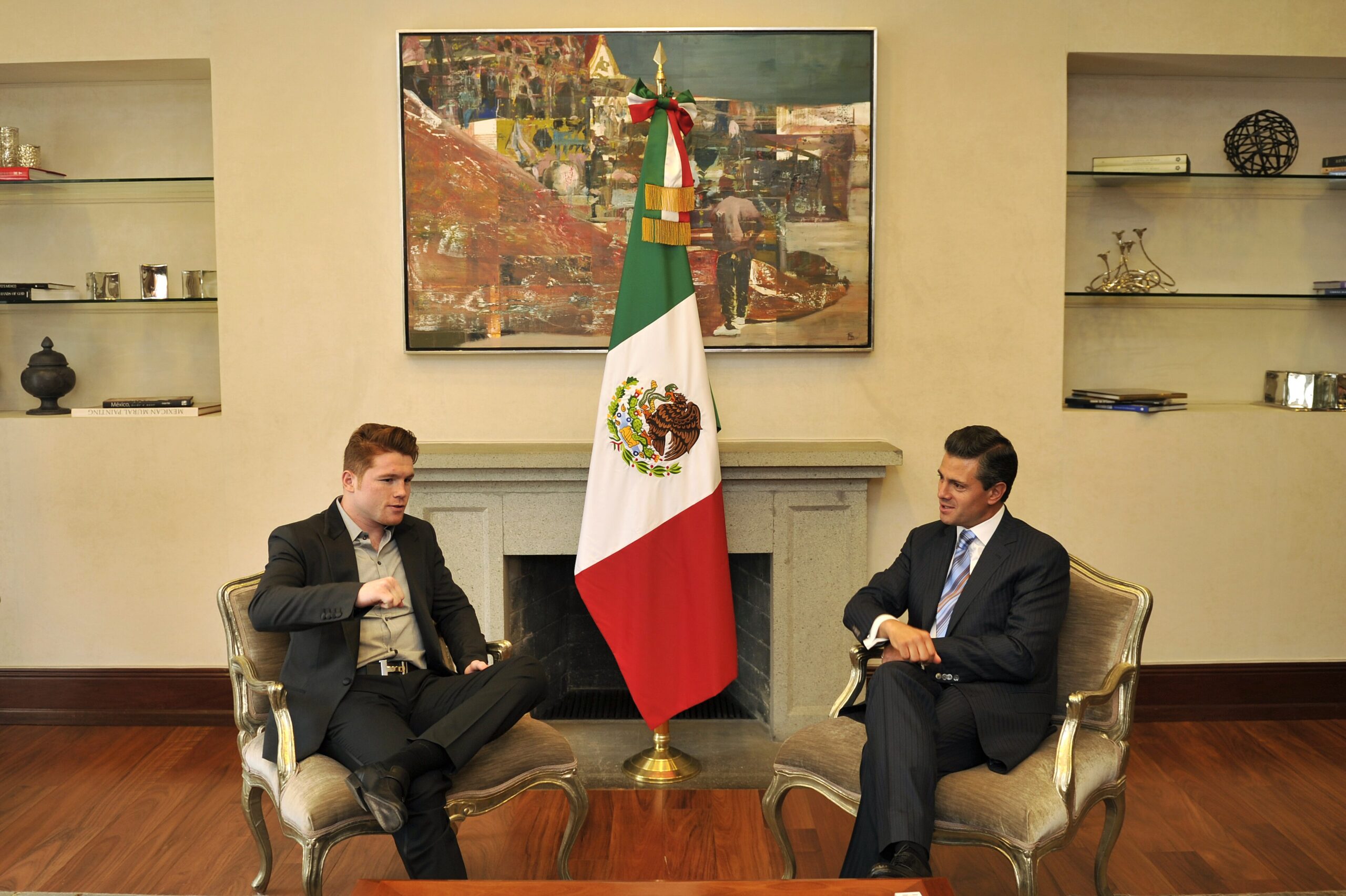
Tim Bradley expects Canelo Alvarez to reclaim the WBC super-middleweight championship in destructive fashion when he challenges Christian Mbilli on October 31 in Riyadh, Saudi Arabia.
Bradley’s prediction is built around familiar Canelo advantages: accuracy, timing, punch placement and a body attack capable of gradually dismantling aggressive opponents. In comments reported by Boxing News, Bradley argued that Alvarez could soften Mbilli up before landing the decisive punch, potentially producing a late stoppage. Boxing News 24 also reported that Bradley used the phrase “Canelo by massacre” during an appearance on Into the Storm.
The prediction carries weight because Bradley is identifying specific vulnerabilities rather than simply choosing the more famous fighter. He believes Mbilli’s reactions to feints, including a tendency to lower his head, could leave him exposed to Canelo’s carefully placed counters.
But Bradley’s forecast depends on more than whether Canelo can land clean punches.
It depends on whether those punches can stop Mbilli from working.
According to DAZN, Canelo-Mbilli will headline the October 31 event in Riyadh. The WBC confirms that Mbilli is its champion at 168 pounds and will be making his first title defense. Canelo enters as the challenger after losing a unanimous decision to Terence Crawford in September 2025.
The Ring reported Canelo’s record as 63-3-2 with 39 knockouts and Mbilli’s as 29-0-1 with 24 knockouts when the fight was confirmed. Those numbers establish the experience and power involved, but they do not resolve the question Bradley’s prediction has raised.
Canelo may be the sharper puncher. Mbilli may still be the fighter who determines how much work is required to win.
Bradley Believes Canelo Can Exploit Mbilli’s Defensive Reactions
Bradley’s case begins with the difference between activity and precision.
Mbilli applies pressure, throws with commitment and attempts to make opponents fight at an uncomfortable pace. That approach has helped carry him to an unbeaten record and the WBC championship, but aggression can also create openings. A fighter who consistently moves forward must manage the distance, protect himself while entering and avoid becoming predictable when reacting to feints.
According to Boxing News 24’s account of Bradley’s analysis, Mbilli has a tendency to lower his head when responding to feints. Bradley believes Canelo can recognize that reaction and punish it with more accurate, better-placed punches.
That is a credible tactical argument. Canelo has spent years operating against elite opposition, and his ability to identify repeated defensive habits has often been more important than his raw punching power. He does not need to win every exchange if he can make the exchanges he does win physically costly.
The body attack may be especially important.
Bradley suggested in comments reported by Boxing News that Canelo could gradually weaken Mbilli before finding the larger punch later. That scenario would allow Alvarez to use Mbilli’s pressure against him. Every aggressive entry would become another opportunity to counter downstairs, interrupt Mbilli’s rhythm and make the champion increasingly reluctant to close the distance.
A late stoppage would not necessarily begin with one dramatic shot. It could begin with Canelo consistently forcing Mbilli to pay for the pace he is trying to impose.
Bradley nevertheless acknowledged the complication in his own prediction. If Canelo cannot hurt or discourage Mbilli, the champion’s activity could keep him competitive.
That qualification may be the most important part of the entire discussion.
Mbilli’s Activity Matters Only if Canelo Cannot Change It
Pressure is not automatically effective because a fighter moves forward. Activity is not automatically productive because a fighter throws more punches.
Mbilli will need to do more than occupy space and create the appearance of aggression. He must enter without absorbing the kind of counters that change his posture, reduce his output or convince him to wait. If Canelo controls the exchanges with cleaner punches and makes Mbilli reset after every attack, the champion’s volume could quickly become less meaningful.
But the opposite possibility is what makes this matchup compelling.
What happens if Mbilli absorbs Canelo’s early counters and continues advancing?
Canelo has increasingly operated in precise bursts rather than maintaining a relentless output across entire rounds. That style can still produce clear victories when his punches are visibly cleaner and his opponents become hesitant. It becomes more complicated when the other fighter refuses to surrender the initiative.
Mbilli’s task is to force Canelo to answer repeated questions. Can Alvarez maintain enough movement to avoid being stationed near the ropes? Can he counter without allowing Mbilli to resume punching immediately? Can he produce enough offense to win complete rounds rather than relying on isolated moments of superior technique?
The champion does not need to become the more accurate fighter to create problems. He needs to make Canelo work often enough that accuracy alone cannot decide every minute.
That is why the early body punching could determine the entire fight. If Canelo damages Mbilli and reduces his activity, Bradley’s forecast begins to look increasingly realistic. If Mbilli remains physically committed after taking Canelo’s best counters, Alvarez may have to produce at a pace that recent performances have not consistently demanded from him.
Power matters most when it changes behavior.
If Mbilli keeps coming, Canelo will need another answer.
The “Massacre” Prediction Deserves More Scrutiny Than the Stoppage Pick
Boxing News 24 challenged Bradley’s forecast by pointing to Canelo’s recent tendencies, including intermittent output, reduced movement and more time spent fighting from the ropes. That assessment is editorial analysis rather than proof of what will happen on October 31, but it addresses a legitimate weakness in the “massacre” language.
Bradley’s late-stoppage prediction and his more dramatic description are not exactly the same claim.
Canelo can win by stoppage without dominating every round. He could struggle with Mbilli’s activity, surrender stretches of the fight and still land the punch that ends it. That outcome would validate Bradley’s belief in Canelo’s accuracy and power without necessarily supporting the idea that the fight was a one-sided destruction.
A competitive decision would create an even clearer distinction. Canelo could land the cleaner punches, control the most important exchanges and deserve the victory while never producing anything resembling a massacre.
Boxing News 24’s argument focuses on whether the current version of Canelo can generate enough sustained offense to dominate a younger, active champion. If Alvarez spends long stretches on the ropes and allows Mbilli to initiate most exchanges, judges may be asked to choose between Canelo’s cleaner bursts and Mbilli’s greater volume.
That does not mean Mbilli should receive credit merely for throwing. Punches must land, pressure must create results and control must be more than forward movement. Canelo’s economy can still be effective if his defense causes Mbilli to miss and his counters remain the most damaging work of each round.
The danger for Canelo is allowing reputation to fill gaps that his offense does not.
Judges are supposed to evaluate what happens in the ring, not what a famous fighter appears capable of doing. If Mbilli controls extended portions of rounds while Canelo waits for perfect openings, isolated clean punches may not be enough to produce the commanding performance Bradley expects.
The Record Supports Both Sides of the Argument
Canelo enters with vastly greater experience at the highest levels of boxing, but his most recent result also creates unavoidable questions.
The Ring records that Terence Crawford defeated Canelo by unanimous decision in September 2025. Mbilli fought Lester Martinez to a 10-round split draw on the same card.
Neither result provides a direct blueprint for October 31. Crawford and Mbilli present different tactical problems, while Martinez’s success against Mbilli demonstrates that the champion is not beyond being tested. Still, those performances prevent either side from entering the matchup with complete certainty.
Mbilli’s championship path also matters. According to the WBC and The Ring, he stopped Maciej Sulecki in the first round in June 2025 to win the interim WBC super-middleweight title. The WBC then elevated him to full champion on January 27, 2026, after the title became vacant.
October 31 will therefore be Mbilli’s first defense.
He enters unbeaten, but he is being asked to defend against a challenger with far more experience in major championship fights. Canelo enters with the stronger résumé, but he is attempting to reclaim the WBC title after a clear loss and must show that he can still control an opponent determined to sustain pressure.
The available evidence gives Bradley a reasonable basis for favoring Canelo. Alvarez’s timing, accuracy and body punching directly target the risks in Mbilli’s aggressive style.
The same evidence makes the language of inevitability difficult to accept.
A prediction identifies what someone believes will happen. It does not establish that Canelo will hurt Mbilli, that Mbilli’s pressure will be effective or that either fighter will control the pace. It also provides no official weigh-in results or purse information, neither of which has been established in the supplied reporting.
The fight remains the necessary evidence.
A Canelo stoppage would support Bradley’s belief that elite timing and body punching can dismantle Mbilli’s pressure. A clear Mbilli decision would demonstrate that sustained output can overcome Canelo’s more precise but intermittent offense. A competitive Canelo decision could validate his technical superiority without supporting the “massacre” description.
A close, uneven fight may reveal that both predictions simplified a much more balanced tactical contest.
LET’S TALK ABOUT IT
Does Canelo’s accuracy and body attack make Bradley’s late-stoppage prediction realistic, or can Mbilli win by forcing Alvarez to work at a pace he can no longer sustain?
If Canelo lands the cleaner punches but Mbilli controls more of each round through effective activity, which fighter should the judges reward?
Outlets cited in this story
- Boxing News 24
- Boxing News
- The Ring
- DAZN
Spot an error? Send a correction. We fix mistakes in the open.