
Tyson Fury Says Deontay Wilder Is “Shot to Bits” — But Jai Opetaia Will Test That Verdict

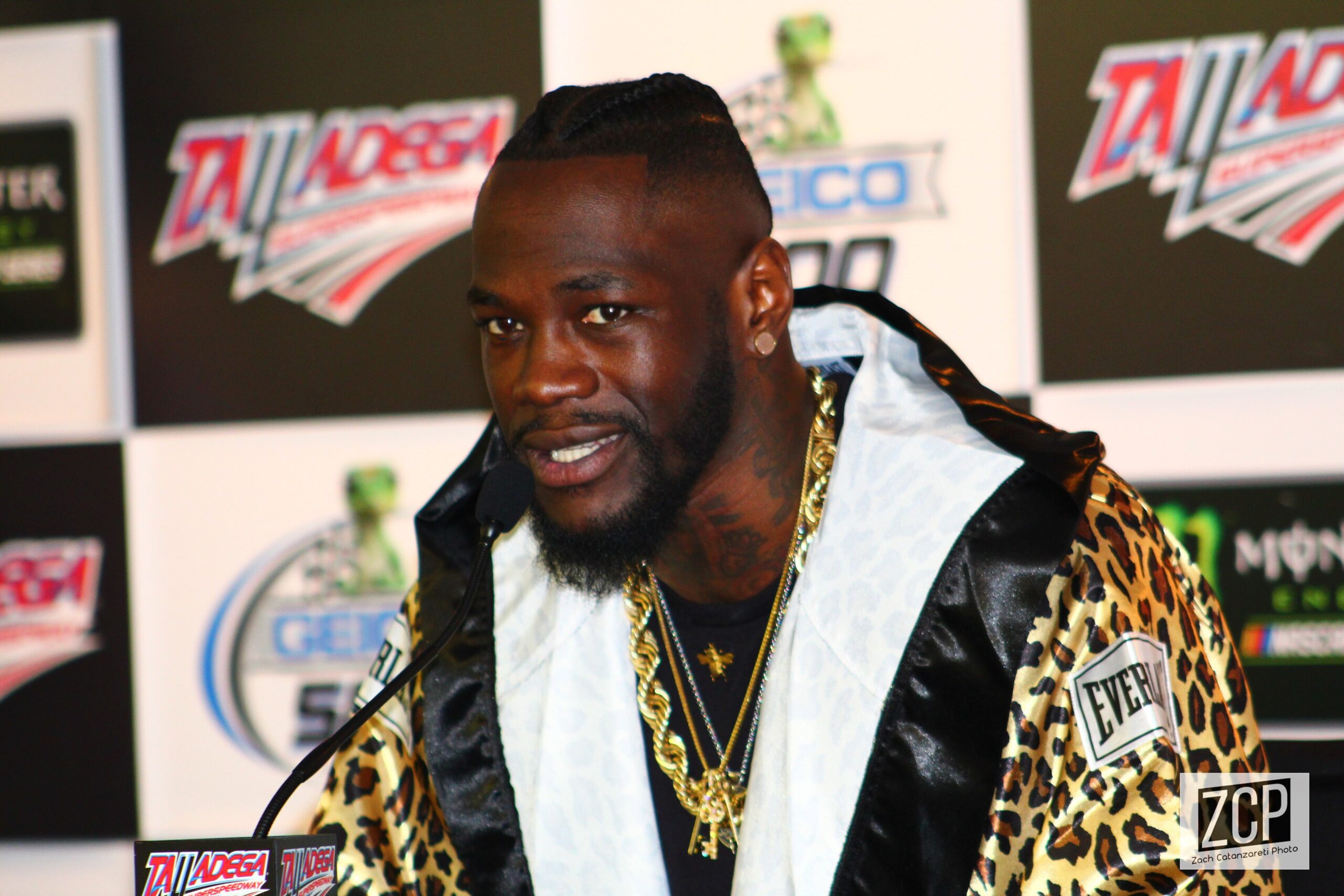
Tyson Fury believes Deontay Wilder should have walked away from boxing when their rivalry ended in 2021. Five years later, Wilder is still fighting—and his former opponent thinks the sport has already seen enough.
Speaking to FightHype, Fury called Wilder “shot to bits,” argued that he should no longer be competing and described his decision to face Jai Opetaia as “silly on Deontay’s part.” Those comments carry unusual weight because Fury is not criticizing an unrelated fight from the sidelines. Wilder and Opetaia will meet in the heavyweight co-main event beneath Fury’s December 11 showdown with Anthony Joshua at Principality Stadium in Cardiff, Wales.
Netflix has confirmed that the card will stream globally, placing Wilder’s latest attempt to remain relevant on one of boxing’s largest stages. The opponent is unbeaten former IBF cruiserweight champion Opetaia, who will enter at 31-0 with 24 knockouts, according to BoxingScene. Wilder arrives with a record of 45-4-1 and 43 knockouts.
On paper, it is an intriguing collision between an established heavyweight puncher and an undefeated champion moving into a larger division. Fury’s criticism gives the matchup a harsher meaning.
Wilder–Opetaia is now a referendum on whether the Bronze Bomber remains a credible heavyweight threat—or has become a famous name for younger fighters to build on.
Fury Believes the Wilder He Fought No Longer Exists
Few active fighters are better positioned to discuss Wilder’s strengths than Fury. They shared three fights between 2018 and 2021, beginning with a draw before Fury stopped Wilder in both rematches. Their rivalry helped define an era of heavyweight boxing and gave Fury firsthand experience with the danger that made Wilder one of the division’s most feared punchers.
That history does not make Fury’s opinion definitive. It does make it relevant.
In his FightHype interview, Fury pointed to Wilder’s performance against Derek Chisora as evidence that the former WBC champion has declined. Wilder officially won that April 4 fight at London’s O2 Arena by split decision over 12 rounds, according to Premier Boxing Champions. Fury’s concern was not the result itself, but what he believed was missing from the performance.
Fury argued that Wilder’s former knockout power was no longer apparent against Chisora. That is his assessment, not a medical finding or an established fact about Wilder’s physical condition. Describing a fighter as “shot” is boxing language for severe decline, but it remains a subjective judgment based on performance.
There is also history behind the verdict. Fury dealt Wilder the two stoppage defeats that transformed the American’s career, and their rivalry was intensely personal. That relationship may give Fury insight, but it may also shape how he interprets everything Wilder has done since.
Still, the Chisora fight did not provide an emphatic rebuttal.
Wilder returned to the win column and proved that he could complete 12 rounds, but a split decision against a veteran opponent did not recreate the sense of danger that once surrounded him. The question was never simply whether Wilder could win another professional fight. It was whether the timing, speed and finishing instincts that made him an elite heavyweight remained available when he needed them.
Fury believes the answer is no.
Opetaia now has the opportunity to test that conclusion.
The Chisora Victory Preserved Wilder’s Career Without Settling the Debate
Wilder’s official record demands respect. BoxingScene lists him at 45-4-1 with 43 knockouts, a ratio that explains why opponents spent years treating his right hand as one of the most dangerous weapons in boxing.
That history cannot simply be erased because recent performances have raised questions.
Wilder beat Chisora. However narrow the margins may have been, the official result matters. The victory stopped another defeat from being added to his record and gave him a direct path toward a significant fight on a major card. At this stage of his career, surviving a difficult night and finding a way to win still has value.
But there is a difference between keeping a career alive and proving that a fighter still belongs near the top of the division.
A split decision can demonstrate resilience without establishing dominance. It can show that a fighter remains capable without showing that he remains elite. For Wilder, whose reputation was built on ending fights suddenly rather than edging through them over 12 rounds, the nature of the Chisora victory invited as many questions as the result answered.
Was the lack of a knockout simply the product of one difficult matchup? Was Chisora’s durability responsible for extending the fight? Or was Fury correct that Wilder no longer generates the same threat that once allowed him to change an entire contest with one clean punch?
The Chisora result alone cannot settle those questions.
It does establish an important boundary around the discussion: Wilder is not entering the Opetaia fight following a loss. He is coming off an official victory, and any analysis of his current form must acknowledge that. Fury’s comments do not reverse the decision or remove Wilder from the win column.
They do, however, increase the standard Wilder will be expected to meet in Cardiff.
Merely lasting 12 rounds may not be enough to restore confidence. Scraping through another close decision may not change the perception that his reputation is doing more work than his current performances. To directly challenge Fury’s judgment, Wilder needs to show authority.
Opetaia Has Plenty to Prove at Heavyweight Too
Fury’s criticism risks presenting Opetaia as nothing more than an instrument for measuring Wilder’s decline. That would undersell what the Australian is attempting.
Opetaia enters unbeaten at 31-0 with 24 knockouts, according to BoxingScene. Netflix identifies him as a former IBF cruiserweight champion, but the December 11 contest will take place at heavyweight. He is therefore stepping into a division where his success has not yet been established.
An undefeated cruiserweight record does not automatically translate into heavyweight credibility.
Opetaia may bring advantages in speed, activity and technical sharpness, but those qualities still have to function against a naturally larger opponent with Wilder’s experience and punching history. No official weights have been supplied for the matchup, so assumptions about the exact size difference would be premature. What is known is that Opetaia is entering new divisional territory against a former WBC heavyweight champion.
That makes the fight a genuine risk for both men.
Wilder could lose to a smaller fighter moving up and reinforce every argument about his decline. Opetaia could discover that heavyweight power, reach and physical presence create problems that did not exist at cruiserweight.
The reward is equally clear. A victory over Wilder would give Opetaia immediate recognition in the heavyweight division. Even critics who believe Wilder has declined would have to acknowledge the significance of defeating an experienced former champion on a global Netflix card.
That is why Fury’s comments change the framing without determining the outcome.
They transform the co-main event from an attractive name fight into an examination of both men’s ambitions. Wilder must prove he is more than a recognizable opponent. Opetaia must prove he is more than an accomplished cruiserweight entering a division where his credentials remain untested.
Wilder Needs More Than an Official Win to Silence Fury
BoxingScene reported that Zuffa Boxing’s Dana White announced Wilder–Opetaia as officially set, while Netflix confirmed the date, location and heavyweight designation. The debate can now move away from whether the fight will happen and toward what the result will actually mean.
For Wilder, not all victories will carry the same value.
A convincing performance—one built on sharp timing, controlled aggression and sustained danger—would directly challenge Fury’s claim that the former champion is finished. Wilder does not necessarily need a knockout, but he needs to look capable of imposing himself rather than merely surviving difficult stretches and waiting for the scorecards.
If the right hand remains a meaningful threat, Opetaia should be forced to respect it. If Wilder’s timing is still effective, he should be able to punish an opponent entering heavyweight competition for the first time. If his championship experience still matters, it should become visible when the fight demands adjustments.
Another flat performance would strengthen Fury’s case even if Wilder managed to win narrowly.
A defeat would make the consequences more severe. It would suggest that Wilder’s greatest remaining value lies in the recognition attached to his name rather than his ability to influence the top of the heavyweight division. At that point, promoters could still find opportunities for him, but the purpose of those opportunities might change. He would look less like a contender pursuing another run and more like an established attraction being offered to fighters seeking credibility.
Opetaia is not guaranteed to provide a final answer. One fight rarely explains every aspect of a veteran’s decline, and moving up in weight creates uncertainties on both sides.
But he can provide much better evidence than another exchange of opinions.
Fury has already delivered his verdict. Wilder’s response does not need to come through an interview or a public argument. It can come through the performance he produces on December 11.
LET’S TALK ABOUT IT
Is Tyson Fury accurately recognizing Deontay Wilder’s decline, or is he dismissing a former rival too quickly after Wilder returned to the win column against Derek Chisora?
And does Wilder only need to defeat Jai Opetaia, or must he win convincingly to prove that the Bronze Bomber still belongs among relevant heavyweights?
Outlets cited in this story
- BoxingScene
Spot an error? Send a correction. We fix mistakes in the open.