Tyson Fury Targets Wilder Knockout Tactics for Anthony Joshua — But the Blueprint May Not Fit

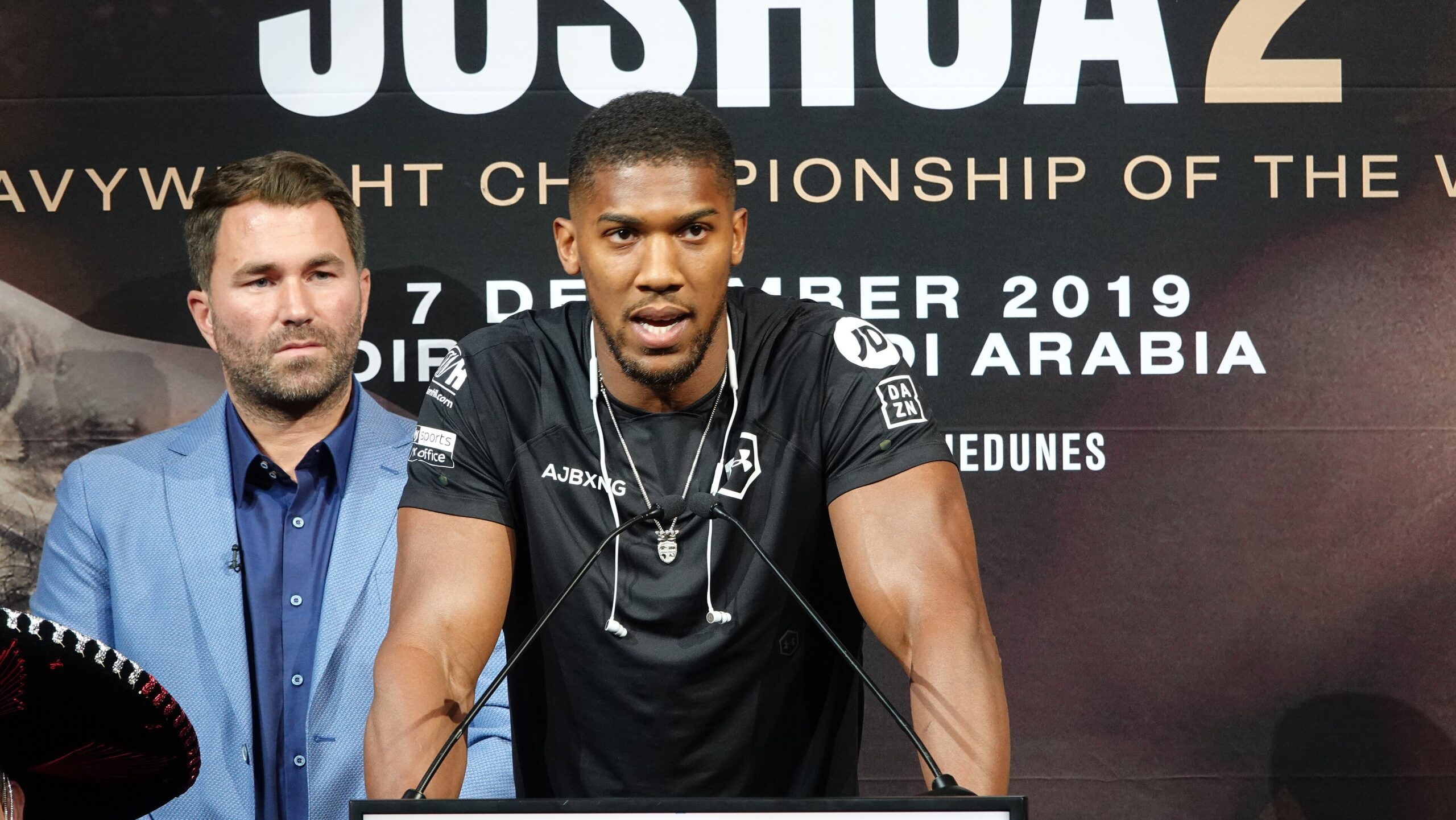
Tyson Fury appears to be preparing for Anthony Joshua with one of the most dominant performances of his career in mind.
According to Boxing 247, Fury posted, “Big boy 280lbs incoming,” while discussing his preparation for the long-awaited British heavyweight showdown. Matchroom Boxing lists Fury versus Joshua for December 11, 2026, while Principality Stadium identifies its Cardiff venue as the site of the fight. The World Boxing Council also reported that the matchup had been officially confirmed.
The number immediately attracted attention because of what Fury accomplished against Deontay Wilder in their February 2020 rematch. The WBC reported that Fury weighed 273 pounds before that bout, and Premier Boxing Champions records that he stopped Wilder in the seventh round to capture the WBC heavyweight title.
Boxing 247 has interpreted Fury’s proposed 280-pound target as a possible attempt to revive the size-and-pressure formula that overwhelmed Wilder. That comparison is understandable, but it remains an interpretation. Fury’s reported post establishes a training target—not his official weigh-in result, his fight-night weight or a confirmed tactical plan from his team.
More importantly, Joshua is not Wilder.
The approach that neutralized Wilder’s most dangerous weapon could expose Fury to a different collection of threats against Joshua. Fury’s size may become a major advantage if he uses it without sacrificing his movement, but simply adding pounds will not reproduce the Wilder result automatically.
Fury’s Pressure Took Away Wilder’s Preferred Conditions
Fury’s performance in the second Wilder fight was not memorable simply because he was heavy. It was effective because his size supported a tactical decision that changed the terms of the matchup.
Rather than allowing Wilder the space to set his feet and launch his right hand, Fury moved forward, occupied the center and forced the American to work while retreating. He used his jab to disrupt Wilder’s positioning, closed distance behind his punches and imposed his body during clinches. The pressure prevented Wilder from settling into the kind of measured, long-range fight in which his power was most threatening.
Fury’s official 273-pound weight mattered within that broader strategy. He was not carrying size passively. He was applying it through forward movement, physical contact and sustained pressure.
Wilder struggled to create room once Fury began forcing him backward. His posture deteriorated, his balance became less reliable and the threat of his right hand diminished as the fight moved away from his preferred range. Fury scored knockdowns and continued pressing until Wilder’s corner stopped the contest in the seventh round, according to Premier Boxing Champions.
That victory became the clearest example of Fury functioning as an aggressive heavyweight rather than the mobile, evasive boxer with whom he had traditionally been associated. It demonstrated that his dimensions could be used offensively—not only to control range, but also to physically exhaust and overwhelm an opponent.
A reported target of 280 pounds naturally invites the same interpretation. If Fury enters against Joshua near that figure, he may intend to make the fight physical, deny Joshua comfortable space and force him to carry Fury’s weight whenever they come together.
But the success of that idea depends on more than the scale.
Joshua Presents Different Risks From Wilder
Wilder’s extraordinary danger has historically been concentrated around his ability to create or exploit an opening for a devastating right hand. Joshua presents a broader offensive problem.
Joshua can attack with combinations rather than relying on one decisive shot. He can work through the middle with straight punches, follow his right hand with a left hook and target the body when an opponent closes distance without sufficient defensive structure. That variety creates different consequences for predictable pressure.
Fury cannot assume that forcing Joshua backward will make him immediately ineffective.
Joshua’s offense may become less comfortable under sustained pressure, but he has more tools for exchanging at mid-range and short range than Wilder displayed in the 2020 rematch. He can answer an advancing opponent with compact combinations, and his physical strength gives him a better chance of resisting Fury’s attempts to dominate every clinch.
That does not mean Joshua will automatically win the inside battle. Fury’s height, frame and ability to manipulate opponents in close remain important advantages. It means those exchanges could demand more defensive discipline than Fury required against Wilder.
If Fury walks forward too squarely, Joshua may have opportunities to punch between his steps. If Fury leans excessively during clinches, Joshua may be able to create enough separation to work to the body or bring an uppercut through the center. If Fury becomes convinced that size alone will break Joshua, he could spend longer than expected in the range where Joshua’s combinations are most dangerous.
The tactical difference is significant. Against Wilder, forward pressure helped Fury suppress the opponent’s primary weapon. Against Joshua, pressure could reduce some dangers while bringing Fury closer to others.
Fury may still decide that making Joshua retreat is the correct approach. The issue is whether he applies that pressure intelligently—behind feints, a controlling jab and changes of rhythm—or treats the Wilder performance as a script that can simply be repeated.
The 280-Pound Target Changes the Conversation, Not the Evidence
Fury’s reported statement gives observers a clue about how he is approaching camp. It does not settle what he will weigh or how he will fight.
A 280-pound target suggests that Fury may be prioritizing physical strength and the ability to impose himself at close range. Additional mass could support a pressure-based approach, particularly if he intends to lean on Joshua, contest clinches and turn the bout into a demanding physical fight.
There are potential tradeoffs.
Fury’s movement has always been one of the qualities separating him from more conventional heavyweights. His ability to change direction, control distance and make adjustments during a fight has allowed him to operate in multiple styles. If reaching 280 pounds reduces that mobility or increases the energy required to sustain pressure, the added size could limit some of the versatility that makes him difficult to prepare for.
The same uncertainty applies to stamina. A heavier Fury might be stronger during individual exchanges, but there is no evidence yet establishing how a 280-pound version will move over the course of the Joshua fight. The proposed target also does not prove that Fury will punch harder or absorb punches better.
Those conclusions cannot be drawn from a social media post.
The WBC’s documented figure of 273 pounds before the second Wilder fight provides a legitimate historical comparison. Fury then produced a career-defining performance and stopped Wilder in seven rounds. What the record does not show is that increasing that weight to 280 pounds will make him more effective against an opponent with Joshua’s offensive variety.
Seven additional pounds would not be the strategy. How Fury uses his body would be the strategy.
If he maintains balance, controls range on the way forward and makes Joshua work without becoming easy to hit, the added size may complement a carefully designed plan. If he becomes slower, more predictable or too willing to exchange, the same weight could work against him.
Fury May Need a Blended Approach Rather Than a Rematch
Fury’s greatest tactical advantage may be that he does not have to choose between constant movement and constant pressure.
He can begin behind his jab, test Joshua’s reactions and decide when to step forward. He can make Joshua reset with feints, turn him after exchanges and then use his weight when the distance closes. That kind of blended approach would preserve the most useful elements of the Wilder blueprint without assuming Joshua will respond exactly as Wilder did.
The opening rounds should reveal whether Fury is adapting or repeating.
Sustained forward movement from the opening bell would support Boxing 247’s interpretation that Fury is returning to the pressure-heavy identity of the second Wilder fight. More measured movement, frequent stance adjustments and selective clinching would suggest that his weight is only one component of a broader plan.
Joshua’s decisions will matter just as much. His official weight and intended tactics remain unknown. He could attempt to hold the center, force Fury to move or concede ground temporarily while looking for counters. Each choice would change how useful Fury’s size becomes.
That is why the weigh-in will answer only the first question. It will establish whether Fury reaches the figure he has reportedly targeted. It cannot establish whether the target was tactically correct.
The fight itself will provide that evidence.
If Fury pressures Joshua while remaining defensively responsible, his performance against Wilder may look like the foundation of an evolved style. If he follows Joshua without controlling the exchanges, the comparison may begin to look less like a blueprint and more like misplaced confidence in a famous victory.
LET’S TALK ABOUT IT
Does Fury need the size-and-pressure approach that stopped Wilder, or would targeting 280 pounds make him more vulnerable to Joshua’s combinations?
Is Fury adapting a proven strategy for a different opponent—or relying too heavily on the memory of his best heavyweight performance?
Outlets cited in this story
- Boxing 247
Spot an error? Send a correction. We fix mistakes in the open.