Devin Haney Signs Multi-Fight DAZN Deal — But Access Must Turn Into Action
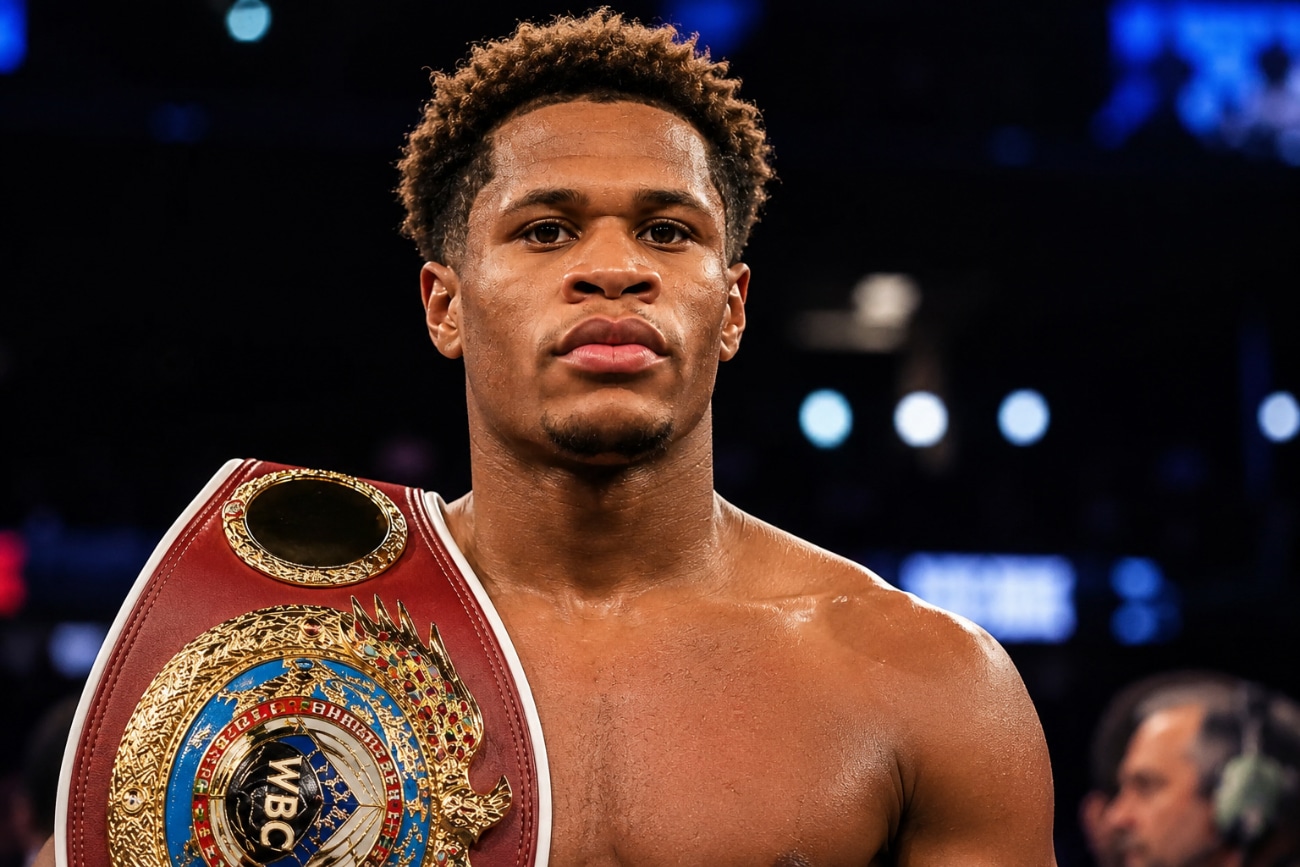
Devin Haney has a new broadcasting home, a promotional partnership and a public commitment to pursue the biggest fights available. What he does not have yet is an officially announced fight.
DAZN announced an exclusive multi-fight agreement with Haney and Devin Haney Promotions on October 23, giving the WBO welterweight champion a platform after approximately 11 months of inactivity. According to ESPN and Bad Left Hook, Haney said he chose DAZN because he wants “the biggest challenges and the fights the fans want to see.”
That is the right ambition for an undefeated champion attempting to build his position in a new division. It also establishes a straightforward standard for evaluating the agreement.
The deal will matter only if it puts Haney back in the ring against opponents capable of advancing his legacy.
The number of fights, length of the agreement and financial terms have not been disclosed. Haney’s DAZN debut also remains unannounced, with no official opponent, date, venue or purse. A possible unification fight against IBF welterweight champion Liam Paro has been reported, but it has not been officially confirmed.
For now, DAZN has secured Haney’s signature. The more important question is what that signature produces.
DAZN Gives Haney a Home After 11 Months of Inactivity
Haney has not fought since defeating Brian Norman Jr. on November 22, 2025. According to the WBO, Haney won that fight by 12-round unanimous decision to claim its welterweight championship, with official scores of 114-113, 116-111 and 117-110.
The victory established Haney as a champion in another division and moved his official WBO record to 33-0. It should have created immediate momentum at welterweight, where major fights and unification possibilities could help define the next stage of his career.
Instead, Haney has spent approximately 11 months outside the ring.
That inactivity makes the DAZN announcement more significant than an ordinary platform agreement. Haney does not simply need a broadcaster willing to feature him. He needs an arrangement capable of converting his championship status into consistent, consequential fights.
DAZN now provides an exclusive home for Haney and a working relationship with Devin Haney Promotions. The agreement could also support Haney’s broader business ambitions. BoxingNews24 reported that Haney said on social media that the partnership would help his promotional company develop fighters while working to make major events.
That gives the deal two potential purposes: advancing Haney’s own career and expanding his influence as a promoter.
Neither objective can be measured by the announcement alone.
For Haney, the immediate priority has to be activity. Winning the WBO title from Norman was an important result, but championship momentum disappears quickly when a fighter does not return to defend or unify the belt. The DAZN deal creates a structure for the next move. It does not replace the move itself.
Haney Says Opponent Access Separated DAZN From Zuffa Boxing
The most revealing part of Haney’s explanation is not simply that DAZN offered attractive terms. It is his claim that the platform could deliver the opponents he wanted.
According to BoxingNews24, Haney told DAZN’s Chris Mannix that Zuffa Boxing offered him substantial money. Haney said he still selected DAZN because the opponents needed for his preferred fights were available through the platform.
That is a meaningful sporting argument.
Broadcast and promotional alignments routinely complicate matchmaking in boxing. Two fighters can want the same bout while competing networks, contractual obligations and promotional interests prevent negotiations from reaching the finish line. If DAZN gives Haney easier access to relevant welterweights, choosing the platform could remove one of the barriers between him and the fights he says he wants.
It could also distinguish this agreement from a deal built primarily around guaranteed appearances against manageable opposition. Haney is already a WBO champion with an undefeated record. At this stage, ordinary wins will add less to his standing than fights that clarify who belongs at the top of the welterweight division.
But access is not the same as matchmaking.
A platform may have relationships with desirable opponents, but those fighters still need to agree to terms. Contracts must be completed. Dates, venues and purses must be settled. Sanctioning bodies may become involved, and competing career plans can derail a matchup even when the broadcaster appears capable of hosting it.
Haney’s explanation therefore strengthens the potential value of the DAZN agreement while increasing the expectations attached to it. If opponent availability was the decisive factor in his decision, the quality of his first few matchups will reveal whether that access was real.
The Agreement Changes Haney’s Position, Not His Schedule
The DAZN deal resolves one important question. Haney now has an exclusive broadcasting home and a platform relationship for Devin Haney Promotions.
It potentially provides a clearer route toward high-level opponents. It also gives DAZN another established American champion whose career can anchor significant boxing events.
What the agreement does not provide is equally important.
DAZN has not announced Haney’s debut opponent. There is no official fight date, venue or purse. The parties have not disclosed how many bouts are covered or how many years the agreement will last. Without those details, it is impossible to determine how quickly Haney is expected to return or how much flexibility exists within the arrangement.
Those unanswered questions do not make the deal meaningless. Contract announcements frequently arrive before individual fights are finalized. Haney and DAZN may be working behind the scenes toward a matchup that would immediately justify the partnership.
The public evidence, however, remains limited to the agreement and Haney’s stated intentions.
That distinction matters because boxing often treats the announcement of a business relationship as though it were the announcement of competitive progress. A fighter can sign with a major platform, appear at a press event and speak convincingly about legacy without taking a meaningful step toward a confirmed bout.
Haney has already completed the business decision. His next announcement needs to be about boxing.
The identity of his first DAZN opponent will say more about the partnership than any language surrounding the deal. If that opponent strengthens Haney’s position at welterweight, the agreement will appear to have created a productive path forward. If the debut is delayed or built around an opponent who offers little competitive value, the same questions about inactivity and direction will remain.
A Liam Paro Unification Would Provide Immediate Proof
The possible fight with Liam Paro is the most compelling test of Haney’s claim that DAZN offers access to the opponents he needs.
Mike Coppinger reported on October 22 that Haney and Paro had agreed to meet in a WBO-IBF welterweight unification fight in the United States before the end of 2026. Bad Left Hook subsequently covered the reported agreement.
The matchup remains unconfirmed.
There has been no official bout announcement, public confirmation of signed contracts, date, venue or purse. Until those details are released by the fighters, their representatives or the broadcaster, Haney-Paro must be treated as a possible fight rather than a completed agreement.
If it becomes official, the matchup would immediately give the DAZN partnership competitive credibility.
Haney would be returning from a lengthy absence against another champion rather than using the new deal to ease back into activity. The fight would place two recognized welterweight titles at stake and give the winner a stronger claim within the division. It would also demonstrate that Haney’s stated access to significant opponents was producing results at the first opportunity.
That would be the clearest proof of concept available.
A Paro fight would not answer every long-term question surrounding the agreement. One major bout does not guarantee continued activity, and the undisclosed length and structure of the contract would still matter. It would, however, transform the conversation from what DAZN might do for Haney into what the partnership has already delivered.
If Paro is not next, Haney’s eventual opponent should still reflect the reasoning he gave for choosing DAZN. The standard does not have to be unification or failure, but the fight should move him closer to divisional authority and the legacy he says he is pursuing.
Haney does not need another announcement explaining that major fights are possible.
He needs a major fight to become official.
LET’S TALK ABOUT IT
Does Devin Haney’s DAZN agreement become an immediate success if it delivers the reported Liam Paro unification before the end of 2026?
If Paro is not next, which welterweight opponent would prove that Haney’s move to DAZN was genuinely about securing the biggest available fights?
Outlets cited in this story
- Bad Left Hook
- BoxingNews24
- ESPN
- DAZN
Spot an error? Send a correction. We fix mistakes in the open.