
Shakur Stevenson’s Asking Price Draws Criticism — But a Muratalla Purse Bid Could Reveal His True Market Value

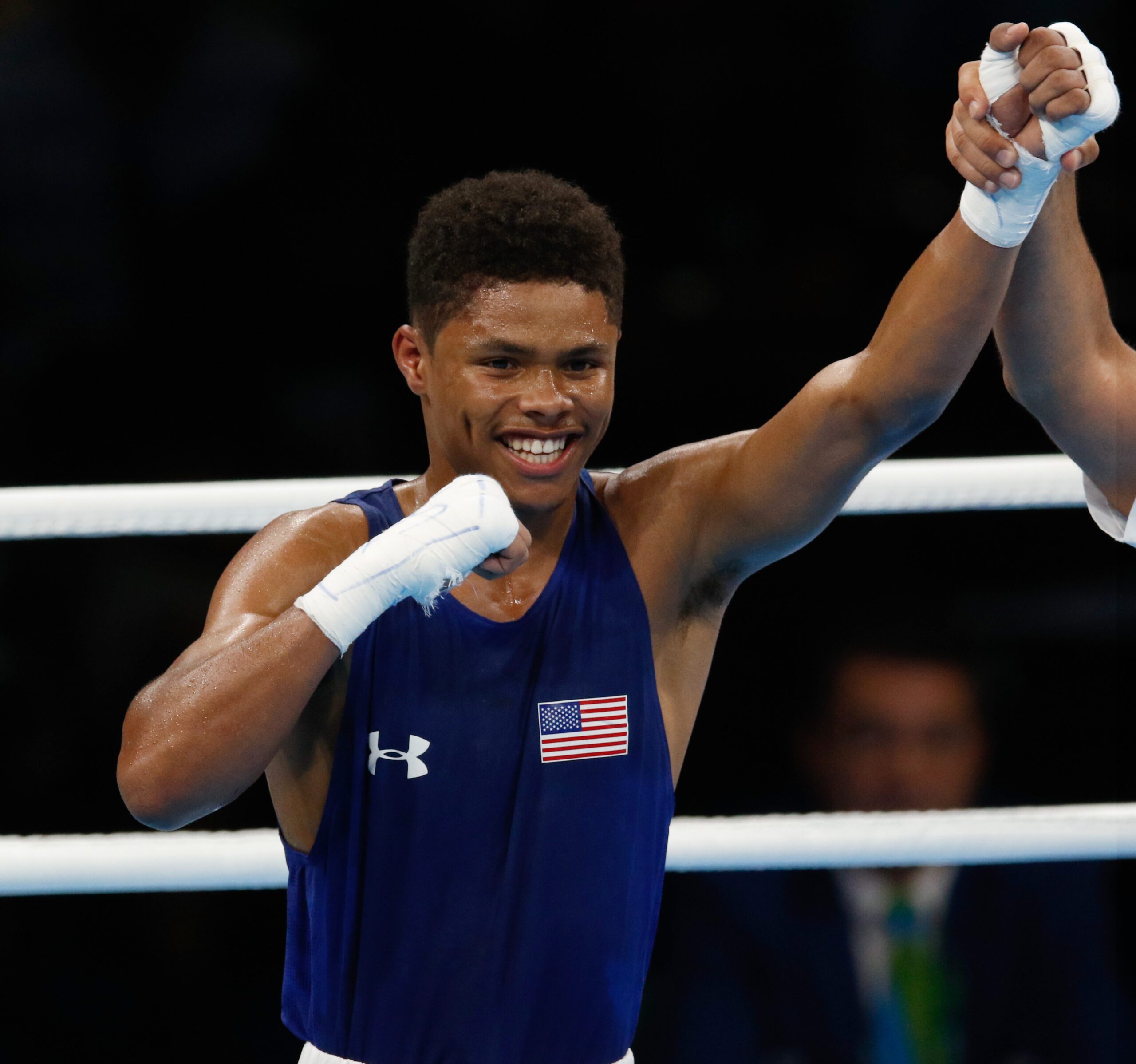
Shakur Stevenson’s decision to leave Zuffa Boxing has placed his value—and his understanding of that value—under immediate scrutiny.
Stevenson announced on October 19 that Zuffa Boxing had granted his requested release, making him a free agent only months after he joined the company in July. He said he intends to launch his own promotional company while remaining willing to work with interested promoters and networks.
That strategy offers Stevenson the possibility of greater control, but it does not remove the central financial question surrounding every major fight: Who is willing to pay for it?
Shawn Porter believes that question will limit Stevenson’s freedom. As reported by Boxing News 24/7, Porter argued that a promoter would be reluctant to invest heavily in Stevenson, allow him to defeat one of its fighters and then watch him leave. Porter predicted that anyone financing a major opportunity would likely demand at least a three-fight commitment.
The business logic is understandable. The conclusion remains unproven.
No promoter has publicly confirmed that Stevenson must sign a three-fight agreement. No verified offer has established what his next fight is worth. Claims that Stevenson is seeking an eight-figure purse or has already “priced himself out” have not been supported by a disclosed contract, a named negotiating source or a confirmed proposal.
The WBO may soon introduce something more useful than speculation. Stevenson has been ordered to negotiate a junior-welterweight title defense against designated mandatory challenger Raymond Muratalla. If the two sides cannot reach an agreement, a purse bid could provide the clearest public evidence yet of what qualified promoters are prepared to commit to Stevenson’s next fight.
Porter’s Prediction Raises a Real Question Without Settling It
Porter’s argument addresses a genuine weakness in the free-agent model.
A fighter may avoid a long-term promotional agreement and retain greater control over individual opportunities, but major events still require financing, distribution and promotion. A company investing in a valuable matchup may want more than one night of business—especially if its own fighter could lose and Stevenson could immediately take the momentum elsewhere.
From that perspective, Porter’s predicted three-fight minimum is not unreasonable. A multi-fight agreement could allow a promoter to recover its investment over several events, participate in Stevenson’s future success and avoid serving merely as the financial vehicle for a one-fight appearance.
That does not mean such a demand has actually been made.
Porter did not disclose a contract, identify a promoter that had presented those terms or reveal a negotiation in which Stevenson rejected a three-fight proposal. His comments should therefore be treated as an informed prediction about how boxing businesses may operate, not as confirmed evidence of Stevenson’s current options.
That distinction matters because commentary can quickly become accepted as negotiation history in boxing. One person estimates what a fighter wants. Another explains why a promoter would refuse it. Before long, the public is discussing an alleged asking price as though it appeared in a signed document.
There is currently no verified figure establishing Stevenson’s demand.
It is possible that promoters will insist on multiple fights. It is possible that Stevenson will discover that full independence comes with smaller guarantees, fewer attractive opponents or greater financial risk. It is also possible that a promoter or network will see enough value in a specific fight to negotiate a co-promotion without requiring long-term control.
Until an actual offer emerges, those remain possibilities rather than facts.
Stevenson’s Zuffa Exit Creates Freedom and Uncertainty
According to The Ring, Stevenson said he requested his release from Zuffa Boxing and received it. He described himself as officially free to pursue other opportunities, announced plans to establish his own promotional company and indicated that he remains open to working with outside promoters and networks.
Stevenson also said he spent eight weeks preparing for fights that never materialized. The Ring reported that Zuffa Boxing did not immediately respond to its request for comment, leaving Stevenson’s account as the primary public explanation for the separation.
If Stevenson’s version accurately describes the situation, his dissatisfaction is easy to understand. A fighter can lose valuable time preparing for events that fail to become official, and inactivity carries particular consequences for a champion attempting to maintain sporting and commercial momentum.
Leaving Zuffa may give Stevenson more influence over his direction. It does not prove that the infrastructure needed to deliver major fights is already in place.
Starting a promotional company and successfully financing championship boxing are different accomplishments. Stevenson will still need opponents, dates, venues, distribution and sufficient revenue to justify the purses involved. Co-promotions could provide those resources, but outside companies will negotiate according to their own interests.
That is where Porter’s criticism becomes relevant. Stevenson may be free from one promotional arrangement while still discovering that another company will attach conditions to its money.
Freedom in boxing is rarely the absence of contracts. More often, it is the ability to choose which contracts are acceptable.
The “Priced Himself Out” Label Is Still Unsupported
Stevenson’s exit has intensified discussion about whether his financial expectations match his commercial position. That is a fair subject for analysis, but the available evidence does not establish what he is asking anyone to pay.
Boxing News 24/7 presented criticism suggesting that Stevenson wants eight-figure purses and has priced himself out of meaningful opportunities. The report did not support those claims with a disclosed offer, a confirmed contract demand or a named source directly involved in negotiations.
That makes the alleged asking price unconfirmed.
Porter’s comments do not fill the evidentiary gap. His prediction that another promoter would seek a multi-fight commitment addresses contractual control, not the specific purse Stevenson has requested. It also does not prove that Stevenson rejected reasonable terms or that a willing promoter walked away because of his demands.
What Stevenson has accomplished inside the ring gives him legitimate leverage. The Ring identifies him as the WBO junior-welterweight champion with a 25-0 record and 11 knockouts. His most recent fight was a unanimous-decision victory over Teofimo Lopez on January 31, when he won the WBO title.
An unbeaten record, a world championship and a victory over Lopez strengthen Stevenson’s position. None of those facts, however, automatically determines the financial value of his next appearance.
Market value depends on more than competitive quality. The opponent, broadcast interest, promotional relationships, location, event costs and available contractual rights can all influence what a company is prepared to offer. Without verified audience figures, confirmed proposals or signed agreements, there is no responsible basis for assigning Stevenson a precise value from the outside.
His record proves that he is an elite fighter.
It does not reveal the number a promoter will place on a contract.
Muratalla Could Force the Market to Produce an Answer
The WBO has ordered Stevenson to negotiate with Raymond Muratalla, its designated mandatory challenger at junior welterweight. According to the organization’s official October 27 order, the parties have until November 16, 2026, at 4 p.m. Atlantic Standard Time to reach an agreement.
If they do not reach terms, the WBO may order a purse bid. The process could also move there earlier if one of the parties requests it and the organization permits that step.
The mandatory creates both an obligation and an opportunity for Stevenson.
As champion, he must address Muratalla’s position under the WBO’s rules if he intends to retain the title. As a newly declared free agent, Stevenson may also receive an early test of whether his independent promotional strategy can deliver a championship event.
A negotiated agreement could answer that question privately. Stevenson, Muratalla and the companies involved might settle on acceptable terms without disclosing the financial details to the public. That would move Stevenson’s career forward, but it would not necessarily resolve the argument about his market value.
A purse bid would offer more visible evidence.
Promoters participating in the process would have to attach actual money to their assessment of the fight. Those bids would carry considerably more weight than estimates from commentators or unsupported claims about Stevenson’s demands. They would show what buyers are willing to risk for the right to stage this specific title defense.
The limitation is important: one purse bid would not establish Stevenson’s complete long-term value.
Stevenson against Muratalla may attract a different level of interest than Stevenson against a more commercially established opponent. A promoter bidding for a mandatory defense may also evaluate the event differently from a company negotiating a broader deal involving future fights, promotional rights or network exclusivity.
Still, the result would give the debate something it currently lacks—a measurable offer for a real fight.
The Next Contract Will Matter More Than the Criticism
Several developments could clarify Stevenson’s position.
A completed agreement with Muratalla could demonstrate that his team can secure acceptable terms while operating outside Zuffa Boxing. A purse bid could reveal what promoters are prepared to spend on the mandatory defense. A confirmed offer from another company could test Porter’s prediction that meaningful backing will require a multi-fight commitment.
Stevenson’s first independently promoted or co-promoted event may provide the broadest answer. That would show whether his plan can produce not only personal freedom but also opponents, distribution and financial terms capable of sustaining his career at championship level.
Until then, the market-value debate remains unresolved.
Stevenson may discover that his expectations exceed the offers available. Porter may be correct that promoters will refuse to finance major opportunities without receiving contractual control beyond one fight. Those outcomes are entirely plausible.
They have not happened publicly yet.
LET’S TALK ABOUT IT
Would a WBO purse bid for Shakur Stevenson against Raymond Muratalla provide the fairest test of Stevenson’s current market value, or can his real worth only be measured in a bigger voluntary matchup?
And without a verified offer or disclosed asking price, is the claim that Stevenson has “priced himself out” legitimate criticism—or speculation being presented as fact?
Outlets cited in this story
- Boxing News 24
- The Ring
Spot an error? Send a correction. We fix mistakes in the open.