
Keith Thurman Withdraws From Vergil Ortiz Jr. Fight — But His Name Still Opens Doors His Recent Record Does Not
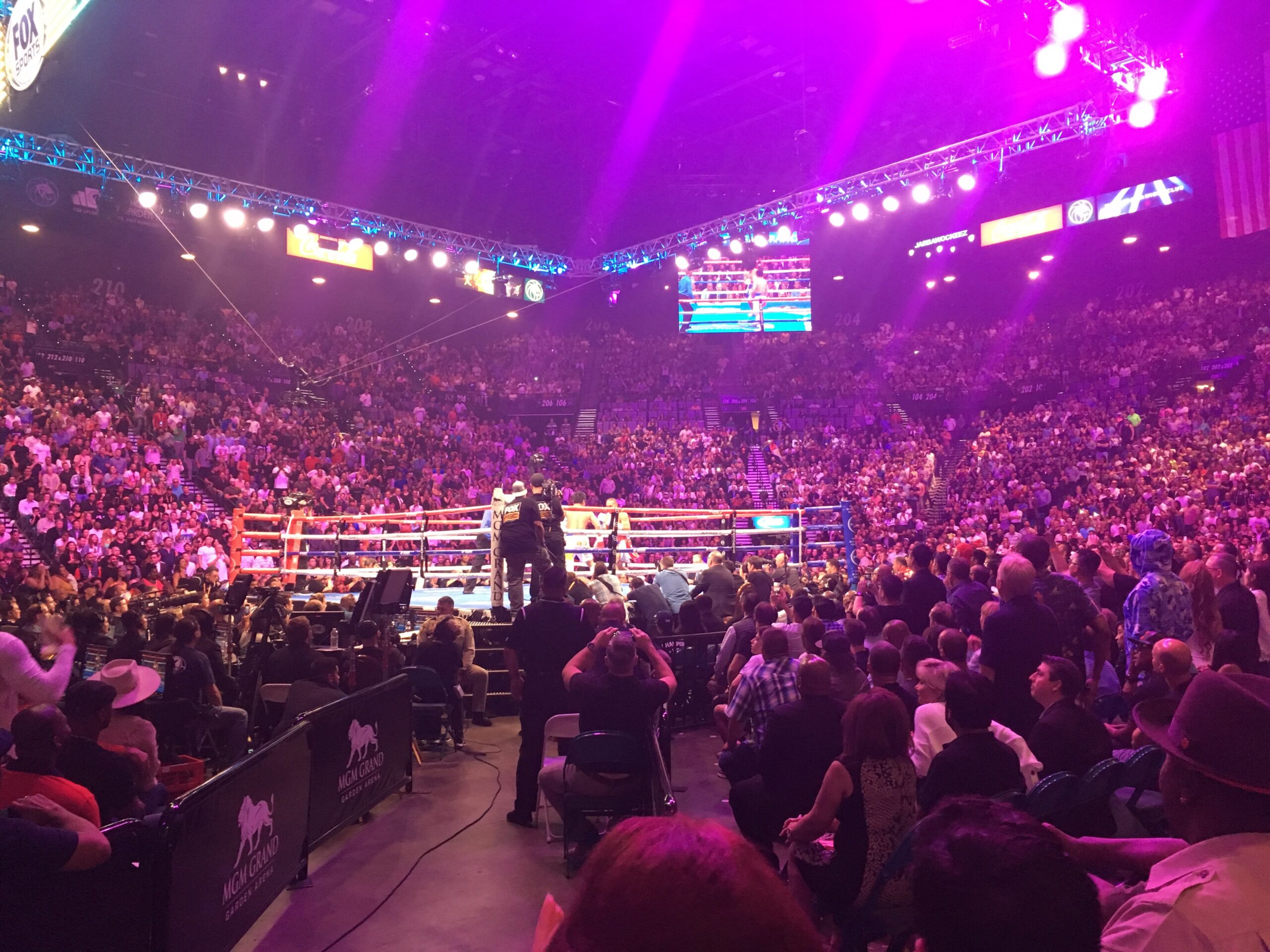
MGM Grand Garden Arena during the Manny Pacquiao and Keith Thurman boxing match in 2019.Image: Toohool / CC BY-SA 4.0 / Wikimedia Commons
Keith Thurman will not face Vergil Ortiz Jr. on December 5, removing one of the most recognizable names from a major boxing card and reviving a question that existed before the matchup was ever finalized.
According to BoxingScene and Uncrowned, Thurman withdrew from the scheduled middleweight fight after suffering an injury during training camp. Premier Boxing Champions had listed Ortiz–Thurman as a 12-round co-main event beneath David Benavidez–Michal Cieslak at Desert Diamond Arena in Glendale, Arizona.
The injury has not been officially identified. BoxingScene cited an unnamed source close to Thurman’s camp who said the injury was not career-threatening and could require up to two months of recovery, but that estimate remains unconfirmed. No official medical diagnosis or recovery timetable has been released.
The immediate problem belongs to Ortiz and the promoters attempting to preserve his place on the card. The larger issue belongs to Thurman.
A former champion with an established profile, Thurman remains marketable enough to receive prominent assignments. But after another major opportunity disappeared before he could demonstrate what he has left, his next premium-card position should require more than name recognition.
Ortiz Needs a Replacement, but Thurman Faces the Bigger Question
BoxingScene and Uncrowned reported that Premier Boxing Champions, Golden Boy Promotions and Ortiz’s team were searching for a replacement opponent. No replacement had been officially announced in the reviewed reporting, leaving Ortiz’s immediate plans uncertain.
That is not a minor disruption. Uncrowned listed Ortiz at 24-0 with 22 knockouts, and the unbeaten contender was supposed to receive a recognizable opponent with former-champion credentials. Thurman offered promotional value, experience and a familiar name that could help sell the co-main event to an audience already being asked to invest in Benavidez–Cieslak.
A late replacement may keep Ortiz active, but it may not preserve the original fight’s significance. Finding an available opponent is one challenge. Finding someone credible enough to justify the same placement and generate comparable interest is another.
None of that means Thurman should be blamed for getting injured.
Training-camp injuries are part of boxing, and there is no established evidence that Thurman withdrew without legitimate cause. The specific injury has not been disclosed, so there is no responsible basis for calling it minor, questioning its authenticity or declaring it a threat to his career.
The withdrawal should be evaluated for what it is: an unfortunate development that changed the December 5 card.
The scrutiny surrounding Thurman comes from everything around that development.
He was being given another significant platform despite limited recent evidence that he remains an elite contender. The Ortiz fight offered him the opportunity to change that perception. Now that the opportunity is gone, at least temporarily, the gap between Thurman’s reputation and his current competitive standing remains unresolved.
Thurman’s Commercial Value Is Real, but So Is the Case Against His Placement
There was a logical promotional argument for Ortiz–Thurman.
Ortiz is unbeaten, dangerous and still building the kind of profile that turns a leading contender into a reliable attraction. Thurman brought a recognizable identity and the credibility of a former champion. He could speak for the promotion, create a storyline and enter the ring with enough experience to make the matchup feel more meaningful than another routine appearance for Ortiz.
Boxing does not build cards from rankings alone. Promoters consider familiarity, audience interest, television value and the ability to create a marketable event. Thurman still offers qualities that many higher-ranked but lesser-known fighters do not.
That matters.
But commercial usefulness cannot become a permanent exemption from competitive standards.
BoxingNews24 questioned Thurman’s continued access to prominent card positions, raising a criticism that extends beyond one injured fighter. Recognizable former champions frequently retain opportunities long after their activity, rankings or recent performances stop supporting that treatment. Their names remain valuable, so promoters continue using them as shortcuts to legitimacy.
Thurman’s current record makes that criticism difficult to dismiss. BoxingScene listed him at 31-2 with 23 knockouts. Premier Boxing Champions records his most recent appearance as a sixth-round stoppage loss to Sebastian Fundora in their WBC super-welterweight title fight on March 28, 2026.
The WBC’s November 2026 ratings placed Thurman at No. 18 in the super-welterweight division.
Those facts do not erase his accomplishments. They do show that the version of Thurman being promoted today is supported more strongly by what he once established than by what he has recently demonstrated.
That distinction should matter when premium positions are assigned.
Ortiz–Thurman was also scheduled at middleweight, while the WBC ranking available for Thurman placed him 18th at super welterweight. A ranking in a lower division does not decide whether someone is capable of competing at a higher weight, but it reinforces the central issue: Thurman was not entering this assignment as a leading contender whose current standing demanded a major opportunity.
He was entering because Keith Thurman remains a name.
The Withdrawal Intensifies the Scrutiny Without Settling the Debate
It would be unfair to use an injury withdrawal as proof that Thurman no longer belongs in important fights. Injuries happen to active contenders, rising prospects and champions at the height of their careers. Missing one event does not automatically make a fighter unreliable.
The withdrawal also does not establish that Thurman would have lost to Ortiz or performed poorly. Ortiz’s unbeaten record and knockout percentage made him the fighter with the stronger recent momentum, but the matchup never reached the ring. Any claim about what definitely would have happened remains speculation.
What the withdrawal does is remove Thurman’s chance to answer the criticism.
A competitive performance against Ortiz could have shown that his experience, timing and skill remained effective against a younger unbeaten opponent. A victory would have transformed the entire conversation, replacing questions about name-based opportunity with evidence that Thurman could still operate at a high level.
Even a respectable defeat might have offered useful information if Thurman demonstrated that he remained capable of competing with a dangerous contender.
Instead, the uncertainty continues.
Thurman’s last recorded result remains the stoppage loss to Fundora. His WBC position remains No. 18 at super welterweight. The Ortiz assignment remains another prominent opportunity that produced no new evidence about his present level.
That is not necessarily Thurman’s fault, but it is still the reality promoters should consider when deciding what comes next.
There is also a financial limit to the available analysis. No verified purse figures for Ortiz–Thurman were identified in the reviewed sources. Without confirmed numbers, it would be irresponsible to speculate about what Thurman was set to earn or whether the financial terms reflected his current sporting position.
The defensible argument is about placement, not an unverified paycheck.
Thurman’s Next Fight Should Determine Whether Another Major Assignment Is Justified
Thurman does not need to be permanently excluded from major cards. He needs to reestablish why he belongs on them.
The clearest route is a comeback against a credible opponent. Not an impossible assignment immediately after an injury, but not a ceremonial appearance designed only to protect his name either. A meaningful contender would give Thurman the chance to show whether he can still control rounds, withstand pressure and compete at the pace required at this stage of his career.
If he returns healthy and produces a convincing victory, another prominent fight becomes defensible. Former champions are not required to abandon every advantage earned through years of accomplishment, and one strong performance can restore competitive relevance quickly in boxing.
If he struggles, loses or remains inactive, the argument becomes much harder to sustain.
The sport has a limited number of meaningful card positions. Every major assignment given primarily to a familiar former champion is one that could have gone to an active contender building a current résumé. Name recognition should influence matchmaking, but it should not overrule form indefinitely.
Thurman’s history has earned him attention. It has earned him an audience and ensured that his return will matter whenever he is medically able to fight again.
It should not automatically earn him the same kind of opportunity he just lost.
The next step should be proof.
LET’S TALK ABOUT IT
Has Keith Thurman’s past success earned him another prominent opportunity after he recovers, or should he first defeat a credible contender?
How long should boxing continue giving premium-card positions to recognizable former champions when their recent records and rankings no longer support them?
Outlets cited in this story
- BoxingNews24
- BoxingScene
Spot an error? Send a correction.
More on Keith Thurman
All 3 Keith Thurman stories →
Keith Thurman’s Injury Cancels the Vergil Ortiz Jr. Fight — Now the Replacement Must Preserve Its Meaning
Keith Thurman has withdrawn from his December 5 fight against Vergil Ortiz Jr. after suffering an injury during training camp, leaving organizers with little time to protect one of the…
Vergil Ortiz Jr. Nears December Fight With Keith Thurman — But a Comeback Is Only the Beginning
Vergil Ortiz Jr. could return to the ring against Keith Thurman in December, but the proposed fight is not official. Golden Boy Promotions founder Oscar De La Hoya told The…