
Shakur Stevenson Says He No Longer Needs Gervonta Davis — But His Zuffa Debut Must Prove It
 Elijah StoneBoxing Writer, 13 years ringside
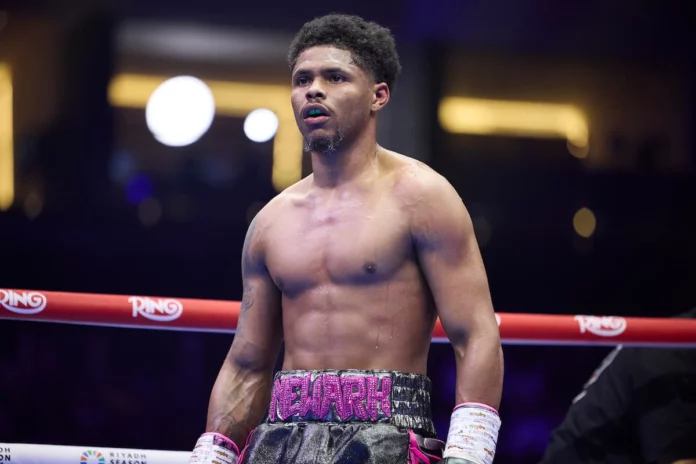
Shakur Stevenson and Gervonta Davis are once again arguing over who needs whom. This time, however, the dispute is not primarily about styles, confidence or willingness to fight. It is about money—and whether Stevenson’s new agreement with Zuffa Boxing has fundamentally changed the financial balance between them.
According to Boxing 24/7, Stevenson accused Davis of being afraid to face him and claimed his next fight would demonstrate that he no longer needs Davis to secure a major payday. Davis responded by arguing that the people investing in Stevenson still need a marquee matchup to recover their money. Stevenson then countered that Davis lacks a comparable opponent and needs him instead.
Neither fighter supplied financial figures supporting those claims. The publicly available announcements surrounding Stevenson’s Zuffa agreement did not disclose its value, and no Davis-Stevenson fight has been announced. There is also no public confirmation that their representatives have entered substantive negotiations.
That makes the argument impossible to settle through social-media claims alone.
Stevenson’s first Zuffa opponent will provide a far more meaningful answer. The matchup should reveal whether Zuffa intends to build him as a standalone attraction through compelling fights—or whether its investment still depends on securing an established superstar such as Davis or Devin Haney.
Stevenson Believes the Zuffa Deal Changed His Leverage
Stevenson’s position is understandable. A multi-fight agreement with a new promotional force can provide contractual security and reduce the pressure to accept unfavorable terms from one particular opponent.
Sports Business Journal, CBS Sports and Sports Illustrated reported that Zuffa Boxing signed Stevenson to a multi-fight agreement in July 2026. The signing gave Zuffa one of the most accomplished American fighters available as the company continued building its boxing operation.
The financial terms were not disclosed in the announcements reviewed.
That missing information matters because Stevenson’s argument is specifically about financial independence. He may be entirely correct that the agreement allows him to earn significant money without Davis, but the public record does not contain the figures necessary to verify how much he will receive, what conditions are attached or how the deal compares with the potential value of a Davis fight.
Contractual security also changes only part of the equation.
A promoter can guarantee compensation. It cannot automatically guarantee that an event will capture widespread attention, generate lasting momentum or turn a technically elite fighter into a larger commercial attraction. Those outcomes still depend on opponents, stakes, promotion and performances that give the audience a reason to become invested.
Stevenson understood the importance of major opponents when the deal was announced. In comments reported by Sports Business Journal, he expressed his desire for significant fights and identified Davis and Haney as possible opponents.
That does not mean his Zuffa run must begin with either man. It does show that the biggest names remained central to his ambitions even after he gained a new promotional platform.
The real value of the Zuffa agreement may therefore be leverage rather than independence. Stevenson no longer has to present himself as someone waiting helplessly for Davis to choose him. He can fight, earn and attempt to strengthen his position elsewhere.
Whether those alternatives can generate comparable demand remains unproven.
Davis’s Investment Claim Has Not Been Supported by Evidence
Davis offered the opposite interpretation. According to Boxing 24/7, he argued that Stevenson’s investors need a major fight to recover what they have committed to him.
That claim may sound commercially plausible, but Davis did not provide contract figures, profitability projections or any other independently verifiable financial evidence. Without knowing what Zuffa agreed to pay Stevenson—or how the company evaluates the broader strategic value of signing him—there is no basis for declaring that the investment requires a Davis fight to succeed.
Zuffa may view Stevenson as more than the participant on one pay-per-view card. A multi-fight deal could be intended to give the company championship-level credibility, attract other boxers, establish consistent programming or build a fighter across several events. None of those possibilities has been financially detailed in public, but they illustrate why the economics cannot be reduced to one speculative calculation.
Davis is still making a point that Zuffa will eventually have to answer.
If Stevenson has received a valuable agreement, the company must produce fights capable of justifying the attention placed on the signing. That does not necessarily mean facing Davis immediately. It does mean Stevenson’s schedule cannot be treated as an afterthought while the promotion waits for a superfight to become available.
Stevenson responded by claiming that Davis has no comparable opponent and therefore needs him. That assertion also remains promotional rather than established fact. Davis-Stevenson would clearly attract attention because of their profiles, rivalry and contrasting approaches, but neither side has released evidence showing what the fight would generate or how much either man would earn.
Both fighters are attempting to define the other as financially dependent.
For now, neither has proved it.
The Zuffa Agreement Provides Security, Not Proven Demand
The confirmed facts are limited but important.
Zuffa announced Stevenson’s multi-fight agreement on July 9, 2026. Sports Business Journal, CBS Sports and Sports Illustrated all reported the signing. Sports Illustrated also reported that Stevenson intended to fight again during 2026.
The available reports did not confirm his debut opponent, date or venue. They also did not disclose his compensation.
Reports connecting Stevenson with Gary Antuanne Russell should therefore be treated as potential-matchup reporting, not as confirmation that the fight is finalized. Without a formal announcement containing an opponent and event details, Stevenson’s Zuffa debut remains an open question.
That distinction is especially important because the debut will give the agreement its first competitive meaning. Signing a fighter creates a headline. Building that fighter requires a schedule.
Stevenson’s ability has never depended on winning an online argument. The more relevant challenge is turning his technical reputation into events that feel necessary. Zuffa must determine which opponents can threaten him, create tension and advance a larger plan rather than simply filling dates on a contract.
A debut against a lightly regarded opponent would suggest that the company is prioritizing a controlled introduction while pursuing bigger names behind the scenes. That might protect the investment in the short term, but it would do little to support Stevenson’s claim that his new situation has created a compelling alternative to Davis.
A credible divisional opponent would send a stronger message. It would show that Zuffa intends to build demand through competitive matchmaking and allow Stevenson to strengthen his case through performance rather than promotion.
A high-level opponent with real name recognition would make the clearest statement of all. It would indicate that the company is prepared to spend, negotiate and accept competitive risk as part of a broader star-building strategy.
The opponent does not have to be Davis or Haney for the debut to matter. It does have to feel consequential.
Stevenson’s First Opponent Will Reveal Zuffa’s Real Strategy
There are two very different versions of what Stevenson’s agreement could become.
In the first, Zuffa uses its platform and resources to create a sustained run of meaningful fights. Stevenson receives opponents who test different parts of his game, each event carries recognizable stakes, and public demand grows until bouts with Davis or Haney become the culmination of that work rather than the only reason the investment makes sense.
In the second, Stevenson remains commercially tied to the same superfights he wanted before signing. The contract may improve his compensation and negotiating power, but the promotion struggles to generate urgency around his other matchups. Zuffa then finds itself needing access to Davis, Haney or another established attraction to elevate the deal beyond routine title business.
The first model would validate Stevenson’s claim that his circumstances have changed. The second would support the substance of Davis’s argument, even if Davis has offered no evidence for his specific financial assertion.
This is why the identity of Stevenson’s debut opponent matters more than anything either fighter posts online.
The matchup will show whether Zuffa sees Stevenson as a property to be developed or as one half of a superfight it hopes to purchase. It will also reveal how much competitive ambition the company is willing to place behind one of its most important signings.
There is nothing inherently wrong with pursuing Davis or Haney. Major fights are supposed to be the objective, and Stevenson has openly identified both men as desired opponents. The problem would be presenting the Zuffa agreement as proof of an entirely new landscape while offering Stevenson no compelling route forward without them.
A strong debut announcement would begin changing that conversation.
Until then, the record confirms a contract, mutual public interest in major fights and an unresolved rivalry. It does not confirm the deal’s financial value, projected profitability, negotiations with Davis or any agreement for the two fighters to meet.
The next formal announcement—not the next social-media exchange—should tell us what Zuffa actually bought and what it intends to build.
LET’S TALK ABOUT IT
Can Zuffa build Shakur Stevenson into a bigger attraction without immediately matching him against Gervonta Davis or Devin Haney?
And what caliber of opponent would make Stevenson’s Zuffa debut feel like proof of a genuine long-term strategy rather than a holding fight before the promotion pursues a superstar?
Spot an error? Send a correction. We fix mistakes in the open.