
Oleksandr Usyk Wants David Benavidez at Cruiserweight — But Tim Bradley Sees a Dangerous Gamble
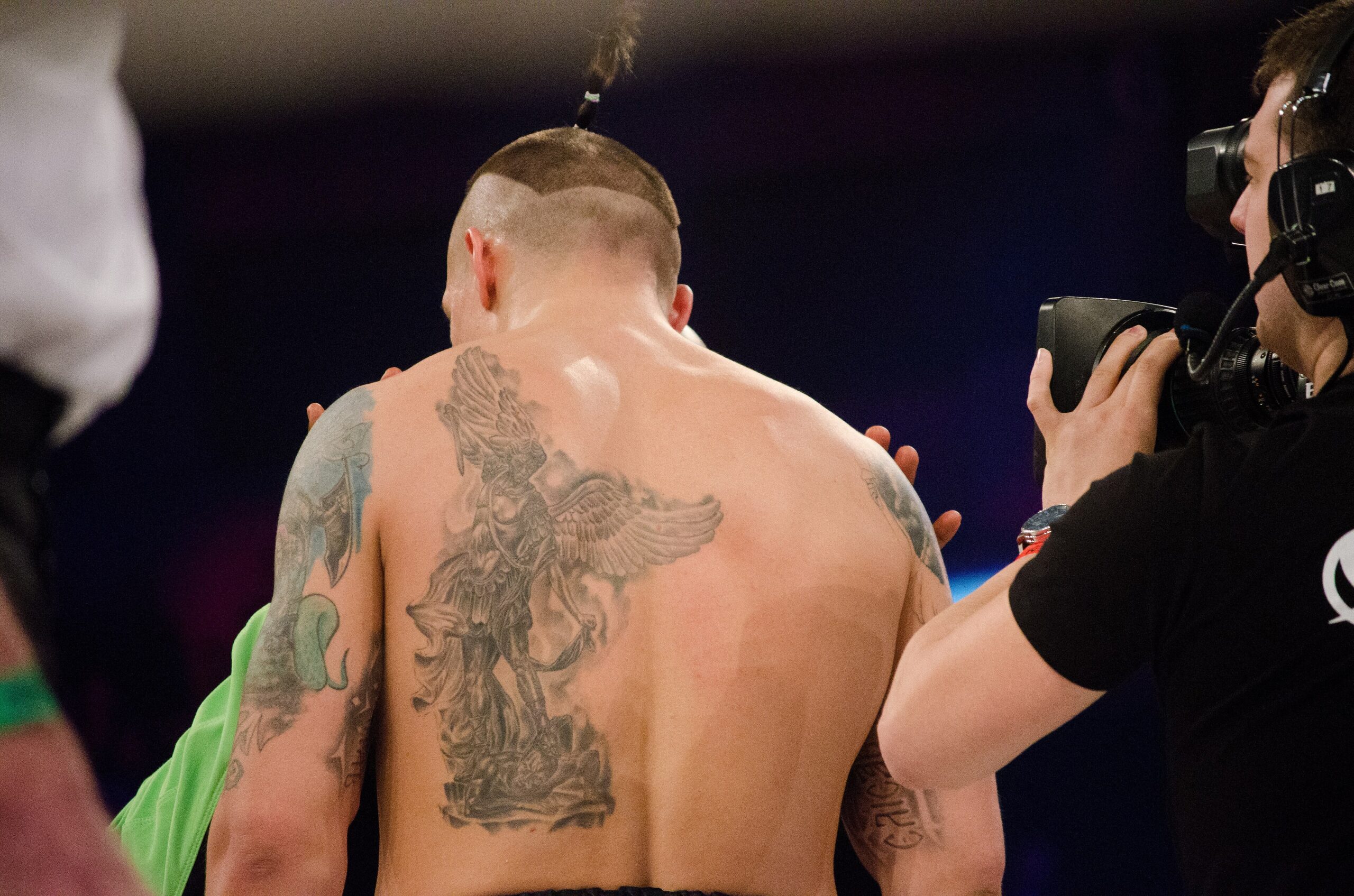
Tim Bradley believes Oleksandr Usyk would be making a serious mistake by returning to cruiserweight for a potential fight with David Benavidez.
The International Boxing Hall of Famer has predicted that Usyk could control the early rounds before fading under Benavidez’s pressure, according to Boxing News. Bradley’s concern is not simply that Benavidez would be the younger, naturally aggressive opponent. He believes the effort required to reach the 200-pound cruiserweight limit could compromise Usyk as the fight develops.
That distinction matters because Usyk and his adviser, Serhii Lapin, have publicly expressed interest in the matchup. Lapin told The Ring on October 30 that Usyk planned to return to cruiserweight in pursuit of Benavidez, and Usyk subsequently confirmed that he wanted the fight in that division.
The proposed bout remains unconfirmed. No contract, date, venue or finalized bout order has been announced. Benavidez also has immediate business ahead of him: the WBC says he is scheduled to challenge its cruiserweight champion, Michal Cieslak, on December 5 at Desert Diamond Arena in Glendale, Arizona.
Until that fight is completed, Usyk-Benavidez remains a compelling possibility rather than an established event.
Bradley’s warning still raises the most important question surrounding it. The issue is not merely whether Usyk can make 200 pounds. It is what version of Usyk would enter the ring after doing it.
Bradley Believes the Weight Cut Would Change the Fight
Bradley’s prediction is an opinion, not evidence that Usyk will struggle at cruiserweight or that Benavidez would defeat him. It is nevertheless based on a clear tactical argument.
According to Boxing News, Bradley expects Usyk to perform well during a competitive first half of the fight. He believes Usyk’s skill could allow him to control those rounds before his stamina begins to decline and Benavidez’s pressure takes over. Boxing News 24/7 reported that Bradley would prefer to see Usyk require Benavidez to move to heavyweight instead of cutting back to cruiserweight himself.
That position goes directly to the qualities that have made Usyk so difficult to beat.
Usyk does not rely on one burst of speed or one devastating punch. His success is built around sustained movement, disciplined footwork, concentration and the ability to continue solving opponents after they have already spent rounds trying to contain him. His late-round control is not separate from his greatness. It is one of its foundations.
Benavidez would present a challenge designed to test those qualities. His pressure, combination punching and willingness to maintain a demanding pace have followed him through multiple divisions. If Usyk retained his movement and conditioning at 200 pounds, those attributes could help him manage Benavidez’s aggression and create angles before the exchanges became prolonged.
If the cut reduced those advantages, however, the entire shape of the matchup could change.
That is Bradley’s argument. He is not saying Usyk lacks the technical ability to beat Benavidez. He is suggesting that Usyk could voluntarily weaken the physical platform supporting that ability.
The concern becomes more significant because Usyk has not competed at cruiserweight since November 2018, when he stopped Tony Bellew in the eighth round. Returning to a former division after years at heavyweight is not necessarily the same process as remaining there continuously.
Usyk has changed, his career has changed and his body has spent years preparing for larger opponents. His previous cruiserweight dominance demonstrates what he could do at the limit then. It cannot establish how he would respond to the same limit now.
Usyk Has Reasons to Believe 200 Pounds Is Still Realistic
Usyk’s position should not be dismissed simply because Bradley sees danger in it.
According to The Ring, Usyk said in late October that he weighed approximately 211–213 pounds. From that starting point, the cruiserweight limit may appear reachable. It is a substantial difference from the career-high 233¼ pounds that The Ring reported for Usyk’s May 23 heavyweight fight.
Usyk also understands the division better than almost anyone. He became its dominant champion, defeated elite opposition and left cruiserweight without losing. His final appearance at the weight ended with the knockout of Bellew, not a performance suggesting that he had physically outgrown the division or could no longer operate effectively there.
That history gives Usyk a rational basis for believing he can return.
It also explains why the proposed matchup would carry so much significance. Usyk would not be entering unfamiliar territory or moving into a division merely because it offered a convenient opportunity. He would be returning to the weight class where he first established himself as one of boxing’s most complete fighters.
The numbers strengthen his case without settling it. A reported weight of 211–213 pounds places him much closer to cruiserweight than his career-high heavyweight mark did. But scale weight alone cannot measure what matters most.
It cannot show whether Usyk would preserve his endurance after reaching 200 pounds. It cannot establish how his recovery, movement or punch resistance would hold up during a high-pressure fight. It also cannot prove that a body which once performed brilliantly at cruiserweight will respond identically eight years later.
Usyk’s record, listed by The Ring as 25-0 with 16 knockouts, reflects a career built on preparation and adaptability. Those qualities make it difficult to assume that he would enter such a fight carelessly.
They do not make the central risk disappear.
Bradley’s Warning Sharpens the Debate Without Settling It
Bradley’s comments do not confirm that Usyk will be weakened by a cruiserweight cut. They do not establish that Benavidez would win, and they do not prove that the proposed fight will happen at all.
What they provide is a credible way to examine which fighter would be making the larger concession.
If Benavidez moved to heavyweight, he would be entering a division where Usyk has already defeated larger men and established himself at the highest level. Benavidez would lose the protection of a contracted weight limit that prevents Usyk from bringing his full heavyweight frame into the ring.
If Usyk returned to cruiserweight, Benavidez would receive the fight in his current division while Usyk accepted the burden of reaching 200 pounds for the first time since 2018.
Bradley clearly believes that burden matters more than any disadvantage Benavidez would face at heavyweight.
There is no available competitive evidence yet that can prove him right. Training footage, reported weights and assurances from Usyk’s team may eventually show that the preparation is progressing as intended, but none can fully reproduce the demands of a championship-level fight.
The records explain why the matchup is attractive. The Ring lists Usyk at 25-0 with 16 knockouts and Benavidez at 32-0 with 26 knockouts. The WBC also recorded Benavidez at 32-0 with 26 knockouts when announcing the Cieslak fight.
Those figures establish that the proposed contest would involve two undefeated champions. They do not tell us how either man would respond to the specific physical compromise required to make the matchup.
That is why Bradley’s prediction should be treated as analysis rather than conclusion. He has identified the possible point of failure, but Usyk would still have to demonstrate whether that failure exists.
Benavidez Must Handle the Fight Already in Front of Him
Speculation about Usyk risks moving too far ahead of Benavidez’s actual schedule.
According to The Ring, Benavidez holds the WBA and WBO cruiserweight titles. The WBA reported that he won those championships by stopping Gilberto Ramírez in the sixth round on May 2. His next assignment is a three-belt unification fight against Cieslak, whom the WBC elevated to full champion in September.
The WBC listed Cieslak at 28-2 with 22 knockouts when it announced the December 5 fight. That is not a ceremonial obstacle between Benavidez and a more glamorous opponent. It is an immediate championship test that could reshape every part of the Usyk conversation.
A Benavidez loss would dramatically change the proposed fight’s momentum and potential stakes. An injury or difficult performance could affect its timing. A decisive victory, particularly one that adds the WBC title to Benavidez’s collection, would make the possibility even larger.
There is also another unresolved name in the order.
Benavidez told Sway’s Universe, as reported by Boxing News, that he intended to face Jai Opetaia before pursuing Usyk. If Benavidez follows that plan, even a victory over Cieslak would not necessarily move Usyk to the front of the line.
That leaves several questions unanswered. It is unclear when Usyk-Benavidez could happen, where it would be held or which championships would be available. It is also unknown whether Benavidez’s preferred sequence will survive the Cieslak fight.
The next meaningful evidence will come from the ring, not from negotiations that have yet to produce a finalized event.
Benavidez must first defeat Cieslak if the current excitement surrounding a possible Usyk fight is to remain intact. Usyk, meanwhile, would need a disciplined preparation for 200 pounds and ultimately would have to prove under competitive pressure that he can reach the limit without losing the qualities that define him.
Anything before those tests is projection.
LET’S TALK ABOUT IT
Is Bradley right that Usyk should make Benavidez move to heavyweight, or does Usyk’s reported weight of approximately 211–213 pounds make a cruiserweight return reasonable?
And if Usyk can reach 200 pounds, do you believe he can preserve the stamina and movement that have defined his career?
Outlets cited in this story
- Boxing News 24
- Boxing News
- The Ring
Spot an error? Send a correction. We fix mistakes in the open.