
Umar Dzambekov Stopped Zach Parker With a Body Shot — But the Top 10 Is a Different Fight
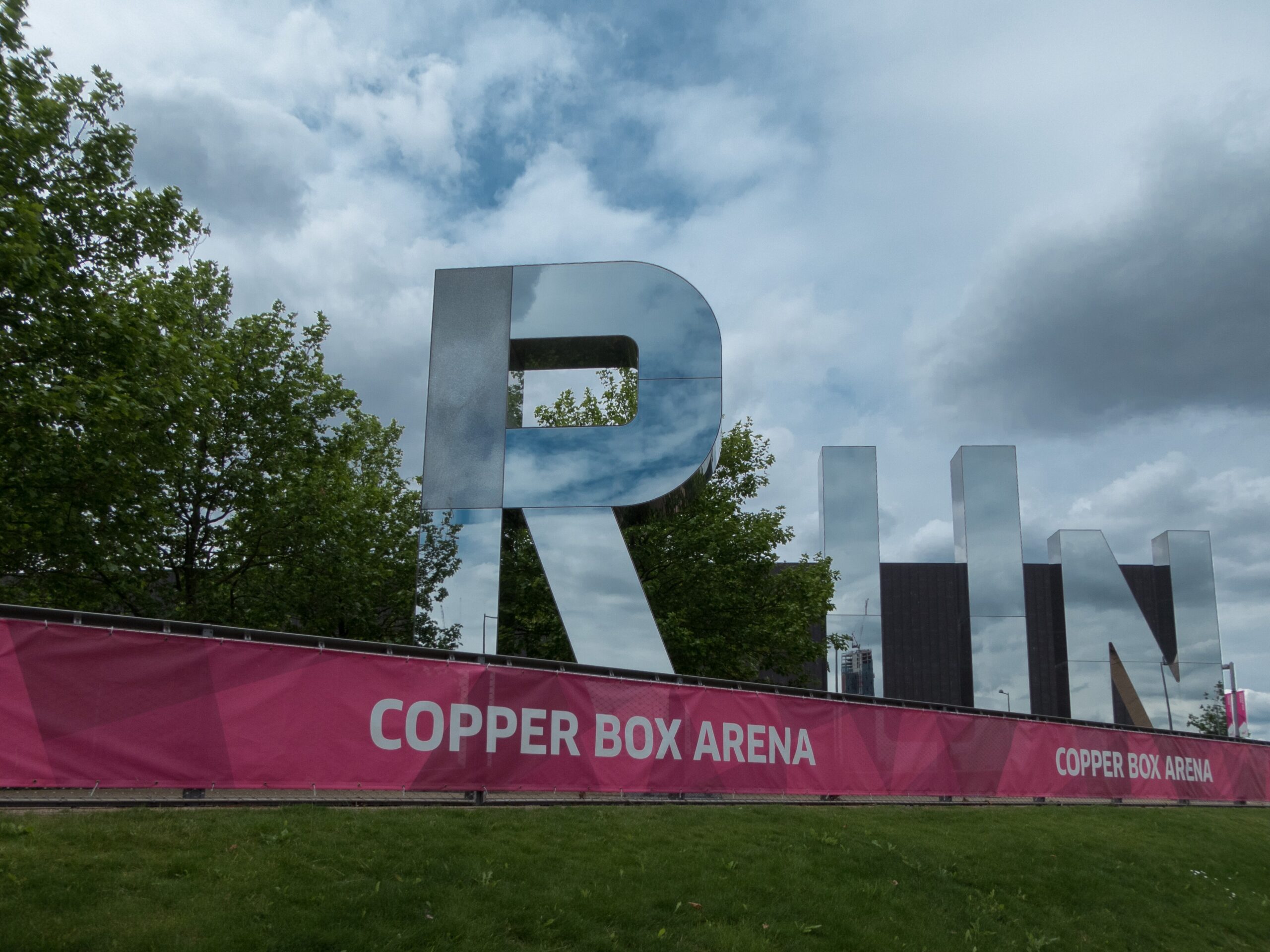
Umar Dzambekov delivered the most important victory of his professional career on November 7, knocking out Zach Parker in the fourth round at London’s Copper Box Arena.
Zuffa Boxing’s official results recorded the finish at 1:47 of the fourth round on the Zuffa Boxing 12 preliminary card. According to The Ring, Dzambekov landed a left hand to Parker’s solar plexus, leaving the British fighter unable to beat referee Kieran McCann’s count. Sky Sports also described the decisive punch as a body shot.
The finish gave Dzambekov more than another knockout for his record. Parker was the most experienced opponent he had faced and the most recognizable name he had defeated. Dzambekov advanced to a reported 15-0 with 11 knockouts, while Parker fell to 26-3 with 18 knockouts, according to The Ring.
That makes the result significant. It does not make Dzambekov a proven elite light-heavyweight.
Parker represented the first serious name test of Dzambekov’s career, and Dzambekov passed it with the kind of performance promoters can sell immediately. The next step should determine whether he can defeat a ranked contender rather than simply continue benefiting from the image of Parker folded on the canvas.
Parker Was Dzambekov’s First Serious Name Test
Dzambekov entered the fight unbeaten, but an undefeated record does not explain the level of opposition behind it. Parker brought 28 professional bouts, recognizable experience and a reputation established well beyond the developmental stage of the sport.
That made this a meaningful matchmaking decision.
The official weights reported by Boxing Only showed how little separated the two physically. Dzambekov weighed 174.8 pounds, while Parker came in at 174.9. This was not a case of Dzambekov overwhelming an undersized opponent who had been pulled into the light-heavyweight division for convenience. Both men entered within the division’s limit for a scheduled 10-round contest.
Dzambekov still had to show that his power and composure would carry against someone with Parker’s experience. He did not need ten rounds to make that point.
The body shot provided a decisive conclusion. Head punches can produce debates about balance, recovery time or whether a stoppage arrived too quickly. Parker remained down through McCann’s count after taking the left hand to the solar plexus, according to The Ring. The official result was a knockout, not a disputed intervention.
That matters because recognizable finishes can accelerate careers in a way that routine decisions rarely do. Dzambekov now has a highlight attached to a credible opponent. His name can be introduced to a wider audience with a simple image: the unbeaten Austrian stopped Zach Parker with one body shot.
Dzambekov deserves credit for creating that moment.
The question is how much the moment proves.
Parker’s Name Adds Value, but His Direction Limits the Conclusion
Beating Parker is clearly more valuable than anything else on Dzambekov’s record. That does not mean Parker should be treated as though he represented the current elite of the light-heavyweight division.
Parker entered the bout after a defeat and has now suffered consecutive losses. That recent trajectory does not erase his experience or make the victory meaningless, but it changes the weight that should be placed on the result.
There are two statements that can be true at the same time.
Dzambekov defeated the best-known and most experienced opponent of his career.
Dzambekov has not yet defeated an established top-10 light-heavyweight.
Boxing often collapses those two ideas after a dramatic knockout. A familiar name goes down, the clip circulates, and the winner is suddenly discussed as though he has already crossed every competitive level between prospect and contender. That is useful promotion, but it is not careful evaluation.
Parker was a legitimate step up because of what he had done and the experience he carried into the ring. His recent results nevertheless leave an unresolved question about what level he currently represents. Dzambekov may have exposed the difference between himself and a capable veteran, or he may have encountered Parker at a point when Parker was becoming more vulnerable. The evidence available from one fight cannot fully settle that distinction.
It would also be premature to declare Parker finished. Consecutive defeats create serious questions, but his next decision will provide more information than speculation immediately following a knockout. Whether he returns, rebuilds or pursues another significant fight remains unresolved.
For Dzambekov, Parker’s uncertain direction should not be used to dismiss the victory. It should be used to define the next test.
The Win Changed Dzambekov’s Status, Not His Ranking Yet
Dzambekov entered Zuffa Boxing 12 without a top-10 position in the WBA, WBC, IBF or WBO, according to The Ring. Until those organizations publish updated rankings, it would be inaccurate to claim that stopping Parker has officially moved him into that group.
What changed is his argument for receiving that opportunity.
Before November 7, Dzambekov was an unbeaten fighter whose record lacked a defining name. After November 7, he is an unbeaten fighter who stopped a considerably more experienced opponent inside four rounds. He proved that he could handle the pressure of a scheduled 10-round step-up and finish a fighter with a deeper professional résumé.
That is real progress.
What the result did not establish is how Dzambekov responds when the early power does not settle the fight. Parker never forced him into the later rounds. Dzambekov was not required to adjust after several tactical changes, recover from adversity or maintain his effectiveness through a prolonged contest against a ranked opponent.
Those are not criticisms of his performance. A fighter should not be penalized for ending a bout early. They are simply questions that the Parker fight did not have time to answer.
The 15-0 record describes Dzambekov’s outcomes. His 11 knockouts show that he has ended most of those victories before the final bell. Neither number, by itself, establishes the competitive level at which he can continue producing those results.
Parker is the strongest evidence so far.
One strong piece of evidence is not a complete résumé.
Dzambekov has earned greater attention and a more ambitious assignment. Any official ranking movement should be reported only when the sanctioning bodies release it, and any declaration that he belongs among the division’s elite should wait until he faces someone currently operating at that level.
A Ranked Contender Would Provide the Real Answer
After the knockout, Dzambekov described Parker as another step up in opposition and said he would accept “any of the names,” according to The Ring.
That is the correct attitude, and the matchmaking should reflect it.
The appropriate next opponent does not need to be a world champion. Dzambekov also does not need to be rushed directly into a title fight because one left hand produced the best result of his career. He does, however, need someone positioned near or inside the major sanctioning-body rankings who can test more than his ability to punish an opening.
A stronger assignment should show how Dzambekov deals with an opponent who remains composed after feeling his power. It should examine his defense when exchanges become more sustained, his durability when he is forced backward and his adaptability if the first plan stops working.
Most importantly, it should establish whether Dzambekov can maintain his effectiveness beyond the early and middle rounds.
Parker’s experience made him a valid test, but his recent defeats mean the victory cannot answer every question Dzambekov now faces. Matching the Austrian against another opponent below the ranked level would preserve his unbeaten record without significantly deepening it.
There is no verified next opponent or return date. There is also no basis to claim that negotiations exist with any particular contender. The available evidence supports a direction, not a prediction.
Dzambekov should receive the opportunity to move forward because of what he did to Parker. He should not be protected from that next level while the Parker knockout is repeatedly presented as proof that he has already conquered it.
The reward for passing a test should be a harder test.
LET’S TALK ABOUT IT
Did stopping Zach Parker prove Umar Dzambekov is ready for a top-10 light-heavyweight, or did it only earn him the opportunity to face one?
Should Dzambekov be matched with a ranked contender immediately, and what type of opponent would provide the most revealing test?
Outlets cited in this story
- Sky Sports
- The Ring
Spot an error? Send a correction. We fix mistakes in the open.