Ben Whittaker Earned the Dmitry Bivol Shot — But Not Yet the Bivol Confidence
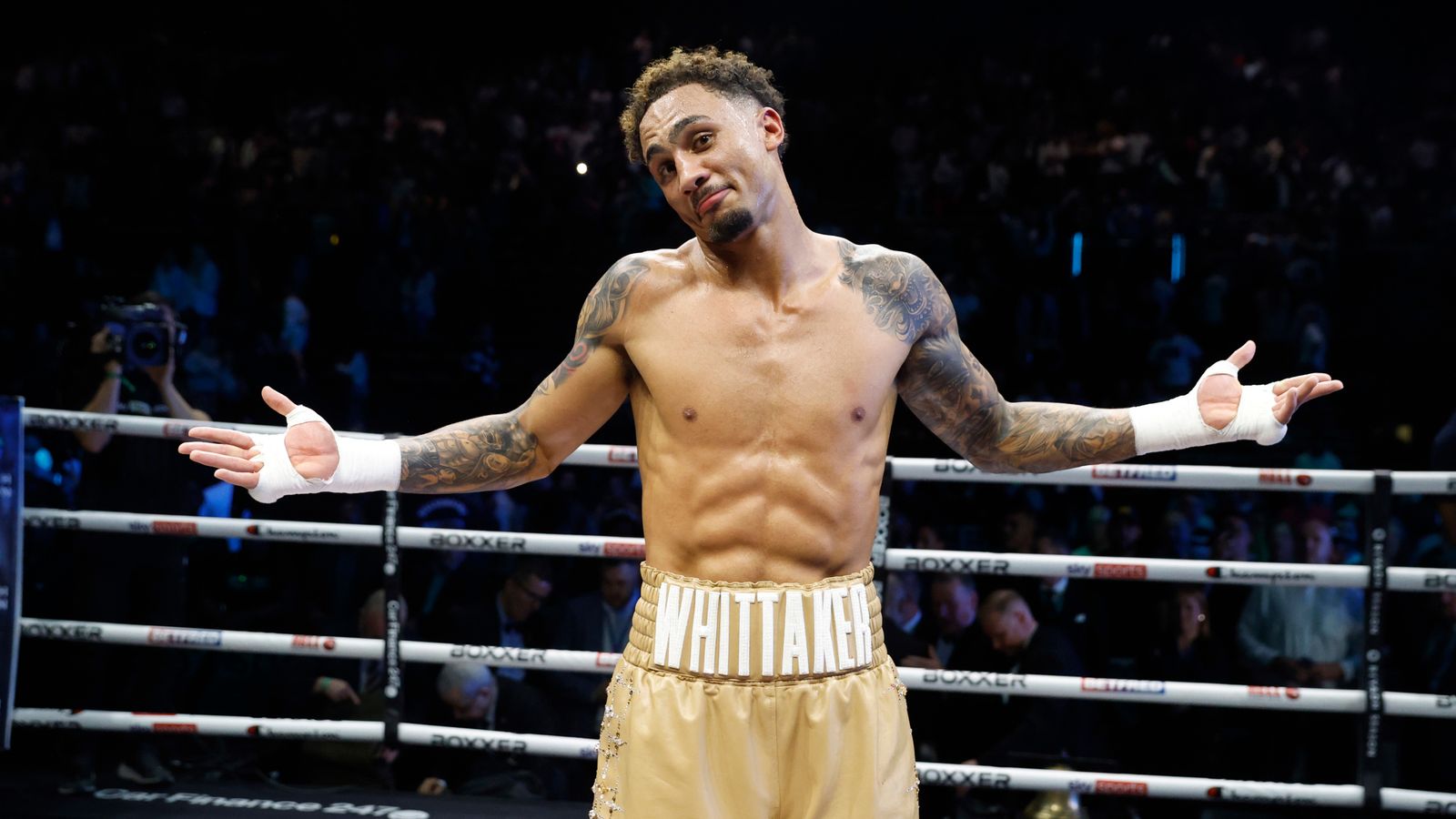
Ben Whittaker has secured the position every rising contender wants. His unanimous-decision victory over Conor Wallace on October 3 made him the mandatory challenger for Dmitry Bivol’s IBF light-heavyweight title, placing the Birmingham fighter within reach of a world championship opportunity.
The result was clear. According to the World Boxing Council, Whittaker defeated Wallace at Utilita Arena in Birmingham by scores of 117-111, 116-112 and 115-113 while retaining his WBC Silver title. He controlled significant portions of the fight with his jab and movement, completed the distance and earned the decision on all three official scorecards.
Frank Warren still does not believe Whittaker is ready for Bivol.
In comments made to Playbook Boxing and reported by BoxingNews24, Warren argued that Whittaker “runs out of gas” and has not demonstrated enough “substance” to handle an assignment at Bivol’s level. That is Warren’s opinion rather than an established verdict on Whittaker’s ability, but the closing rounds against Wallace gave the criticism something tangible to address.
Whittaker earned his place in line.
The question is whether he currently looks prepared to win once he reaches the front of it.
Wallace Turned a Clear Victory Into a Serious Warning
Whittaker’s performance against Wallace should not be reduced to its most difficult moments. The WBC reported that he controlled much of the contest behind his jab and movement, building enough of an advantage to withstand Wallace’s late pressure and win clearly on two of the three cards.
That matters because Wallace was not merely another opponent selected to extend Whittaker’s unbeaten run. Matchroom Boxing promoted the contest as an IBF final eliminator, with the winner positioned as the leading challenger for the anticipated fight between Bivol and Callum Smith. Whittaker entered a meaningful test, completed 12 rounds and emerged with the result he needed.
There was still an uncomfortable shift as the fight progressed.
Wallace increased the pressure during the closing rounds and began troubling Whittaker more consistently. The movement that had allowed Whittaker to manage the earlier stages became less authoritative, and Wallace found more opportunities to force exchanges. One judge’s 115-113 score reflected how competitive the fight became from at least one ringside perspective.
Whittaker also acknowledged that the finish was not entirely satisfactory. Speaking after the fight in comments reported by The Ring, he said he “took my eye off the ball a little bit” and raised the possibility of facing Wallace again.
That admission can be read in two ways. Whittaker may have lost concentration after establishing control, which would make the late problems correctable. It may also be that Wallace’s sustained pressure exposed a physical limitation that became harder to disguise as the rounds accumulated.
Either explanation would matter against Bivol.
A lapse in concentration can be punished at world-title level just as severely as a failure of conditioning. The distinction affects how Whittaker and his team address the problem, but neither can be dismissed simply because he still received the decision.
Warren’s Criticism Is Harsh, but It Is Not Groundless
Warren’s assessment goes beyond saying Whittaker had a difficult finish. According to BoxingNews24’s report of his Playbook Boxing interview, the promoter argued that Whittaker lacks the engine required for Bivol and has not yet shown enough substance to justify confidence in him against an elite opponent.
Warren also credited Matchroom with promoting Whittaker effectively. His point was that successful promotion and visible talent should not be confused with proof that a fighter is prepared for one of the division’s most demanding assignments.
The language is severe, but the central question is legitimate.
Whittaker has already demonstrated qualities that can control a high-level eliminator. He can dictate distance with his jab, disrupt an opponent’s rhythm and use movement to create the type of fight he wants. Against Wallace, those abilities allowed him to establish a lead and win on every official card.
What he did not demonstrate was complete control from the opening bell through the final round.
Warren suggested Joshua Buatsi or Willie Hutchinson as possible opponents who could test Whittaker before he challenges for a world title. No fight with either man has been officially announced, and those names should be treated as Warren’s proposed alternatives rather than active negotiations or confirmed plans.
A Wallace rematch also remains only a possibility raised by Whittaker after the fight.
The names are less important than the kind of examination they represent. If Whittaker takes another bout before challenging Bivol, it must provide a meaningful test of his ability to manage pressure, preserve his legs and maintain tactical discipline over 12 rounds. A routine appearance would keep him active, but it would not settle the issue Warren has raised.
Mandatory Status Establishes Whittaker’s Right, Not His Readiness
The Ring reported that the Wallace victory made Whittaker the mandatory challenger for Bivol’s IBF title. That status gives him a legitimate claim to a championship opportunity and confirms that he completed the competitive requirement placed in front of him.
It does not answer every question surrounding what happens next.
The IBF has not yet formally ordered Whittaker’s challenge, based on the available reporting. Bivol is expected to face Callum Smith before Whittaker receives his opportunity, but the timing and sequence of those fights remain unresolved. It is also unclear whether Whittaker will pursue the title immediately, accept another developmental fight or seek the Wallace rematch he mentioned afterward.
Those uncertainties create both opportunity and danger.
If Bivol faces Smith first, Whittaker may have time to make one more appearance without surrendering his position. A demanding fight could strengthen him for the championship level and provide evidence that the Wallace finish was a correctable lapse rather than a persistent limitation.
It could also cost him everything.
Another opponent would have the chance to defeat him, injure him or disrupt the timeline of his mandatory opportunity. Boxing careers do not advance in laboratory conditions, and a supposedly useful preparation fight can remove the title shot it was intended to improve.
Whittaker therefore faces a choice between protecting access and improving readiness.
Taking Bivol as soon as the opportunity becomes available would ensure that Whittaker receives the championship fight he earned. Waiting for another serious test could increase his chances of performing well when that moment arrives, but only if he wins and develops in the process.
There is no risk-free path.
The Wallace Fight Raised Questions Without Delivering a Verdict
It would be easy to treat Wallace’s late success as proof that Whittaker cannot handle Bivol. The evidence does not support such a definitive conclusion.
Whittaker did not collapse. He completed the fight, continued competing through the difficult rounds and won unanimously. The official scorecards show that his earlier work mattered, while the WBC’s account confirms that his jab and movement allowed him to control substantial portions of the contest.
Those are not insignificant achievements.
The closing rounds remain important because Bivol represents a far more demanding version of the problems Whittaker encountered. Fighting him would require sustained concentration, disciplined positioning and the ability to execute under pressure without relying on an early lead to carry the result. A contender who fades physically or mentally cannot expect an elite champion to allow him time to recover control.
Warren’s criticism should therefore be treated as a challenge for Whittaker to answer, not a sentence already passed.
If Whittaker’s late difficulties resulted from taking his eye off the ball, his next performance should show sharper discipline after he builds an advantage. If stamina was the problem, the answer must come through improved conditioning and a stronger finish against an opponent capable of maintaining pressure.
Another convincing 12-round performance would directly address both concerns. Another late fade would make Warren’s argument considerably harder to dismiss.
Whittaker may decide that the title fight itself should provide the answer. Mandatory challengers do not receive unlimited opportunities, and there is a reasonable argument that a fighter should take an earned world-title shot when it becomes available rather than waiting for an ideal moment that may never arrive.
But accepting the opportunity and being prepared to capitalize on it are different calculations.
The Wallace victory proved Whittaker belongs in the championship conversation. His next decision will reveal whether his team believes he is ready for the championship examination.
LET’S TALK ABOUT IT
Did Whittaker’s victory over Wallace show enough to justify going directly into a fight with Bivol, or did the closing rounds prove that he needs another serious test first?
If Whittaker waits, which fight would prepare him best for the championship level: a Wallace rematch, Joshua Buatsi or Willie Hutchinson?
Outlets cited in this story
- BoxingNews24
- The Ring
Spot an error? Send a correction. We fix mistakes in the open.