





For years, Jaron “Boots” Ennis and Terence Crawford existed in one of boxing’s most frustrating hypothetical matchups. Ennis was the young welterweight everybody said would eventually become a problem. Crawford was already one of the best fighters in the world, trying to complete his own business at 147 pounds. Fans argued about whether Crawford should […]
For years, Jaron “Boots” Ennis and Terence Crawford existed in one of boxing’s most frustrating hypothetical matchups. Ennis was the young welterweight everybody said would eventually become a problem. Crawford was already one of the best fighters in the world, trying to complete his own business at 147 pounds. Fans argued about whether Crawford should fight Boots, whether Ennis had earned the opportunity, whether one side was avoiding the other and whether the timing ever actually made sense.
Then boxing did what boxing often does.
The moment passed.
Crawford defeated Errol Spence Jr., moved beyond welterweight, continued climbing through divisions and eventually retired undefeated. Ennis stayed behind, became a unified champion at 147, moved to junior middleweight and continued building his own career. By the time Boots became established enough that nobody could dismiss him as merely a prospect calling out an accomplished champion, Crawford’s career appeared to be finished.
Now somehow we’re talking about the fight again.
Crawford recently asked Ennis publicly whether he would fight him if he came out of retirement. Boots immediately responded that he would. Crawford later explained that the post wasn’t an actual comeback announcement and said he was making a point in his criticism of Ennis over the Vergil Ortiz situation. Still, the exchange reopened an argument boxing fans never completely stopped having.
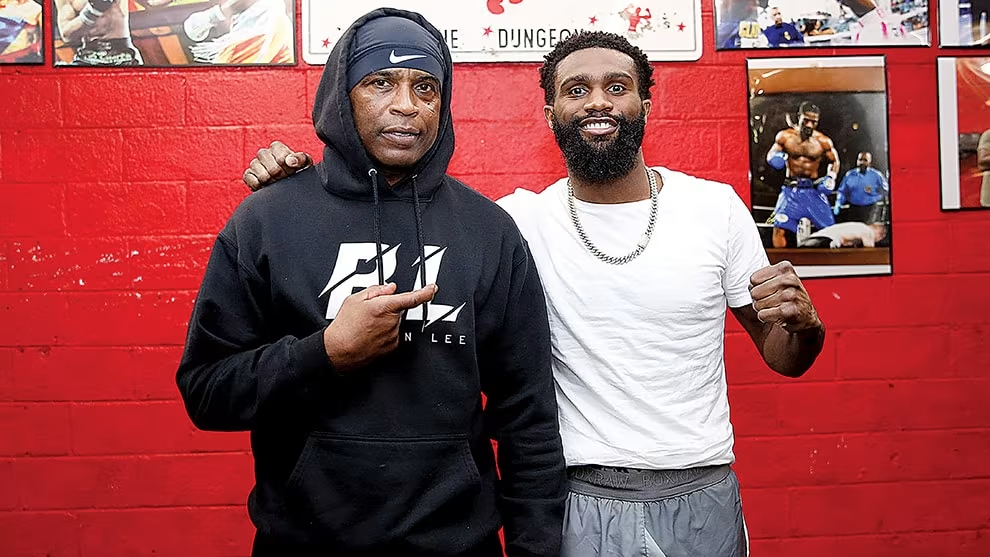
Bozy Ennis isn’t running from the conversation. His message is straightforward: if Crawford genuinely wants to fight, let’s fight.
The problem is that boxing may finally be ready for Crawford-Ennis at exactly the moment Terence Crawford no longer needs it.
Bozy Has Been Telling the Same Story for Years
One reason I don’t have much interest in rewriting the history of Crawford-Ennis is that Bozy Ennis has been remarkably consistent about his version of events. He has maintained that Team Ennis pursued major welterweight fights, including Crawford, Errol Spence Jr. and Keith Thurman, while Boots was climbing toward championship level. Earlier this year, Bozy again said they had attempted to secure those fights but couldn’t get them made.
That doesn’t automatically prove anybody ducked anybody.
Timing matters in boxing. Promotional relationships matter. Mandatory positions matter. Money matters. Crawford and Spence spent years trying to make an undisputed fight that ultimately became one of the defining victories of Crawford’s career. Crawford wasn’t obligated to abandon that pursuit because another talented welterweight was emerging underneath him.
At the same time, Ennis couldn’t manufacture the opportunity himself.
That’s why the endless argument over whether Crawford “ducked” Boots has always felt too simplistic. Crawford had his own path, and Boots had the unfortunate experience of becoming dangerous before he became commercially indispensable.
That’s one of the worst positions a boxer can occupy.
Everyone recognizes your ability, but the fighters above you don’t necessarily gain enough by facing you to justify the risk.
Crawford himself understood that problem earlier in his career.
Boots eventually inherited it.
The Version of Boots Crawford Would Face Now Is Different
This is where a potential fight becomes considerably more interesting than it would have been several years ago.
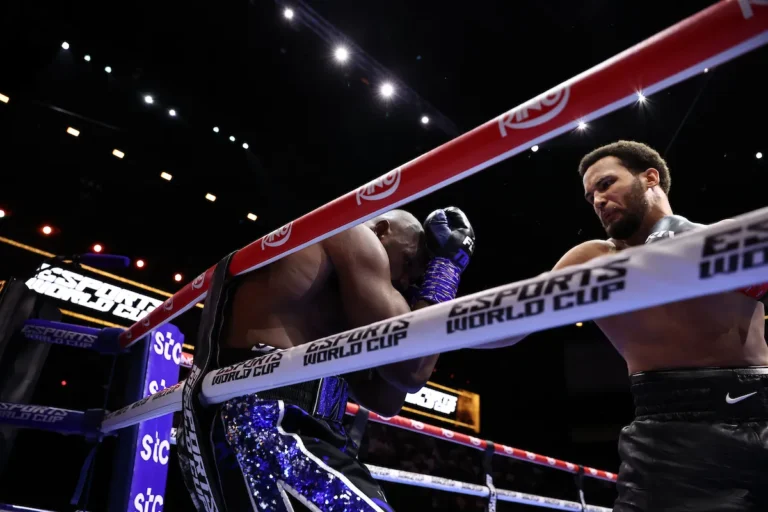
Ennis isn’t an intriguing contender anymore. He’s 36-0, a two-division unified champion and now holds the WBA and WBO junior-middleweight titles after stopping previously unbeaten Xander Zayas in seven rounds. Before moving to 154, he unified at welterweight by stopping Eimantas Stanionis.
Those victories matter because one of the most persistent criticisms surrounding Ennis was always his résumé. People could see the talent, but boxing eventually has to move beyond the eye test. If everyone says you’re special, somebody significant eventually has to appear on the record.
Stanionis helped answer that question.
Zayas answered more of it.
Boots didn’t simply edge past either man. He stopped both undefeated champions.
That doesn’t suddenly make Ennis more accomplished than Crawford, and it certainly doesn’t erase the enormous gap between their overall careers. Crawford retired undefeated after winning championships across five divisions and building the kind of résumé Boots is still attempting to create.
But it does mean Crawford-Ennis would no longer be an established legend being asked to give an ambitious prospect an opportunity.
Boots brings something now.
He has championships, momentum and enough accomplishment that beating him would mean something even for Terence Crawford.
Crawford Has Already Explained Why He Thinks He’d Beat Him
What’s fascinating is that Crawford doesn’t dismiss Ennis’ ability.
Earlier this year, Crawford called Boots a tremendous talent and acknowledged his speed, power, defense and reflexes. His criticism was much more specific: Crawford believes the gap between them is boxing intelligence. He said he considers himself significantly ahead of Ennis mentally and believes that’s where Boots would encounter problems against him.
That is exactly why I’d still watch this fight.
Stylistically, there are obvious similarities. Both can switch stances. Both possess speed and power. Both can box from distance or become aggressive when they see an opponent beginning to break. Ennis is younger, physically explosive and currently active. Crawford has accumulated the kind of high-level experience that can’t be recreated in a gym.
If they fought now, the central question wouldn’t simply be whether Boots is talented enough.
We already know he’s talented enough to create problems.
The question would be whether Crawford could still solve those problems at this stage of his life faster than Ennis could exploit the advantages that come with youth, activity and physical freshness.
That’s a much better boxing argument than another round of debating who supposedly avoided whom in 2022.
But Crawford Doesn’t Owe Boots a Comeback
This is where the conversation has to remain fair.
Terence Crawford is retired.
He has said repeatedly that he’s retired. His trainer Brian McIntyre has also pushed back against speculation that Crawford’s appearances in the gym automatically mean another fight is coming. Even after publicly asking Boots whether he would fight him, Crawford subsequently said the exchange wasn’t a callout and that he wasn’t motivated to return.
That matters.
We can’t spend years telling fighters they should leave boxing before boxing leaves them and then immediately act as though retirement creates an obligation to return whenever an interesting matchup appears.
Crawford completed his career on his terms.
If he stays retired, Boots doesn’t get to treat that as another avoidance story. There is a major difference between an active champion declining a fight and a retired fighter deciding that his career is finished.
Bozy saying “if he wants to fight, let’s fight” is perfectly reasonable.
The important word is if.
Crawford has to actually want it.
Boots Doesn’t Need to Wait Around Either
Ennis would also make a mistake if this renewed Crawford conversation became the center of his career.
He’s finally reached the point where the junior-middleweight division offers plenty of meaningful work without requiring a retired fighter to rescue the schedule. Sebastian Fundora has openly discussed an undisputed fight with Ennis, and other significant names remain around 154.
That’s where Boots’ attention should remain unless Crawford becomes serious.
The worst possible outcome would be Ennis spending months calling for Crawford while viable championship fights pass by. He already spent too much of his welterweight career waiting for established names who never materialized.
There’s no reason to repeat that experience at 154.
If Crawford calls with a genuine offer, answer.
Until then, unify.
Fight the best available junior middleweights.
Keep building the résumé.
Ironically, the stronger Boots becomes without Crawford, the more interesting a Crawford comeback becomes anyway.
The Fight Means More Now — But Crawford Has Less Reason to Take It
That’s the strange part of this entire story.
Crawford-Ennis is arguably more legitimate competitively today than when fans first started demanding it. Boots has matured, become champion in two divisions and accumulated meaningful victories. He’s no longer being promoted primarily on what people think he might become.
Yet Crawford has less professional incentive to fight him than ever.
What does Crawford need to prove?
He retired undefeated. He conquered multiple divisions. He already possesses the historical accomplishments Ennis is chasing.
A victory over Boots would be impressive, especially after retirement and against a younger elite fighter, but Crawford doesn’t need that victory to validate what he already did.
Boots would gain considerably more.
That’s exactly why the economics and competitive motivation would have to be substantial enough to make Crawford interested.
And maybe that’s the unfortunate truth about fights that arrive late.
Sometimes the matchup becomes better at exactly the same time the reasons for making it become worse.
REAL TALK
Boxing has a habit of waiting until everybody agrees a fight matters before finally trying to make it. By then, careers have moved, divisions have changed, promotional relationships have shifted and somebody has often aged out of the original moment.
Crawford-Ennis may eventually become another example.
Years ago, Boots needed Crawford because beating him would have accelerated everything. Crawford had far less reason to take the risk because Ennis didn’t yet possess the résumé or commercial position that made the fight unavoidable. Now Boots has begun accumulating exactly the accomplishments people said he needed, but Crawford has already finished his career.
Nobody necessarily had to be afraid for the fight to disappear.
Sometimes boxing simply creates incentives that make everyone wait until the timing no longer works.
That’s why Boots shouldn’t make Crawford responsible for his legacy now. If Crawford wants to return, the fight is fascinating and Bozy is right to welcome it. But Ennis finally has enough power over his own career that he doesn’t need to spend another chapter waiting for somebody else’s decision.
Crawford already built his legacy.
Boots is building his.
If those paths cross, great.
If they don’t, Ennis has to make sure that ten years from now nobody is still explaining how good he was by listing all the fighters he almost faced.
The best way to end that conversation is straightforward: keep fighting the best opponents who are actually available.
Then, if Crawford ever really does decide he wants one more fight, Boots won’t need to convince anybody that he deserves it.
Crawford will know exactly where to find him.
LET’S TALK ABOUT IT
If Terence Crawford genuinely came out of retirement, would Jaron Ennis be the most meaningful opponent for his return, or has Crawford already accomplished enough that there is no reason to take that risk?
And looking back at their careers, did boxing miss the right moment for Crawford-Ennis at welterweight, or is the fight actually more interesting now that Boots has become a unified champion at 154?