Senate Unanimously Passes Ali Boxing Revival Act — But Reform Could Concentrate Boxing’s Power
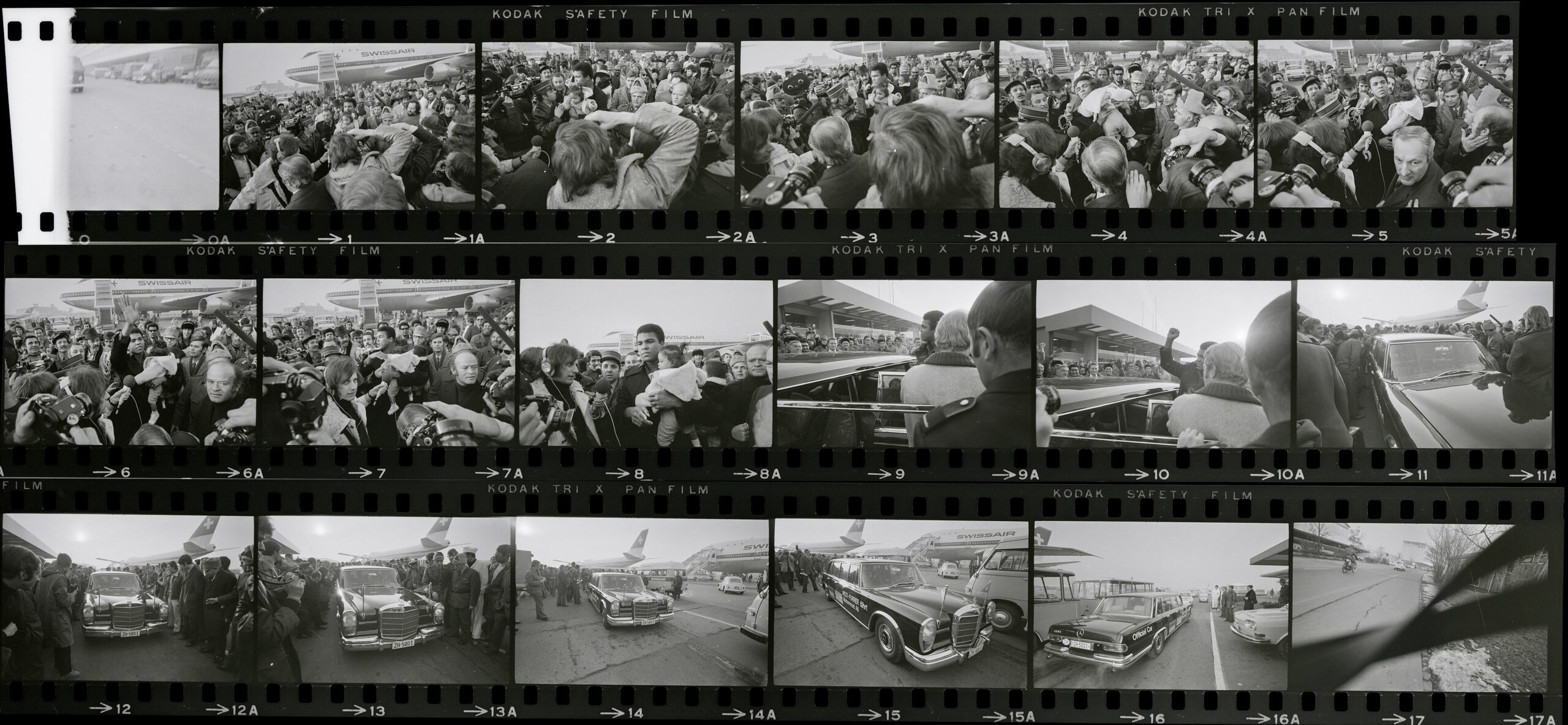
Muhammad Ali arriving at Zürich Airport in December 1971 ahead of his fight against Jürgen Blin.Image: Hans Krebs / CC BY-SA 4.0 / Wikimedia Commons
The United States Senate has unanimously passed the Muhammad Ali American Boxing Revival Act, advancing the most consequential federal boxing reform proposal in years while opening a larger debate about who should control the sport.
According to the U.S. Senate Daily Press, H.R. 4624 passed by unanimous consent on November 19 with a substitute amendment developed by Senators Ted Cruz and Jacky Rosen. The revised legislation would create a federal framework for Unified Boxing Organizations, or UBOs—centralized operations capable of contracting fighters, promoting bouts and administering or recognizing rankings and championships.
That would represent a major shift in a sport whose authority is traditionally divided. Promoters sign fighters and arrange events. Sanctioning organizations control rankings and titles. State and tribal commissions regulate contests. The Senate bill would allow some of those functions to exist under one league-style structure.
Supporters believe that model could make major fights easier to arrange while providing boxers with stronger contract, compensation, insurance and medical protections. Critics see a different possibility: one well-financed organization gaining enormous influence over a fighter’s employment, activity, ranking and access to championships.
The central question is not whether boxing needs reform.
It is whether Congress can improve fighters’ working conditions without creating an even more powerful gatekeeper.
The bill is not yet law. Because the Senate substantially revised the version previously approved by the House, H.R. 4624 must return to the House for another vote before it can reach President Donald Trump.
The Senate Passed a Substantially Revised Boxing Bill
The House passed its original version of H.R. 4624 by voice vote on March 24, according to the Congressional Record. The Senate did not simply approve that same legislation.
After an April 22 Commerce Committee hearing featuring Oscar De La Hoya, Nico Ali Walsh, Association of Boxing Commissions president Timothy Shipman and WWE president Nick Khan, Cruz and Rosen introduced a revised proposal on July 30. The Senate Commerce Committee advanced that version on September 16 after adopting the Cruz-Rosen substitute and additional amendments.
On November 19, the full Senate inserted the revised language into H.R. 4624 and passed it by unanimous consent, according to the Senate Daily Press and the Senate Commerce Committee.
The Senate substitute defines a Unified Boxing Organization as a private league or centralized organization that contracts with professional boxers, organizes matches under unified rules and operates or recognizes systems for rankings and titles. The Congressional Budget Office similarly explained that UBOs would be permitted to contract fighters, promote matches and establish rankings and championships—functions that are generally performed by separate parties in boxing’s current structure.
Cruz and Rosen have argued that UBOs would operate alongside traditional promoters rather than eliminate the existing system. That distinction matters. The legislation would create an optional federal structure, not abolish conventional promotional companies or independent sanctioning organizations.
Still, the proposal would offer a different way to organize professional boxing. A fighter could sign with an entity that controls far more than the promotion of individual bouts.
That possibility is both the bill’s selling point and its greatest source of concern.
The Senate Rewrite Adds Meaningful Fighter Protections
The revised legislation contains safeguards that could materially improve conditions for fighters operating within a UBO.
Under the Senate substitute, a boxer must receive at least $200 for every round in which that boxer participates. UBO contracts must also specify compensation of at least $200 for each scheduled round. These are minimum federal standards, not projections of what established fighters would earn.
The bill would limit a boxer’s first professional promotional contract to three years. Subsequent contracts with a UBO could last no more than four years. During the final 90 days of an agreement, a fighter would have to be allowed to communicate with competing UBOs or traditional promoters about future opportunities.
That final provision is especially important in a sport where contractual control can determine whether a boxer remains active, receives a meaningful matchup or disappears from television. Allowing negotiations before a contract expires could give fighters more leverage and reduce the risk of an organization using inactivity to pressure them into another agreement.
The Senate text would also require a UBO to offer each contracted boxer at least two matches during every 12-month period or provide substitute minimum compensation specified by the legislation. Exceptions would apply in circumstances including injuries, positive drug tests, licensing problems and travel restrictions.
The protections extend beyond contracts and activity.
According to the Senate substitute, match-injury insurance would have to provide at least $50,000 in medical coverage and $15,000 in accidental-death coverage. The UBO could not charge those insurance premiums to the boxer. Contracted fighters would also receive training-injury coverage and access to a medical coordinator.
The bill establishes federal examination standards covering physical health, eye health, cardiac health, infectious diseases and brain health. Additional examinations would apply after knockouts and to fighters aged 40 or older.
Drug testing would be required for title fights, with random testing for other contests. Within the UBO framework, in-competition testing would also have to occur in at least half of an organization’s covered matches at each event.
None of those requirements should be dismissed as cosmetic. Guaranteed activity, limits on contract length, medical coordination and insurance that a fighter does not have to fund personally could address real weaknesses in the current system.
The Senate rewrite also appears to have answered at least some objections raised by boxer Nico Ali Walsh. ESPN reported that Ali Walsh opposed the earlier House version because of concerns about fighter protections but supported the revised Senate measure after changes involving contract limits, negotiation rights and other safeguards.
That does not prove the final structure will work as intended. It does show that the Senate version is materially different from the bill that first left the House.
A Centralized League Could Make Major Fights Easier
Supporters see boxing’s fragmentation as one of the sport’s most persistent problems.
A major bout can require negotiations between rival promoters, broadcasters, managers and sanctioning organizations. Fighters may hold titles issued by different bodies, while rankings and mandatory obligations can complicate matchups that the public actually wants. Even when both boxers want a fight, competing commercial interests can delay or destroy it.
A league-style organization could simplify that process.
If one UBO contracts multiple leading fighters, promotes their bouts and operates under unified rules, it may be able to arrange major matchups without negotiating across several competing promotional networks. A recognizable ranking system and coordinated schedule could also make boxing easier for casual fans to follow.
Cruz and Rosen have presented that structure as a way to revive the sport while strengthening protections for boxers. Their argument is not simply that centralization would make events easier to produce. It is that a UBO would receive expanded authority only within a framework that imposes requirements involving compensation, activity, contracts, insurance and medical care.
That tradeoff could be attractive to fighters who currently face long periods of inactivity or lack reliable coverage when they are injured.
But the benefits are not guaranteed. The bill can authorize a centralized structure; it cannot ensure that an organization will consistently make the best fights. A UBO could still prioritize commercial interests, protect valuable boxers or arrange rankings in ways that favor its preferred stars.
Centralization removes some obstacles.
It can also concentrate the power to decide which opportunities exist.
The Same Organization Could Become a New Gatekeeper
The strongest criticism of the UBO model is not that it changes boxing. It is that it could place too many forms of authority in the same hands.
A UBO could contract a boxer. It could promote that boxer’s fights. It could also operate or recognize the rankings and titles that determine whether the boxer receives a championship opportunity.
Those powers directly affect one another.
A fighter who challenges a contractual decision could also be dependent on the same organization for activity. A boxer who disputes a ranking could be appealing to a structure financially connected to the promotion of other fighters in that ranking. An athlete considering departure might have to decide whether leaving also means losing access to the organization’s most valuable opponents and championships.
The Senate bill attempts to address that danger through disclosure and appeals requirements. UBOs and financially connected ratings organizations would have to disclose their ranking criteria, policies, appeals processes and relevant officials to the Federal Trade Commission and the Association of Boxing Commissions—or publish that information on a freely accessible website.
Transparency matters, but disclosure does not automatically eliminate a conflict of interest. Publishing the method used to make a decision is not the same as ensuring that the decision was independent or fair.
ESPN identified Zuffa Boxing as a possible future UBO under the proposed system. That possibility remains unconfirmed. Neither the legislation nor Zuffa has formally declared that the company will seek UBO status if the bill becomes law.
The broader issue is larger than any one company. Congress must consider whether multiple UBOs could realistically compete—or whether one organization with superior financing, media distribution and fighter contracts could quickly dominate the market.
A league can provide stability when athletes have meaningful bargaining power and credible alternatives. It becomes much more dangerous when leaving the league also means losing access to the opponents, rankings and titles that define a career.
The House Must Decide What Happens Next
The immediate test will take place in the House.
Lawmakers could approve the Senate substitute unchanged, seek further revisions or take no action before the current Congress ends. As of November 20, the House had not approved the revised language.
Until that happens, the Muhammad Ali American Boxing Revival Act is not law. No company has received UBO status, and none of the proposed compensation, insurance, medical or contract provisions has taken effect.
If the legislation is enacted, the longer test will come through implementation.
Which organizations will seek UBO status? How independent will their ranking and appeals systems be? Will contracted fighters consistently receive the activity, compensation and medical protections promised by the statute? Can a boxer realistically leave one organization and find comparable opponents, exposure and title opportunities elsewhere?
The bill also cannot guarantee that major fights will happen. It can reduce structural barriers, but commercial strategy will still influence matchmaking. Nor can it guarantee fair rankings simply because the criteria behind those rankings must be disclosed.
The real measure of the legislation will not be whether boxing looks more organized on paper.
It will be whether fighters become safer and better protected without surrendering meaningful control over their careers.
LET’S TALK ABOUT IT
Would you accept a more centralized boxing system if it delivered stronger medical coverage, guaranteed activity and more major fights?
Or would allowing one organization to control contracts, promotion, rankings and titles create too much power—regardless of the protections it promises fighters?
Outlets cited in this story
- ESPN
Spot an error? Send a correction.
Keep reading
More Business of Boxing → BUSINESS OF BOXINGTHE BOXING STREETS
Alistair Overeem Prepares for His Boxing Debut — But Jimi Manuwa Is Only the First Test
Alistair Overeem is returning to competition at 46, but his professional boxing debut looks less like the beginning of a conventional heavyweight title campaign than an audition for bigger crossover…
Tyson Fury Gets Tony Sims’ Vote Over Anthony Joshua — But the Prediction Exposes What Boxing Lost
Tyson Fury should enter his long-awaited fight with Anthony Joshua as the favorite, according to Joshua’s former trainer Tony Sims. That sounds like a clear prediction until Sims explains why…
Shakur Stevenson’s Mandatory Defense Heads Toward Purse Bids — But His Market Value Is the Bigger Fight
Shakur Stevenson became the WBO junior-welterweight champion by defeating Teofimo Lopez by 12-round unanimous decision on January 31, according to the WBO’s February 2026 divisional record. Now the business surrounding…
Shakur Stevenson’s Next Deal Faces Eddie Hearn’s Financial Line — But His Value Goes Beyond the Ring
Shakur Stevenson has already answered the competitive question. The unbeaten WBO junior-welterweight champion is 25-0 with 11 knockouts, according to BoxingScene, and his dominant victory over Teofimo Lopez reinforced his…