



For most of the last decade, Canelo Alvarez entered major fights with everybody else trying to take something from him. They wanted his championships, his position as boxing’s biggest attraction and the credibility that came with putting his name on their résumé. On October 31 in Riyadh, that relationship will be reversed. Christian Mbilli owns […]
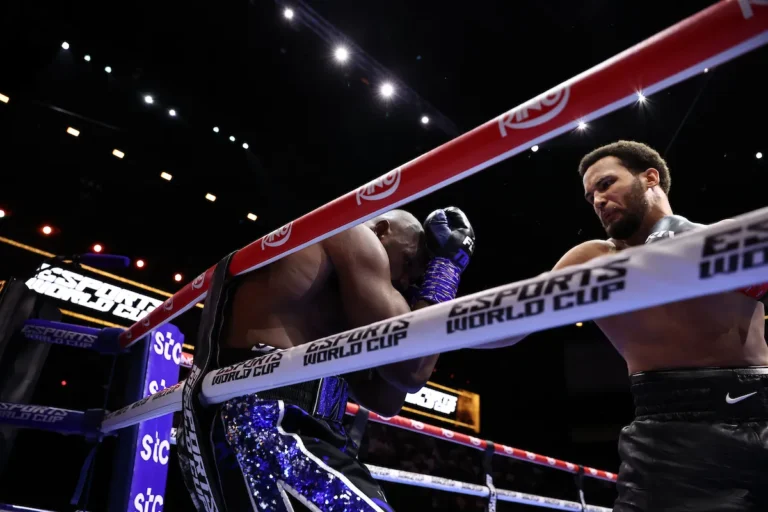
For most of the last decade, Canelo Alvarez entered major fights with everybody else trying to take something from him. They wanted his championships, his position as boxing’s biggest attraction and the credibility that came with putting his name on their résumé. On October 31 in Riyadh, that relationship will be reversed. Christian Mbilli owns the WBC super-middleweight championship, and Canelo is the man trying to take it from him.
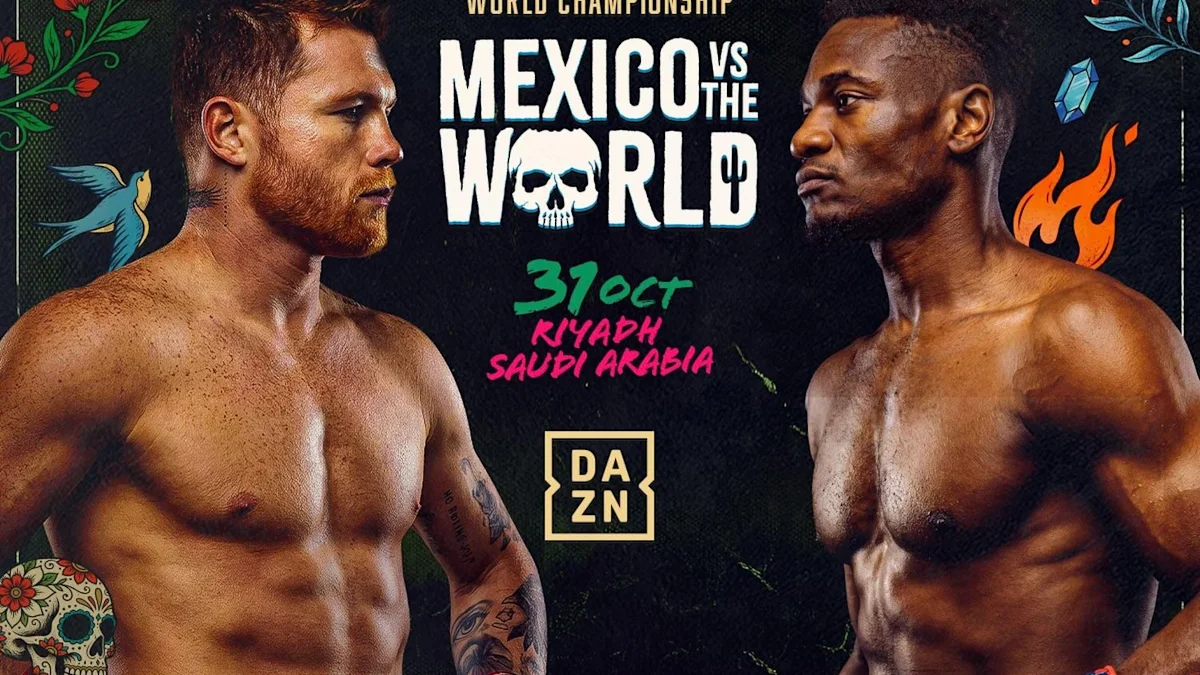
The fight is finally official after months of changing dates and uncertainty surrounding the location. Canelo and Mbilli were originally scheduled to meet September 12, but a family matter delayed the beginning of Canelo’s training camp and forced the event to move. Turki Alalshikh has now confirmed the 12-round championship fight for October 31 at The Venue in Riyadh as part of Riyadh Season’s “Mexico vs. The World” card. The event will be available through DAZN pay-per-view and to DAZN Ultimate subscribers.
Those logistical details are important, but the more interesting part of this fight is what it represents for both men. Canelo is returning for the first time since Terence Crawford defeated him by unanimous decision in September 2025 and took the undisputed super-middleweight championship. Mbilli fought on that same card, battling Lester Martinez to a split draw before later being elevated from interim WBC champion to full champion after Crawford retired. Now the two fighters who walked away from that night with very different questions surrounding their careers are meeting for the right to determine who moves forward as WBC champion.
For Canelo, this isn’t merely another championship opportunity. At 36 years old, after 68 professional fights and championships across four divisions, he is entering a stage of his career where every performance will be examined for evidence that the fighter who dominated 168 pounds for years is beginning to disappear. Mbilli understands that perfectly, which is why he has openly argued that the timing favors him. The champion believes Canelo isn’t the same fighter he was five years ago, even while acknowledging that his power, counterpunching and experience remain dangerous.
That’s what makes October 31 fascinating. Canelo is trying to prove that losing to Crawford represented one difficult night against an extraordinary fighter rather than the beginning of the end. Mbilli is trying to prove that what people interpret as Canelo’s decline has progressed far enough for somebody from the next generation to finally push him out of the way.
Canelo Hasn’t Had to Approach Many Fights Like This
Canelo’s position as challenger changes the psychology surrounding the matchup. For years, opponents entered Canelo fights knowing they had to convince judges, survive his counterpunching and overcome the atmosphere surrounding one of boxing’s biggest stars while trying to take championships he already possessed. Mbilli doesn’t have to chase Canelo’s belt. Canelo has to chase his.
The championship changed hands without Mbilli defeating Crawford because Crawford retired after becoming undisputed and vacated the titles, allowing the WBC to elevate Mbilli from interim champion. That circumstance will naturally create debate about how much meaning people attach to Mbilli’s championship until he successfully defends it, but October 31 gives him the perfect opportunity to eliminate most of that discussion. Beating Canelo Alvarez in the ring would accomplish something no administrative elevation ever could.
Canelo faces a similar opportunity from the opposite direction. His loss to Crawford stripped away the undisputed status that had defined his second reign at super middleweight. He isn’t returning against a handpicked opponent with nothing at stake while gradually rebuilding confidence. He’s going directly after one of the championships he lost, against an undefeated fighter whose physical style appears designed to test exactly how much Canelo has left.
That willingness deserves some credit regardless of how anyone feels about the matchup. There were easier ways for Canelo to return after more than a year away from competition. Instead, he’s facing a 31-year-old champion with a 29-0-1 record and 24 knockouts who has spent years building a reputation around pressure and physicality.
Mbilli Has the Perfect Style to Test an Aging Canelo — and Maybe the Wrong Style to Beat Him
Mbilli’s greatest strength is also what makes this fight dangerous for him. He likes pressure, activity and physical exchanges. He isn’t going to spend 12 rounds trying to reproduce the disciplined movement Dmitry Bivol used against Canelo or the sophisticated tactical adjustments Crawford employed last year. Mbilli generally wants to force opponents into a fight.
Against a 36-year-old Canelo returning from the longest layoff of his recent career, that approach makes sense. Age becomes easier to expose when somebody forces you to work. A veteran can remain dangerous in individual moments while losing the ability to sustain a demanding pace over an entire fight. Mbilli’s best argument may therefore be that he can make Canelo uncomfortable often enough that the older fighter has fewer opportunities to control when and where the exchanges happen.
The problem is that pressure also gives Canelo opportunities to do what he still does exceptionally well. He remains a dangerous counterpuncher, particularly to the body, and his experience against aggressive fighters is extensive. Mbilli may believe Canelo’s power has declined somewhat, but he has also repeatedly acknowledged that the Mexican remains dangerous. Canelo, unsurprisingly, rejects the idea that age has closed the gap between them and has publicly dismissed Mbilli’s chances in emphatic terms.
That stylistic conflict makes this much more interesting than simply asking whether Canelo is old. Mbilli has to determine whether he can exploit Canelo’s age without allowing his own aggression to provide the openings Canelo needs. If he approaches the fight believing constant pressure automatically equals success, he could discover that Canelo doesn’t need to be the fighter he was five years ago to punish predictable aggression.
The Lester Martinez Fight Is the Reason I’m Not Ready to Crown Mbilli
There is also an important piece of Mbilli’s résumé that shouldn’t disappear simply because he now owns the WBC championship. His most recent fight was a split draw with Lester Martinez in September 2025, a competitive back-and-forth contest that prevented Mbilli from entering the Canelo fight with the kind of unstoppable momentum his knockout percentage might suggest. The WBC subsequently ordered a rematch, although that second fight never happened.
That draw doesn’t disqualify Mbilli from being a serious threat. If anything, difficult fights can reveal more about a contender than another early knockout. But it does complicate the argument that Canelo is simply being fed to a younger destroyer whose superiority has already been established.
Mbilli still has something to prove at the highest level.
That’s why this fight works so well for both men. Canelo needs to demonstrate that he’s still capable of beating an undefeated champion after the Crawford loss and his extended inactivity. Mbilli needs to demonstrate that his physical style works against somebody operating several levels above most of the opponents who built his reputation.
The champion has youth, activity and pressure on his side. The challenger has experience, counterpunching, championship rounds and an enormous amount of knowledge accumulated against elite opposition.
Neither man’s biggest question can be answered until they’re standing across from each other.
This Fight Will Tell Us More About Canelo Than Another Comfortable Win Ever Could
Canelo’s career has reached the point where defeating ordinary opposition doesn’t tell us very much anymore. He has accomplished too much for that. Another comfortable victory against somebody clearly below championship level might improve his record, but it wouldn’t answer whether the Crawford loss represented a temporary setback or evidence that age has meaningfully reduced what Canelo can still do against elite competition.
Mbilli can help answer that.
The physical demands of the matchup should force Canelo to show whether his legs, work rate and reactions can still operate consistently over a difficult 12-round fight. Canelo hasn’t competed since September 2025, meaning he will enter the ring following roughly 13 months of inactivity, his longest layoff since the period preceding his 2020 victory over Callum Smith. Mbilli has been inactive for roughly the same period, so neither man possesses a meaningful advantage in recent ring activity.
That makes the age difference more important. Mbilli is 31, theoretically close to his physical prime. Canelo is 36 with significantly more professional mileage, including championship fights stretching back more than a decade. The question isn’t whether Canelo suddenly became an old man overnight. Athletic decline usually isn’t that convenient. It’s whether enough small things have changed that an opponent like Mbilli can turn them into one large problem.
Crawford may not be the ideal measuring stick because Crawford brought a unique level of intelligence and adaptability to the fight. If Mbilli defeats Canelo through pressure and physicality, however, the interpretation becomes different. It would suggest opponents no longer need Crawford’s extraordinary skill set to make Canelo look vulnerable.
That’s why this fight matters to Canelo’s future.
Mbilli Isn’t Just Fighting Canelo — He’s Fighting Canelo’s Reputation
There is another challenge Mbilli will have to manage that doesn’t show up in the tale of the tape. Fighters sometimes approach established legends differently because they know exactly who is standing across from them. They become cautious where they were previously aggressive, hesitate after feeling the first meaningful counter or spend too much time respecting accomplishments that happened years before the fight they’re currently contesting.
Mbilli can’t afford that.
He has already said Canelo remains the number one fighter in his mind despite possessing the championship himself. Respect is understandable, particularly when you’re facing somebody whose career you’ve watched for years, but championship fights become difficult when respect turns into hesitation.
Canelo has built an enormous psychological advantage throughout his career because opponents understand that one mistake can produce a body shot, counter right hand or combination capable of changing the fight. Mbilli’s pressure only works if he remains willing to apply it after Canelo demonstrates that those weapons still exist.
That may be the real test of the champion. Everybody knows Mbilli can pressure fighters when he feels physically dominant. October 31 will tell us whether he can maintain that identity after Canelo gives him reasons to reconsider it.
REAL TALK
There is something appropriate about Canelo entering this stage of his career as a challenger again. Championship status can sometimes hide the larger reality surrounding an aging superstar because the belts themselves create an assumption that the fighter still occupies the same position he held during his prime. Losing to Crawford removed that protection. Canelo now has to go back into the ring and take something from somebody younger if he wants to call himself champion again.
That doesn’t diminish what he already accomplished. Nothing Mbilli does on October 31 changes the years Canelo spent building one of the strongest résumés of his generation. What changes with age is the standard by which the present has to be judged. At some point, reputation stops answering questions that only current performance can answer.
Mbilli faces his own version of that problem. Being elevated to full champion gave him the title, but it didn’t automatically give him the kind of defining victory that makes people view a fighter differently. He now has the opportunity to earn that recognition against the biggest name available to him.
That’s why the fight feels more meaningful than another Canelo title defense would have. Neither man can simply rely on the position he occupied before October 31. Canelo has to prove he can still take a championship from a younger undefeated fighter, while Mbilli has to prove he belongs in a championship position that initially came through elevation rather than defeating the previous champion.
One fighter is trying to reclaim authority he lost in the ring. The other is trying to establish authority he received outside it.
By the end of October 31, somebody should have a much stronger argument.
LET’S TALK ABOUT IT
If Christian Mbilli beats Canelo convincingly, would you view that primarily as Mbilli arriving as an elite super middleweight, or as confirmation that Canelo’s decline has reached the point where the next generation has passed him?
And if Canelo wins the WBC championship back at 36 after more than a year outside the ring, should he immediately pursue the other champions at 168—or should this stage of his career be about choosing the biggest individual fights rather than rebuilding another undisputed run?