Chantelle Cameron and Mikaela Mayer Set for Christmas Eve Rematch — But the Sequel Must Answer a Bigger Question
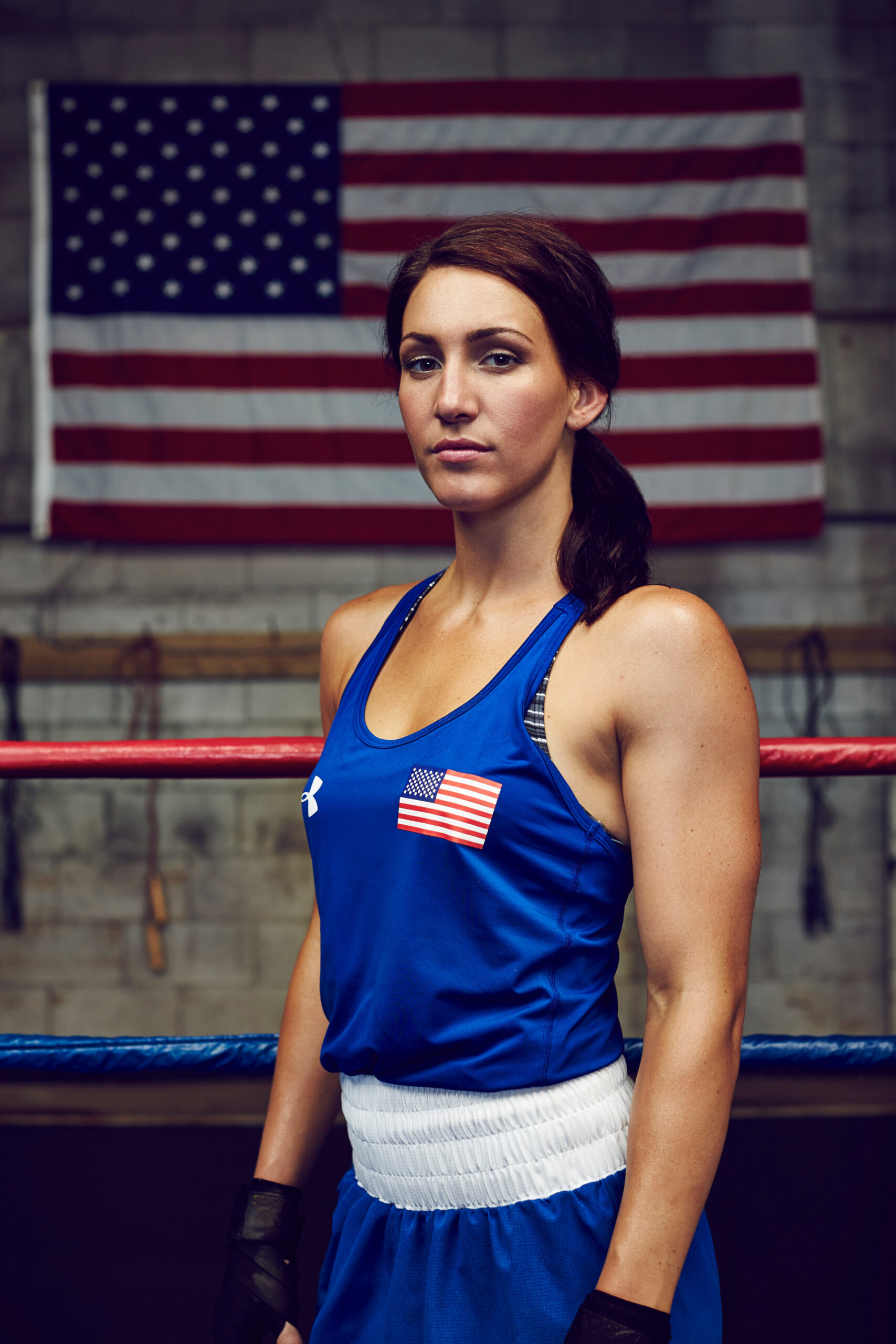
Boxer Mikaela Mayer wearing Team USA gear in 2016.Image: Georgehruiz / CC BY-SA 4.0 / Wikimedia Commons
Chantelle Cameron and Mikaela Mayer will meet again on December 24 at Coca-Cola Arena in Dubai, less than four months after Cameron defeated Mayer by unanimous decision in their super-welterweight title unification fight.
Sky Sports and ESPN report that the rematch has been confirmed for the Jake Paul-Cédric Doumbé event. ESPN identifies Cameron-Mayer II as the co-main event, while Sky Sports describes it as part of the undercard. Most Valuable Promotions lists the Christmas Eve card at Coca-Cola Arena.
The quick turnaround makes sense contractually. Before the first fight, Mayer told Sky Sports that both boxers held rematch rights. It is also an easy fight to sell: two accomplished champions, three major titles in the first meeting and an immediate opportunity for Mayer to challenge the only verdict that matters.
But a rematch clause explains why the fight can happen. It does not prove why it needs to happen.
Cameron won their August 29 meeting on all three official scorecards. Most Valuable Promotions recorded totals of 97-93, 97-93 and 96-94 after 10 rounds in Birmingham, England. According to the World Boxing Association, that victory left Cameron holding the WBA, WBC and WBO super-welterweight titles.
Mayer now has to offer more than another competitive performance. She has to show that she can create a substantially different fight.
Cameron Already Won the First Competitive Argument
The first result did not arrive through a disputed split decision, an accidental foul or a controversial stoppage. Cameron completed 10 rounds and earned the decision from every judge.
That distinction matters because boxing rematches often inherit drama from the circumstances of the first meeting. A narrow verdict can leave the public divided. A premature ending can leave a contest incomplete. An officiating controversy can make a second fight feel necessary before it is even announced.
Cameron-Mayer I did not produce that kind of official uncertainty.
The 96-94 card indicated a close contest, but the two scores of 97-93 gave Cameron a wider margin. Collectively, the cards established a clear winner even if the action remained competitive enough to justify continued interest in the matchup.
Cameron therefore enters the rematch with a simpler assignment. She must show that the first victory was an accurate reflection of the competitive order between them. A second convincing win would turn one successful night into a more definitive statement that Cameron owns this matchup.
Mayer carries the heavier burden. She cannot merely argue that she was close, return with the same approach and hope that a few exchanges break differently. She lost on all three official cards. To reverse that result, she needs to identify where rounds escaped her and demonstrate a tactical answer that was missing in Birmingham.
That could involve changing how she controls distance, when she initiates exchanges or how she finishes rounds. It could mean altering the pace at which she applies pressure or becoming more selective about when she commits. The specific solution will belong to Mayer and her team, but the standard is straightforward: the adjustment must be visible.
A rematch becomes meaningful when it reveals that the first fight did not tell the whole story.
The Fight Is Confirmed, but Its Most Important Details Are Not
The date, location and placement on the Paul-Doumbé event have been reported. Several competitive and commercial details remain unresolved in the sources reviewed.
The championships officially at stake have not been announced. The contracted weight limit has not been reported. Neither have the fighters’ purses or guarantees, the broadcast arrangement, the completed bout order or the remaining undercard.
Most importantly for the matchup itself, the length of the rounds remains unconfirmed.
After defeating Mayer, Cameron told Sky Sports that she wanted the rematch contested over three-minute rounds. Women’s championship boxing has traditionally used two-minute rounds, making Cameron’s request more than a cosmetic preference. Adding one minute changes the amount of time available to establish pressure, recover from an opponent’s attack, build combinations and adjust within every round.
That does not automatically mean longer rounds would favor Cameron. It would be irresponsible to present an untested format as an established advantage for either boxer. Three-minute rounds create opportunities and demands for both of them.
A fighter who starts quickly would have another minute to press that advantage, but she would also have another minute in which the opponent could respond. Sustained pressure could become more valuable, while mistakes could become more expensive. Conditioning, concentration and the ability to make adjustments without returning to the corner would all take on greater importance.
The effect would accumulate across the fight. If the rematch is again scheduled for 10 rounds, three-minute rounds would create considerably more fighting time than the two-minute format commonly used in women’s title bouts. That changes the rhythm of the contest and potentially the strategic choices available within it.
It could also give the sequel a distinct identity.
For now, however, three-minute rounds are something Cameron requested—not something the available reporting confirms she received. Until the official format is announced, the rematch must not be promoted or analyzed as though that issue has already been settled.
Mayer Must Change the Fight, Not Simply Narrow the Scores
Mayer’s immediate rematch gives her the opportunity to challenge the conclusion created by the first fight. It does not erase that conclusion.
According to Most Valuable Promotions’ event record, Cameron moved to 23-1 after the August victory, while Mayer fell to 22-3. Those records provide the basic outcome, but the scorecards reveal the more urgent challenge. Mayer did not need one judge to see a different fight. She needed all three.
That makes “doing a little more” a risky approach.
A closer defeat would demonstrate improvement, but it would not restore Mayer’s position. Losing 96-94 on three cards instead of dropping wider totals would still leave Cameron with two victories and the stronger claim to superiority. Mayer must either win or produce such a dramatically different performance that the competitive conversation changes.
The best route is not necessarily to abandon everything that worked in the first fight. Immediate rematches often punish overcorrection. A boxer who becomes obsessed with proving she has changed can surrender the qualities that made the original matchup competitive.
Mayer instead needs to preserve her strengths while correcting the patterns that allowed Cameron to win enough rounds decisively enough to sweep the cards.
That is what makes the rematch compelling despite the clarity of the original verdict. Mayer is experienced enough to understand what failed, and the short interval between fights should keep the tactical memory fresh. Cameron, meanwhile, knows that Mayer will arrive looking for a new solution and can prepare adjustments of her own.
The sequel is not a replay conducted in isolation. Both fighters now possess 10 rounds of direct evidence.
Cameron can study where Mayer created problems and close those openings. Mayer can examine which exchanges looked competitive without actually producing winning rounds. Each boxer knows how the other responds under pressure, how the distance changes during combinations and which tactical patterns the judges rewarded.
The rematch will show which team used that information better.
A Second Cameron Victory Could Settle the Rivalry
Cameron is not fighting merely to protect the official result from August. She has the opportunity to make the result definitive.
One victory can establish a champion. Two convincing victories over the same elite opponent can establish ownership of a matchup.
If Cameron controls the rematch and again earns a clear decision—or produces an even more decisive result—the central competitive question will largely be answered. Mayer would still have an accomplished career and future options, but there would be little justification for immediately extending the rivalry again.
If Mayer wins, the situation changes completely. A victory would prove that the first result was not the final word and would create an obvious case for a third fight. Depending on the manner of the result, Cameron could invoke the same principle now benefiting Mayer: one fighter answered the first meeting, and the other answered the second.
The round format could become an important part of that discussion, particularly if the rematch uses three-minute rounds. A different pace might reveal new dimensions in both fighters. It might also confirm that Cameron can beat Mayer under more than one set of conditions.
What it cannot become is an excuse prepared in advance.
Both fighters will enter under the same agreed rules. Whether the rounds last two minutes or three, Mayer’s responsibility remains unchanged: she must demonstrate that she has a genuine route to victory. Cameron’s responsibility is to deny it.
The unanswered questions surrounding the event should be resolved before fight night, especially the titles, weight and round length. Once the opening bell sounds, however, the argument becomes much cleaner.
Either Cameron repeats her authority, or Mayer changes the matchup.
LET’S TALK ABOUT IT
Does Mikaela Mayer have a genuine tactical route to reversing the first result, or did Chantelle Cameron’s unanimous-decision victory already establish who is better in this matchup?
Would three-minute rounds meaningfully change the rematch—and if Cameron wins clearly again, should the rivalry end there?
Outlets cited in this story
- Sky Sports
- ESPN
Spot an error? Send a correction.