Claressa Shields Earns Mike Tyson’s Highest Praise — But Women’s Boxing Must Match Her Greatness
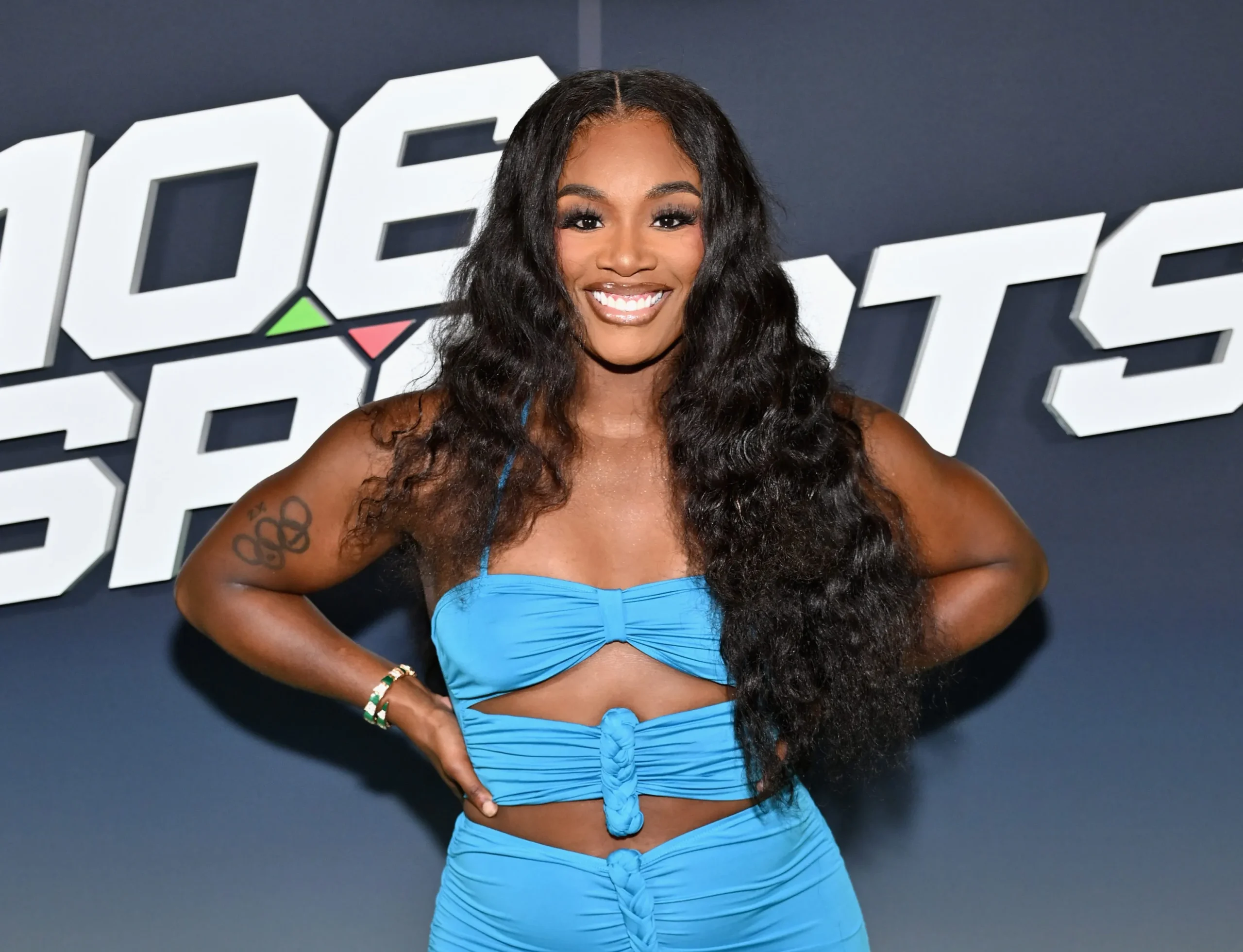
Claressa Shields received the Champion of Champions Award at the inaugural VEON “Women Who Win” ceremony on November 16, adding another form of recognition to a career already defined by success inside the ring.
The ceremony, presented by the All Women’s Sports Network at Cipriani South Street in New York City, celebrated accomplished women from across sports and entertainment. Shields’ honor was an award—not a new boxing title, ranking or fight result—but its meaning extends beyond another trophy.
That meaning became even clearer when connected with recent praise from Mike Tyson.
According to World Boxing News, Shields shared a clip from the Double Coverage podcast in which Tyson called her “the baddest monster on the planet” and “the real deal.” He also praised what she has contributed to women’s boxing. Shields reacted emotionally to the comments, writing that Tyson recognized a great fighter.
Tyson’s opinion does not officially crown Shields as the greatest women’s boxer of all time. Boxing has no single authority capable of settling that kind of historical debate. His endorsement does, however, demonstrate how far Shields’ reputation has traveled.
The argument is no longer confined to Shields making the case for herself.
One of boxing’s most recognizable former champions is making it for her.
Tyson’s Endorsement Carries Weight Without Settling the Debate
Mike Tyson’s comments matter because of who delivered them and what he appeared to recognize.
Tyson was not simply complimenting Shields’ personality or congratulating her on an award. In the Double Coverage clip reported by World Boxing News, he described her in language reserved for an intimidating, authentic fighter. Calling Shields “the real deal” acknowledged the competitive identity at the center of her career.
The reviewed reporting does not establish when Tyson originally recorded those remarks. That distinction is important because the comments should not automatically be presented as a direct response to the November 16 ceremony. What can be said is that Shields recently shared the clip and that World Boxing News connected Tyson’s praise with her Champion of Champions recognition.
His words remain an influential opinion rather than an official determination.
Greatest-of-all-time arguments are rarely settled by a single endorsement, even when that endorsement comes from a figure as prominent as Tyson. Different generations present different opponents, competitive conditions and opportunities. Historical comparisons also depend on what a person values most: achievements, dominance, influence, longevity, visibility or some combination of them.
Tyson’s praise does not eliminate those questions.
It does show that Shields has reached a level where her greatness is increasingly treated as an established part of the conversation rather than a claim requiring constant introduction.
That is a meaningful shift.
For years, women fighters have often been forced to prove not only that they belong at the highest level but also that their divisions deserve sustained attention. Shields has operated under that pressure while becoming one of the central figures associated with women’s boxing. Tyson’s comments recognize both the fighter and the larger contribution.
Shields’ emotional reaction suggests that the source of the praise mattered. World Boxing News reported that she viewed Tyson’s comments as recognition from one great fighter to another.
That does not make his judgment final.
It makes it significant.
The Champion of Champions Award Reflects a Wider Recognition
The All Women’s Sports Network announced Shields as one of the honorees for its inaugural “Women Who Win” event and listed Champion of Champions among the ceremony’s award categories.
BroBible reported from the event that Shields received the award. Shields also publicized the honor through her verified social-media account on November 17.
Speaking to BroBible contributor Kathia Vega, Shields said she was “super humbled and grateful” to be recognized alongside accomplished women. Her response placed the award in its proper context: this was not a championship she won through a sanctioned boxing match, but an honor reflecting how her success and influence are perceived beyond the ring.
Some reports referred to the distinction as the “Champion of all Champions” Award. AWSN’s advance announcement used “Champion of Champions,” which is the clearest available name for the honor.
The difference in wording does not change its larger meaning.
Shields was being celebrated in a room designed to recognize elite women across multiple fields. That matters because boxing recognition can sometimes remain trapped inside boxing. Fighters become highly respected among dedicated fans without developing comparable visibility among the broader sports audience.
The VEON “Women Who Win” ceremony placed Shields in a wider conversation.
Combined with Tyson’s praise, the award shows recognition arriving from two directions. Tyson represents boxing history and the sport’s cultural reach. AWSN’s event represents a growing platform devoted to women’s sports and achievement.
Neither form of approval adds a victory to Shields’ record. Together, however, they show that her position is no longer being defined exclusively by the result of her most recent bout.
She has become a cross-sport figure whose importance is tied to achievement, visibility and the advancement of women’s boxing.
The Recognition Changes Her Stature, Not Her Boxing Record
There is a temptation to treat every major honor as another piece of competitive evidence. That would overstate what happened in New York.
The Champion of Champions Award does not change Shields’ professional record, championship standing or place in any official ranking. Tyson’s comments do not operate as a sanctioning-body decision. No belt changed hands, and no opponent was defeated.
The honor also does not erase every reasonable historical argument involving other great women fighters.
What it changes is the context surrounding Shields.
The strongest case for her greatness has never depended on Tyson’s permission or a ceremonial award. It comes from the competitive achievements, public visibility and influence that made both forms of recognition possible. Tyson and AWSN did not manufacture Shields’ stature. They reflected it.
That distinction is essential.
When a fighter repeatedly receives recognition beyond the immediate cycle of fight promotion, it suggests that her significance has become larger than any single event. Shields is being discussed not merely as a current champion to watch, but as a defining representative of her era.
The conversation therefore begins to move.
Instead of asking whether Shields belongs among the greats, the more productive question becomes what women’s boxing will build around a fighter whose status is already widely accepted.
A dominant champion still needs credible competition. Historical stature does not eliminate the need for meaningful fights. If anything, it increases the responsibility of promoters, broadcasters and potential opponents to create events worthy of that stature.
Praise can confirm a reputation.
It cannot create competitive momentum.
Shields’ Next Major Event Must Be Bigger Than an Endorsement
Shields no longer needs one famous former champion to establish that she belongs in the discussion. Tyson’s endorsement is powerful because it supports a case already built through her work and influence.
The next stage requires more than recognition.
Women’s boxing must continue developing opponents who can be presented as legitimate threats rather than supporting characters in a celebration of Shields. It needs rivalries with clear stakes, contrasting personalities and enough competitive uncertainty to make audiences believe they are witnessing an event rather than a tribute.
That challenge is not entirely Shields’ responsibility.
A defining champion can draw attention, promote fights and continue winning, but she cannot manufacture a deep competitive ecosystem alone. Opponents must be developed before the matchup is announced. Their accomplishments must be communicated to the public. The event must be promoted with enough seriousness that the audience understands why the fight matters.
Without that structure, even an extraordinary champion can become more respected than urgently watched.
That is the danger facing women’s boxing if recognition becomes a substitute for matchmaking. Shields can continue collecting honors and praise, but the sport still needs bouts that create tension around her dominance.
A major Shields event should answer questions larger than whether she remains excellent. It should identify a rival with a credible path to winning, establish what the matchup means for the direction of women’s boxing and give both fighters a platform equal to the stakes being advertised.
The greatest champions are remembered for what they accomplished, but their eras are often remembered through the opponents and events that forced those accomplishments into sharper focus.
Tyson’s praise tells the public that Shields is authentic.
The Champion of Champions Award tells the public that her impact reaches beyond boxing.
The next important fight must show that the sport can produce a stage big enough for both truths.
LET’S TALK ABOUT IT
Has Mike Tyson’s endorsement effectively settled Claressa Shields’ place in women’s boxing history, or can no individual opinion end a greatest-of-all-time debate?
And what kind of opponent, rivalry or major event would give Shields a stage that truly matches her standing in the sport?
Outlets cited in this story
- World Boxing News
Spot an error? Send a correction.