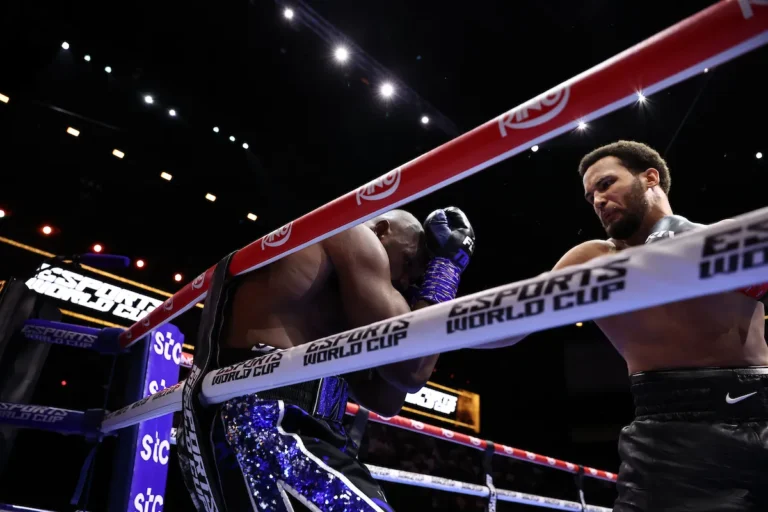





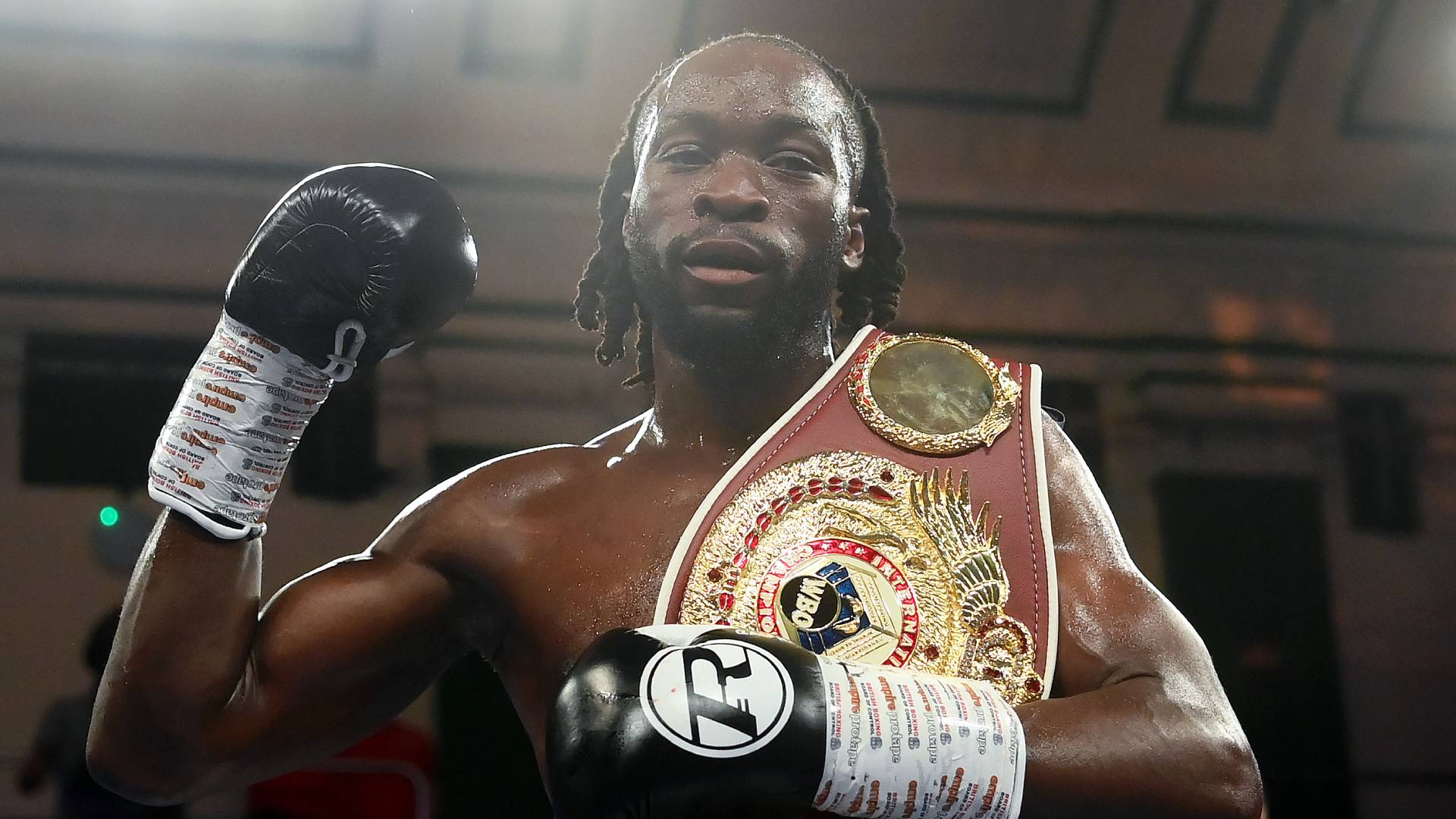
Denzel Bentley has a world championship, Yoenli Hernandez has the mandatory position, and now we have reached that familiar point in boxing where everybody starts using the word nobody wants attached to their name: ducking. Hernandez’s team believes Bentley doesn’t want the fight. Warriors Boxing Promotions president Leon Margules has publicly accused the WBO middleweight champion […]
Denzel Bentley has a world championship, Yoenli Hernandez has the mandatory position, and now we have reached that familiar point in boxing where everybody starts using the word nobody wants attached to their name: ducking.
Hernandez’s team believes Bentley doesn’t want the fight.
Warriors Boxing Promotions president Leon Margules has publicly accused the WBO middleweight champion of avoiding Hernandez as the situation surrounding their mandatory title fight has moved into purse-bid territory. That’s a serious accusation in boxing because once fans believe a champion is ducking somebody, the conversation can quickly become less about contracts and sanctioning-body procedures and more about courage.
But before we decide Bentley is afraid of Hernandez, there’s a much better question to ask:
What fight does Bentley actually want instead?
Because when you look at everything happening around the WBO middleweight title, this starts looking less like a simple case of one fighter being scared of another and more like one of boxing’s oldest conflicts — mandatory obligation versus financial opportunity.
Hernandez Didn’t Just Call Bentley Out — The WBO Ordered the Fight
This isn’t Hernandez standing on social media demanding a championship opportunity he hasn’t officially earned.
The WBO designated Hernandez as Bentley’s mandatory challenger and subsequently ordered the two sides to negotiate a championship fight. When an agreement wasn’t reached during the negotiating period, the organization moved toward a purse bid.
That distinction matters.
A mandatory challenger has a much stronger position than somebody simply ranked near the top of the division. Once a sanctioning organization orders a mandatory defense, the champion generally can’t just choose another opponent without receiving permission from the organization or risking consequences involving the title.
Hernandez, 11-0 with nine knockouts, doesn’t have a long professional résumé, but his boxing experience goes considerably deeper than 11 professional fights suggest. The 29-year-old Cuban had an extensive amateur career and won back-to-back amateur world championships before turning professional.
Bentley has already questioned whether that should be enough.
He recently described Hernandez becoming mandatory after only 11 professional fights as “mental,” pointing out that Hernandez hasn’t fought a 12-round professional fight or gone through what Bentley considers the traditional progression toward a championship opportunity.
That’s where this gets interesting.
Bentley isn’t arguing that Hernandez doesn’t exist.
He’s essentially questioning whether Hernandez should be standing at the front of the line in the first place.
The WBO has already answered that question.
He is.
Bentley Had a Much Bigger Opportunity in Sight
Here’s the part of the story that changes the conversation.
Bentley apparently wasn’t sitting around looking for an easy opponent.
He had been linked to something much more significant: a unification fight with IBF middleweight champion Aaron McKenna.
Bentley and McKenna reportedly had an agreement in place for a fight later this year, with sanctioning-body approval remaining an obstacle. The WBO ultimately insisted that Bentley fulfill his mandatory obligation to Hernandez first. WBO president Gustavo Olivieri explained that the middleweight mandatory was already overdue and that Bentley inherited the division’s mandatory responsibilities when he became champion.
That’s an important piece of context when somebody uses the word “duck.”
If Bentley were attempting to avoid Hernandez so he could fight an obscure opponent for an easy title defense, Hernandez’s argument would probably hit differently with boxing fans.
But Bentley was trying to unify championships.
There’s another name that tells us even more about Bentley’s thinking: Conor Benn.
Bentley recently expressed interest in giving Benn an opportunity at his WBO championship, openly acknowledging the commercial value of that fight. The WBO quickly shut that possibility down, saying Bentley’s mandatory against Hernandez had to be completed and pointing out that Benn wasn’t even ranked by the organization.
Put those two possibilities together and the picture becomes clearer.
McKenna offers another championship.
Benn potentially offers considerably more attention and money.
Hernandez offers something completely different:
an obligation.
And those aren’t always the fights champions are excited about taking.
This Is Where the Word “Ducking” Gets Complicated
Boxing fans use “ducking” loosely.
Sometimes it absolutely describes what appears to be happening: a dangerous opponent is available, the fight makes sense, and somebody continually finds reasons not to make it.
Other times we’re really talking about business.
Those situations aren’t necessarily the same.
There is no public evidence establishing that Bentley is personally afraid to fight Hernandez. What we can say is that Bentley has questioned Hernandez’s mandatory status, his team hasn’t reached an agreement with Hernandez’s side, and Bentley has been interested in alternative fights that carry obvious championship or commercial benefits.
Meanwhile, Hernandez has every reason to protect his position.
He’s done the most important thing a contender can do politically: get himself officially designated as the mandatory challenger.
Once you have that position, why surrender it?
Hernandez doesn’t need to convince Bentley that he’s the best financial option. He doesn’t even need Bentley to believe he’s deserving.
He needs the WBO to enforce its own order.
And so far, that’s exactly what the organization has been doing.
Bentley’s Championship Situation Is Unusual Too
There’s another layer here that’s easy to overlook.
Bentley didn’t originally win the full WBO championship by defeating the reigning champion in the ring.
He stopped Endry Saavedra in April to capture the interim WBO title and was subsequently elevated to full champion after Janibek Alimkhanuly vacated and moved to super middleweight.
That doesn’t mean Bentley isn’t a legitimate fighter. His résumé already includes serious middleweight experience, including his 2022 challenge against Janibek, where Bentley went the distance before losing a unanimous decision.
But becoming champion through elevation creates an interesting dynamic.
Bentley understandably wants to capitalize on finally possessing a world championship. A unification fight or commercially significant opponent could potentially transform his earning power.
The sanctioning body, meanwhile, is essentially telling him:
Before you capitalize, handle the mandatory.
And Hernandez’s team is saying something even simpler:
We’re the mandatory. Fight us.
That’s the collision.
The Purse Bid Could Tell Us a Lot
When fighters and promoters can’t agree on the financial terms of a mandatory fight, a sanctioning organization can order a purse bid. Eligible promoters submit bids for the right to stage the fight, and the winning bid helps determine the financial pot that will be divided between the fighters according to the applicable rules.
The WBO ordered exactly that after Bentley and Hernandez failed to reach an agreement. The organization subsequently announced that the purse-bid proceedings scheduled for September 29 were being rescheduled.
That matters because purse bids can change everything.
A mandatory challenger who isn’t considered a major commercial attraction can suddenly become much more interesting if a promoter is willing to put serious money behind the fight.
Conversely, a weak purse bid can expose why the champion was looking elsewhere in the first place.
That’s why this isn’t merely about whether Bentley wants Hernandez.
It’s about what the market believes Bentley-Hernandez is worth.
And Hernandez Isn’t Some Random Mandatory
Bentley’s frustration with Hernandez’s limited professional experience isn’t completely unreasonable.
Eleven professional fights is eleven professional fights.
Hernandez hasn’t accumulated the kind of professional résumé we normally associate with somebody receiving a mandatory world-title opportunity.
But there’s a flip side.
Elite Cuban amateurs have frequently entered professional boxing with experience that isn’t reflected by their professional records. Hernandez reportedly had around 300 amateur bouts and became a two-time amateur world champion.
He’s also already beaten veteran former world-title challenger Terrell Gausha, stopping him in the seventh round in March, a performance that significantly accelerated Hernandez’s championship trajectory.
His most recent performance against Francisco Veron wasn’t nearly as spectacular, however, with Hernandez having to work through a much closer decision.
So Bentley actually raises a worthwhile boxing question underneath all the politics:
How much should elite amateur accomplishment accelerate somebody’s professional career?
There isn’t one obvious answer.
Hernandez’s team sees a highly accomplished boxer who has already demonstrated enough ability to challenge for a championship.
Bentley sees somebody with 11 professional fights being placed directly in front of champions who have spent years navigating the professional system.
Both perspectives help explain why negotiations have become contentious.
REAL TALK
This situation is a perfect example of how differently opportunity looks depending on where you’re standing.
From Hernandez’s side, this may be the opportunity he has spent his entire boxing life earning. He’s undefeated, highly decorated as an amateur, climbed to the No. 1 position and secured mandatory status. Asking him to step aside because somebody else represents a bigger payday would essentially mean telling him that following boxing’s supposed pathway to a championship still doesn’t guarantee you’ll get your chance.
From Bentley’s side, finally becoming world champion creates a completely different urgency. Fighters don’t have unlimited careers. If possessing that belt suddenly creates an opportunity to unify against McKenna or make substantially more money against somebody like Benn, it’s easy to understand why Bentley would want to maximize the moment.
That’s where boxing constantly gets caught between being a sport and being a business.
The sporting system says Hernandez earned his position.
The business may say somebody else is worth more money.
Neither reality magically disappears because the other exists.
And that’s why I wouldn’t automatically call this a duck based solely on Hernandez’s team’s accusation. Avoiding a fighter because you believe he’s too dangerous is one thing. Fighting for a second championship or pursuing the biggest payday of your career is something different.
But there’s also a responsibility that comes with carrying a championship belt.
You don’t get to enjoy only the leverage the belt gives you while ignoring the obligations attached to it.
If Hernandez is the mandatory and the WBO continues enforcing the order, eventually Bentley’s options become pretty straightforward:
Fight the mandatory, reach some type of step-aside arrangement that the relevant parties accept, or potentially face consequences involving the championship.
That’s when we’ll learn much more about what everybody actually wants.
Until then, “ducking” makes a great headline.
The business behind the headline is considerably more complicated.
LET’S TALK ABOUT IT
Do you consider Bentley’s attempt to pursue a unification or bigger-money fight smart career management — or once Hernandez became the mandatory, should the champion have simply fought him?
And here’s the bigger boxing question: Should an elite amateur like Yoenli Hernandez be able to become a mandatory challenger after only 11 professional fights, or should even decorated amateurs have to work through more contenders first?