




Dillian Whyte’s first-round knockout loss to Moses Itauma looked like the kind of defeat that can end a veteran heavyweight’s career. More than a year later, Whyte is offering important context that he says changes how that performance should be evaluated. Whyte says he entered the August 2025 fight with a fractured foot that was […]
Dillian Whyte’s first-round knockout loss to Moses Itauma looked like the kind of defeat that can end a veteran heavyweight’s career. More than a year later, Whyte is offering important context that he says changes how that performance should be evaluated.
Whyte says he entered the August 2025 fight with a fractured foot that was injured during training and then aggravated again while he was warming up in the dressing room shortly before the bout. According to Whyte, the injury was serious enough that a doctor examined him on fight night and advised him not to compete. Whyte rejected that advice and proceeded with the fight, believing he could survive the early stages and eventually drag Itauma into deeper rounds.
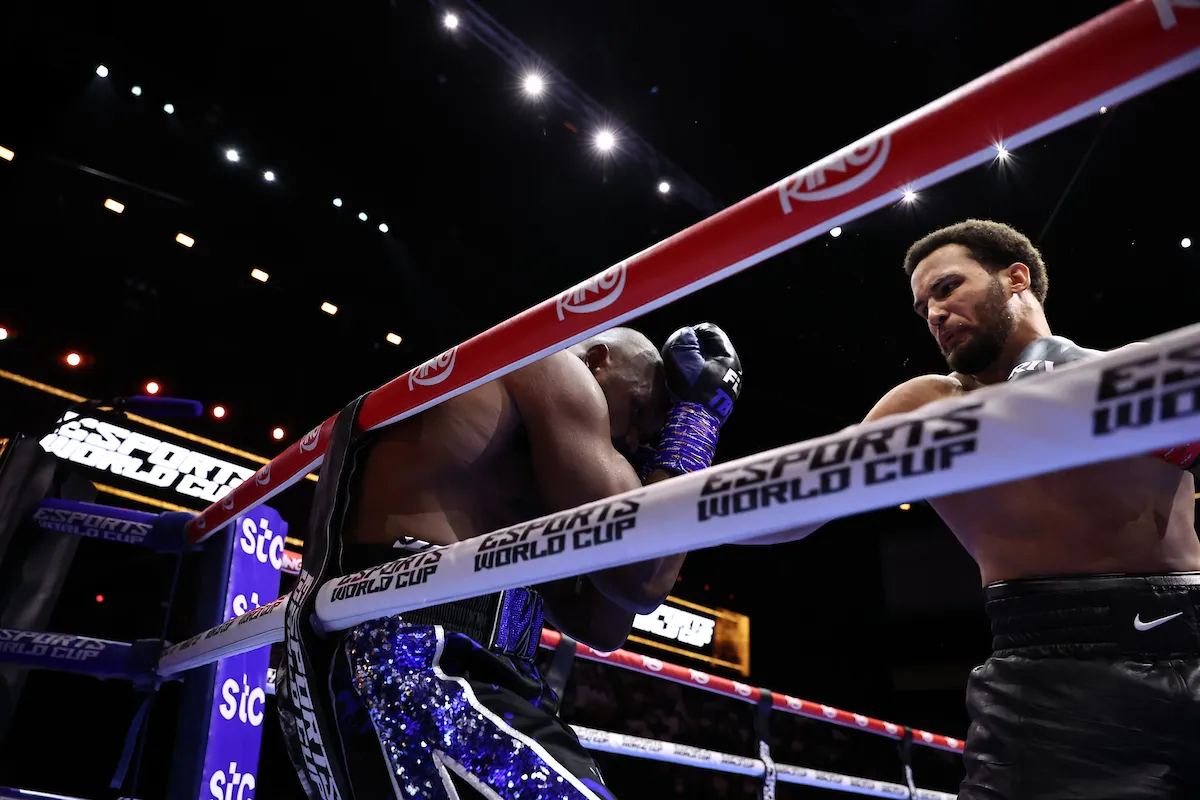
That plan never had an opportunity to develop. Itauma overwhelmed Whyte almost immediately, hurting him with a right hook before finishing the veteran inside the opening round. Whyte offered little resistance and appeared unable to establish the physical pressure that had characterized many of his best performances. At the time, the result was widely interpreted as evidence of two careers moving in opposite directions: Itauma was emerging as one of heavyweight boxing’s most exciting young fighters, while Whyte appeared to have reached the end of his useful years at elite level.
Whyte now believes the public was missing an important part of that picture.
Whyte Says the Injury Happened Before Fight Week
According to Whyte, the problem began during training. He said he initially felt discomfort while running and later suffered what he described as a clean fracture when he stepped backward awkwardly during sparring. Whyte continued preparing for Itauma and said he felt sufficiently confident during fight week that he still expected to win. The situation worsened dramatically in the dressing room when he says he fractured the foot again while jumping rope during his warm-up.
Whyte’s account creates an obvious question about why the fight was allowed to continue. He says the doctor who examined him recommended that he withdraw, but Whyte refused after completing camp and traveling to Saudi Arabia. That decision reflects a mentality common among professional fighters, particularly veterans who have competed through injuries before. Whyte has pointed to his 2015 fight with Anthony Joshua as another example, saying he entered that bout with a badly damaged shoulder.
The willingness to fight injured may demonstrate toughness, but it does not necessarily demonstrate sound judgment. A heavyweight already dealing with compromised mobility was preparing to face a young opponent whose speed and explosiveness were considered among his greatest advantages. Whyte’s ability to plant his feet, move away from attacks and generate his own power would all potentially be affected by a serious foot injury.
If Whyte’s account accurately reflects his physical condition, proceeding with the fight placed him in an extremely difficult position before Itauma threw the first punch.
The Injury Adds Context, but It Doesn’t Erase Itauma’s Performance
Whyte has been careful to say that he did not reveal the injury immediately because he didn’t want to diminish Itauma’s victory. That distinction is important. An injured opponent and an impressive performance can exist in the same fight.
Itauma still had to capitalize on what was in front of him.
The young heavyweight did exactly that. He began quickly, found openings and never allowed Whyte enough time to establish himself. Once Whyte was hurt, Itauma attacked with control rather than becoming reckless, and the fight ended before Whyte could recover. The official result remains a first-round knockout, and nothing about Whyte’s explanation changes what Itauma accomplished that night.
The injury does, however, complicate the conclusions drawn from the performance. There is a difference between saying Itauma destroyed a healthy Whyte who was physically capable of executing his game plan and saying Itauma destroyed a veteran who, according to Whyte, entered the ring with a foot serious enough for a doctor to recommend withdrawal.
The first interpretation suggested Whyte had virtually nothing left.
The second leaves open the possibility that the performance exaggerated the extent of his decline.
That possibility is particularly relevant now because Whyte has no intention of retiring.
The Timing of Whyte’s Explanation Deserves Scrutiny
Whyte’s decision to discuss the injury more than a year after the fight comes at a convenient moment. He is attempting to return to heavyweight relevance and is being linked with Johnny Fisher, who recently defeated Michael Pirotton in his Zuffa Boxing debut. Whyte’s manager Michael Ofo says he and Fisher’s manager Adam Morallee have agreed to the matchup in principle, with November or December being discussed.
That doesn’t mean Whyte invented the injury. There is currently no evidence supporting that conclusion. It does mean the timing provides an obvious reason for the story to become relevant again.
Whyte needs to convince promoters, opponents and the public that the Itauma performance shouldn’t be treated as definitive evidence that he can no longer compete. Explaining that he fought with a fractured foot directly addresses the most damaging recent image of his career.
There is also a limitation worth acknowledging. The recent reports are based primarily on Whyte’s account. Sky Sports reports his description of the injury and his statement that a doctor advised him to withdraw, but the coverage does not include medical documentation or an independent statement from the doctor confirming the diagnosis. That doesn’t disprove Whyte’s account, but it means the fracture should properly be presented as something Whyte says happened rather than independently verified medical fact.
Ultimately, a comeback fight may provide a more useful answer than continued debate over an injury from 2025.
Johnny Fisher Could Tell Us What Whyte Actually Has Left
A fight with Fisher makes sense because both heavyweights need something from it.
At 38, Whyte needs to demonstrate that the Itauma loss wasn’t simply the inevitable conclusion of an aging heavyweight career. He has been inactive since that defeat and cannot rebuild indefinitely against low-level opposition if he still wants meaningful fights before retirement.
Fisher needs credibility of a different kind. The 27-year-old remains popular and commercially attractive, but his recent performances have exposed limitations that still need development. He was stopped by Dave Allen in 2025 and recently required a majority decision to defeat Pirotton in his Zuffa debut. Whyte has praised Fisher’s courage and punching power while also predicting that he would stop him.
That creates a legitimate crossroads fight rather than simply matching an established name against a younger heavyweight.
Whyte would be testing whether experience, toughness and whatever remains of his power can still overcome a younger opponent. Fisher would be testing whether he has developed enough to defeat a veteran who operated around world-title level for years.
Most importantly for Whyte, the fight would allow him to answer the Itauma questions without requiring anyone to accept his explanation on faith.
If he returns healthy and performs well, the broken-foot account becomes meaningful context for an unusually poor performance. If he looks equally limited against Fisher, the discussion surrounding the Itauma injury becomes much less important because the larger question about Whyte’s decline will have received another answer.
REAL TALK
Whyte’s situation illustrates one of boxing’s recurring problems with injured fighters. The sport celebrates competitors who refuse to withdraw, but that same mentality can produce decisions that are difficult to defend once the consequences become visible.
Whyte had already completed training camp, traveled to Saudi Arabia and committed himself mentally and financially to fighting Itauma. From his perspective, withdrawing hours before the bout may have felt impossible. Professional fighters also spend their careers learning to suppress pain and continue performing when ordinary instincts would tell most people to stop.
The problem is that toughness doesn’t eliminate physical limitations. A broken foot doesn’t become functional because a fighter is willing to ignore it, and entering a heavyweight boxing match unable to move properly carries consequences beyond losing a sporting contest.
Whyte’s decision also affected the way both fighters were subsequently evaluated. Itauma’s victory accelerated the perception that he was ready for the highest level of the heavyweight division, while Whyte’s performance generated immediate calls for retirement. We now know that Itauma himself eventually encountered a much more difficult reality against Filip Hrgovic, losing after dominating early and exhausting himself in the later rounds. That result does not retroactively diminish what Itauma did to Whyte, but it demonstrates why one dramatic performance should rarely become the complete evaluation of a fighter.
Whyte deserves the opportunity to provide context for his own performance, and his explanation is plausible enough to be taken seriously. It should not, however, be treated as independently established simply because he has now disclosed it.
The cleanest resolution is another fight.
If Dillian Whyte believes the man who lost to Moses Itauma wasn’t an accurate representation of what he can still do, Johnny Fisher may give him the opportunity to prove it.
At this stage of Whyte’s career, that evidence will matter considerably more than the explanation.
LET’S TALK ABOUT IT
Does Whyte’s account of fighting Moses Itauma with a fractured foot significantly change how you evaluate that first-round knockout, or does choosing to enter the ring injured mean the result still has to be judged exactly as it happened?
And if Whyte returns against Johnny Fisher, is that the right crossroads fight to determine whether the former heavyweight contender still has something meaningful left?