





Filip Hrgovic and Moses Itauma are both expected back in the ring early next year, but calling these two ordinary 2027 returns misses what really happened when they fought. One night changed the direction of two heavyweight careers. Hrgovic entered their August 29 fight as the experienced heavyweight many people expected the 21-year-old Itauma to […]
Filip Hrgovic and Moses Itauma are both expected back in the ring early next year, but calling these two ordinary 2027 returns misses what really happened when they fought.
One night changed the direction of two heavyweight careers.
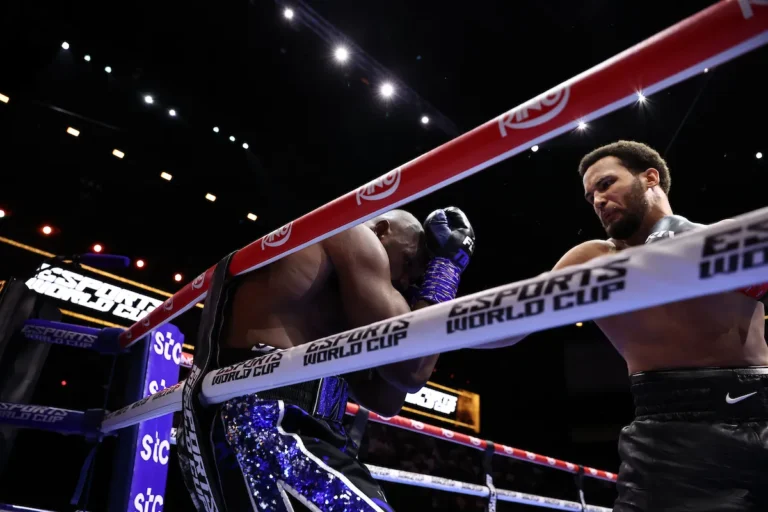
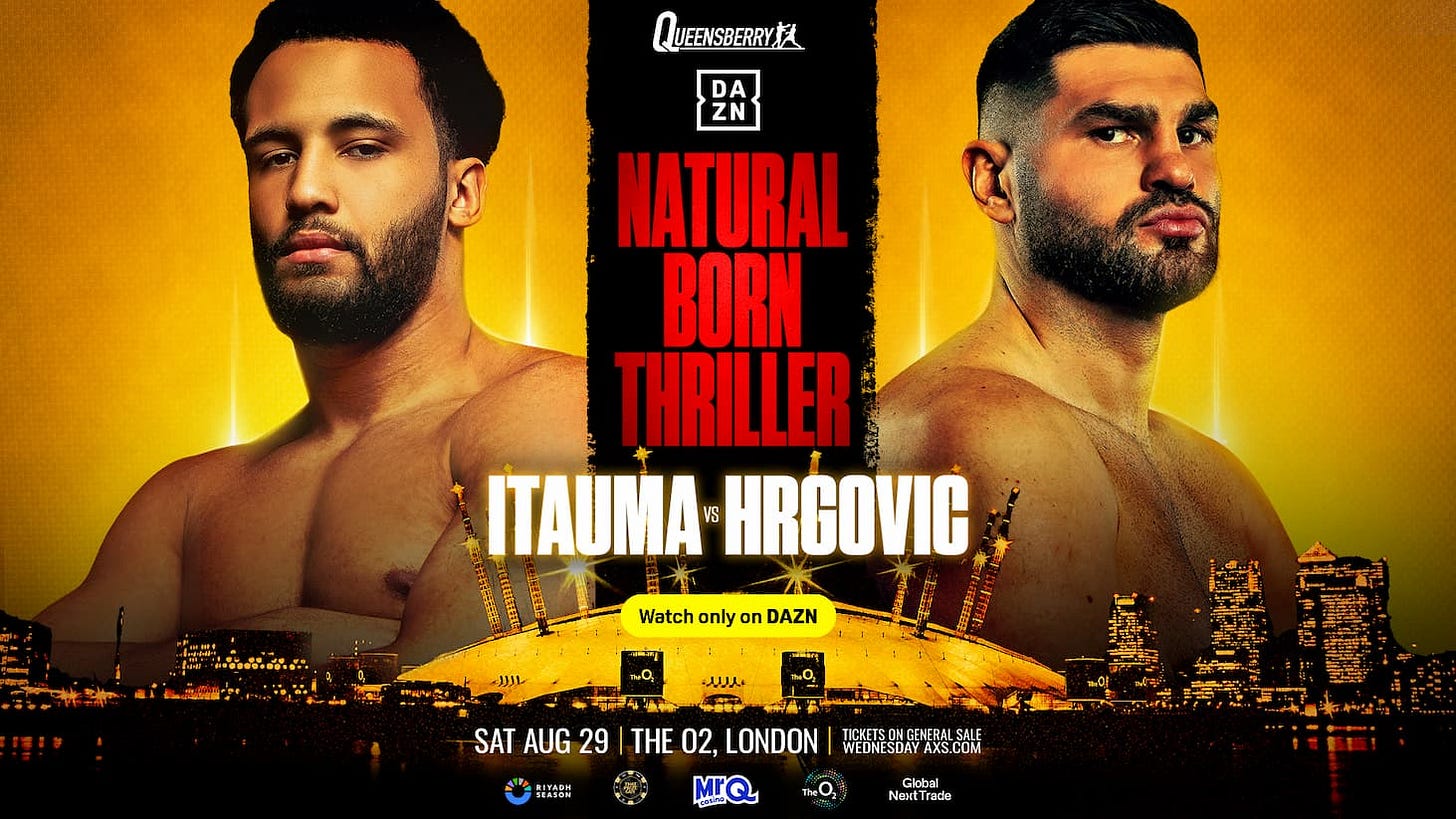
Hrgovic entered their August 29 fight as the experienced heavyweight many people expected the 21-year-old Itauma to run through. For much of the fight, that prediction looked pretty good. Itauma dropped Hrgovic in the second round, controlled large portions of the action and appeared headed toward becoming one of the youngest heavyweight champions in boxing history.
Then the fight went somewhere Itauma had never been.
Deep.
And everything changed.
Itauma’s energy faded dramatically. Hrgovic remained standing, kept applying pressure and stopped the exhausted young heavyweight in the ninth round to claim the vacant IBF heavyweight championship. It was Itauma’s first professional defeat and made Hrgovic Croatia’s first heavyweight world champion.
Now both men are expected to return in early 2027.
But they’re coming back with completely different assignments.
Hrgovic has to prove becoming champion wasn’t the end of his journey.
Itauma has to prove losing didn’t expose the limits of his.
Hrgovic Survived What Almost Everybody Thought Would Finish Him
There are victories that look impressive on a résumé, and then there are victories that completely change how people understand a fighter.
Hrgovic-Itauma became the latter.
Itauma’s speed was a problem. His southpaw positioning was a problem. His power was a problem. Hrgovic himself has since described Itauma as an exceptionally difficult opponent and acknowledged the punishment he absorbed during the fight.
But Hrgovic had something Itauma hadn’t been forced to deal with before:
He wouldn’t go away.
That sounds almost too simple, but heavyweight boxing sometimes comes down to exactly that.
What happens when you land your best shots and the other man is still there?
What happens when the knockout you’ve become accustomed to doesn’t arrive?
What happens when the sixth round becomes the seventh, the seventh becomes the eighth and suddenly you’re being asked questions your professional career has never required you to answer?
Before Hrgovic, Itauma had never been beyond six rounds.
Against Hrgovic, that mattered.
By the ninth, the fight had reversed completely.
That’s why reducing the result to Itauma simply “gassing out” doesn’t give Hrgovic enough credit. Somebody had to survive long enough to make Itauma pay for spending that energy.
Hrgovic did.
Now Hrgovic Has a Problem Named Frank Sanchez
Winning the IBF championship gives Hrgovic leverage, but it doesn’t give him complete freedom.
Frank Sanchez is waiting.
Sanchez stepped aside to allow Hrgovic-Itauma to proceed for the vacant IBF championship, with the understanding that he would receive his opportunity against the winner. Frank Warren has since described Hrgovic-Sanchez as a contractual obligation, while Sanchez’s representatives have made clear they intend to enforce his position rather than accept another step-aside arrangement.
That makes Hrgovic’s first defense particularly interesting.
He understandably has bigger ambitions.
Hrgovic has spoken about unification fights and has obvious unfinished business with WBO champion Daniel Dubois, who stopped him in 2024. He’s also mentioned the other heavyweight champions while discussing where he wants his career to go.
But championship boxing has obligations.
Before Hrgovic can start shopping for whichever heavyweight champion offers the biggest opportunity, Sanchez appears to be standing directly in front of the door.
And Sanchez isn’t an easy first defense.
He’s an experienced Cuban heavyweight with a very different style from Itauma. Hrgovic just survived the speed and explosiveness of a young southpaw; now he may have to deal with another technically skilled Cuban fighter who has been waiting specifically for this opportunity.
Hrgovic wanted to become champion.
Now he gets everything that comes with being one.
Including the fights you don’t necessarily get to choose.
Itauma Has a Much More Important Fight Ahead of Him
For Moses Itauma, the opponent may initially matter less.
Frank Warren says Itauma is already back in the gym and is expected to fight very early in 2027. But Warren has also used much stronger language when discussing what needs to happen before the comeback.
There have to be “serious changes.”
That’s the most interesting part of this entire story.
Not the return date.
The changes.
Because before Hrgovic, almost everything about Itauma’s professional career had gone according to plan.
He was 14-0.
Twelve knockouts.
One of the most heavily discussed young heavyweights in boxing.
People weren’t asking whether he could become heavyweight champion.
They were asking how quickly.
The Mike Tyson record became part of the conversation because Itauma was attempting to become one of the youngest heavyweight champions ever.
That accelerated everything.
Every knockout made the next step seem obvious.
Every easy victory made another developmental fight feel unnecessary.
Then Hrgovic forced Itauma into a type of fight he’d never experienced professionally.
And suddenly the developmental stages everybody thought he could skip didn’t look so meaningless anymore.
Losing May Have Answered a Question Winning Couldn’t
There’s a temptation after a prospect loses to immediately decide he was overrated.
Boxing fans are brutal that way.
One night you’re the future heavyweight champion.
The next morning you’re supposedly a hype job.
Neither reaction is particularly useful.
Itauma was doing extremely well against Hrgovic before the fight turned. Two judges reportedly had him ahead 80-71 after eight rounds, with the third scoring it 79-72.
That doesn’t look like a fighter who suddenly forgot how to box.
It looks like a young heavyweight who discovered that dominating rounds and managing an entire heavyweight championship fight are different skills.
Pacing matters.
Energy management matters.
Knowing when not to chase a knockout matters.
Understanding how your body responds after eight hard heavyweight rounds matters.
And you can’t completely simulate those experiences in a gym.
That’s why Itauma’s next opponent shouldn’t simply be somebody he can destroy in two rounds.
What does that teach him?
We already know he can do that.
His team now knows something much more valuable: what happens when somebody absorbs his offense and makes him keep fighting.
The rebuild should be designed around answering that problem.
An Immediate Rematch Sounds Better Than It Probably Is
Itauma apparently wanted Hrgovic again almost immediately.
That reaction is understandable.
Competitive fighters hate unresolved problems, and from Itauma’s perspective, he probably looks at the first eight rounds and sees plenty of evidence that he can beat Hrgovic.
But wanting the rematch doesn’t necessarily mean taking it immediately would be smart.
Hrgovic has the Sanchez obligation anyway, making an immediate second fight unlikely.
That may actually benefit Itauma.
He’s 21 years old.
There’s no emergency.
Heavyweights frequently mature later than fighters in lighter divisions, and Itauma could conceivably have well over a decade of significant boxing ahead of him.
The obsession with making history as an extraordinarily young heavyweight champion created urgency.
That particular race is over.
Now his team can replace urgency with development.
And that could eventually make him more dangerous.
The Next Itauma Fight Should Tell Us What His Team Learned
This is where matchmaking becomes fascinating.
I wouldn’t be looking for somebody Itauma can simply blast out.
I’d want somebody durable.
Somebody experienced enough to survive the early attack.
Somebody who can make Itauma think.
Somebody who forces him to control rounds instead of trying to destroy every opponent immediately.
That doesn’t mean throwing him straight back into another world-title fight.
There’s a huge space between a soft confidence-building opponent and Filip Hrgovic.
Use it.
Give Itauma rounds.
Let him experience seven, eight, nine and eventually ten rounds where he’s required to maintain his technique while tired.
The goal shouldn’t be restoring the undefeated aura.
That’s gone.
The goal should be building the heavyweight who doesn’t repeat what happened when Hrgovic refused to disappear.
Meanwhile, Hrgovic Has Entered the Hardest Part of Being Champion
Hrgovic’s situation is almost the opposite.
At 34, development isn’t the priority.
Capitalizing is.
His championship window may be considerably shorter than Itauma’s eventual window, which means every fight matters.
If Hrgovic beats Sanchez, then the heavyweight division becomes extremely interesting for him.
Dubois would bring the revenge storyline.
Other champions could bring unification.
And Itauma could eventually return as a dramatically bigger rematch if the young heavyweight rebuilds successfully.
That’s one of the beautiful things about heavyweight boxing.
Their stories aren’t necessarily finished with each other.
They’re simply moving in different directions for now.
Hrgovic moves forward as champion.
Itauma goes backward temporarily to build something that was missing.
If both succeed, their paths could eventually cross again.
And a second fight would feel completely different.
REAL TALK
There’s a strange tendency in sports — and really in life — to treat losing as proof that somebody wasn’t as good as we thought.
Sometimes losing proves the opposite.
It shows you exactly what needs to improve.
Itauma spent the early part of his career being rewarded for ending fights quickly. When you’re knocking people out, nobody tells you that you need to learn how to conserve energy for round nine.
Why would they?
Round nine never comes.
Then eventually somebody survives.
That’s when success can become a problem if it has hidden weaknesses you never had to confront.
Hrgovic gave Itauma something his previous opponents couldn’t give him: information.
Painful information, certainly.
Public information too.
But useful information.
Now comes the part that will determine what kind of fighter Itauma eventually becomes.
Does he simply try to return to what worked before, knock over a few opponents and convince everybody the Hrgovic fight was an accident?
Or does his team genuinely rebuild parts of his game?
Hrgovic has his own version of that challenge.
Becoming champion can create the same trap that being an undefeated prospect creates. Once you’ve reached the thing you’ve spent your career chasing, it’s easy to start protecting the accomplishment instead of continuing to grow.
Hrgovic can’t live forever off beating Moses Itauma.
And Itauma can’t spend forever explaining why he lost to Filip Hrgovic.
Both men got something from that fight.
One got the belt.
The other got the lesson.
What they do with those things in 2027 will tell us far more about both fighters than what happened on August 29.
LET’S TALK ABOUT IT
Should Moses Itauma’s first fight back be a confidence-building opponent, or should Queensberry deliberately match him with a durable heavyweight who can force him into the later rounds again?
And if Filip Hrgovic gets through Frank Sanchez, would you rather see him chase a unification with one of the other champions — or eventually give Itauma the rematch if Moses earns his way back?