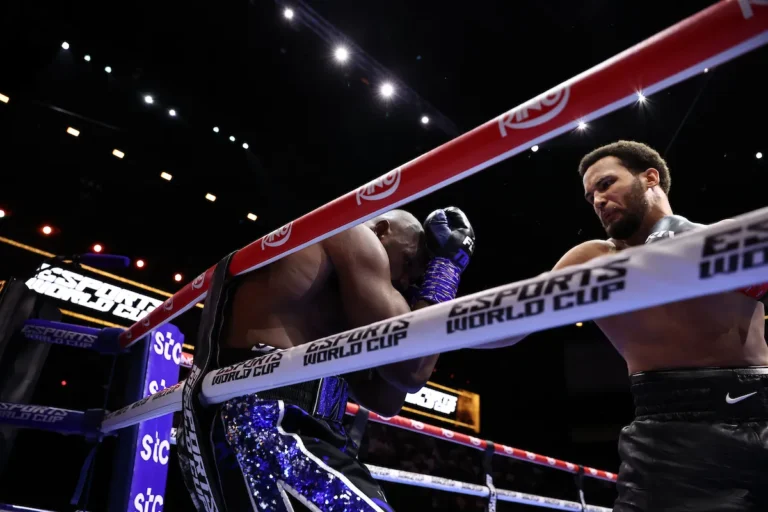





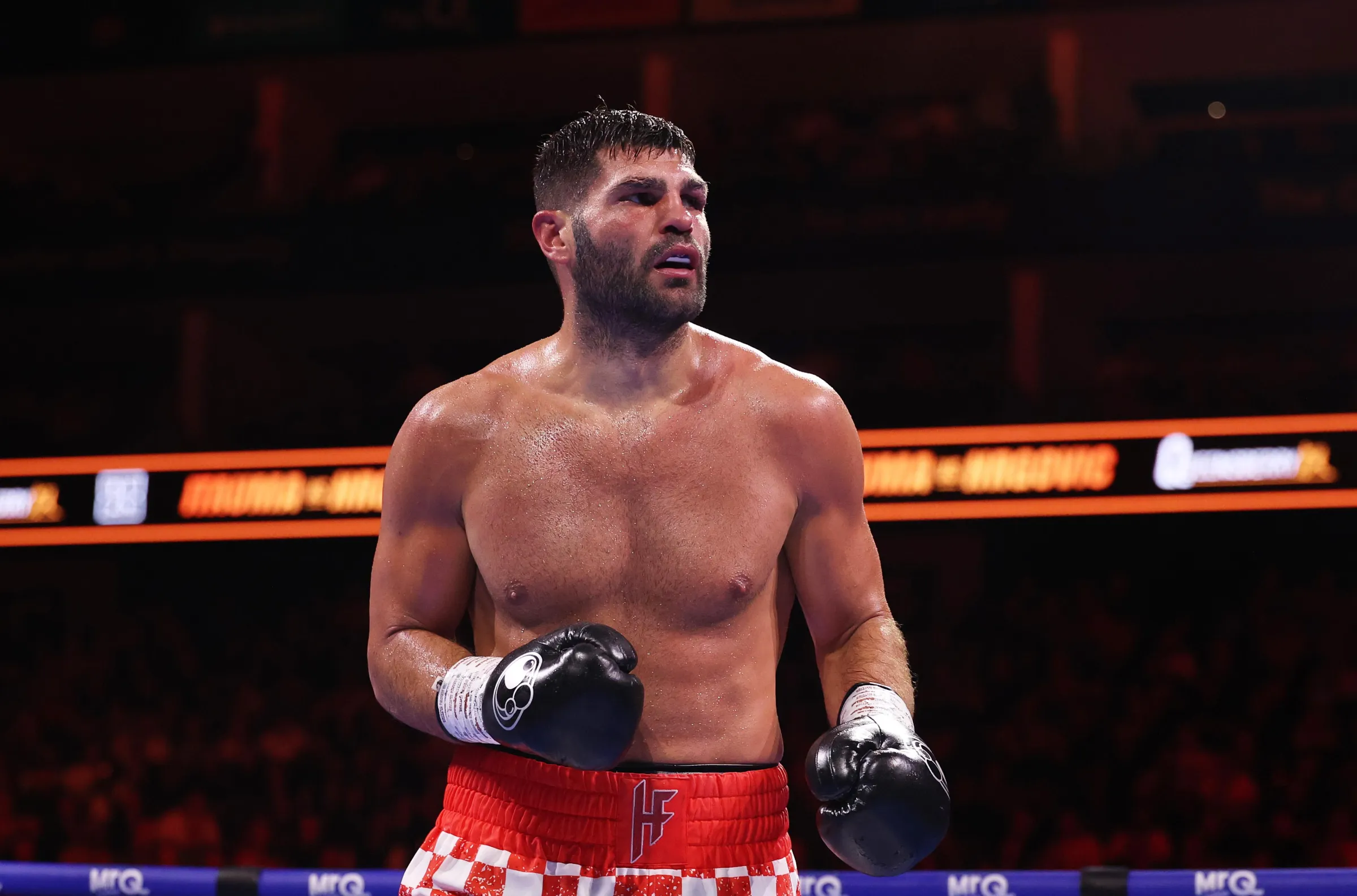
Filip Hrgovic has every reason to feel confident right now. He entered his fight with Moses Itauma as a significant underdog, survived an opening stretch where the 21-year-old looked faster and more dangerous, climbed off the canvas after being dropped in the second round and eventually stopped an exhausted Itauma in the ninth to become […]
Filip Hrgovic has every reason to feel confident right now. He entered his fight with Moses Itauma as a significant underdog, survived an opening stretch where the 21-year-old looked faster and more dangerous, climbed off the canvas after being dropped in the second round and eventually stopped an exhausted Itauma in the ninth to become heavyweight champion. A month later, Hrgovic isn’t talking like somebody who believes he escaped with a lucky victory.
He thinks a second fight would be worse for Itauma.
Hrgovic recently acknowledged that Itauma’s speed caused him problems early and made him hesitant to attack the way he normally would. Now that he’s experienced that speed firsthand, however, Hrgovic believes he would approach a rematch much more aggressively. He didn’t leave much room for interpretation when discussing what he thinks would happen next time, saying that if they fight again, he would “smash him.”
That’s exactly the kind of confidence you’d expect from the champion, and Hrgovic has earned the right to talk. But there’s an interesting assumption underneath his prediction. Hrgovic is looking at a rematch as though he would be the fighter making the biggest adjustment because he now understands Itauma better.
What if Moses Itauma is the fighter who learned more?
Hrgovic Figured Out the First Fight — Eventually
The result can make people forget how uncomfortable Hrgovic looked before the fight turned.
Itauma’s speed gave him genuine problems. Hrgovic has admitted as much. He described Itauma as a special talent and the fastest heavyweight he had faced, while acknowledging that the young southpaw repeatedly countered the adjustments he attempted to make. Itauma was comfortably ahead before fatigue completely changed the contest.
That context doesn’t diminish Hrgovic’s victory. It actually makes it more impressive.
Championship boxing isn’t scored according to who looked better before becoming exhausted. Hrgovic absorbed Itauma’s best work, survived the knockdown and remained physically and mentally composed while the younger fighter burned through his energy. When Itauma’s pace finally became unsustainable, Hrgovic was experienced enough to recognize what was happening and ruthless enough to take advantage of it.
That’s not luck. That’s heavyweight experience.
Itauma had spent much of his professional career ending fights early. Hrgovic gave him a completely different problem: an opponent who could be hurt without being removed. When the knockout didn’t arrive, Itauma continued operating at a pace his body eventually couldn’t support.
By the ninth round, the fight looked nothing like it had several rounds earlier.
Hrgovic had solved the problem by surviving it.
But Hrgovic Has Also Been Extremely Complimentary of Itauma
This is where Hrgovic’s recent comments become particularly interesting.
The same man predicting that he would smash Itauma in a rematch has also said Itauma could become extraordinarily difficult to beat if he recovers properly from the loss. Hrgovic has praised his speed, talent, timing and ability to counter what was being thrown at him. He has even suggested that the biggest question surrounding Itauma now may be psychological rather than technical because some fighters never completely recover from suffering their first major defeat.
Those two opinions aren’t necessarily contradictory.
Hrgovic can believe Itauma is exceptional while also believing he personally understands how to beat him.
But that makes a potential rematch much more interesting than simply asking whether Moses can avenge his loss.
Hrgovic now knows what Itauma’s speed feels like.
Itauma now knows what championship-round exhaustion feels like.
Which piece of information is more valuable?
That’s the real rematch question.
Moses Doesn’t Need to Become a Better Puncher
If Itauma’s team watches the first fight and concludes that he needs more power or more spectacular offense, they’ve watched the wrong fight.
The offense worked.
He dropped Hrgovic. He controlled much of the early action. His speed created exactly the problems people expected it to create, and even Hrgovic has acknowledged how difficult those attributes were to manage.
What failed was sustainability.
Itauma needed to understand when to reduce his output, when to stop chasing the dramatic finish and how to recognize that winning a round comfortably is sometimes more valuable than spending additional energy trying to end the entire fight. Those are skills that rarely show up in highlight reels, but they’re part of what separates an explosive heavyweight prospect from a complete heavyweight champion.
The first Hrgovic fight gave Itauma something his previous opponents couldn’t provide: a physical consequence for poor energy management.
That’s painful information, but it’s also valuable.
A second fight becomes fascinating if Itauma learns how to use it.
Imagine the same speed and offensive ability, except this time Itauma isn’t trying to prove that every successful exchange should lead to a knockout. Imagine him controlling portions of the fight, forcing Hrgovic to deal with the movement and counters again, but conserving enough energy that the seventh and eighth rounds don’t become a countdown toward exhaustion.
Hrgovic may believe he’ll be more aggressive next time.
That aggression could help him.
It could also create opportunities for a more disciplined version of Itauma.
This Is Why an Immediate Rematch Might Actually Be the Wrong Idea
None of this means Itauma should fight Hrgovic immediately.
In fact, waiting could make the eventual rematch significantly better.
Itauma asked for another fight almost immediately after losing, but an immediate return against Hrgovic was always unlikely. Frank Sanchez stepped aside to allow Hrgovic-Itauma to proceed for the vacant IBF championship, and Sanchez’s representatives have made clear that they intend to enforce his mandatory opportunity rather than accept another step-aside arrangement.
Frank Warren has also said Hrgovic is expected back in early 2027 and is currently due to face Sanchez. According to Warren, that’s the contractual obligation created when Sanchez allowed the first title fight to happen.
That may be the best thing that could happen for Itauma.
The emotional response after losing is understandable. Fighters don’t like unanswered questions, and when somebody has spent his entire professional career winning, the first instinct after a defeat is often to erase it as quickly as possible.
Development doesn’t always cooperate with pride.
Itauma doesn’t simply need another training camp before fighting Hrgovic again. He needs professional rounds where he can practice the things the first fight exposed.
Give him somebody durable enough to make him manage eight or ten rounds. Let him discover how to reduce his pace without surrendering control. Let him experience fatigue without having a heavyweight championship hanging in the balance. Let him learn how to win rounds when his body isn’t operating at 100 percent.
Then revisit Hrgovic.
At 21 years old, Itauma has time to make the rematch more meaningful rather than merely making it quickly.
Hrgovic Has His Own Business to Handle
Hrgovic can’t spend too much time thinking about Itauma either.
Becoming champion changes the conversation. He now has Frank Sanchez waiting for his mandatory opportunity, and Sanchez is a very different heavyweight problem from Itauma.
Sanchez’s team has been explicit about wanting the championship fight. His adviser said Sanchez called during Hrgovic-Itauma and expressed confidence that he could beat either man, then reiterated afterward that they intend to enforce his mandatory position.
That gives Hrgovic his own test.
He proved against Itauma that durability, patience and experience could overcome spectacular early offense. Against Sanchez, he may need a completely different solution. That’s part of what makes holding a championship more difficult than winning one. Once you possess the belt, the challengers don’t necessarily arrive in styles designed to make you comfortable.
Hrgovic has also talked about larger heavyweight opportunities, including revenge against Daniel Dubois and potential unification fights. Those ambitions make sense, especially at 34 years old. Itauma has the luxury of thinking about what he might become several years from now. Hrgovic’s championship window is happening right now.
He has to capitalize while he has it.
The Rematch Could Become Much Bigger by Not Happening Yet
Boxing sometimes rushes toward rematches because the first fight produced drama, but Hrgovic-Itauma could actually become more valuable if both fighters take separate paths first.
Suppose Hrgovic defeats Sanchez and establishes himself through another successful championship defense. He’s no longer simply the veteran who upset a heavily favored prospect. He’s an established heavyweight champion.
Now suppose Itauma returns, fixes some of the stamina and pacing issues exposed in the first fight and beats two credible heavyweights while looking more complete.
Suddenly the rematch sells a completely different story.
The first fight becomes the origin of the rivalry rather than its conclusion.
Hrgovic enters knowing he already broke Itauma once. Itauma enters knowing exactly why he lost and believing he’s corrected it. Hrgovic believes familiarity with Moses’ speed makes the second fight easier, while Moses believes the experience of going nine rounds with Hrgovic removed the biggest unknown from his own career.
That’s a better rematch than simply putting them back together because everybody is still emotionally reacting to August 29.
REAL TALK
There’s something interesting about how differently winners and losers interpret the same experience.
Hrgovic looks back at the fight and sees information that makes him more dangerous. He now understands Itauma’s speed, knows he can absorb his power and believes he was too cautious during the early rounds. From Hrgovic’s perspective, the mystery has disappeared. If they meet again, he believes he’ll begin the second fight with knowledge that took him several rounds to acquire the first time.
Itauma can look at exactly the same night and reach his own conclusion. He knows his speed worked. He knows he can hurt Hrgovic. He also knows, probably more clearly than any trainer could ever explain to him, what happens when a heavyweight championship fight demands more energy than you’ve saved for it.
That’s why losses can become valuable without pretending they’re secretly victories. Itauma lost because Hrgovic handled the complete fight better than he did. Nothing needs to be softened about that.
The interesting part is what Itauma does with the information.
Hrgovic believes experience gave him the advantage the first time and will make him even better the second time. Itauma now has a little more of the very thing that beat him.
Not enough yet.
But more than he had before.
If Moses spends the next year actually developing instead of simply rebuilding his knockout reel, Hrgovic may eventually discover that the fighter he learned how to beat in August 2026 doesn’t exist anymore.
Of course, the opposite is possible too. Maybe Hrgovic really did discover the formula. Maybe Itauma’s speed looks less intimidating once you’ve survived it once, and maybe a more aggressive Hrgovic makes the second fight shorter rather than longer.
That’s why I want the rematch eventually.
Not because Moses deserves another championship opportunity immediately.
Because both fighters now have reasons to believe the second fight would belong to them.
Let them prove those beliefs separately first.
Then put them back in the ring.
LET’S TALK ABOUT IT
Who actually learned more from the first fight: Hrgovic because he discovered how to survive Itauma’s speed and power, or Itauma because he finally experienced the stamina and pacing demands of a heavyweight championship fight?
And if both men win their next fights, would you want Hrgovic-Itauma II immediately after that, or should Moses have to beat another top heavyweight before earning another shot at the champion?