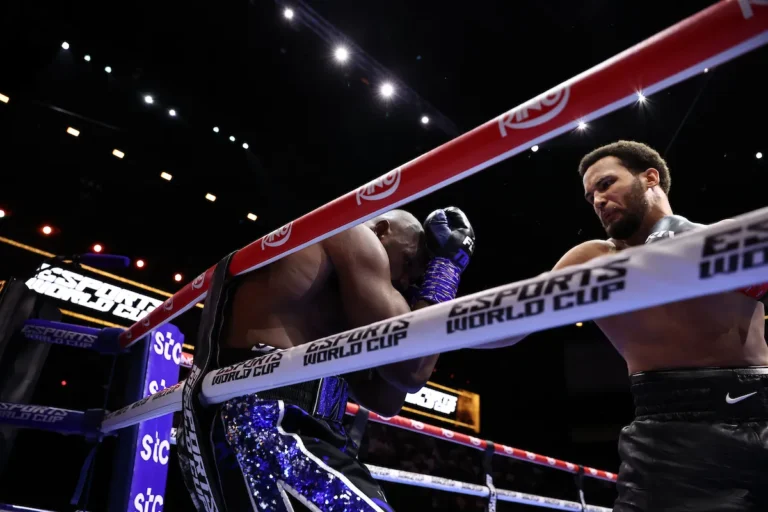








Liam Smith has spent most of his adult life in a profession where violence is permitted under very specific circumstances. Inside a boxing ring, two licensed fighters agree to compete under rules, medical supervision and the authority of officials. Outside that environment, violence is something entirely different, which is why the latest news surrounding the […]
Liam Smith has spent most of his adult life in a profession where violence is permitted under very specific circumstances. Inside a boxing ring, two licensed fighters agree to compete under rules, medical supervision and the authority of officials. Outside that environment, violence is something entirely different, which is why the latest news surrounding the former world champion has to be discussed with considerably more care than an ordinary boxing controversy.
Smith has been charged with causing grievous bodily harm with intent following an alleged incident involving a night concierge at an apartment building in Manchester. Police say the alleged incident occurred on September 13 and left the man with serious facial injuries that reportedly required surgery. Smith was arrested and appeared at Manchester Magistrates’ Court the following day before being released on bail. He is scheduled to appear at Manchester Crown Court on October 19, when he will be asked to enter a plea.
Those are the facts currently established publicly. What hasn’t been established is Smith’s guilt. A criminal charge is an accusation that begins a legal process; it isn’t a conviction, and responsible coverage shouldn’t turn allegations into conclusions simply because the person accused happens to be famous.
That distinction is especially important when the headline involves a boxer, because people can too easily allow what somebody does professionally to influence assumptions about what happened outside the ring.
The Timing Couldn’t Be Worse for Smith’s Boxing Career
Even without attempting to predict what happens legally, the charge arrives at a difficult point in Smith’s career.
The 38-year-old hasn’t fought since April 2025, when Aaron McKenna defeated him on points. Smith had been linked with a possible fight against WBO middleweight champion Denzel Bentley earlier this year, and another attempted return was derailed after injury prevented him from traveling to Finland for a scheduled September 4 fight with Ilaru Kujala.
At Smith’s age, inactivity already matters. Boxing careers don’t provide unlimited opportunities to postpone the next chapter, particularly for fighters who rely on timing, conditioning and the accumulated instincts that come from consistent competition.
Smith’s résumé means he doesn’t need to prove he had a successful career. He became WBO junior-middleweight champion by defeating John Thompson in 2015 before losing the title to Canelo Alvarez the following year. His most famous later-career victory came in January 2023, when he stopped Chris Eubank Jr. in four rounds, although Eubank reversed the result by stopping Smith in the 10th round of their September rematch.
The question before this news was whether Smith had enough left for one more meaningful run.
That question now feels secondary.
Boxing Shouldn’t Turn a Criminal Case Into Fight Promotion
Whenever a well-known fighter becomes involved in a legal situation, boxing has an unfortunate tendency to absorb almost anything into the promotional machine. Controversy creates attention, attention creates engagement, and engagement can eventually be converted into ticket sales.
This situation shouldn’t be treated that way.
There may eventually be a point where Smith’s boxing future becomes relevant again, but the immediate story concerns an alleged victim who reportedly suffered serious injuries and a defendant facing a serious criminal charge. Smith is entitled to the presumption of innocence and the opportunity to answer the allegation through the legal system. The alleged victim deserves not to become a forgotten detail simply because the person charged is a former world champion.
Those two principles aren’t in conflict.
You don’t have to declare Smith guilty to acknowledge the seriousness of the allegation, and you don’t have to minimize the alleged injuries in order to respect Smith’s legal rights.
The court process exists to determine what actually happened and whether criminal responsibility can be established.
Boxing commentary should resist pretending it can accomplish that job first.
Being a Professional Fighter Makes the Conversation More Complicated
There will inevitably be discussion about Smith being a professional boxer because physical ability is central to his profession.
That’s understandable, but it has to be handled carefully.
A boxer isn’t automatically responsible for every confrontation simply because he knows how to fight, nor should professional fighting experience be treated as evidence that an allegation must be true. At the same time, elite boxers possess physical abilities most ordinary people don’t have, which is one reason incidents involving fighters outside sanctioned competition often receive heightened public attention.
The important thing is not to reverse-engineer the facts from Smith’s profession.
We don’t yet have a complete account established through court proceedings. We don’t know which allegations Smith will accept or contest when he enters his plea. Those details matter far more than whatever assumptions people can construct from knowing he once fought Canelo Alvarez.
Until the evidence is tested, that’s where the conversation should remain.
This Could Ultimately Decide Whether We Ever See Smith Fight Again
There is an unavoidable boxing implication even if it isn’t the most important part of the story.
Smith is 38.
He has been inactive since April 2025.
His planned September return already disappeared because of injury.
Now his immediate future includes Crown Court proceedings.
Depending on how the case develops, any serious attempt at another boxing run could become considerably more complicated. That isn’t a prediction about the legal outcome; it’s simply the reality that preparing for professional boxing requires stability, training time and the ability to make contractual commitments months in advance.
Smith had reached a point where every remaining fight was already competing against age.
Now boxing is competing against uncertainty as well.
The irony is that Smith’s career had always been defined partly by his willingness to take difficult assignments. He fought Canelo. He fought Jaime Munguia. He fought Eubank twice. He continued competing long after losing his world championship and eventually produced one of his biggest victories years later.
Whether there is another boxing chapter after this is no longer something matchmaking alone can answer.
REAL TALK
Stories like this are where sports coverage has to understand its limitations.
Boxing fans know Liam Smith as a fighter. We’ve watched him get hit, watched him hurt other fighters and watched him compete in an environment where physical aggression is not merely permitted but rewarded. That familiarity can create the illusion that we know enough about him to decide what happened in a completely different environment.
We don’t.
The legal system will have access to evidence, witnesses, arguments from both sides and eventually Smith’s own formal response to the charge. People reading a headline on social media don’t have those things.
That doesn’t mean the story shouldn’t be reported. The charge is serious, the alleged injuries are serious and Smith is a prominent public figure whose professional future could be affected. Pretending nothing happened until a case concludes could take months or longer and wouldn’t serve readers either.
The responsible position sits somewhere between those extremes. Report what police and the courts have confirmed, clearly identify allegations as allegations, don’t manufacture details that aren’t available and allow new evidence to change the story as it emerges.
Boxing teaches us to score fights round by round because you’re supposed to judge what actually happens in front of you.
There isn’t enough evidence in front of the public to score this one yet.
Smith will have his opportunity to answer the charge.
The alleged victim will have an opportunity to be heard through the process.
Everything else should wait for evidence.
LET’S TALK ABOUT IT
When a boxer faces a serious criminal charge outside the ring, how much should boxing promoters and broadcasters distance themselves before the legal process is complete?
And more broadly, do you think combat-sports media handles allegations involving famous fighters responsibly, or does the rush for headlines too often turn accusations into conclusions before a court has established what happened?