


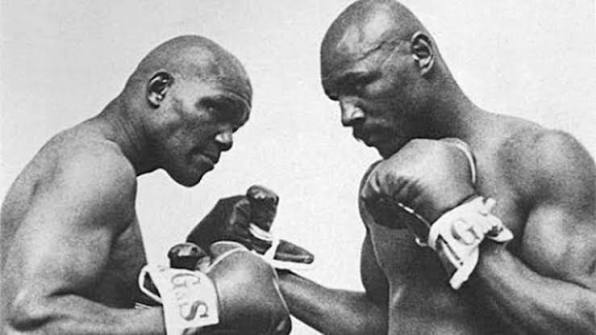
Marvin Hagler’s unanimous-decision victory over Bennie Briscoe has returned to the spotlight through a September 30, 2026, retrospective from Boxing 247. The fight took place on August 24, 1978, at the Spectrum in Philadelphia. Hagler was a rising middleweight contender who had not yet fought for a world championship. Briscoe was an experienced hometown pressure […]
Marvin Hagler’s unanimous-decision victory over Bennie Briscoe has returned to the spotlight through a September 30, 2026, retrospective from Boxing 247.
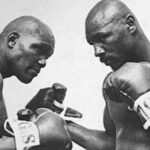
The fight took place on August 24, 1978, at the Spectrum in Philadelphia. Hagler was a rising middleweight contender who had not yet fought for a world championship. Briscoe was an experienced hometown pressure fighter with the ranking, strength and style to turn the night into exactly the kind of physical battle Philadelphia crowds understood.
Hagler could have tried to beat Briscoe by standing directly in front of him and trading.
He chose something smarter.
According to Boxing 247, Hagler used his southpaw jab, movement and selective aggression to control the 10-round contest. Boxing News reports that Briscoe continued pressing forward, but Hagler refused to give him sustained access to an inside fight.
The performance demonstrated more than toughness. It showed that Hagler could recognize the opponent’s preferred route to victory and close it.
That tactical maturity mattered because Philadelphia had already punished him before. Boxing 247 notes that Hagler’s two previous professional defeats—against Bobby “Boogaloo” Watts and Willie “The Worm” Monroe—had occurred in the city.
Against Briscoe, Hagler did not simply return to Philadelphia and survive.
He controlled the terms.
The Rankings Made Briscoe More Than a Hometown Test
BoxRec lists Hagler at 159 pounds and Briscoe at 161 pounds for the fight.
According to Boxing 247 and BoxRec, Hagler entered ranked eighth by both the WBA and WBC. Briscoe was ranked fifth by the WBA and tenth by the WBC.
That created an interesting position for both men. Briscoe held the better WBA ranking, while Hagler held the better WBC position. This was not a champion defending against a challenger, and no belt was at stake, but the winner would strengthen his claim to a future title opportunity.
Briscoe also brought something rankings cannot fully capture.
His pressure represented a tactical demand. He wanted to move forward, reduce space and make Hagler work at the range where Briscoe believed he had his best chance. That was not a poor or primitive strategy. It was the approach most likely to force Hagler into uncomfortable exchanges.
Hagler’s responsibility was to prevent pressure from becoming control.
Boxing 247 reports that he repeatedly used the jab and movement to keep Briscoe from establishing a sustained inside attack. Instead of trading continuously, Hagler selected his moments to answer.
The official cards recorded by BoxRec show how clearly the officials believed that plan succeeded. Referee Tommy Reid scored the fight 48-43, judge John Stewart had it 47-44, and judge Paul Harris scored it 49-43, all for Hagler.
All three officials agreed on the winner.
That does not mean Briscoe failed to apply pressure or stopped presenting danger. It means Hagler’s work was more effective over the full 10 rounds.
There is a temptation when discussing a fighter as historically respected as Hagler to read his later greatness backward into every earlier performance. This fight deserves a more disciplined interpretation.
Hagler was not yet the middleweight champion. The Briscoe victory did not prove that he had completed his development. It provided evidence that he was learning how to win when strength and aggression alone would not be enough.
Briscoe Applied Pressure, but Hagler Controlled the Distance
The tactical contrast was straightforward.
Briscoe wanted proximity. Hagler wanted enough space to use his southpaw jab, change position and decide when exchanges occurred.
Boxing News reports that Briscoe pressed the action. Boxing 247 says Hagler’s movement prevented him from consistently establishing the inside fight he wanted.
The important word is consistently.
A pressure fighter does not have to dominate every second to remain dangerous. He needs enough successful entries to disrupt the opponent’s rhythm, create exchanges and make the other man spend energy escaping. Briscoe’s forward movement therefore remained part of the contest even when Hagler was winning it.
Hagler did not respond by abandoning offense.
He used selective aggression. That meant answering when the openings favored him rather than accepting every invitation to trade. Boxing News reports that Hagler hurt Briscoe in the seventh round after responding to an attack.
That exchange matters because it keeps the performance from being reduced to movement for movement’s sake. Hagler was not merely circling away from danger. He was using position to create better moments for his own offense.
The distinction separates avoidance from control.
Avoidance is designed only to escape what the opponent is doing. Control changes where and when the opponent can operate, then punishes him when he overreaches.
Based on the sourced accounts, Hagler’s jab and movement denied Briscoe the sustained pressure fight he wanted. His counters reminded Briscoe that moving forward still carried a cost.
Briscoe’s strategy remained logical. A hometown veteran known for pressure had no reason to volunteer for a long-range contest against a southpaw jab. His best chance was to close distance and make Hagler work.
Hagler’s achievement was not exposing the strategy as foolish.
It was preventing a sound strategy from becoming effective enough to win.
The Cut Tested Whether Hagler Would Abandon the Plan
Boxing News reports that Hagler suffered a cut near his right eye beginning in the fourth round.
The available sources do not establish the exact cause or severity of the cut, so there is no reason to invent either. What matters tactically is that the injury created another form of pressure.
A cut can make a fighter feel urgency even when he is otherwise controlling the bout. It can encourage him to chase a finish, exchange more recklessly or allow concern about a stoppage to replace the original game plan.
Against Briscoe, that reaction would have been especially dangerous.
If Hagler had interpreted the cut as a reason to stand and trade, he would have moved closer to the fight Briscoe wanted. The available accounts instead describe Hagler continuing to work behind his jab, movement and selective offense.
That response is part of what makes the performance significant.
Toughness is often discussed as the willingness to absorb punishment or continue through injury. Hagler showed that kind of resilience by fighting with the cut. But he also displayed another form of toughness: maintaining discipline when discomfort and pressure gave him an emotional reason to abandon it.
The second quality is easier to overlook.
Standing your ground can look brave. Refusing unnecessary exchanges can look cautious. But at championship level, the smarter act is often the one that protects the winning conditions already established.
Hagler did not need to prove that he could participate in Briscoe’s kind of fight.
He needed to prove that Briscoe could not force him into it.
Philadelphia Made the Performance More Valuable
The location gave the result additional weight.
Briscoe was the hometown fighter, while Hagler had already lost in Philadelphia to Watts and Monroe, according to Boxing 247. The Briscoe bout became Hagler’s fifth and final appearance at the Spectrum.
That history made the night more than another ranking contest. Hagler returned to a city associated with both of his previous defeats and faced an opponent whose style could test whether the earlier setbacks still carried tactical or psychological influence.
The attendance also shows the scale of the event, although the surviving sources disagree on the final number.
BoxRec and Boxing News list 14,930 spectators. Philly Boxing History records 15,302 as the final attendance and describes 14,930 as an earlier newspaper estimate.
Without the complete Pennsylvania commission documentation, the discrepancy should remain visible rather than being forced into one definitive number.
Philly Boxing History also records a gate of $145,308, identifies J Russell Peltz and Spectrum Fights as the promoters and describes the event as a Pennsylvania attendance record for a non-title bout.
No verified purses for Hagler or Briscoe are supplied by the cited sources.
That missing information matters because the size of the audience and gate can show public interest, but they do not establish how the revenue was divided. Any claim about what either fighter earned would require contracts, commission records or another reliable financial source.
The historical record is clearer about what the victory did for Hagler competitively.
He defeated a dangerous contender who was ranked above him by the WBA, handled a cut and won decisively on all three official cards. According to Boxing 247, Hagler received his first world-title opportunity against middleweight champion Vito Antuofermo in November 1979, when the fight ended in a draw.
The Briscoe victory did not immediately make Hagler champion. It also cannot be credited, based on the available material, with producing a specific movement in his next WBA or WBC ranking.
What it did provide was credible evidence of championship readiness.
Hagler had shown that he could win in difficult territory without demanding that the fight follow his preferred script. He adjusted to the opponent, protected his lead and stayed tactically responsible when the cut gave him a reason to become impatient.
That is development, even without a belt attached to it.
The Missing Records Limit How Precisely the Night Can Be Reconstructed
A complete historical assessment would require more than retrospective descriptions.
The Pennsylvania commission bout sheet could help settle the official attendance. Commission-certified scorecards would strengthen the surviving record of the judges’ totals. Verified contracts or purse documents would answer the financial questions surrounding the event.
WBA and WBC rankings published immediately before and after the fight could show whether the victory produced measurable movement. Complete footage would allow a detailed round-by-round study of Hagler’s jab, positioning, counters and the moments when Briscoe succeeded in closing distance.
Without that material, the safest analysis begins with what multiple sources support.
Hagler won unanimously. He used his jab and movement. Briscoe pressed forward. Hagler fought through a cut and hurt Briscoe after answering an attack in the seventh round.
Those facts are enough to explain why the performance mattered.
They are not permission to invent everything the surviving record does not show.
REAL TALK
Boxing celebrates fighters who stand their ground.
That celebration sometimes confuses accepting every exchange with proving greatness. A fighter can be brave while making the opponent’s job easier. He can win the crowd’s approval while surrendering the distance, pace or rhythm that gives him his best chance to win.
Against Briscoe, Hagler’s most important decision was refusing to treat the fight as a toughness contest.
Briscoe wanted pressure to become the controlling force. Hagler allowed him to come forward without allowing that forward movement to dictate the entire bout. The jab interrupted him. The movement changed the range. The selective counters made his entries expensive.
None of that made the night easy.
Hagler was facing a ranked contender in that contender’s city, at a venue where Hagler’s own history included previous defeats. He dealt with a cut from the fourth round and still had to remain responsible for the rest of the fight.
That is what makes the performance useful when evaluating fighters today.
A boxer who changes tactics is sometimes accused of becoming less exciting. A puncher who chooses to box can be treated as if he has abandoned his identity. But the higher the level rises, the less likely one approach will work against every opponent.
Adjustment is not a retreat from greatness.
It is often the evidence of it.
Hagler’s later championship career should not be used to exaggerate what the Briscoe victory was in 1978. It was not a title win, and it did not settle every remaining question about his readiness.
It was proof that Hagler could identify the wrong fight and refuse it.
The best fighters do not prove themselves by giving opponents the battle they want. They prove themselves by recognizing that battle—and taking it away.
LET’S TALK ABOUT IT
Was Hagler’s decision to box Briscoe more impressive than winning a sustained inside war would have been, or does the tactical approach receive extra credit because of what Hagler later became?
When a pressure fighter cannot force his preferred contest, should more credit go to the opponent’s movement and control—or should the pressure fighter be criticized for failing to adjust?
The result is settled. The tactical lesson is still worth arguing.