




Nico Ali Walsh didn’t quietly express reservations about the Muhammad Ali American Boxing Revival Act and then gradually warm up to it. He became one of its most symbolically important opponents. Muhammad Ali’s grandson testified before the Senate Commerce Committee earlier this year and raised concerns about what the proposed legislation could mean for fighter […]
Nico Ali Walsh didn’t quietly express reservations about the Muhammad Ali American Boxing Revival Act and then gradually warm up to it.
He became one of its most symbolically important opponents.
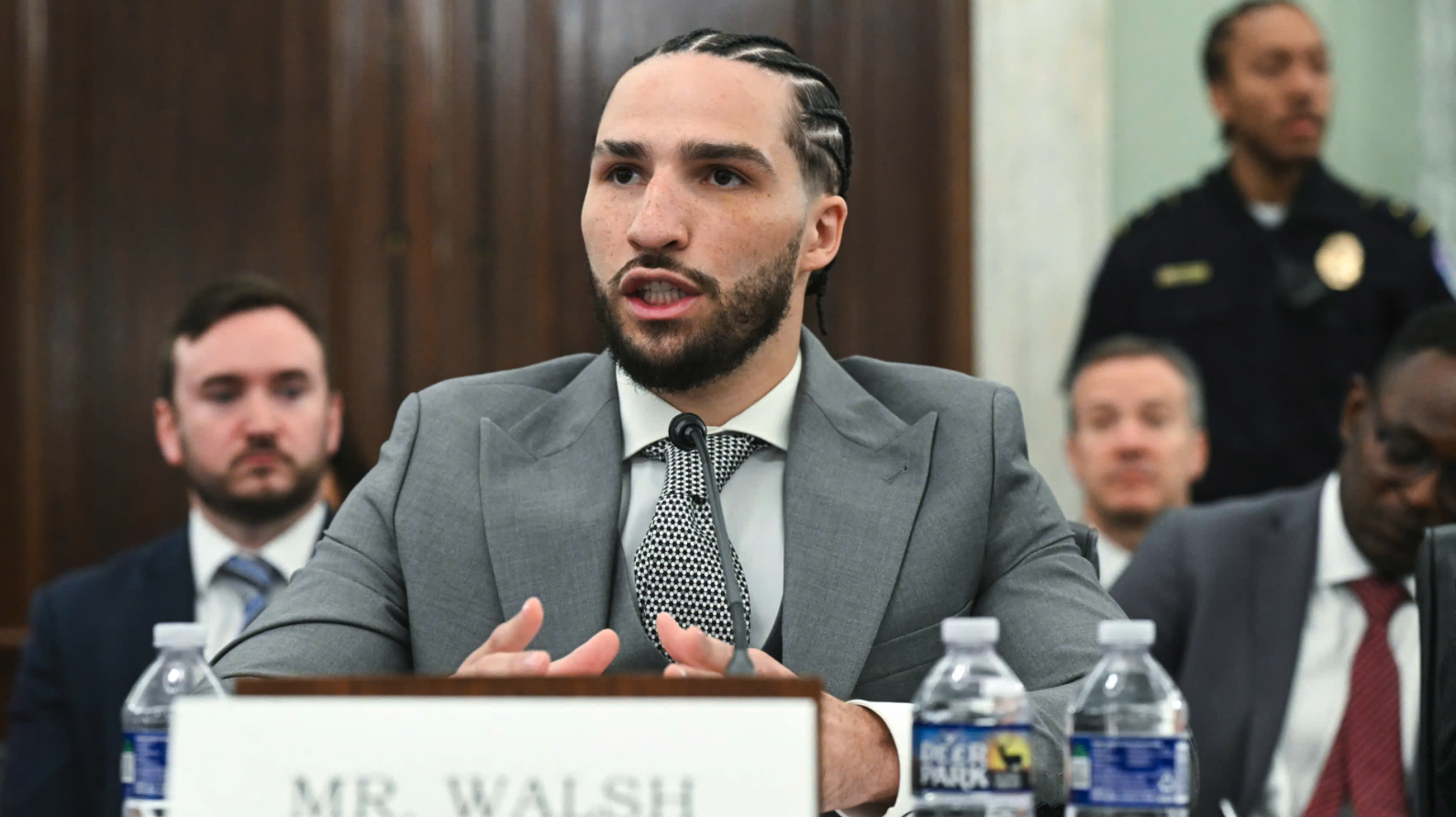
Muhammad Ali’s grandson testified before the Senate Commerce Committee earlier this year and raised concerns about what the proposed legislation could mean for fighter bargaining power and the protections created under the law bearing his grandfather’s name. His opposition carried significance that went far beyond his professional boxing résumé because this wasn’t just another fighter criticizing another piece of legislation. This was Muhammad Ali’s grandson essentially questioning whether legislation carrying Muhammad Ali’s name actually protected fighters the way his grandfather would have wanted.
Now, several months later, Ali Walsh has reversed his position.
He has written a formal letter supporting the revised Muhammad Ali American Boxing Revival Act and urged the Senate to advance it. Senators Ted Cruz and Jacky Rosen aren’t hiding the reversal either. Cruz specifically described Ali Walsh as “originally opposed to the bill” before explaining that he subsequently worked with lawmakers to strengthen it. Rosen similarly credited changes Ali Walsh advocated for as important to the drafting process.
That gives Ali Walsh a perfectly legitimate explanation for changing his mind: the bill changed.
But when somebody goes from being one of a controversial proposal’s most recognizable opponents to having his endorsement promoted by the politicians trying to pass it, boxing fans are also entitled to examine exactly what changed—and whether those changes address the reasons people were worried in the first place.
Nico Isn’t Pretending He Never Opposed It
To his credit, Ali Walsh isn’t attempting to rewrite his own history.
His September 10 endorsement letter begins by acknowledging that he strongly opposed the original version because he believed fighters deserved better. He says that rather than simply continuing to criticize the legislation, he spent months meeting with senators, policymakers and attorneys trying to strengthen it.
Ali Walsh points to several changes he considers meaningful. Among them are shorter promotional contracts, a clearer path toward free agency, more transparent ranking systems, financial disclosure requirements and what he describes as a firewall involving promoters, Unified Boxing Organizations and fighter managers. He has also emphasized that fighters operating within a UBO structure would still be able to compete for championships from organizations such as the WBC, WBA, IBF and WBO.
Those aren’t imaginary changes.
Cruz and Rosen publicly confirm that Ali Walsh participated in the process and that his feedback influenced the revised legislation. So the fairest version of this story cannot simply be, “Nico opposed the bill, somebody got to him, and now he supports it.”
We don’t have evidence establishing that.
The documented explanation is that Ali Walsh believes he helped make the legislation better.
The more interesting question is whether better automatically means good enough.
Because the Central Controversy Didn’t Simply Disappear
This is where Ali Walsh’s reversal deserves scrutiny.
Much of the original opposition wasn’t limited to contract length or whether fighters received financial disclosures. Critics have objected to the larger Unified Boxing Organization structure itself and the possibility that a powerful entity could operate within a system where promotion, rankings and championships become much more closely connected.
The original Muhammad Ali Boxing Reform Act was built in part around preventing conflicts of interest between promoters and sanctioning organizations. The Revival Act creates a new framework under which UBOs can organize fights, rank fighters and award championships. Supporters argue that this gives fighters another voluntary option alongside traditional boxing. Opponents argue that it risks concentrating too much power inside vertically integrated organizations.
That fundamental debate hasn’t vanished because Nico Ali Walsh supports the revised legislation.
And that’s important.
If Ali Walsh’s original objection was primarily that fighters needed stronger protections inside the proposed new system, then his reversal is logically consistent: he fought for protections, got some of them and decided the revised bill deserved his support.
But if the deeper concern was that the UBO model itself threatens the independence that the original Ali Act was designed to protect, then people are reasonably going to ask whether the revisions actually solved the central problem or merely improved the conditions surrounding it.
That’s the conversation worth having.
The Timing Makes the Endorsement Even More Valuable
There’s another reason the reversal immediately attracted attention.
Ali Walsh’s endorsement arrived at an extremely useful political moment.
His letter was dated September 10. On September 16, Cruz and Rosen publicly announced his endorsement as the Senate Commerce Committee prepared to consider the legislation. The committee subsequently advanced the bill.
Think about the optics.
A bill carrying Muhammad Ali’s name has generated criticism from portions of the boxing community.
Muhammad Ali’s grandson publicly opposes it.
He then works with lawmakers.
The bill is revised.
Muhammad Ali’s grandson endorses it.
Lawmakers can now present that endorsement as evidence that they listened to fighter concerns and improved the legislation.
Politically, that’s enormously valuable.
It doesn’t mean anything improper happened. It means Ali Walsh’s name and relationship to Muhammad Ali give his endorsement significance that an ordinary boxer couldn’t provide.
That’s precisely why his change of position deserves more examination, not less.
Was Nico Paid to Change His Position?
This is where we have to be responsible.
I haven’t found credible evidence establishing that Nico Ali Walsh was paid to endorse this legislation, and without evidence, The Boxing Streets shouldn’t present that suggestion as fact.
But fans asking what caused such a dramatic reversal aren’t being unreasonable either.
Ali Walsh himself has addressed questions about his incentive. His public answer has been that the legislation directly affects him as an active boxer and that, as an Ali, he feels an obligation to protect both his career and his family name. He has strongly rejected the idea that he simply abandoned his original principles, arguing instead that the current legislation is materially different from the version he opposed.
That’s his explanation.
Unless evidence emerges showing something different, that’s what we can document.
But accepting that Ali Walsh worked sincerely to change the legislation doesn’t require everyone to accept his conclusion that the resulting bill deserves support.
Those are separate questions.
He may genuinely believe he improved it considerably.
Critics may genuinely believe the most dangerous structural elements remain.
Both positions can exist without inventing a secret payment.
Nico Actually Telegraphed the Change Before September
There’s another fact that makes the “sudden payoff” theory harder to support.
The reversal wasn’t completely sudden.
By August, Ali Walsh was publicly telling critics that progress had been made on a revised version of the legislation. He specifically mentioned shorter initial contracts, increased negotiating freedom and the ability of UBO fighters to interact with traditional sanctioning organizations. He argued that participating in the process accomplished more than simply remaining silent or opposing the bill from the outside.
That’s significant because it establishes a visible transition between opposition and endorsement.
April: Ali Walsh opposes the legislation before Congress.
Over the following months: he participates in discussions about revisions.
August: he publicly acknowledges progress while saying the work isn’t finished.
September: he formally endorses the revised Senate version.
People can still question his judgment.
But that’s different from saying he mysteriously flipped overnight.
He didn’t.
There is a documented progression.
That Still Doesn’t Mean Boxing Should Stop Asking Questions
The danger here is allowing Muhammad Ali’s grandson to become a shortcut for evaluating the legislation.
If you oppose the bill, Nico Ali Walsh’s earlier criticism doesn’t automatically prove you’re correct.
If you support the bill, his current endorsement doesn’t automatically prove you’re correct either.
The legislation has to stand on its own.
That’s particularly important because Ali Walsh’s endorsement is politically powerful precisely because of who his grandfather was. Muhammad Ali’s name carries enormous moral authority in boxing, especially when the discussion involves fighter independence and protection from exploitative business practices.
Nobody owns that legacy—not promoters, politicians, sanctioning organizations or even Muhammad Ali’s descendants.
Nico Ali Walsh has every right to interpret his grandfather’s legacy and decide that the revised legislation better reflects it. Other people inside boxing have every right to reach the opposite conclusion.
The useful conversation begins when we stop treating the Ali name as the argument and start examining the actual provisions.
REAL TALK
Changing your mind isn’t automatically hypocrisy.
Sometimes changing your position after receiving new information or successfully negotiating changes is exactly what reasonable people are supposed to do. If Ali Walsh entered the process opposed to the legislation, identified specific problems, convinced lawmakers to address several of them and ultimately decided the revised product was acceptable, there is nothing inherently contradictory about that sequence.
The contradiction becomes worth examining when the principles behind the original opposition don’t appear to have been fully resolved.
That’s why Ali Walsh’s explanation matters.
If he originally believed fighters needed more negotiating freedom, shorter contracts, transparent rankings and stronger financial disclosure—and those provisions materially changed—then he can point directly to what moved him.
If people believe the real problem was always the concentration of promotional, ranking and championship power within the UBO structure, however, they’re going to look at the revised legislation and ask whether the biggest issue survived the negotiations.
That’s not accusing Nico of corruption.
That’s accountability.
When you publicly attach your name—and in this case one of the most important names in boxing history—to legislation affecting potentially thousands of fighters, people should ask difficult questions about why you support it.
The same standard should have applied when Nico opposed the bill.
It should apply now that he endorses it.
And if somebody eventually produces credible evidence showing that money, a promotional agreement or another undisclosed benefit influenced his reversal, that would obviously change the story dramatically.
Right now, I haven’t found that evidence.
What we do have is something more nuanced and probably more interesting: a fighter who went inside the political process as an opponent, says he successfully changed portions of the legislation, and came out the other side as an advocate.
Whether Nico Ali Walsh changed the bill enough to justify changing his position is something boxing should debate.
But we shouldn’t invent the answer simply because the reversal looks suspicious.
LET’S TALK ABOUT IT
Did Nico Ali Walsh help fix enough of the Muhammad Ali American Boxing Revival Act to justify reversing his position, or do you believe the legislation’s biggest structural problems remain essentially unchanged?
And considering how heavily lawmakers are now emphasizing Muhammad Ali’s grandson as a supporter, should Nico explain his reversal in even greater detail so fighters can see exactly what changed between the bill he opposed and the bill he’s now asking Congress to pass?