
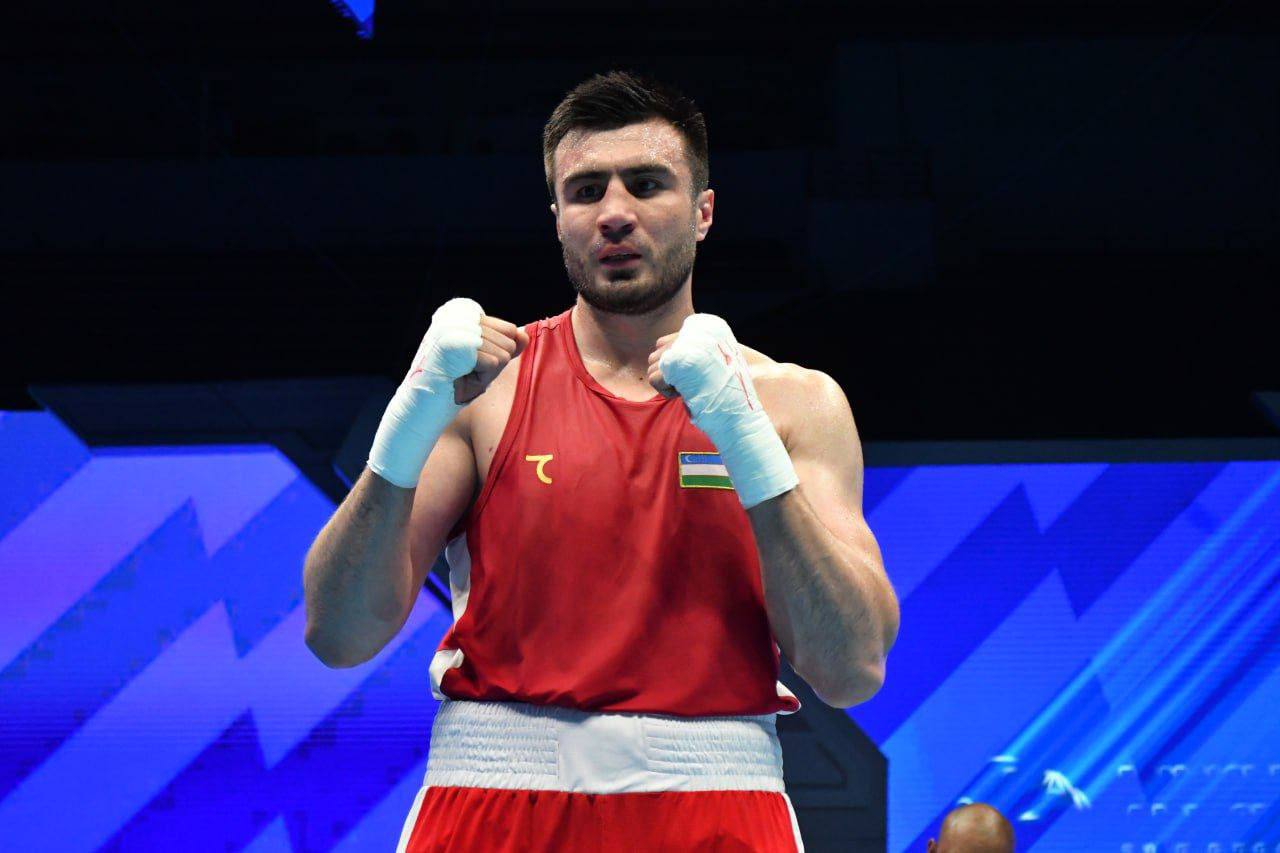
Bakhodir Jalolov Suggested as Deontay Wilder’s Replacement Opponent — But No Negotiations Have Been Reported
Bakhodir Jalolov at the 2023 World Boxing Championships in Tashkent.Image: НОК Узбекистана / CC BY 4.0 / Wikimedia Commons
Deontay Wilder needs a new opponent for the December 11 Tyson Fury–Anthony Joshua undercard in Cardiff, and the heavyweight selected could reveal more than organizers intend.
Jai Opetaia withdrew from the planned fight after aggravating a hand injury in training. His manager, Mick Francis, told Nine that Opetaia originally injured the hand during his September fight against Noel Mikaelian. Boxing News also reported Opetaia’s explanation and public apology for pulling out.
The Ring reported that organizers were searching for a replacement and expected Wilder to remain on the card. No new opponent, purse, weight or bout terms have been officially announced.
Bakhodir Jalolov’s name has entered the discussion, but the distinction between a proposed matchup and an active negotiation matters. BoxingNews24 columnist Scott Gilfoid argued that Jalolov should replace Opetaia. That was commentary about the fight organizers should make—not a sourced report that Jalolov had been approached.
Jarrell Miller has made a more concrete claim. Miller says he received a call about facing Wilder, although neither Wilder’s team nor the event promoters have independently confirmed an offer or agreement.
The uncertainty leaves organizers with a decision that could define how Wilder’s appearance is understood. A credible replacement would suggest that this comeback is intended to test his remaining value in the heavyweight division. A safer opponent would make the assignment look more like an exercise in protecting a famous name on a major card.
Miller Says He Received the Call, but No Deal Has Been Confirmed
Miller wrote on social media that he “got the call” about fighting Wilder and indicated that he wanted a deposit before proceeding. BoxingScene and Boxing News reported his statement, but both the nature of the contact and the seriousness of any negotiations remain unclear.
That makes Miller more than a name suggested by an outside observer, but less than a confirmed replacement.
There is no announcement establishing that Wilder’s representatives formally offered him the fight. There is also no confirmation that Miller accepted terms, received the requested deposit or began preparing for a December 11 appearance.
Miller’s position in the heavyweight division would nevertheless give the matchup some immediate significance. The WBA’s October 31 rankings listed him as its No. 1 heavyweight contender. That ranking should not be confused with confirmation that he is the organization’s mandatory challenger, but it would still allow organizers to present Wilder’s replacement as a highly ranked opponent rather than an emergency selection with little divisional standing.
The matchup would also create a specific kind of test for Wilder.
Miller’s durability and pressure would force the former heavyweight champion to operate against an opponent expected to keep advancing. Wilder’s punching power has always been the quality around which his career was built, but a fight with Miller would ask whether he can still create the distance, timing and openings necessary to deliver it against a physically persistent heavyweight.
There are substantial complications.
Boxing News reports that Miller is already scheduled to face Tony Yoka in Accra on December 20, only nine days after Wilder’s date in Cardiff. Unless that commitment can be canceled, postponed or otherwise resolved, accepting the Wilder fight could present both a contractual problem and an unrealistic turnaround.
That obstacle may explain why Miller’s public statement should not be treated as evidence that the replacement is close to being finalized. Receiving a call can begin a negotiation. It does not settle the opponent’s existing commitments, financial demands or willingness to sign.
Until organizers confirm an agreement, Miller remains a possible replacement who says he was contacted—not Wilder’s official opponent.
Jalolov Is an Ambitious Proposal, Not a Reported Negotiation
The framing around Jalolov requires even greater care.
Gilfoid’s BoxingNews24 column argued that Jalolov should receive the opportunity instead of a safer or more familiar alternative. The argument has an obvious sporting appeal. Jalolov would represent an opponent associated with the heavyweight division’s future rather than a replacement selected primarily because he was available on short notice.
But no sourced report currently establishes that Jalolov has been contacted.
There is no confirmed offer, negotiation or agreement. There are also no announced purse, weight or contractual terms connecting him to Wilder’s December 11 appearance. Describing Jalolov as officially linked to the fight would therefore turn one columnist’s proposed matchup into something the available reporting does not support.
That does not make the idea irrelevant.
A Jalolov fight would immediately change the meaning of Wilder’s place on the card. Instead of preserving Wilder for another comeback step, organizers would be asking him to confront an opponent capable of representing both substantial danger and future relevance in the division.
For Wilder, that type of assignment could produce the clearest answer—and the greatest risk.
A strong performance against Jalolov would offer evidence that Wilder can still compete with a heavyweight being discussed as part of the division’s next phase. A poor performance could reinforce concerns that his name now carries more value than his ability to defeat serious opposition.
That is why the proposal has generated attention. It is also why it cannot be casually presented as an active negotiation.
Boxing regularly allows speculation to travel faster than confirmation. A plausible fight becomes a rumored fight, the rumor becomes a supposed discussion, and the supposed discussion is eventually treated as though contracts are being prepared. The current reporting does not support moving Jalolov’s name through that sequence.
For now, Jalolov is the bold option a columnist believes organizers should pursue. Miller is the heavyweight who says he received a call. Neither man has been officially announced.
The Replacement Will Define the Purpose of Wilder’s Appearance
Opetaia’s withdrawal changed the matchup, but it did not eliminate the larger question surrounding Wilder.
What is this comeback supposed to prove?
Keeping Wilder on the Fury–Joshua undercard makes commercial sense. His name remains recognizable, his presence adds another established heavyweight to the event, and the possibility of his punching power producing a dramatic finish gives organizers something easy to promote.
Commercial value, however, is not the same as competitive relevance.
If Wilder receives a replacement chosen mainly to keep him active and limit the danger, the fight may preserve his profile without providing useful information about his current level. He could win decisively and still leave the central questions unanswered.
A credible opponent would create a different assignment. Miller would test Wilder’s response to pressure, physical resistance and a contender holding a prominent WBA ranking. Jalolov would present the kind of high-risk matchup that could connect Wilder directly to the division’s future rather than its past.
Neither fight would guarantee a complete answer.
Opponent quality matters, but Wilder’s performance would still have to supply the evidence. He would need to show whether he can establish his offense, manage difficult moments and remain effective when a credible heavyweight refuses to cooperate with the comeback narrative.
The selection alone can reveal the promoters’ intention. The fight itself must reveal what Wilder still has.
That distinction is important because major boxing events often use former champions in carefully managed roles. Their names help sell the card, while their opponents are selected to produce a familiar image rather than a genuine examination. The audience sees the famous fighter return, the broadcast describes the victory as a rebirth, and the unresolved competitive questions are pushed toward another date.
Wilder has reached the stage where that approach would offer diminishing returns.
A protected victory might create another headline, but it would not establish that he remains capable of affecting the heavyweight division. A meaningful replacement could jeopardize the comeback while also giving it substance.
What the Reporting Establishes—and What It Does Not
The verified picture remains limited.
Wilder and Opetaia were officially announced for the Fury–Joshua undercard on November 4. On November 17, Dan Rafael reported that Opetaia had withdrawn and that organizers intended to find Wilder a replacement. The following day, Francis attributed the withdrawal to the hand injury Opetaia sustained in September and aggravated during training.
Miller then said he had received a call about taking the fight. Boxing News and BoxingScene reported his claim, but no promoter or Wilder representative has publicly confirmed that an agreement exists.
Jalolov’s name comes from Gilfoid’s argument that he should be selected. It is a proposed matchup, not evidence of contact.
Other heavyweights may inevitably be discussed while the search continues, but discussion should not be confused with negotiation. Names such as Derek Chisora or Richard Riakporhe cannot responsibly be presented as active candidates unless sourced reporting establishes that their representatives have been approached.
The record currently shows only that Opetaia is out, organizers are reportedly seeking a replacement, and Wilder is expected to remain on the December 11 card.
Everything beyond that requires attribution and restraint.
The eventual announcement should answer the immediate question of who will stand across from Wilder. It will also indicate whether the people directing his comeback want evidence or appearance—whether they are prepared to test him against an opponent who could expose his current limitations, or whether the priority is simply maintaining his presence on one of boxing’s biggest stages.
Miller would bring ranking value, pressure and considerable logistical complications. Jalolov would bring a more ambitious connection to the future of the division, assuming he is genuinely available and organizers are actually interested.
Either would make Wilder’s return more revealing than a replacement selected only for convenience.
LET’S TALK ABOUT IT
Should Wilder face the toughest replacement available, even if that threatens his comeback, or has he earned a rebuilding assignment after Opetaia’s withdrawal?
Would Miller provide the more meaningful test, or should organizers pursue a high-risk opponent such as Jalolov if he is genuinely available?
Outlets cited in this story
- BoxingNews24
- BoxingScene
- Boxing News
- The Ring
Spot an error? Send a correction.
More on Bakhodir Jalolov
All 3 Bakhodir Jalolov stories →
Jalolov Beats Dacres by Unanimous Decision at O2 Arena
Bakhodir Jalolov won a unanimous decision victory over Solomon Dacres on the undercard of Daniel Dubois-Fabio Wardley II at London's O2 Arena. The fight was decided by scores of 99-91…
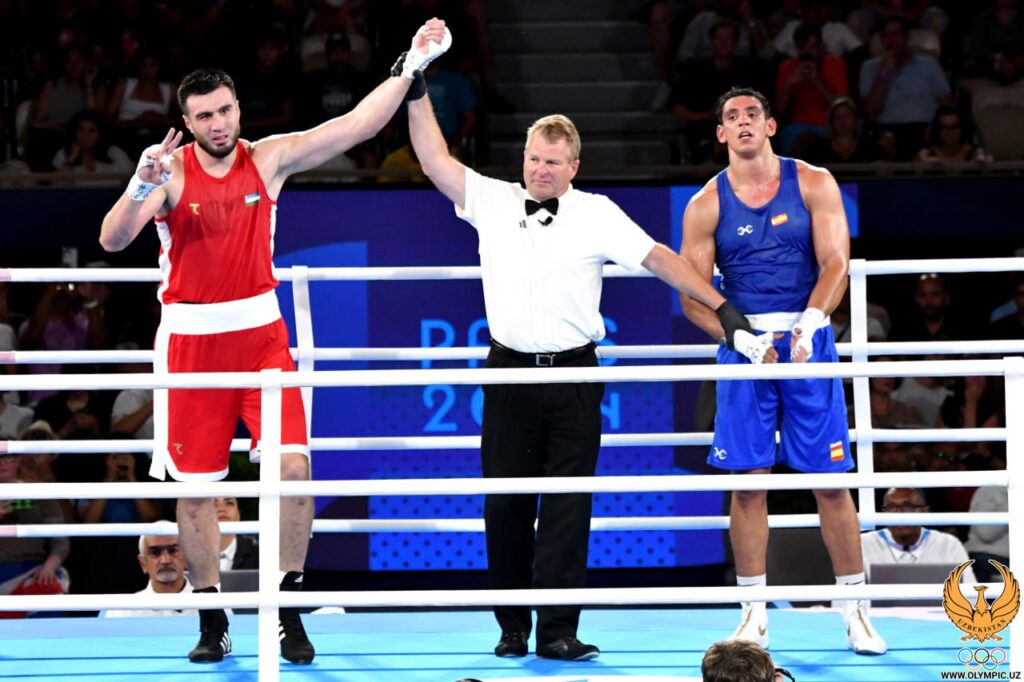
Bakhodir Jalolov Defeats Solomon Dacres — But His Prospect Phase Should End Here
Bakhodir Jalolov remained unbeaten by defeating Solomon Dacres over ten heavyweight rounds on October 17, 2026, at London’s O2 Arena. The result gave Jalolov another victory, his first reported ten-round…